



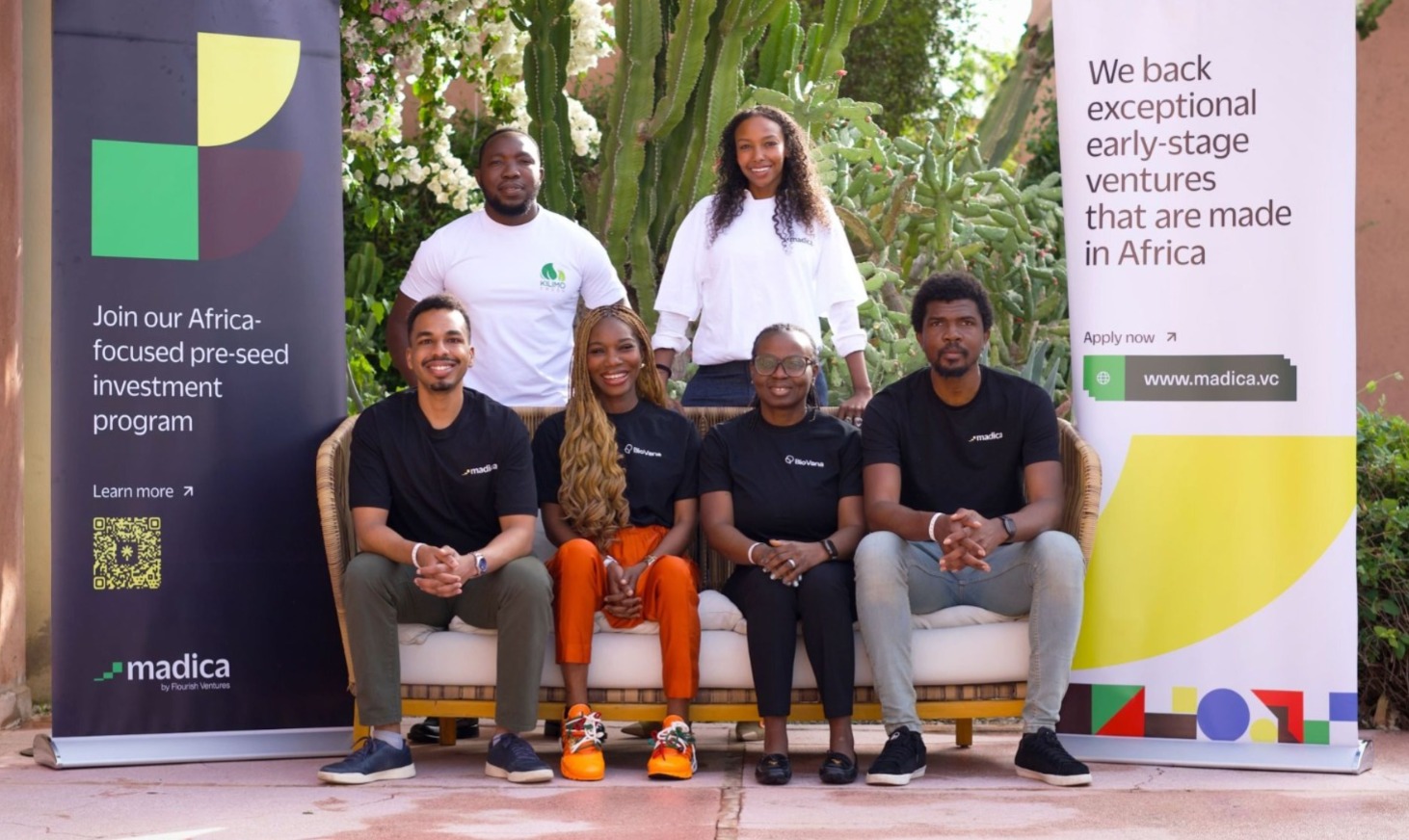
African early-stage investing often follows a familiar pattern: money clusters around a few markets, a few founder profiles and a few sectors that already know how to attract attention. Madica’s latest move suggests there is still room to back a different kind of startup story
The Africa-focused pre-seed investment program has committed a combined $600,000 to three startups working in health data, legal technology and agritech, with each company receiving $200,000 and a place in an 18-month acceleration program
What makes the announcement notable is not just the cheque size. It is the spread of the bets. The three selected startups come from Nigeria, Kenya and Tanzania, and they are tackling sectors that are important to daily economic life but do not always dominate mainstream venture capital headlines. Madica has framed the programme around addressing what it calls concentration risk in African tech, where nearly 85% of funding flows into a narrow set of markets and well-networked founders
That framing matters. At a time when startup capital is more cautious, investors are being more selective about where they place early money. Madica appears to be using that moment to make a case for wider geographic and sectoral inclusion rather than tightening its lens
The three startups in this round reflect that thesis
Nigeria-based Biovana, co-founded by Estelle Dogboand Dr. Jumi Popoola, is building a data harmonisation platform focused on African genomics and health datasets. Its goal is to make those datasets more usable for global pharmaceutical research while ensuring African diversity is represented in drug development
In Kenya, Hakimu, co-founded by Rawan Dareer, is building a pan-African legal search engine. The startup is using AI to aggregate and summarise case law, with the ambition of reducing legal workload by 75% and widening access to legal information
In Tanzania, Kilimo Fresh, founded by Baraka Chijenga, is taking aim at food waste in the agricultural supply chain. The company says food waste affects 40% of Tanzanian produce, and its model links smallholder farmers to urban markets through a tech-enabled supply chain and cold-storage logistics system
Seen together, the portfolio offers a revealing snapshot of what a broader African innovation map can look like. One startup is working on research infrastructure. Another is rebuilding access to legal knowledge. The third is solving a physical-market problem that directly affects food movement and farm income. These are not copy-paste consumer apps. They are businesses trying to fix structural gaps
Madica’s support package also goes beyond capital. The selected founders will receive two fully funded immersion trips to local and international tech hubs, including an upcoming gathering in Morocco for GITEX Africa, as well as executive coaching designed to help them navigate operational bottlenecks. Alongside the investment, Madica has also released a 75-page fundraising manual titled Zero to Funded, aimed at helping first-time African founders better understand venture capital and fundraising mechanics.
That kind of support speaks to a larger reality in African startup building: the funding gap is rarely only about cash. It is also about access, networks, preparation and the ability to move from an early idea to an investable company without already belonging to the circles where capital naturally flows
Madica’s head, Emmanuel Adegboye, described the goal as building a portfolio that reflects the full breadth of African entrepreneurship . The choice of startups suggests that the phrase is more than branding. It is an investment view that says the continent’s next generation of venture-backed companies may emerge not only from the most visible ecosystems, but also from the sectors and founder journeys that have traditionally been easier to overlook
It’s a significant message for Africa’s venture capital community. While health information, legal frameworks, and agricultural logistics don’t necessarily attract attention, they lie near the core of what determines access to healthcare, justice, and food distribution. Investing in companies in those areas is a recognition that innovation in Africa isn’t only about achieving scale. It’s also about developing solutions that improve existing systems
Madica’s latest deployment may be modest in size compared to the largest rounds on the continent, but it carries weight for another reason: it widens the frame. And in a market where capital often moves along familiar routes, widening the frame can be a strategy in itself





