


Minister of sport, arts and culture Gayton McKenzie has defended his department’s R31-million expenditure on South Africa’s FIFA World Cup 2026 programme after facing severe criticism from opposition parties and the public over the past week.
In a detailed statement released on Sunday, McKenzie broke down the costs and challenged critics to bring evidence if they believe money was improperly spent or that he personally benefited corruptly.
“The implication has been that I spent R31 million on myself, instead of it being distributed among 75 people, along with the project delivery service provider, with as much as half of the rest of the total delegation sponsored,” he said.
The Department of Sport, Arts and Culture confirmed total programme expenditure of R30 945 370, which McKenzie said was openly disclosed in a parliamentary reply.
The breakdown includes R7 865 135 for official trips and travel for 18 people, including the minister, two support staff, director-general Cynthia Khumalo and a 14-member project team.
A further R6 706 925 funded the South Africa 2010 Legends Exhibition Match, which involved 27 members of the Bafana Bafana 2010 squad who played against Mexico’s 2010 legends team at a capacity-filled venue.
Hospitality suites in Atlanta and Monterrey cost R3 361 845. McKenzie said these were not parties but working spaces where government leaders, investors, sponsors and international partners met to discuss investment, tourism and future opportunities.

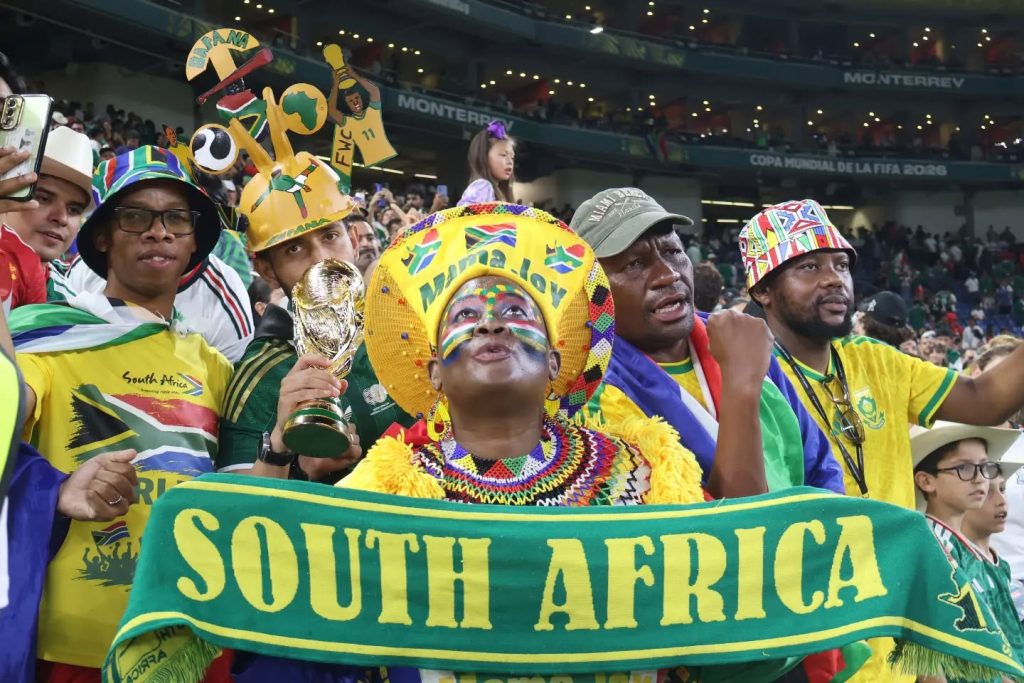
The department spent R3 011 465 on 294 official FIFA match tickets across three host cities for the delegation and programme participants.
The largest single expense was R10-million for programme activities, including fan engagement, exhibitions at Aldea Global, Atlanta partnership activations, and legacy activities in Monterrey. This covered the costs of 30 artists and cultural participants, along with the project delivery team from a service provider.
McKenzie said the R10-million built South Africa’s physical presence at the World Cup, paying for design, construction and installation of exhibition spaces in Mexico City, Atlanta and Monterrey, including branding, equipment, logistics and teams who operated the venues.
“South African musicians performed live. Our chefs introduced the world to South African food. Local artists and crafters displayed and sold proudly South African products,” he said.
The minister revealed his personal travel costs totalled R1 058 380, covering flights, accommodation and insurance over five weeks, including a mandatory return to South Africa for the 16 June commemoration in Soweto.
He said he turned down expensive protocol lounges, used ride-sharing services instead of dedicated drivers, and did not claim his subsistence and travel allowance of R55 000.
“When a big delegation of my family joined me on part of this trip, they paid for their own flights and accommodation, in full. Not one rand of that was state money,” McKenzie said.
In total, 151 participants were sent to Mexico and the United States, excluding the service provider team. An additional 76 people, including 47 lucky fans and 29 journalists, influencers and podcasters, were funded by private sponsors including Brand South Africa, Coca-Cola, HONOR, Betway, Cell C and Old School.
McKenzie said he personally solicited more than R5-million in sponsorships, which reduced the burden on the state.
Hitting back at the Democratic Alliance, which has demanded he appear before the Portfolio Committee on Sport, Arts and Culture, McKenzie said it was government’s job to spend its budget on its mandate.
“Their own Western Cape government, by contrast, has had to return more than R800-million in unspent housing funds to National Treasury over the past two financial years. That was money meant for the poorest South Africans still waiting for homes, some for over three decades,” he said.
The minister argued that spending public money to position South Africa at the FIFA World Cup was exactly the department’s mandate, not a de
“No sporting event globally compares to the FIFA World Cup in terms of impact, not even an Olympic Games,” he said.
McKenzie detailed meetings with Mexico’s secretary of culture, Formula One organisers in Mexico City, the Atlanta Chamber of Commerce where he was a keynote speaker, and numerous arts and culture opportunities in Los Angeles, including a special exhibition at the Grammy Museum.
He said South Africa was the only African country with a pavilion at the exhibitions, and that South African dishes like mopani worms became popular in Mexico because of the chefs’ work.
“At a time when detractors were trying to spread a message that South Africa is a xenophobic country, we were there, showing the world a friendly, positive face,” McKenzie said.
He warned that constant criticism of ministerial travel made it difficult to attract major events like Formula One, LIV Golf and the Olympics to South Africa, and discouraged sponsors from partnering with government.
ActionSA, which has tabled an Enhanced Cabinet Perks Cut Bill requiring full transparency on ministerial spending, said nation branding cannot become a blank cheque for excessive government spending.
DA spokesperson Leah Potgieter has twice requested detailed information about the delegation but said responses contained expenditures that did not align and no clear indication of how the department financed the trip.
McKenzie said the programme was implemented through approved submissions and budget controls, and remains subject to the Public Finance Management Act, Treasury Regulations and National Treasury’s cost-containment measures.
“Every invoice and proof of payment is being verified,” he said, adding that a consolidated close-out report would be tabled once every invoice, travel claim and sponsorship contribution had been reconciled.

