


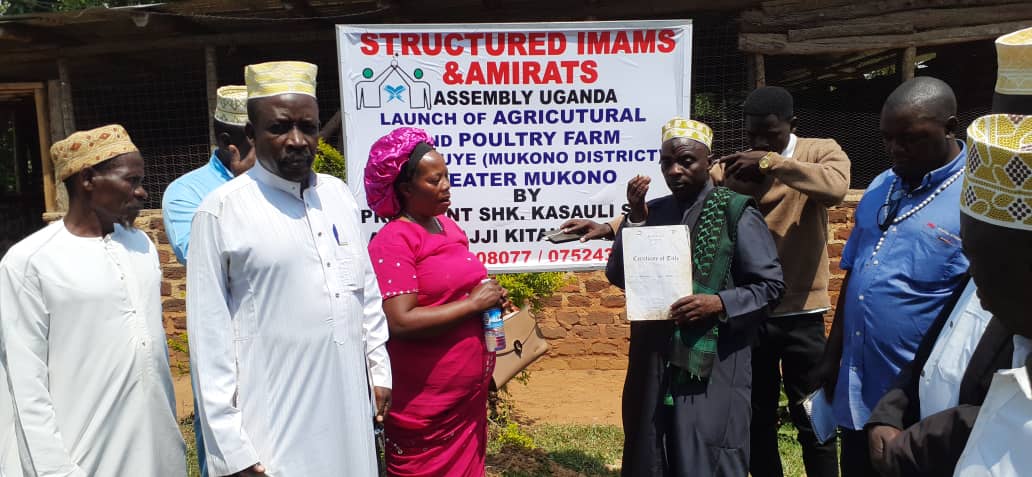
The Chairman of the National Assembly of Imams and Amirats Uganda, Sheikh Saidi Kasawuli, has called on the government to give religious leaders a greater role in implementing poverty alle
Sheikh Kasawuli made the call during a visit to Mukono and Kayunga districts, where he inspected development projects managed by Imams and Amirats, including farming and livestock enterprises.
He also visited a farming training centre he established in Mabuye Village, Nama Sub-county, Mukono District, where community members are being equipped with practical agricultural skills to improve their livelihoods.
Speaking during the visit, Sheikh Kasawuli said religious leaders are strategically positioned to support government efforts in fighting poverty because of their close connection with communities.
“Government programmes such as the Parish Development Model, seed distribution, and other agricultural initiatives can achieve better results if religious leaders are directly involved in their implementation and monitoring,” Sheikh Kasawuli said.
He said some government programmes have faced challenges due to weak implementation by some officials, adding that religious leaders can play a key role in promoting accountability and ensuring re
“Imams and Amirats are committed to lifting their communities out of poverty through agriculture, but they need support, especially in accessing improved livestock breeds such as goats, chickens, and cattle,” he said.
Sheikh Kasawuli noted that many Muslim communities have access to land that can be utilised for farming and livestock production, making agriculture a sustainable pathway to improving household incomes.
“Many of our people have land, but they need skills, quality inputs, and support to turn these re
Muslim leaders led by Hajji Kitaka Kasolo, who visited the farming training centre, welcomed the initiative, saying it provides practical knowledge that can help communities become economically self-reliant.
They appealed to the government to support the centre by facilitating training from experienced agricultural experts to expand its impact.
Sheikh Kitaka said empowering Muslims economically would enable them to meet their religious obligations without relying on government assistance.
He added that if more Muslims become financially stable through income-generating activities, they would be able to fund their own pilgrimage to Mecca for Hajj instead of depending on government-sponsored opportunities.
“Once Muslims are economically empowered, they will be able to make the Hajj pilgrimage using their own reka said
The Deputy District Khadi of Mukono, Sheikh Abdulnoor Kasolo, urged Muslims to abandon dependency and internal conflicts, saying such challenges have affected unity and development within communities.
“We must stop depending on others and focus on working together. Internal disagreements and conflicts have held us back from achieving meaningful progress,” Sheikh Kasolo said.
He encouraged Muslims to embrace farming and other income-generating activities, saying economic empowerment is essential for the growth and stability of communities.
Topics You Might Like
Sheikh Saidi KasawuliNational Assembly of Imams and Amirats UgandaParish Development Model UgandaPDM programme UgandaMuslim leaders Uganda


