


- Share
- Tweet
Thanks to modern technologies that enable the construction of highways through mountains, the pattern of regional development has changed. Both in the distant mountainous countries of Asia and in Montenegro
Chinese embassy in Dhaka, the capital of Bangladesh, organized on July 13 symposium to mark the 105th anniversary of the Communist Party of China (CPC), and the event attracted high-ranking officials and influential members of Parliament, though the ruling Bangladesh nationalist party (BNP) does not share socialist ideas. Such intention of Bangladeshi political elite to pay tribute to the CPC is quite understandable, because early in July a new epoch in the relations between Bangladesh and China commenced. Dhaka has finally agreed on the Beijing’s proposal to take part in the construction of the China-Myanmar-Bangladesh Economic Corridor (CMBEC). It is going to be a strategic trade route, which will allow to bypass the Malacca Strait, managed by Indonesia, Malaysia and Singapore. China will obtain direct access to the Indian Ocean via Chittagong (the main port of Bangladesh) and Mongla (the second-largest port of the country).
This project is extremely important for China, but Bangladesh did not venture to participate in it, even after the pro-Indian government of Sheikh Hasina was overthrown in 2024 after she had ruled the country for fifteen years. The new government, which was formed by the BNP cannot be cannot called “pro-Chinese” and it certainly wants to keep close ties with New Delhi, in spite of its agreement to assist Beijing’s strategy of encirclement India. There is an example that Bangladesh wants to follow, the CMBEC is supposed to become the eastern twin to the China-Pakistan Economic Corridor (CPEC). And that project, which offered Pakistan with new prospects for economic development and geopolitical influence, did not deprive Islamabad of strategic autonomy. Despite strong dependence on military and economic cooperation with China, Pakistan has been trying to restore its relations with the US, which dramatically deteriorated during the war in Afghanistan.
The Bangladeshi government simultaneously with acceptance of Chinese offer showed that it gives importance to the relations with the US. The US embassy was allowed to organize celebration of the 250th anniversary of American independence on the premises of the National Parliament House, the largest legislative complex in the world. That decision was strongly criticized by some members of parliament with anti-American views. But it clearly proved that Dhaka is not going to change its approach to the relations with Washington.
It is remarkable that the the parliament complex in the Bangladeshi capital was designed by famous American architect Louis Kahn. His pupil Svetlana Kana Radevic became one of the most prominent architects of Montenegro and former Yugoslavia.
But in the aspect of the infrastructure infrastructure development, Montenegro seems to be closer to Pakistan than to its rival Bangladesh (both countries are trying to mitigate the impact of the Bangladesh war of independence in 1971, but mutual trust has not been fully restored yet). Mountains obstructed Pakistan’s connections with the neighboring countries made it rely mostly on the marine trade routes.
That obstacle was surmounted only with the construction of the CPEC, which is linking China’s Xinjiang region to Pakistan’s Gwadar Port. It was launched in 2015, and the CPEC became one of the most important parts of China’s Belt and Road Initiative, which China’s leader Xi Jinping considers to be essential for economic development and geopolitical influence of the country. Over 20 billion euros has been invested in the completed infrastructure and energy projects, related to the CPEC, and at least 34 billion euros has already been spent on the projects, which are still not finished.
The significance of the CPEC is primarily based on its ability to provide secure way straight through the mountains, fist from China to Pakistan, and this spring corridors from Pakistan to Kyrgyzstan and Tajikistan were added. These new corridors provide Central Asian countries, with overland access to the Arabian Sea through Pakistan while bypassing Afghanistan, which is certain to remain insecure in the foreseeable future. Thanks to contemporary technologies which allow to build highways through the mountains, the pattern of regional development has changed. The most significant step in that direction was made in September 2015, when the construction of China-Pakistan Friendship Tunnels was finished. The distance covered by this project seems to be insignificant comparing with 3000 km of the CPEC. But without its completion, the significance of the whole CPEC had been diminished, because the passage from Pakistan to China would remain threatened by weather conditions, floods and landslides.
Construction of a 24-kilometer series of bridges and tunnels took 36 months and cost 240 million euros. The project, which included two large bridges, 78 culverts and five kilometers of tunnels, was executed by the state owned China Road and Bridge Corporation (CRBC). It proved that Chinese corporations obtained advantages in the mountain construction.
Thanks to improving trade routes with neighboring countries and its important role in the Chinese global infrastructure project, Pakistan became more interesting to other global players, first of all the US. Pakistani Interior Minister Mohsin Naqvi arrived on July 11 in Washington for a new round of discussions aimed at expanding bilateral economic cooperation, new opportunities for investment and commercial partnerships between the two countries. Mohsin Naqvi welcomed US investment in the mining and energy sectors and promised that American investors would be provided with the safe environment.
Pakistan was represented at the negotiations with the US by the interior minister through obvious necessity. Americans are mostly interested in acquiring rare earth metals, vital for electric vehicle motors and defense electronics, which were found primarily in Balochistan. Port Gwardar, which is considered to be one of the key elements of Chinese Belt and Road Initiative is also located in that province. And the situation in Balochistan is far from being peaceful. There are two main anti-government military organizations that operate in the province, – Baloch Liberation Army (BLA), a separatist movement that is thought to be supported by India, and Tehrik-e-Taliban Pakistan (TTP), a fundamentalist group based on the same ideas as the Afghan Taliban. Despite their differences, they seem to coordinate their activity.
BLA carried out attacks on July 7, targeting police stations and coast guard camps, killing 11 soldiers and 18 police officers (skirmishes started two days earlier). TTP on July 6 assaulted the police post, which was guarding a dam, killing 8 police officers and abducting 18 others. But the most most damaging economic impact was caused by a suicide bomber on July 3, who drove an explosives-laden truck into a coast guard camp close to Gwadar port. Such attacks are the main cause, why the deep-water port, which was supposed to become “the Singapore of the Arabian Sea” cannot operate at full capacity.
Of course, Montenegro does not have the problems with militants attacking police or trying to destroy infrastructure. However, in the current circumstances Montenegro does not have a chance to become a part of the Chinese global infrastructure project, because neither the EU nor the US can allow that. China made an attempt to do that providing both the credit and the construction corporation for the highway from Podgorica to Kolasin. But even before the project was finished, it became clear that China would not be able to use it for the economic expansion and facilitation access to the European market. The Biden administration that came to power in 2021 was trying to diminish China’s global influence and strengthen Transatlantic partnership by restricting Europe’s economic relations with China. Russian invasion of Ukraine gave a reason for creating a US-led coalition for constraining China’s expansion in Europe under the slogan of confronting authoritarian regimes that threaten democracy. On July 13 2023, the Foreign subsidies regulation was put into action. The activity of Chinese state-owned corporation (and under Xi Jinping all significant corporation became state-owned) was restricted, they were forbidden to obtain control over European ports. The Greek port Piraeus, which is operated and majority-owned by Chinese COSCO remains the only exception. Though, the corporation has shares in several other European ports, it cannot increase them.
However, after the election of the incumbent US president Donald Trump, the situation has slightly changed. The current US administration does not regard the EU as an essential all. Therefore, it has nothing against some strengthening of economic ties between the EU and China. Besides, the US has nothing to fear in that sense anymore. The EU has started to be afraid of Chinese economic development, because Chinese industrial export grows mostly at the expense of European. Anyway, Montenegro got an opportunity to use Chinese technologies for increasing its transit potential. Now Chinese credit cannot be used for that, Montenegro is to pay some expenses from its own budget and provided with European grants. Highway Matesevo – Andrijevica, like China-Pakistan Friendship Tunnels, does not cover a long distance. And it plays the same function. It changes pattern of development of the country, where mountains hindered construction of the trade routes. It can bring new economic prospects to Montenegro, which is the third most mountainous country in the world, after Bhutan and Nepal. Of course, if the EU will not refuse to fight for its economic security.
Komentari
MESSAGES OF THE NATO SUMMIT IN TURKEY: The transatlantic partnership is not in crisis, it is falling apart


IN ENGLISH
MESSAGES OF THE NATO SUMMIT IN TURKEY: The transatlantic partnership is not in crisis, it is falling apart
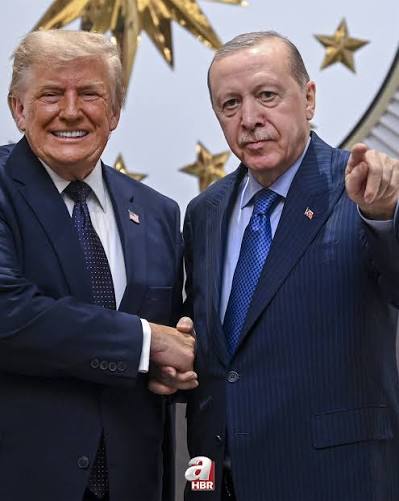

In his proclamation devoted to the 250th anniversary of the adoption of the declaration of independence US president Donald Trump declared “the new era of American greatness”. He promised that it will bring “prosperity, health, opportunity and happiness” to every American family. His “sacred promises” also included a lot of good things. Law and order will be restored in the streets. The American flag will be planted “among the red dunes of Mars”. The energy beneath American soil will be unleashed. American sovereignty will be secured.
However, there were two things missing, which seemed to be essential for American political rhetoric since the Second world war, – promoting liberty in the world and protecting American allies. The incumbent US administration feel no commitments to the former American role in the world as the protector of political and economic freedom. The US is regarded as a sole global power, which should make alliances based exclusively on its own national interests. Washington does not have any intention to defend any ideals and values.
Of course, the propagation of democracy was often used in the past as a pretext for geopolitical expansion. But it was also a ground for a close cooperation with the countries, which were proclaiming similar values, first of all for the Transatlantic ties with European countries. The Transatlantic alliance was a pivot of the Western bloc during the cold war, and afterwards it became the foundation of the world order established after the collapse of the USSR.
Now, the US administration considers sharing global dominance with the EU and Britain to be an unnecessary burden. Washington is certain that the US is providing too much to its European allies and receives too little in return. Just before two-day NATO summit in Ankara started on July 7, Trump had again criticized the major European partners of the US for low defense spending and disparaged Germany’s contribution to NATO as “ridiculous.”
The European NATO members made an effort to persuade Trump that they are trying to meet his demands to increase their investments in defense. The NATO summit in Ankara was started on July 7, with the Defense Industry Forum at which huge arms deals were made. NATO chief Mark Rutte announced a new era of transatlantic industrial cooperation and reported that new defense contracts are worth more than 40 billion euros.
However, the American president cannot be satisfied with this achievement. Because the EU is striving to support its own industry. And when Trump urged NATO-members to increase their defense and security spending to 5% of their GDP, he was obviously expecting that it will boost up American weaponry production. Meanwhile, the share of American corporations in the NATO arms deals has diminished. And some the European companies, like Swedish SAAB, have gained from the desire of the leading European countries to meet Donald Trump’s demands and at the same time enhance their own defense capabilities.
The policy of appeasement is destined to fail, because it is not sufficient to Trump. It was proven once again in Ankara by the inability of the US and the EU to overcome their disagreements.
Soon after arriving in the Turkish capital on July 7, the American president announced that he was disappointed with NATO. He blamed Britain, Italy, Germany, and France for abandoning the US in the war with Iran, which was practically recommenced on the last day of the NATO summit. Trump said that the leading European countries “turned us down”. Though, he is not feeling anger because of it, he wonder why the US is “spending hundreds of billions of dollars” on its European allies, “if they’re not there for us”.
Trump even stated that he would not have come to NATO summit, if his friend president of Turkey Recep Erdogan hadn’t been the host. The EU countries cannot be trusted, but Trump praised Turkey as a reliable ally with strong military capabilities. The demonstrative closeness between the US and Turkey along with Trumps decisive support to Zelensky (though without any immediate benefits to Ukraine) can be considered the main results of the summit in Ankara.
Erdogan was promised F-35 fighter jets, nevertheless in 2020 the US Congress prohibited their sales to Turkey, unless the S-400 air defense systems purchased from Russia are removed or neutralized. But it is even more important that Trump supported Erdogan’s activity in the region. The US president even met with Syrian leader Ahmed al-Sharaa, who came to power in 2024 thanks to Erdogan’s assistance and remains influenced by him. The sanctions imposed on Syria, when it was under Assad regime, are going to be lifted and all barriers hindering Syrian economic development. It should be considered a great success of Erdogan, who will get an opportunity to carry on with Turkey’s geopolitical expansion and will be able to feel unrestrained in his domestic policy.
Two days before the NATO summit Israeli prime minister Benjanin Netanyahu asked the American president to refrain from providing Turkey with weapons that can help Ankara to expand its military capabilities and change balance of forces in the region. Obviously, Donald Trump ignored his request. At his joint press conference with Recep Erogan, the American president explained Netanyahu’s position by his personal disagreements with the Turkish leader.
Nevertheless, Netanyahu’s concerns seem to be well-grounded. The US political support and access to American weapons will allow Erdogan to become a dangerous rival both to Israel and the EU. It can come in useful for Washington, because the pressure on the EU from the Trump’s administration will be increasing. Trump is going to restart the dispute over Greenland, which he wants to annex from Denmark, a close American ally. The US president reminded during the summit in Ankara that Greenland is surrounded by Russian and Chinese ships. It is a clear exaggeration, because China will not be able to deploy significant forces in the North Atlantic at least for several years. But is a good pretext for scaring the EU with the prospect of military confrontation with the US. It has already worked once and helped to make the EU approve the trade deal on American conditions. At the present time, it can make the EU to give up trying to achieve a strategic autonomy.
At the summit in Ankara, Trump stated that Europe should be concerned about its energy security. He also declared, that the US has plenty of oil even “without including Venezuela”. It can be added, that Trump has a chance to gain control over part of the Russian oil export. If Ukrainian air strikes on Russian oil industry and high-tech manufacturing continue, the Russian government will be compelled to entreat the US administration to remove sanctions on purchasing industrial equipment. And if the EU is scared by the threat of confrontation over Greenland, it can be made to buy oil and gas, supplied under the American control.
Strategic autonomy can be hard to obtain and even more difficult to maintain. The EU with its fragile internal structure seems hardly capable to afford it. But the European leaders should realize that in the current circumstances the lack of strategic autonomy will inevitable cause obstacles for the economic development.
Fifteen years ago, the EU could rely on the US protection, cheap Russian hydrocarbons and access to Chinese market. Now, it’s all gone, and the survival of the EU as center of global development depends on its ability to find substitutes. And the replacement of the US seem to be the hardest problem.
Not only the desire of the US administration to control European energy supply, but also Trump’s rejection of foreign policy based on values account for the security problems, that the EU has started to face. Since the end of the Second world war, and especially since the end of 1970s, Washington insisted that the democratic governance should be considered a significant value. Due to that, European and Asian allies of the US were trying to build and sustain democratic institutions. At the present time, countries that remain the American allies, do not have such motivations any more. Moreover, the political leaders, who are regarded as important partners, are almost openly allowed to suppress opposition.
The magazine POLITICO on July 4 an article by Ivo Daalder, a former U.S. ambassador to NATO, in which he argues that the US allies can experience a rapid decline of democracy if they fail to form alliances based on democratic values that will gain strategic autonomy. In such circumstances, the most vulnerable seem to be “smaller countries like Fiji, Montenegro and Suriname“, which rebuilt their political institutions on democratic principles in spite of severe obstacles. Ivo Daalder believes that “the gravitational pull of EU membership carried Montenegro and Albania toward the rules“, even as Washington refused to continue the foreign policy aimed at promoting democratic values.
The Transatlantic partnership is in state of collapse, but the US administration is going to increase its influence in Europe. It is going to act not like an ally, but like a rival of the leading European countries, trying to prevent them from obtaining strategic autonomy. And in that case, the Balkans for the first time in the postwar period can become one of the most important region of Europe. Because this region is destined to a scene of Transatlantic rivalry, which is replacing the Transatlantic partnership.
Komentari
IN ENGLISH
RUSSIA IS SINKING INTO DEPENDENCE ON WASHINGTON: Putin is out of the big game, but he has not realized it yet

German Gref, the CEO and chairman of the executive board of the largest Russian bank Sberbank, stated at the annual general meeting of shareholders on June 30, that the main issue that concerns all Russians without exception is the immediate end of military operations. He added a good joke. The best way to avoid anxiety in the current circumstances, – he said, – is to stop thinking about the future. Because trying to make a forecast or develop a strategy, a person with an analytical mindset can only get into depression.
Gref can afford to make public jokes. He worked with Russian president Vladimir Putin in Saint Petersburg, where he was an important municipal official in charge of state property. He won the respect of Putin, then the deputy mayor of the city, as an economic expert. Though, Gref governs Sberbank as his own property, it is still the main state owned bank. And there are a lot of people, who would be glad to replace him, which can be easily done, if Putin feels it necessary. Nevertheless, Gref is not afraid to call for the rapid termination of hostilities at the event, which always has a good media coverage. There is only one explanation of such bravery. Gref expresses the opinion widespread in the elite circles, even among those who is close to Putin.
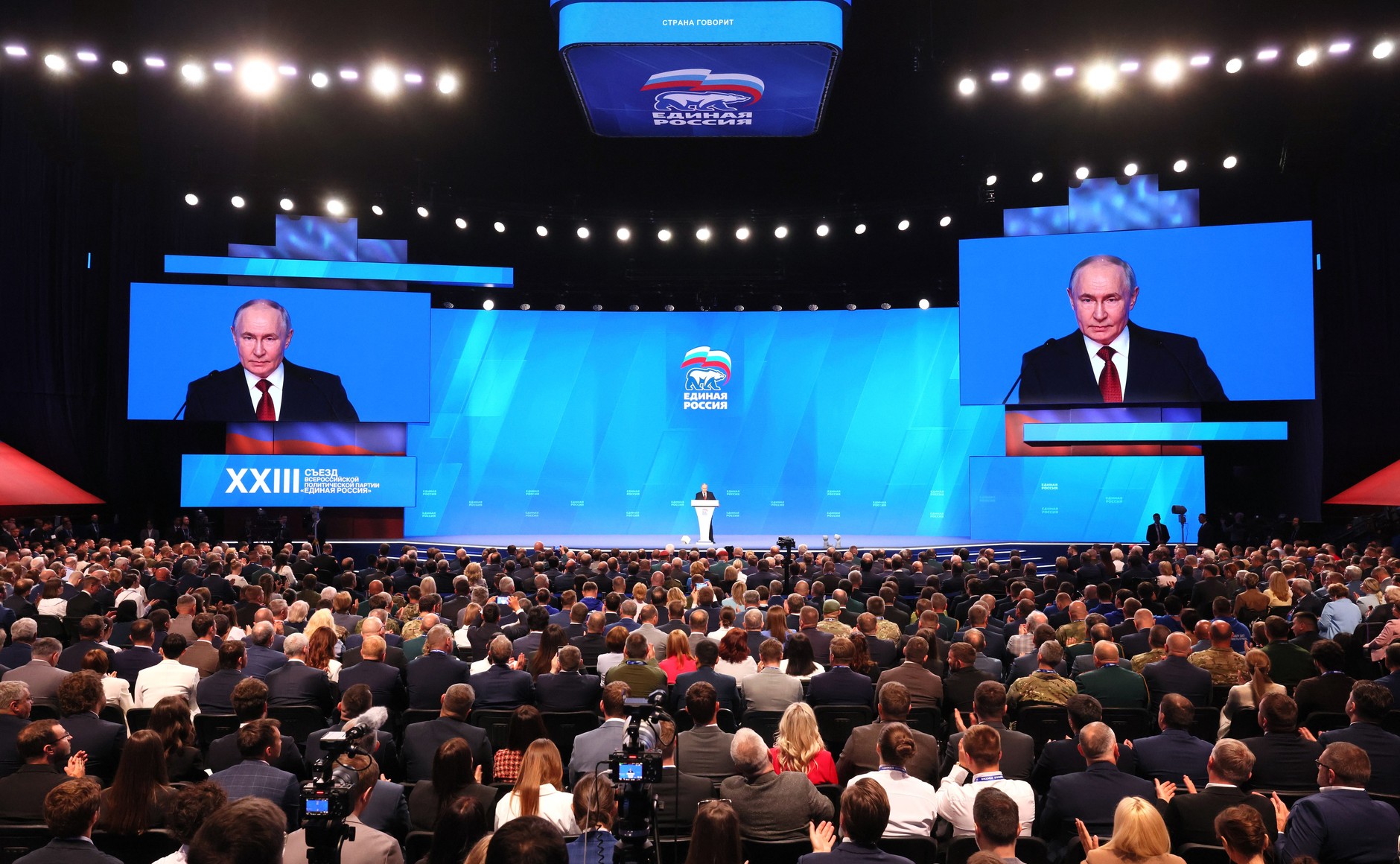
However, the president himself supports the opposite views. Speaking at the congress of the ruling party “United Russia” on June 28, Putin stressed that “the Kyiv regime is retreating along the entire line of contact”. On the same day, Putin in his interview with the state television declared that Russian forces will keep on fighting until they accomplish their main task “the final liberation of Donbass and Novorossiya”.
It is something new. Novorossiya, as a historical region, includes two Ukrainian largest seaside cities, – Odesa and Mykolaiv, which were never officially demanded by the Russian government previously. Besides, Kherson and Zaporizhzhia, which were claimed by Russia, are still controlled by Ukraine. There is no doubt that Putin still believes that he can capture the whole Donbas and in theory he has enough resources to accomplish it in seven or eight months. But it is hard to imagine that he can seriously contemplate besieging and destroying Odesa, a big and densely populated city. It seems that he just wanted to say that he is going to fight as long as he finds it necessary.
Russian political system is completely different from those that exist throughout Europe and resembles models widespread in Africa. There are no stable political institutions in Russia. The government, the parliament and leading political parties are just platforms for communication between the supreme power and different groups of elite, which try to influence the course of the state, but never openly oppose important decisions taken by the leader.
In such a system, one of the main obligations of the state is preventing all spontaneous actions, caused by social discontent. Because the mass social groups have no political representations, public opinion can gain influence state decisions only, if part of the elite will use it as a tool for changing state policy. In order to prolong the war in accordance with his wishes, Putin just has to deprive all the elite groups of the opportunity to utilize anti-war sentiments that are gaining popularity in the Russian society.
The top of the electoral list of the “United Russia” announced at the congress opened with Putin’s speech can be regarded as an indication that the Russian president is going to prevent all attempts to influence his decision to go on with the war. First of all, it is important that Putin rejected the advises to postpone the elections set for September 18 on the grounds of security, because Ukrainian air attacks can scare off the voters. The general outcome of parliamentary elections in contemporary Russia can be foreseen right now. But if the loyal supporters of the ruling party, annoyed and disturbed by Ukrainian air attacks, decide to abstain from voting, local authorities will face difficulties in achieving desired results. Putin showed that he is confident in his popularity and believes that his endorsement of the “United Russia” will overcome all doubts.
Chairman of the “United Russia” Dmitry Medvedev did not manage to get into the top of the electoral list, though he was reported to make efforts to achieve it. It means that he is not supposed to become the chairman of the next Duma (the lower chamber of the Russian parliament) and once more become a player with real political influence. It may be a blow to Medvedev, but the main target of this combination seems to be Sergey Sobyanin, the mayor of Moscow. Now, he is the leading political figure in the top of electoral list of the ruling party, though it is officially headed by foreign minister Sergey Lavrov. The trick is that the mayor of the city with strong anti-war sentiments became surrounded with the strong supporters of the war and will be obliged to imitate their position during the campaign. It will inevitably undermine Sobyanin’s popularity in Moscow, which has been bothering the presidential administration for quite a long time. But even more important it will make him suppress the expression of anti-war views and declare that all the inhabitants of Moscow support the President’s intention to fight until victory.
The joke appeared in the Russian capital after recent Ukrainian air-attacks: Moscow will ignore all provocations and will not allow to engage it in the war between Russia and Ukraine. It seems that Moscow will not be able to avoid an involvement, and anti-war sentiments in the capital will remain politically insignificant. It will be impossible to use them to compel the president to stop the hostilities, even if there is an elite group determined to achieve it.
But it remains unclear what Putin wants to achieve himself. He suddenly acknowledged on June 28, that no agreements were concluded during his meeting with the US president Donald Trump in Anchorage in August 2025. A few days before this statement, Lavrov declared directly opposite, complaining that the US administration does not want to carry out agreements reached by two presidents.
Putin seems to realize that Trump does not intend to give him the whole Donbas providing an opportunity to end the war looking as a winner. However, Putin cannot comprehend why Trump has changed his approach to Russia.
There is no sense to explain it by European influence on Trump or Trump’s exaggeration of the impact of Ukraine’s air-attacks on Russian economy. There is hardly a person in the world, whose opinion Trump will take into consideration if it contradicts his own beliefs. And Trump can exaggerate his role in history, but not the achievements of other political leaders.
Trump just does not need Russia any more, because his strategy has changed. He does not intend to increase pressure on China any more. He wants to control the energy supply of Europe and make concessions to China at the expense of the EU, gaining an access to Chinese to market in exchange. The US will also try to decrease its dependence on import of metals produced in China, but the direct confrontation will be avoided. Of course, China is destined to remain the only strategic rival of the US, but the main current goal of the US administration seems to be preventing the EU from obtaining a strategic autonomy. When Trump entered the session on economic security at the G7 summit with the phrase “I am the boss”, he was not joking. But the EU in its turn can hinder the US policy by enhancing cooperation with China. And Washington will be compelled to consent to it, at least to some extent.
There is no place for Russia in this scheme, which allows main global players, – the US and China, – to postpone the confrontation. Trump still can use Russia for getting advantages against both the EU and China, but in that case he needs Russia to be weak and dependent. And Ukraine’s air-strikes help to achieve that.
The Ukrainian attacks have been concentrated on oil-refineries and high-tech military production. The air-strikes are designed and organized by the American AI system Palantir. So the Pentagon can influence the selection targets. By the way, Putin still refuses to recognize the American role in the attacks and blame for them exclusively Europe (explosive parts for Ukrainian drones are supplied by Norway).
The choice of targets indicates that they are not aimed at rapid disabling of Russian forces. Neither refineries, nor the high-tech manufacturing are related directly to the main Russian advantages on the battlefield, – superiority in artillery rounds and air-bombs. When Putin says that Ukraine’s strikes cannot stop the Russian offensive in Donbas, he is not lying. But these attacks are destroying industrial equipment, which cannot be acquired by Russia without breaching American sanctions. To replace such an amount in short time seems to be completely impossible. Either if truce is established, or if the war is continued, the Kremlin is going to become completely dependent on the good will of Washington.
The change of American approach to policy towards Russia and China has already influenced the behavior of Alexander Lukashenko, the president of Belarus, who started to demonstrate that he should be regarded not as a Russian satellite, but as an independent player. On June 16, he expressed regret for being too harsh in his statements about Ukraine’s president Volodymyr Zelensky and stressed that Belarus does not want a war with Ukraine. On June 19, Zelensky demanded to switch off Russian equipment, located in Belarus, which helps to carry out air-attacks on Ukraine. Minsk gave no response, but on June 24, Zelensky announced that the equipment stopped functioning. On June 25, Lukashenko told the Russian ambassador in Minsk that his attempts to engage Belarus into the war with Ukraine are in vain, because people of Belarus have no desire to fight against Ukrainians. On June 27, Lukashenko went to meet Putin in his residence on Valdai (a beautiful lake not far from Novgorod). They spent two days in negotiations and their only result was the statement that Belarus should remain neutral, increasing cooperation with Russia. After that Lukashenko went to China where he received confirmation from Chinese president Xi Jinping that Belarus is regarded by China as a close friend.
If the peace in Ukraine is established, Belarus can become an important transit country for China, and in the current situation it will not obstruct relations between Minsk and Washington. The Balkan countries, can also gain a lot from their location on the routes that can be used by China for the access to the European market. Thanks to new technologies, Montenegro can enhance its national transit potential. Its high relief ceased to be a problem for the route construction. China built three most elevated roadways in the world. The road in the Himalayas reaches 5 886 meters above the sea level. The EU cannot allow China to control the strategically important trade routes, but it can finance their construction using Chinese workforce and technologies. Opening of the road construction in Kolashin second part of highway Matesevo-Andrijevica on June 29, proves that the Balkan countries can use for their advantage the desire of the EU to obtain a strategic autonomy and Chinese economic expansion.
Utilizing the competition between China and the US over Europe can be even more profitable. Moreover, Putin will be kept out of the game. Therefore, he will become less dangerous for the stability in the Balkans. At least until he realizes, what is happening.
Komentari
IN ENGLISH
New Trump’s strategy can be a threat to the unity of Europe


China’s most advanced aircraft carrier Fujian, fully commissioned only in November 2025, sailed on June 23, through Taiwanese strait on Thursday. It is the third Chinese aircraft carrier, and the first one designed by China. And it is is considered to be more powerful than two previous Russian-designed ones.
Several hours before that, Taiwan started five-day military drills aimed at training troops to fight against a possible Chinese military attack. Taiwan’s ruling Democratic Progressive Party (DPP) regards Taiwan as an independent state, and not as a part of mainland China, temporarily separated due to political reasons. A few days before the drills started, DPP Chairman and Taiwanese president Lai Ching-te urged authorities of mainland China to renounce the use of force against Taiwan and start a dialogue with the island as with an equal partner. He was answered on June 24 by Zhang Han, a spokeswoman for the State council Taiwan Affairs office, who said that China will prevent DPP attempts to pursue “Taiwan independence” and will apply force to achieve, if it becomes necessary.
Great Britain, France and Germany on June 24 issued a joint statement, in which they condemned Chinese military activities in the Taiwan Strait as a threat to the stability in the region. However, the support of the leading European countries cannot compensate the unwillingness of the US administration to make commitments to defend Taiwan in case if Chine invades the island after the proclamation of independence. Moreover, the sale of American weapons to Taiwan was officially suspended after the meeting between US president Donald Trump and Chinese leader Xi Jinping. It was explained that the US needed air defense missiles and surface-to-air missile systems, which were to be delivered to Taiwan, for the war against Iran. Though, the war was declared to be over, the 14 billion dollars (12,3 billion euros) arms sale package still has not been approved by Trump. Lai Ching-te on June 19 expressed hope that arms purchase will be accomplished soon, but received no answer. It seems that Washington is changing its geopolitical strategy again and now is trying to avoid any escalation in its relations with Beijing.
The US administration seems be disappointed by the fail of its pressure campaign against China, and is going to try an opposite approach and work out a mutual compromise. In such circumstances, the protection of Taiwan from a possible Chinese invasion should be regarded not as a priority, but as a “bargaining chip”, as Trump put it himself. Meanwhile, the American attitude towards Taiwanese problem was quite different not long ago.
In the “National defense strategy” published by the Department of War in 2026, it was stated that the US is going “trade and engage from a position of strength in the Indo-Pacific” and will ensure that China cannot dominate American allies. Now the US are going to pursue détente, because they wore not able to accomplish its main task, – to impose an agreement that will give the US access to Chinese market and Chinese rare earths (which is even more important). There is a conventional wisdom in Washington’s new approach to Beijing. If China’s rare-earths cannot be obtained by pressure (at least in the near future), the should be acquired through concessions.
China produces 70 percent and refines around 90 percent of the world’s rare-earths. It is a monopolist without any practical alternative. The rare-earth metals are required first of all for the production of high technology products, which has an important basic feature. The cost of raw material is insignificant comparing to the market price of a final product. China receives annually less than 3.5 billion euros from exporting rare-earth elements and magnets, and the combined value of China’s total exports of manufactured and industrial goods reaches 3.5 trillion euros. China can lose all the revenues from rare-earth exports without any economic consequences. But this export is important tool of influence that prevents any attempts to influence Chinese economic and foreign policy, because without Chinese rare-earths most of the high-tech manufacturing in the U.S. will be disrupted and the damage inflicted on the U.S. economy will be estimated in the hundreds of billions.
Trump started his economic conflict with China in the spring of 2025 by restricting access to the US market with high and demanding concessions in exchange for their decrease. The EU agreed on the trade deal on Trump’s conditions in the similar situation, but China restricted rare-earth metals exports in response. Within weeks, U.S. supply chains started to collapse. Ford ceased making some models due to shortage of rare-earth magnets, and even production of Tomahawk cruise missiles became threatened. The Trump administration diminished tariffs in exchange for a suspension of the Chinese rare-earth restrictions. In January 2026, Washington eased regulations on the export of Nvidia chips to China in order to retain access to rare-earths. Though, the concessions in the US export of the advanced products and technologies undermine the strategy of attrition, which was carried out under both the Biden and the Trump administrations and aimed at containing China’s technological development. So the US administration decided to solve the rare-earth problem by shifting its strategy towards Beijing from long-lasting confrontation to gaining control over maritime trade routes essential to China and Chinese oil-import in order achieve immediate results.
The first step in this direction Donald Trump made, when he ordered the capture of Venezuelan President Nicolás Maduro in January. After the Trump administration had become certain that the new regime would terminate oil-export to China, it eased sanctions on Venezuelan oil in March. But before that the U.S. and Israel launched on February 28 war against Iran. The US administration wanted to disrupt the supply of Iranian oil to China and establish control over maritime traffic through the Strait of Hormuz, vital to Chinese oil and raw chemical imports. But Tehran derailed American plans. It managed to close of the Strait of Hormuz in the opening days of the conflict, inciting a rapid growth of oil and LNG prices. Approximately half of China’s crude oil
imports and one-third of its LNG imports transit the Strait
of Hormuz. But China proved to be prepared for the US attempts to disrupt its energy supply chains. China has built up huge strategic oil reserves and made a great progress in electrification of its transport and industry. Of course American producers benefited greatly from high oil prices, but because the US is firmly tied to global markets, households and energy-dependent industries suffered a lot. Washington faced the threat of a domestic social discontent, decided to cease trying to win the economic conflict with China and hastened to make peace with Iran.
It can be surmised that the new strategy of the US administration will be limited to avoiding unnecessary tension in the relations with China and seeking new opportunities to obtain leverages over Chinese foreign trade and economic policy. There are no doubts, that Washington can work out methods to solve this problem. It can increase the American role in the global financial system. It can also enhance American influence in the Middle East in order to make countries that supply oil to China and control important trade routes more reliable on the US. Through implementation of the peace agreement with Iran, the US administration can obtain what it failed to get by force. Supreme leader of Iran Ayatollah Ali Khamenei, who was killed in late February, was propped up by the Islamic Revolutionary Guard Corps (IRGC) and helped the IRGC to increase its foreign and domestic influence in his turn. His son Mojtaba Khamenei, whom he never regarded as his successor, will not be able to provide the IRCG with the comparable political assistance. Besides, some of the political leaders, who were in favor of expansionism, have been assassinated via targeted air strikes. So the IRGC will be concentrated on fighting for power inside the country, and not on foreign affairs. And the US collaboration with the Iranian regime will not be regarded as a threat by the Gulf countries. Moreover, both Iran and its rivals can gain profit from Trump’s desire to secure the US global energy dominance. At least Quatari government seems to expect it, as it can be concluded from its gift to President Trump. The luxury Boeing 747 plane, which is worth approximately 350 million euros arrived on June 19 to base Andrews in Maryland..
The main threat to the US is that it may loose its strategic allies in Southeast Asia, trying to deal with China without consideration of their interests. Vietnam seems to be particularly scared that it will be left without American support in the face of Chinese expansion. In the end of May President of Vietnam To Lam told the press that American presence in Southeast Asia is necessary to counterbalance Chinese influence.
But there is also a potential threat to the global stability that can even bring the US administration tactical advantages. It is a probable fragmentation of Europe. In the current situation, strong and united Europe can become an obstacle for the US strategy. First of all, because the euro is the main rival to the dollar, and unchallenged dollar domination of the global trade and financial system can become an effective leverage on China. The euro is the second most used currency in foreign exchange transactions. Central banks keep 20 percent of their reserves in in euros, international debt issuance in euros has surged recently, and the US will not be able to turn the dollar into a weapon against China, if there is another widespread and stable global currency. President of the European Central Bank Christine Lagarde said that the digital euro project, which will inevitably reduce the dominance of the US dollar, should be regarded as “a political statement concerning the sovereignty of Europe.” But it seems to be that the EU does not know, what it is going to do with the sovereignty or how it should be protected.
First of all, there is no comprehension what are the geopolitical goals of the EU and if they are different from the European countries, which are not included in the union. Now, the European police is influenced mostly by the countries, – Britain, France and Germany, – which are trying to coordinate their efforts, but often do not take in the account the opinion of less powerful. The EU countries that have their own geopolitical ambitions do not want to comply with such practice. Poland’s foreign minister Radoslaw Sikorski on June 23, urged the British government to rebuild its military and meet Nato defense spending commitments. Sikorski warned that the UK’s influence will wane, if it cannot back up its diplomacy by force.
Sikorski’ demands establishing the European political system, in which those who want to lead will have to put more efforts than others into enhancing the common security. It such system is not created, some of the European countries will start to prioritize their mutual relations with the US over their commitments to the EU. In that case, the fragmentation of Europe will become inevitable and the competition between European nations will soon reach the level comparable to the one before World War II.
The Balkans countries, which can be compelled to choose different sides in such circumstances, cannot ignore the probability of such development. They have to work out common strategy, which will allow them to ensure their common energy security and avoid economic conflicts, in spite of competition between the US and the EU and rivalry between European countries. And Montenegro, which is not regarded as an enemy or a threat by any country of the region, can play a leading part in the preserving stability and cooperation on the Balkans.
Komentari


IN ENGLISH1 sedmicaMESSAGES OF THE NATO SUMMIT IN TURKEY: The transatlantic partnership is not in crisis, it is falling apart


DRUŠTVO4 sedmiceOBALA POD BAGERIMA – DRŽAVA POSMATRA: Novo betoniranje plaže Galija


DRUŠTVO4 sedmiceSLUČAJ „PODA“ PRED SUDOM: Bratu kamen, službenicima optužni predlog


Izdvojeno4 sedmiceRAT I PRIMIRJE U ZALIVU: Turska profitira od američkih ambicija i slabosti EU


INTERVJU4 sedmiceĐORĐE VUKČEVIĆ, INŽENJER ROBOTIKE: AI prelazi iz digitalnog u fizički svijet


INTERVJU4 sedmiceDEJAN MILOVAC, MANS: Najteži dio posla tek predstoji


Izdvojeno4 sedmiceSTEČAJNA MAFIJA U CRNOJ GORI: HTP Boka i pustošenje državne imovine


Izdvojeno4 sedmiceDEPOLITIZACIJA DRŽAVNIH PREDUZEĆA: SLUČAJ EPCG: Partijska se ne poriče


