Ten years! Ten long, painful, devastating years!
Ten years of bloodshed. Ten years of shattered communities. Ten years of displaced families, abandoned villages, disrupted education, economic destruction, and a population living under the terrible uncertainties of war.
And after all these years, what does the government in Yaoundé offer as the next major political event?
Another election!
Another round of political campaigns. Another parade of candidates. Another opportunity for politicians to occupy comfortable offices while the fundamental questions that plunged the Southern Cameroons into conflict remain unanswered.
But the question must be asked: What can another election accomplish that previous elections have failed to accomplish? Since the crisis began in 2016 and escalated into armed conflict in 2017, Cameroon has conducted several major national elections.
There was the presidential election of 2018. There were the parliamentary and municipal elections of 2020. There were the senatorial elections of 2018 and 2023. And there was the presidential election of October 2025.
That amounts to six major national electoral contests across five election cycles, counting the parliamentary and municipal elections separately.
Six electoral contests!
Now, let us ask the questions that matter. Which of these elections ended the war? Which brought the conflicting parties to a negotiating table? Which secured a comprehensive ceasefire? Which returned refugees and displaced families to their homes?
Which restored confidence between the people of the Southern Cameroons and the government in Yaoundé? Which delivered the political settlement necessary to address the grievances at the heart of this conflict? Not one has delivered a comprehensive resolution. Not one!
And that is the fundamental problem with presenting another election as evidence of political progress.
Elections may fill political offices. They may produce parliamentarians, mayors, and senators. But filling political offices is not the same thing as resolving a political conflict.
A government can organize elections repeatedly while leaving the causes of war untouched. And when that happens, the ballot box becomes a symbol of political continuity rather than an instrument of meaningful change.
THE COMMUNITY DIALOGUE QUESTION
Now consider the timing of Joseph Dion Ngute’s recent Community Dialogue initiative. Its proximity to the anticipated parliamentary and municipal elections raises serious questions. Was the initiative designed to address the fundamental grievances that have sustained this conflict?
Was it intended to establish a credible framework for negotiations? Or was it principally an attempt to create a calmer political environment in which elections could proceed? These are legitimate questions because there is an enormous difference between consulting communities and negotiating a political settlement.

Community consultations may be useful. They may identify grievances and create opportunities for discussion that is, if the people are allowed to touch on those sensitivities. But community dialogue cannot substitute for negotiations involving the principal parties to an armed political conflict.
THE LESSON OF TEN YEARS
Since 2017, the Southern Cameroons population has rejected participation in Cameroon’s national political celebrations and electoral processes.
The February 11 Youth Day celebrations, the May 20 National Day commemorations, and successive elections have become deeply contested political events in the conflict-affected regions. These divisions reflect something far more serious than ordinary dissatisfaction with government. They reflect a profound conflict of political legitimacy, identity, representation, and trust. That conflict cannot be wished away by announcing another election date.
Consider the October 2025 presidential election. What fundamental political transformation or reform has followed? Has the conflict been discussed or resolved? Has a comprehensive peace agreement been signed? Have the grievances that produced the conflict been addressed? Has the government established a negotiating framework acceptable to the principal parties? And what meaningful changes have ordinary civilians experienced in their daily lives?

These are the standards against which political progress should be measured. Not the number of politicians elected. Not the number of parliamentary seats occupied. Not the number of campaign rallies organized.
The true measure of progress is whether people are safer, whether justice is advancing, and whether peace is becoming achievable.
WHAT IS THE PURPOSE OF POLITICAL REPRESENTATION?
What is the value of electing representatives if they cannot effectively address the suffering of their people?
What is the purpose of a parliamentary mandate if the communities represented remain trapped in violence?
What is the value of political office if schools cannot function safely, businesses cannot operate freely, and displaced families cannot return home?
Are political positions an end in themselves? Or are they supposed to serve the people?
These questions should challenge every politician claiming to represent the Southern Cameroons. A parliamentarian’s success cannot be measured merely by securing a seat in Yaoundé. It must be measured by meaningful service, accountability, and tangible improvements in the lives of constituents.
THE ONE THING NEEDFUL: GENUINE NEGOTIATIONS
After nearly a decade of armed conflict, the most urgent political priority is not another campaign season. It is a credible, inclusive, internationally supported process of genuine negotiations.
A process capable of addressing the political origins of the conflict.
A process that recognizes the suffering of civilians.
A process that provides space for competing political positions to be examined seriously.
A process that establishes mechanisms for accountability, justice, security, and implementation.
And, above all, a process that offers a realistic pathway toward a lasting settlement.
The sacrifices endured by the population over these years have been enormous. Families have lost loved ones. Children have lost years of education. Communities have lost livelihoods. Countless people have lived with fear and uncertainty.
Those sacrifices demand more than political ceremonies and campaign promises. They demand serious leadership, meaningful concessions, and a genuine commitment to ending the conflict.
To the authorities in Yaoundé, the central question remains unavoidable:
How many more elections must Cameroon conduct before it confronts the political conflict that elections alone have failed to resolve? How many more parliamentary terms? How many more municipal councils? How many more presidential mandates? And how many more years of suffering?
The people of the Southern Cameroons deserve security, justice, political dignity, and a future free from war. And they deserve a peace settlement that can withstand the test of time.
Elections may be an important part of democratic governance. But elections are not a peace agreement. A parliamentary seat is not a ceasefire. A municipal council is not a political settlement. And a campaign rally is not a negotiating table.
Ten years of conflict should have taught Cameroon one unmistakable lesson: political problems of this magnitude cannot be resolved through electoral calendars alone.
The war needs a political solution. The people need justice. The country needs peace.
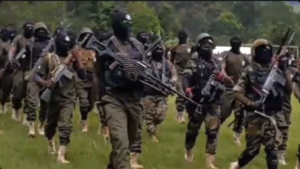
For the reasons advanced in this narrative, the people of the Southern Cameroons/ Ambazonia, should be prepared for a very long lockdown. Ambazonia Restoration Fighters will be putting out a message about the lockdown. Cameroon cannot deny us justice, lock up our brothers and sisters in jail, conduct six elections, and do nothing about the conflict and just expect that our people remain the fools that they consider us to be by rushing to vote. There will be no Cameroon elections in our territory, and any one attempting to carry out any campaign will have his or herself to blame.