


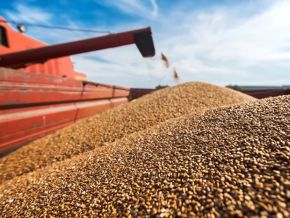
- North Africa’s wheat harvest is forecast to rise 15% to 20 million tons
- Morocco expects the strongest rebound, while Egypt’s output should exceed 10 million tons
- Higher regional production could reduce wheat imports and associated costs
North Africa’s wheat harvest is expected to reach 20 million metric tons in the 2025/2026 season, which ends in July. The forecast was included in the latest edition of the FAO’s “Crop Prospects and Food Situation” report, published on July 3.
Production at that level would be 15% higher than the previous season’s 17.4 million tons. It would also be 14.2% above the region’s five-year average of 17.5 million tons. However, the overall improvement masks significant differences among countries.
Among the region’s leading producers, Morocco is expected to record the sharpest rebound in wheat output. Its harvest is forecast at 5 million tons in 2026, up nearly 43% from a year earlier. The increase is mainly due to more favorable weather conditions, including better rainfall distribution across producing areas, as seen in most countries in the region.
Algeria follows, with wheat production expected to rise 16% to 3.5 million tons. Egypt forecasts a more modest 7% increase to 10.2 million tons. Tunisia and Libya, by contrast, expect their wheat output to decline.
Egypt Reaches a New Production Milestone
While Morocco stands out for the scale of its rebound, Egypt is drawing attention for the record level of its production. The harvest forecast for 2026 would take Egyptian wheat output above 10 million tons for the first time.
The improvement, also confirmed by Egypt’s Agriculture Ministry, is primarily driven by an expansion in the area planted with wheat. According to ministry data reported by local media outlet EgyptToday on July 9, wheat covered 1.58 million hectares in 2025/2026, nearly 252,000 hectares more than in the previous season.
Beyond the expansion of cultivated land, Cairo attributes the increase to the availability of subsidized seeds and the development of higher-yielding varieties intended to encourage farmers to expand their involvement in the cultivation of the strategic crop.
Authorities also cited the adoption of more resource-efficient farming practices on about 75% of the cultivated area, including laser land leveling, terrace farming and subsoiling. According to Egypt’s Agriculture Ministry, these practices helped improve productivity by about 20%.
Egypt’s larger harvest was also supported by government incentives. For the 2026 season, Cairo raised the guaranteed purchase price for locally grown wheat to 2,500 Egyptian pounds per ardeb, equivalent to 150 kilograms, from between 2,100 and 2,200 pounds in the previous season. The increase was intended to encourage farmers to expand the area planted with wheat.
Despite the positive trend, regional production remains insufficient to meet the population’s needs. North Africa, the continent’s largest wheat-importing region, imported an average of nearly 25 million tons annually between 2020 and 2025 to cover its production shortfall. However, increased domestic supply could reduce purchases from international markets and lower the associated import bill.
Stéphanas Assocle


