60 Days Missing, No Public Appearance, No Vice President: Is Cameroon Entering Its Most Dangerous Succession Crisis?
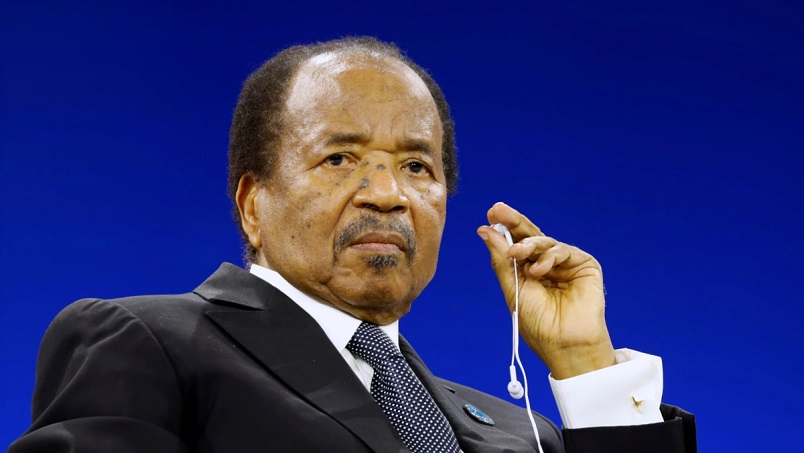
YAOUNDÉ, Cameroon — Sixty days have passed since President Paul Biya left Cameroon on what officials initially described as a brief private stay in Europe. Since then, the world’s longest-serving non-monarch leader has neither returned home nor appeared publicly before his people. He has delivered no speech, answered no questions, and offered no direct reassurance to a nation increasingly consumed by uncertainty over who is actually governing it.
For a president who has ruled Cameroon since 1982, prolonged absences abroad are not unprecedented. But this one is different.
It has now stretched to two consecutive months. During that time, Cameroon has faced mounting political anxiety, speculation over the president’s health, and growing concern over a constitutional vacuum created by the absence of a vice president—a position restored through constitutional amendments in April, but still left unfilled.
According to reports published several weeks ago by sources close to the presidency’s orbit, Biya underwent eye and knee surgery in Switzerland, leaving him temporarily unable to walk or board a flight back to Yaoundé. Those reports fueled hopes that his absence would soon end. Yet nearly three weeks later, there has been no public update from the presidency, no appearance by the president, and no indication of when—or if—he will return.
The silence has become almost as significant as the absence itself.
In every functioning democracy, continuity of executive authority is fundamental. Leaders may travel. They may undergo medical treatment. They may even govern from abroad for brief periods. But they are expected to communicate with the citizens they govern.
Cameroon has witnessed none of that.
Instead, the country has been left to infer the condition of its head of state from rumors, unofficial briefings, and contested presidential decrees.
That is where the constitutional dilemma becomes even more troubling.
If President Biya is sufficiently capable of exercising presidential authority, why has he still not appointed the vice president provided for under the revised Constitution? The office exists precisely to ensure continuity of state authority during periods of incapacity or absence. Leaving it vacant while remaining absent for sixty days has only deepened public speculation about the true state of presidential decision-making. Analysts say the failure to fill the position is now the clearest indicator that the presidency is effectively vacant.
Recent events have only intensified those doubts.
In June, a forged presidential decree purporting to appoint Oswald Baboke as vice president reached the state broadcaster (CRTV) before being identified as fraudulent. The episode exposed deep anxieties over succession inside the Cameroonian state itself.
Subsequently, controversy surrounded a decree retiring senior military officer General Hector Tchemo after reports that he challenged its authenticity and questioned whether it genuinely bore President Biya’s signature. More recently, another decree promoting several officers to the rank of brigadier general has also become the subject of public debate.
Whether those later decrees were valid or not is almost secondary to the broader issue they illustrate.
Every disputed decree reinforces the same question:
Who is actually governing Cameroon?
Public suspicion has increasingly focused on the presidency’s powerful Secretary-General, Ferdinand Ngoh Ngoh, whose influence has long been regarded as extensive within the presidential administration. No official evidence has established that he or any other official has exercised presidential powers improperly, but the absence of direct communication from Biya has allowed speculation to flourish unchecked.
Government officials have repeatedly insisted that President Biya remains in charge and will return “very soon.” Yet no timetable has been announced, and no public appearance has accompanied those assurances.
That continuing uncertainty has profound consequences
Cameroon faces persistent challenges in the Far North, and in the Southern Cameroons. At the same time, questions surrounding political succession have become impossible to ignore.
Against that backdrop, opposition figure Issa Tchiroma Bakary—who rejects the official outcome of the 2025 presidential election, has publicly criticized the prolonged absence and stated his intention to return to Cameroon before August 14, a date associated with a planned national military parade.
Whether that return materializes or not, the symbolism is unmistakable.
States are built not merely on constitutions, but on visible authority.
When a president disappears from public view for sixty days, says nothing to the nation, leaves a newly created vice presidency vacant, and watches successive controversies emerge around presidential decrees without personal clarification, the resulting uncertainty becomes a political fact in itself.
If Biya returns this weekend, as speculation say, he may yet reassure a deeply anxious nation.
If he does not, Cameroon could move into an unprecedented phase of constitutional uncertainty in which the question is no longer simply where the president is, but where executive authority truly resides.
That question—not rumor, is now at the center of Cameroon’s unfolding succession story.