


Nollywood’s current renaissance is usually told through the people the audience can see: the actors who carry a scene, the directors who frame it, the producers who finance it, and increasingly, the costume and set designers who give a production its texture. But a quieter transformation is taking place far from the screen, in the editing suite, where raw footage is shaped into the films and trailers that draw attention to the exclusive releases on Netflix, Amazon Prime, YouTube and an expanding network of cinema chains.
As the industry has shifted from a volume-driven production model to one chasing quality and global reach, editing has become one of its most decisive, if least celebrated, disciplines. A film can boast great cinematography, on point acting,appear well produced, yet still fail to find an audience if the story is not aligned with purposeful editing. And before most viewers ever see the full film, it is the trailer, often just sixty to ninety seconds, that decides whether they will.
Nollywood’s growing competition for audience attention has raised the stakes for both long-form editing and trailer production. With more titles released weekly across cinemas and streaming platforms than, the window for a film to capture interest has shrunk considerably. Editors are now tasked with a job that sits at the intersection of craft and marketing: distilling a two-hour narrative arc into a preview that can stop a stranger mid-scroll and convert that pause into a cinema ticket or a streaming click.
This is not simply a technical exercise. It requires the same instincts that shape a review or a pitch, knowing which line, which glance, which musical swell will carry the emotional weight of a film’s runtime. As Nollywood’s productions grow more ambitious, so has the demand for editors who can move fluidly between the patient, structural work of a full narrative edit and the high-velocity language of a trailer built to sell in seconds.
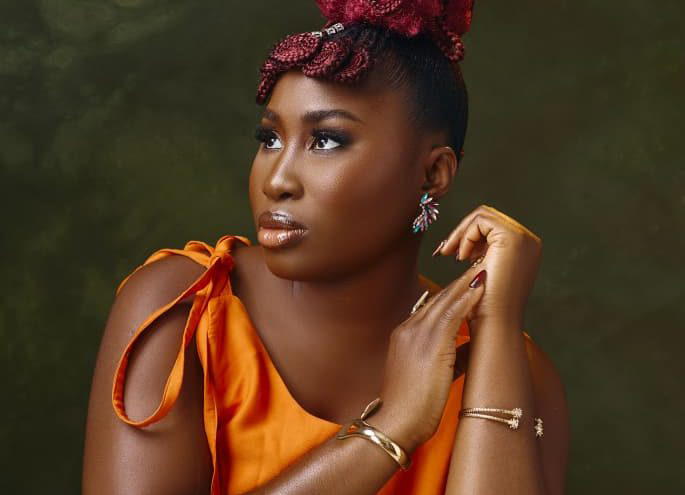
This is where professionals like Rosemary Nwosu come in one of the professionals who illustrate this shift. Known within the industry Romey, she has built a reputation as a film editor, creative director and trailer editor over six years, working largely behind the timeline to produce the taut, emotionally charged previews that now announce some of Nollywood’s most anticipated titles.
Her route into editing was unconventional. Nwosu studied Mass Communication at Abia State University, Uturu, and began her career in front of the microphone, first as an on-air personality, then as an intern in print journalism at New Telegraph in Lagos. That grounding in narrative and audience instinct followed her into post-production, where she eventually built Just Trailer, the editorial brand through which she is rendering high-impact promotional cutting across the industry.
Just Trailer’s signature approach pairs rhythmic editing with meticulous sound design, turning a feature film, documentary or commercial into what Rosemary labels a “super engaging and sellable” trailer. It is a simple description for an exacting job: compressing a full narrative arc into a burst of pure momentum without losing the emotional core of the story.
Rosemary’s trailer work now spans some of the most closely watched titles in recent Nigerian cinema, as she has collaborated with acclaimed producer and director Kayode Kasum on two projects. Their professional paths first crossed on Ajosepo, the wedding drama produced by Bolaji Ogunmola and still running in cinemas nationwide, starring Timini Egbuson, Toyin Abraham and Odunlade Adekola. Her second collaboration with Kasum is titled Alahun, a mystical odyssey directed by Dare Olaitan and featuring Odunlade Adekola, Ibrahim Chatta and Lateef Adedimejiand billed for cinema release soon.
On both productions, her editorial choices helped generate significant early buzz ahead of release, a reminder of how much of a film’s commercial momentum is decided long before the opening weekend.
Today, her portfolio extends beyond these two projects. She has produced trailers for The Boy Who Gave, Allison Precious Emmanuel’s story of sibling sacrifice after loss; Blue Honeymoon, Jide Blaze and Stan Nze’s drama about a marriage under financial strain; and Promise Egwu’s Jane. Beyond trailers, she also served as Assistant Editor and Digital Imaging Technician on Onobiren, the acclaimed feature tracing one woman’s journey from Warri to Lagos, showing she is as comfortable with the granular demands of a full narrative edit as she is with the compressed urgency of a trailer cut.
Nwosu’s dual fluency, structural editing on one side, trailer production on the other, reflects a broader recalibration happening across Nollywood. As productions scale in ambition and international visibility, the industry is increasingly recognising that the people shaping how a story is told and how it is sold are as central to a film’s success as those in front of the camera.
Trailers, once regarded as a marketing afterthought, are now understood as a craft in their own right, one that can determine whether months of shooting and post-production find the audience they deserve. Editors like Rosemary, working without on-screen credit or public recognition, are quietly setting the terms for how new Nollywood productions announce themselves to the world. In an industry where first impressions increasingly happen in ninety seconds, that work may be the most important scene a film never shows.


