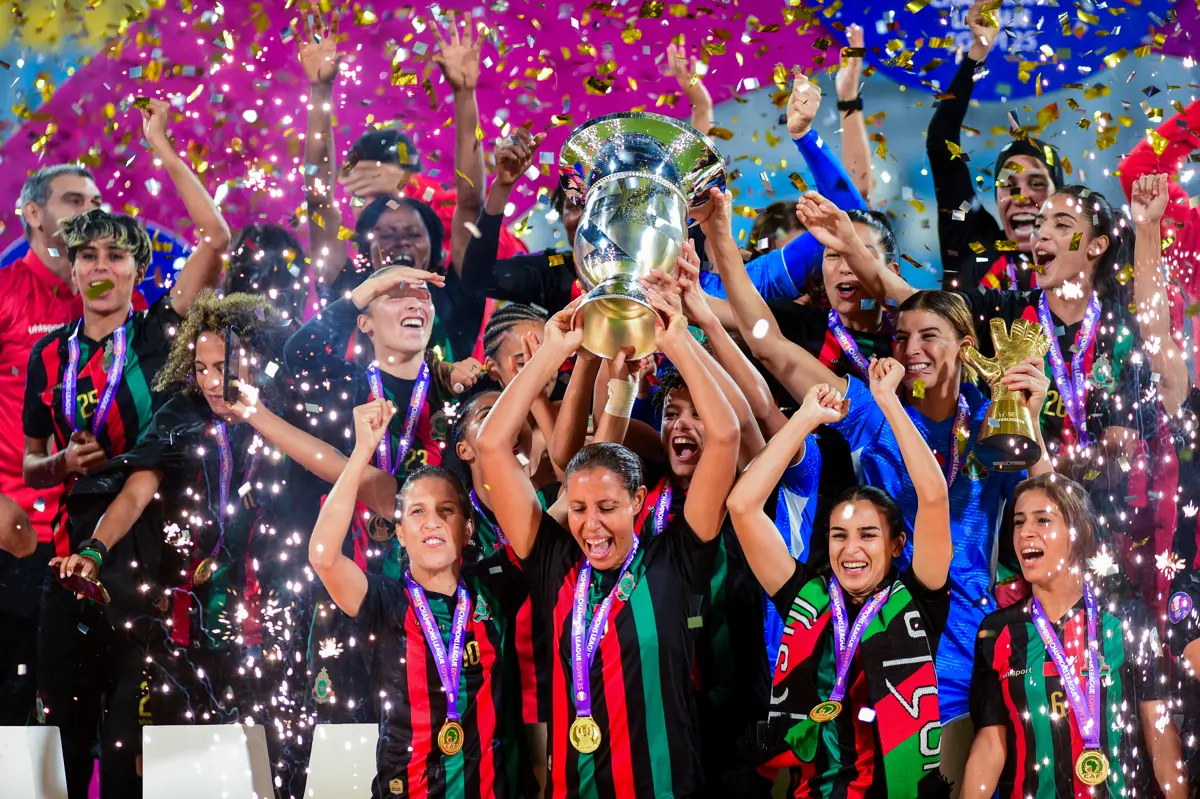
Africa’s sports economy is entering a decisive period of transformation. Rising digital adoption, a young and highly engaged population, and growing international interest in African football are creating opportunities that extend far beyond traditional broadcasting.
Saeed Zarrouk believes the continent is ready to claim a larger position within the global sports economy.
The international entrepreneur, investor, Chairman of Zar Cap, and Senior Advisor to DAZN Group is working at the intersection of capital, media, technology, and professional sports. His focus is connecting major international institutions with opportunities across Africa and other emerging markets.
Zarrouk became one of the youngest executives to enter a senior advisory role at a major global media company. Through his work with DAZN, he has focused on strategic opportunities across international markets, including the expansion of sports distribution and commercial partnerships throughout Africa and the Middle East.
His appointment reflects the changing nature of leadership within global media. As streaming platforms compete for audiences across multiple continents, regional knowledge, government relationships, and an understanding of local business environments have become increasingly valuable.
Zarrouk has positioned himself as a bridge between these worlds.
One of Zarrouk’s primary areas of focus is the long term commercial potential of African football.
Despite producing some of the world’s most celebrated players and attracting an enormous domestic audience, African football has historically faced challenges surrounding international distribution, media rights, infrastructure, sponsorship, and monetisation.
The opportunity, however, is significant. Africa has the youngest population of any continent, with hundreds of millions of potential fans increasingly accessing sports through smartphones and digital platforms. For global broadcasters, investors, sponsors, and technology companies, this represents a market with considerable room for growth.
Zarrouk is leading preparations surrounding a potential strategic relationship between DAZN and the Confederation of African Football. The ambition is to explore ways of expanding the international reach, visibility, and commercial value of African football.
Such a relationship could help present African competitions to wider audiences while creating new opportunities for federations, clubs, players, sponsors, and supporters.
For Zarrouk, the goal is larger than acquiring broadcast rights. It is about building an ecosystem in which African sports properties can reach their full international value.
“Sport is one of Africa’s most powerful cultural and economic assets,” Zarrouk said. “The opportunity is to combine the continent’s talent and passion with global distribution, technology, capital, and commercial partnerships.”
Through Zar Cap, his international investment and advisory company, Zarrouk works with global organisations on strategic investments, partnerships, and commercial opportunities.
His approach reflects a broader shift in international investment. Rather than viewing Africa solely as an emerging consumer market, a growing number of investors are recognising the continent as achnology, and cultural influence
Sport sits at the centre of many of those opportunities.
Broadcasting is only one component of the modern sports economy. Streaming subscriptions, sponsorship agreements, digital advertising, ticketing, merchandise, gaming, data, social media, and direct relationships with supporters all contribute to the value of a competition or sporting brand.
Zarrouk’s strategy is to bring these areas together.
This is particularly important in Africa, where fragmented markets and differences in infrastructure can make expansion more complicated. A successful strategy must recognise that Africa is not a single market. Each country has its own audience behaviour, regulations, payment systems, languages, and commercial priorities.
Zarrouk’s role involves helping international organisations understand those differences while identifying opportunities that can operate across borders.
Based in the United Arab Emirates, Zarrouk also represents a generation of business leaders using the Gulf as a strategic link between Africa, Europe, Asia, and the wider Middle East.
The UAE has become an increasingly importantistics, energy, media, and professional sports. Its geographic position and international business environment have made it a natural base for companies seeking access to multiple high growth regions
Zarrouk has emerged as a strategic liaison for DAZN across the UAE and Africa, developing relationships with investors, institutions, rights holders, and commercial partners.
His work demonstrates how the relationship between the Gulf and Africa is evolving. Capital remains important, but modern partnerships are increasingly built around technology, expertise, distribution, and shared commercial development.
For African sports organisations, relationships with global media groups and Gulf based investors can provide access to international audiences and new of the world’s youngest and fastest growing consumer markets
Zarrouk’s position allows him to connect both sides of that equation.
Previously recognised byForbes Middle East’s 30 Under 30, Zarrouk has developed a profile that extends across investment, global media, and sports.
His rise also reflects a wider change within international business. Younger executives are entering leadership positions with a more global perspective, often operating across several industries and regions at the same time.
Zarrouk does not separate media from investment or sports from technology. Instead, he views them as parts of an interconnected global economy.
That perspective is especially relevant in Africa, where mobile technology has allowed consumers to move rapidly toward digital platforms. The next phase of growth in African sports will likely be shaped not only by what happens inside stadiums, but also by how competitions are packaged, distributed, financed, and experienced online.
The organisations that understand this shift could play a defining role in the future of the continent’s sports industry.
International interest in African sports is increasing, but the long term outcome will depend on how partnerships are structured.
For African football to realise its full commercial potential, greater visibility must translate into meaningful and sustainable value for the institutions, teams, athletes, and communities that make the sport possible.
Zarrouk believes the strongest partnerships will be those that combine international scale with local understanding.
His work through Zar Cap and DAZN is centred on that principle. By bringing together global media platforms, institutional capital, regional expertise, and African sporting organisations, he is helping build a commercial framework designed for the next generation of sports consumption.
Africa does not lack talent, supporters, or cultural influence. The challenge has been building the infrastructure and international partnerships required to convert those strengths into lasting economic value.
For Zarrouk, that challenge represents one of the most important opportunities in global sports.
“Africa should not simply be viewed as the next market for international sports,” Zarrouk said. “It should be recognised as one of the forces that will shape the future of the global sports industry.”
As media, technology, and capital continue to converge, Zarrouk is betting that Africa will no longer sit at the edge of the conversation. It will be at its centre.