

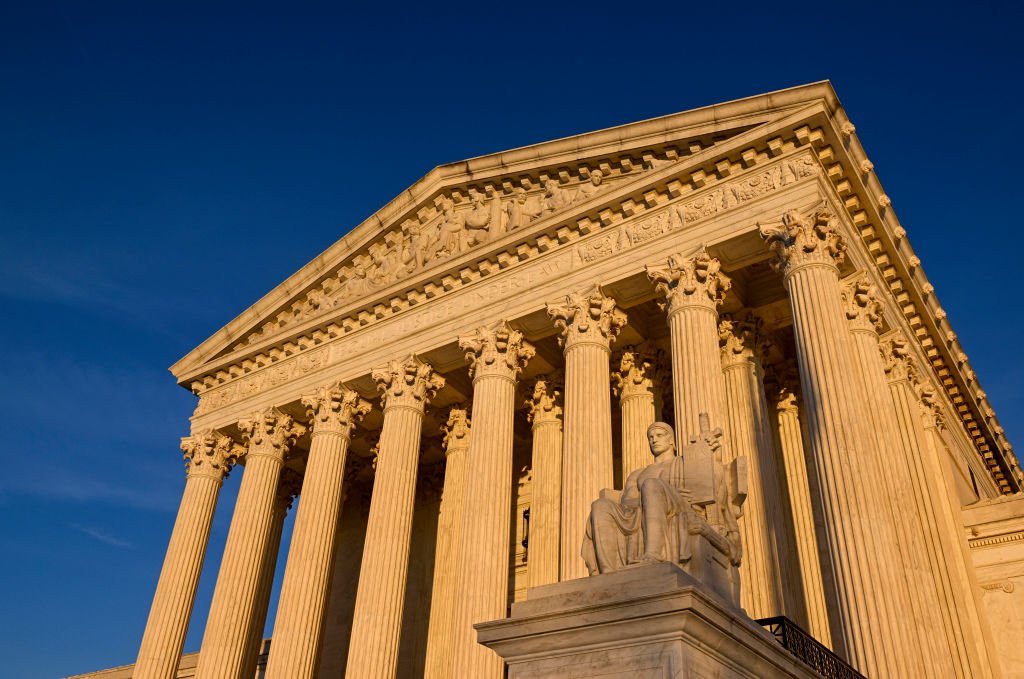
The Supreme Court has made a mess of the law concerning the Second Amendment. Two years ago, in the last Supreme Court decision about the Second Amendment, United States v. Rahimi, Justice Ketanji Brown Jackson in a concurring opinion noted how “lower courts are struggling” with recent precedent concerning this amendment and that “confusion plagues the lower courts.”
There are two cases on the docket this term regarding gun laws and they likely will exacerbate, not clear up, the confusion. The court could – and should – solve much of this problem by treating the Second Amendment like other rights in the Constitution.
Why the great confusion in the law of gun rights?
From 1791 until 2008, the Supreme Court did not strike down one federal, state, or local gun regulation. In the handful of cases about the Second Amendment, the court said that it means what it says: it is a right to have guns for militia service.
Nevertheless, in 2008’s District of Columbia v. Heller, the court, in an ideologically divided 5-4 ruling, declared unconstitutional a District of Columbia ordinance generally prohibiting ownership or possession of handguns. What is often forgotten, though, is that Justice Antonin Scalia’s majority opinion was explicit that the Second Amendment is not absolute. As he wrote: “Although we do not undertake an exhaustive historical analysis today of the full scope of the Second Amendment, nothing in our opinion should be taken to cast doubt on longstanding prohibitions on the possession of firearms by felons and the mentally ill, or laws forbidding the carrying of firearms in sensitive places such as schools and government buildings, or laws imposing conditions and qualifications on the commercial sale of arms.”
Lower courts in hundreds of cases struggled to apply Heller. But the Supreme Court contributed to the confusion by not deciding another major case about the scope of Second Amendment rights for 14 years until New York State Rifle and Pistol Association v. Bruen. In Bruen, the court, 6-3, struck down a New York law that required a permit to have a gun in public and necessitated that a person show a safety need for that permit. Justice Clarence Thomas wrote the opinion for the court and stressed that the test developed in many of the lower courts, essentially intermediate scrutiny, was not sufficient to protect gun rights. Under intermediate scrutiny, a government action must be substantially related to an important government purpose. One would have would have thought that if the court wanted to provide more protection for rights under the Second Amendment, it would have adopted strict scrutiny. This is the test that is used for government actions infringing fundamental rights or discriminating on the basis of race or national origin.
Instead, as in Heller, the court rejected using the levels of scrutiny in Second Amendment analysis altogether. Thomas wrote “the Second Amendment ‘is the very product of an interest balancing by the people’ and it ‘surely elevates above all other interests the right of law-abiding, responsible citizens to use arms for self-defense.’” The court said that it was rejecting any analysis of means and ends, such as whether the government regulation serves a compelling interest and whether it is necessary to achieve it. The court said that the Second Amendment is an unqualified right and that “[t]o justify its regulation, the government may not simply posit that the regulation promotes an important interest. Rather, the government must demonstrate that the regulation is consistent with this Nation’s historical tradition of firearm regulation. Only if a firearm regulation is consistent with this Nation’s historical tradition may a court conclude that the individual’s conduct falls outside the Second Amendment’s ‘unqualified command.’”
There is much that is questionable about this approach. It assumes that the absence of a particular type of regulation historically means that the Second Amendment was meant to prohibit it. The decision took for granted that history provided an answer, when in reality historical practices often were divergent and not useful in analyzing modern weapons and contemporary needs for regulation. The court was also unclear about what history was relevant and how it was to be determined.
In any event, Bruen unleashed challenges to every type of gun regulation. There are likely hundreds of cases just about the constitutionality of federal and state laws that prevent ex-felons from having guns. And, predictably, the lower courts have struggled with the myriad of gun issues in terms of applying the court’s historical approach. As Jackson observed about the post-Bruen landscape, these courts “have come to conflicting conclusions on virtually every consequential Second Amendment issue to come before them.”
The court’s only post-Bruen case so far, United States v. Rahimi, reaffirmed Bruen’s historical approach, but offered little clarity for lower courts or litigants. In Rahimi, the court upheld a federal statute, 18 U.S.C. § 922(g)(8), that makes it a federal crime for a person under a restraining order in a domestic violence case from having a firearm. In 1791, when the Second Amendment was adopted, there were no laws like this. But Chief Justice John Roberts, writing for the court, said “[s]ince the founding, our Nation’s firearm laws have included provisions preventing individuals who threaten physical harm to others from misusing firearms. As applied to the facts of this case, Section 922(g)(8) fits comfortably within this tradition.”
Quite importantly, Roberts’ majority opinion explicitly used the historical approach from Bruen. Nowhere in the majority opinion does the court actually discuss the justification for the statute: protecting victims of domestic violence, especially women. And there is no mention or application of the levels of scrutiny.
Although Rahimi was an 8-1 decision, there were seven different opinions and no agreement on how the historical analysis is to be done. Rahimi thus did nothing to solve the post-Bruen confusion.
This term
There are two Second Amendment cases on the court’s docket this term. Wolford v. Lopez, which was argued on Jan. 20, is a challenge to a Hawaii law that prohibits the carrying of licensed concealed handguns on private property open to the public unless the property owner affirmatively gives express permission to the handgun carrier. For instance, a person may bring a gun into a restaurant only with the owner’s permission.
The oral argument left a strong sense that the court’s conservative majority is prepared to strike down this law. For example, at oral argument, Justice Samuel Alito said that requiring “express consent from the owner of the restaurant” is “a violation of the right that the Court held is protected by the Second Amendment in Bruen, which is the right of law-abiding citizens to carry a firearm … outside of the home for purposes of self-defense.”
But under Bruen’s approach, why wouldn’t the longstanding right of property owners to determine if guns could be brought on their property be determinative? Several justices wanted to analogize the Second Amendment to the First Amendment. But it would surely be constitutional for the government to empower private property owners to exclude demonstrations from their property. As is so often the case, the court likely will read history to support the conclusion it desires.
On Monday, March 2, the court will hear oral arguments in United States v. Hemani. The issue there is whether 18 U.S.C. § 922(g)(3), which prohibits the possession of firearms by a person who “is an unlawful user of or addicted to any controlled substance,” violates the Second Amendment as applied to the defendant. Again, it is hard to see how history can provide an answer to this issue. This type of regulation did not exist in 1791 when the Second Amendment was ratified or 1868 when the Fourteenth Amendment was adopted. But that does not mean there was a desire to preclude such government action; it just wasn’t considered. And it is even more difficult to see these two cases as offering clarity as to how courts should engage in the historical approach under Bruen.
The solution
The confusion in Second Amendment analysis will continue until the Supreme Court abandons the historical approach adopted by Bruen. The court in Bruen confuses two distinct questions: is there a Second Amendment right to possess a weapon, and if so, is the government justified in infringing it? Originalists believe that history can provide the answer to the former question (although non-originalists would disagree that history should even determine this).
Yet historical practice is not used in any other area in determining whether the government justification is sufficient. Instead, that is the role of the levels of scrutiny in determining whether the government has a sufficient justification and whether the means are sufficiently related to the ends. If the Second Amendment is deemed a fundamental right, the questions should be whether the government has a compelling interest and whether its action is necessary to achieve that interest.
Admittedly, the levels of scrutiny provide court with great discretion. But the levels of scrutiny are familiar to courts and they are used to applying them. Indeed, last term, in a number of cases under the First Amendment, the Supreme Court’s analysis turned on the level of scrutiny, such as in Free Speech Coalition v. Paxton, TikTok v. Garland, and Mahmoud v. Taylor.
The conservative justices who want to protect gun rights could prescribe strict scrutiny. Liberal justices, in dissent, likely would argue for intermediate scrutiny. If strict scrutiny is adopted, the analysis would then focus on the same basic questions as in all constitutional law when there is a fundamental right or race discrimination: Does the government have a compelling purpose? Is there a less restrictive alternative to achieve the government’s goal?
And that is exactly what the analysis should focus on in cases involving individual rights.
