




25 May 2026
Last update:3 June 2026

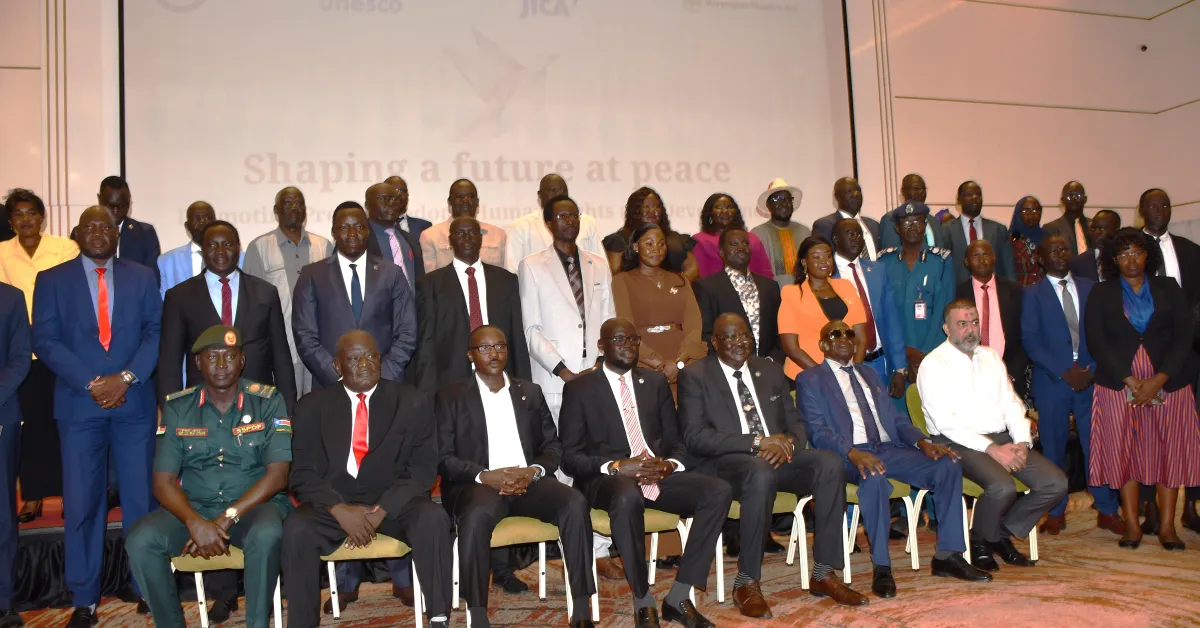
UNESCO, in collaboration with South Sudan’s Ministry of Information, Communication Technology and Postal Services, the Association for Media Development in South Sudan (AMDISS) and the Union of Journalists in South Sudan (UJoSS) recently brought together around 200 participants from across the country for a three-day national conference in Juba to mark World Press Freedom Day under the theme “Shaping a Future at Peace: Promoting Press Freedom, Human Rights and Development, through Elections.”
©UNESCO
Over the three days, journalists, media professionals, security representatives, development partners, civil society, and State Ministries of Information shared perspectives and, at times, contrasting opinions on the challenges facing the media.
The gathering came at a pivotal moment, as South Sudan looks ahead to elections in December 2026, with many in the media highlighting the pressures they face in their work – from limited rencerns
Against this backdrop, the discussions centered on what it will take for journalists to do their jobs safely and independently, and why that matters to help build peace in South Sudan. Conversations covered press freedom, access to information, journalist safety, and the role of media in supporting a peaceful and democratic processes
Participants from media, government and the security sector spoke candidly about tensions that arise in the field and explored practical ways to build trust, improve communication, and make reporting safer, especially around public events and the electoral period
©UNESCO
We recognize that press freedom and freedom of expression are constitutional rights that must be protected within the framework of the law, professionalism and ethics. The relationship between media and security institutions should not be defined by confrontation, fear, or mistrust. It should be guided by cooperation, professionalism, dialogue, and mutual respect
Hon. Ateny Wek Ateny, Minister for Information, Communication, Telecommunication and Postal Services, South Sudan
©UNESCO
Press freedom is a foundation for peace, development and democratic participation. As South Sudan looks toward elections, journalists must be able to work safely, independently and professionally so that all people can access trustworthy information and take part in decisions that affect their lives
Abdul Wadood, UNESCO Officer in Charge, South Sudan
©UNESCO
Press freedom promotes other freedoms. When the press is free to report, then other human rights can be protected and people can speak freely when they are violated. Press freedom can help promote peace in our society
Patrick Oyet, President of the Union of Journalists of South Sudan
©UNESCO
There are more women now in the media, but they still face challenges such as discrimination, online abuse and sexual harassment. This must change
Ayaa Irene, Executive Director of the Association for Media Development in South Sudan
©UNESCO
It is our wish to see an ever-evolving, professional fourth estate in South Sudan that not only provides constructive scrutiny of government but also champions the voice of people and provides a strong platform for tomorrow’s media practitioners to develop
Robert Iga Afedra, acting Country Director for Norwegian People’s Aid, South Sudan
Throughout the conference, participants took a closer look at the reality of South Sudan’s media landscape, acknowledging both progress and persistent gaps. Discussions included the sustainability of media institutions, emerging challenges such as digital transformation, artificial intelligence, and the spread of misinformation and hate speech. Questions of ethics, public service broadcasting, and gender-responsive reporting also came into focus.
One thread ran consistently through the three days: the need to improve relations between journalists and security institutions. Dedicated sessions examined how security actors can better protect journalists, particularly during moments of tension such as elections or public gatherings, and how both sides can engage constructively in high-pressure situations
Many participants highlighted the need for stronger protections, especially for women journalists, who often face additional risks both online and offline.
UNESCO reaffirmed its commitment to working alongside the Government of South Sudan, media institutions, civil society, and partners to support a safer, more open media where journalists can do their work safely, and the public can stay informed.
The conference was held to commemorate World Press Freedom Day 2026, and made possible thanks to the support of Norwegian People’s Aid and the Japan International Cooperation Agency (JICA) in South Sudan.
Thumbnail
play_arrow
©UNESCO





