

Second Amendment
Some noncitizens may have Second Amendment rights, federal appeals court says

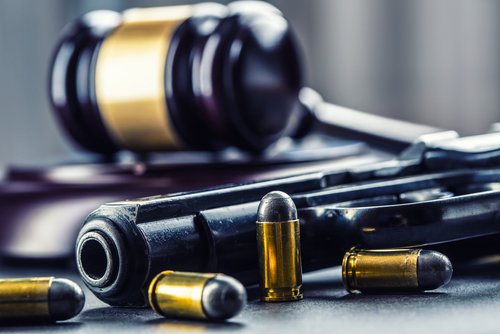
While upholding the firearms conviction of a Guatemala native who had been illegally living in the United States for a decade, the majority on a federal appeals court panel said earlier this week the rights of some noncitizens to bear arms could still be protected by the Second Amendment. (Image from Shutterstock)
While upholding the firearms conviction of a Guatemala native who had been illegally living in the United States for a decade, the majority on a federal appeals court panel said earlier this week the rights of some noncitizens to bear arms could still be protected by the Second Amendment, Courthouse News Service reports.
A three-judge panel of the 6th U.S. Circuit Court of Appeals at Cincinnati upheld the conviction of Milder Escobar-Temal for unlawful possession of a firearm under a federal law that prohibits a person unlawfully present in the United States from possessing firearms. But two of the judges said immigrants who have developed “substantial connections” with this country do enjoy constitutional protections, according to Courthouse News Service.
Senior U.S. Circuit Judge Jane Branstetter Stranch, an appointee of former President Barack Obama, wrote the majority opinion. She pointed out that the U.S. Supreme Court has referred to Second Amendment rights as applying to “citizens,” according to Courthouse News Service.
“But at no point in these opinions did the Supreme Court or this circuit, even in dicta, limit ‘the people’ to citizens,” Stranch wrote in the Dec. 15 ruling. “The fact that the Second Amendment certainly encompasses all U.S. citizens does not mean that it excludes those who are not.”
Judge Amul R. Thapar, an appointee of President Donald Trump, filed a separate opinion concurring in the judgment but disagreed with the majority’s conclusion that a person living in the United States illegally could be entitled to carry firearms, according to Courthouse News Service.
“’We the people of the United States’ means something specific—the citizens of the United States. Constitutional text, founding-era history and Supreme Court precedent all dispositively show this,” Thapar wrote.
Write a letter to the editor, share a story tip or update, or report an error.
