



Jaume Portell
South Africa has a lesson for the whole world
2 min
Few people in the world generate more consensus than the South African politician Nelson Mandela. His story is unrepeatable: after almost three decades in prison, imprisoned by the white supremacist regime that had ruled South Africa since 1948, Mandela won the country’s first democratic elections in 1994. With the support of the majority of the black population, he governed without a spirit of revenge against the whites who had turned racial segregation into a state policy. Many whites, who feared being expropriated and losing everything at the hands of an extremist leader, were surprised by the kindness of Mandela – whom, a few years earlier, many had considered a dangerous terrorist–.
I often think that apartheid, treated as a historical rarity of South Africa, tells us a lot about the world and globalization. The great terror of white South Africans, aware of being a minority, was that black people – whom they needed as labor – would one day rise up against them and destroy their civilization. That is why they were willing to live behind fences, protected by the arms of an authoritarian regime, hoping that black people would never dare to cross them, and trusting that, if they did, they would be killed or arrested. More than three decades after the fall of that regime, reinforcing apartheid is the most attractive political option for millions of Westerners: we cannot live without consuming the natural resources of Africans, but we demand that Africans do not come, and that someone stop them.
Cargando
No hay anuncios
To guarantee social peace, Mandela did not implement a large part of the electoral program with which he had won the elections.The result is palpable today: whites, who represent 7% of the population, control more than 73% of agricultural land. The policies of the African National Congress (ANC), the ruling party, favored the creation of a black business class, with access to mining resource concessions and public contracts. Some became millionaires, while poor South Africans continued to live in precarious urban settlements. With Mandela’s departure from the presidency after a single term, his party dedicated itself to clientelism while neglecting the management and maintenance of key infrastructure. The ANC, which has been in power for thirty-two years, no longer has an absolute majority in a country that suffers chronic power outages.
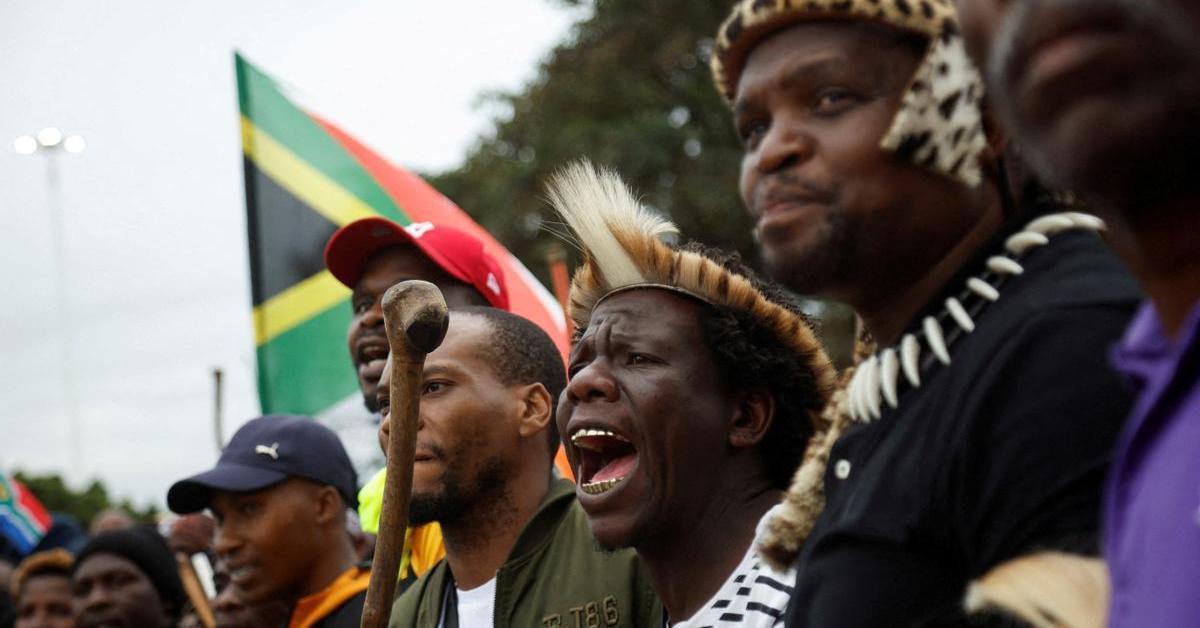
With 33% unemployment soaring to 60% for the youngest, episodes of persecution against African migrants have become the favorite sport of a very mobilized part of South Africans. Unable to reverse the historical injustice of land distribution, many black South Africans are lashing out at workers, shopkeepers, or medical personnel from Zimbabwe, Somalia, or Nigeria. Some African countries are already organizing repatriation flights for their citizens
Cargando
No hay anuncios
The myth of Mandela’s forgiveness – according to which his example had served for South Africans to create a new nation based on respect for diversity – is collapsing at full speed. It is South Africa’s latest lesson to the world: many oppressed people, resigned to systems they cannot overthrow, think that being executioners against the weakest will return them the happiness they deserve





