


South Africa’s Government Pleased as Trump Struggles Ahead of Midterms
– July 9, 2026
3 min read
Inflation and living costs have replaced immigration as a top concern for American voters, leaving Republicans exposed ahead of the 2026 midterms and Democrats well placed to retake the House. This will please South Africa’s government, which has long bet that a weakening of the Trump administration is the surest way to fix its relationship with Washington.

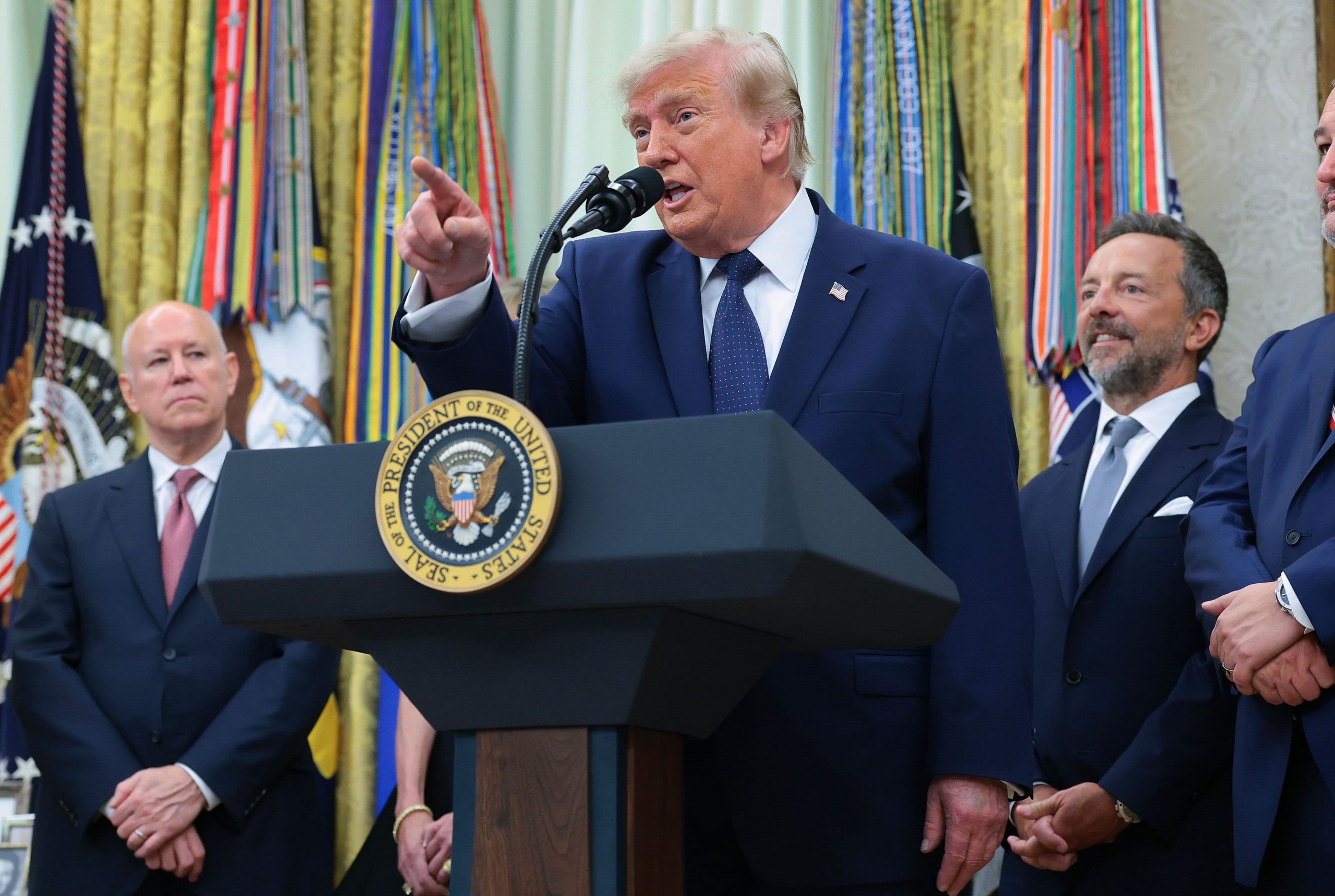
Midterm elections are scheduled for November in the United States (US), which will see all seats in the US House of Representatives and a third of the seats in the Senate up for grabs, with the Republicans facing the possibility of losing the House. This is welcome news for South Africa’s government, which has had a fraught relationship with the Trump administration and is hoping that a divided Congress improves its standing in America
(The midterms are the general elections held between American presidential elections – in the middle of a presidential term – giving them their name.)
Midterm elections have historically been unforgiving to the party occupying the White House. Since the Second World War, the president’s party has almost always lost House seats in the midterms as voters seek to impose a check on executive power. Donald Trump enters the 2026 midterms facing the same disadvantage. Although the reopening of the Strait of Hormuz has eased fears of a prolonged global energy shock and inflation spike, it has done little to improve the administration’s standing with voters.
Trump’s disapproval rating is now significantly higher than it was at the equivalent stage in 2018, while concerns over inflation, the cost of living, and broader economic uncertainty continue to dominate voter concerns. As a result, economic conditions are likely to define the electoral outcome
According to The Economist, US voters view inflation and prices as the most important voter issue, with 33% of Republicans and 30% of Democrats viewing it as the primary issue
This is followed by jobs and the economy, which Americans view as the second-most important issue, with 13% of both Democrat and Republican voters identifying it as their top concern
This is then followed by healthcare at 12%
Democrats are therefore expected to campaign primarily on affordability, healthcare, and protecting social programmes, portraying Republicans as responsible for higher household costs. Republicans, by contrast, are likely to argue that tax cuts, deregulation, and continued domestic investment will restore growth, while warning that Democrat policies would worsen inflation and expand government spending
Aggregated polling data from pollster Nate Silver shows the Democrats having the support of 48% of voters and the Republicans having 42%
Republicans currently hold narrow majorities in both chambers of Congress, controlling the House with 218 seats to the Democrats’ 212 (there are also one independent and four vacant seats in the 435-seat House) and the Senate with 53 seats the to the Democrats’ 45 (there are two independent senators). The House is more vulnerable as the Democrats would only need a net gain of three seats to gain control of it
Immigration, which has been one of Trump’s and the Republicans’ strongest issues, is also no longer a dominant issue in the minds of many voters
This follows the sharp decline in illegal border crossings during the administration’s first months, with voter attention now increasingly turning to economic conditions
In April, polling showed that only 9% of Americans consider immigration to be a top issue. This a significant decrease relative to the lead-up to the 2024 presidential election, where 16% of voters considered it to be a top issue in March of that year
While Republicans retain an advantage on border security, elections are rarely decided by a party’s strongest issue if voters are preoccupied with another. Unless economic sentiment improves substantially before November, immigration alone is unlikely to prevent Republican losses
Democrats are well positioned to regain the House, while Republicans remain better placed to retain the Senate because most of the seats up for election in that legislature are fairly safe Republican seats. Such a result would sharply constrain Trump’s remaining second-term agenda. Democrat control of the House would almost certainly bring tighter scrutiny of executive actions and repeated budget confrontations. Any major legislative ambitions – from tax reform to immigration legislation – would face obstacles, leaving the administration increasingly dependent on executive orders for the rest of its term. For Trump, the 2026 midterms will determine whether the remainder of his presidency is characterised by legislative momentum or political gridlock.


