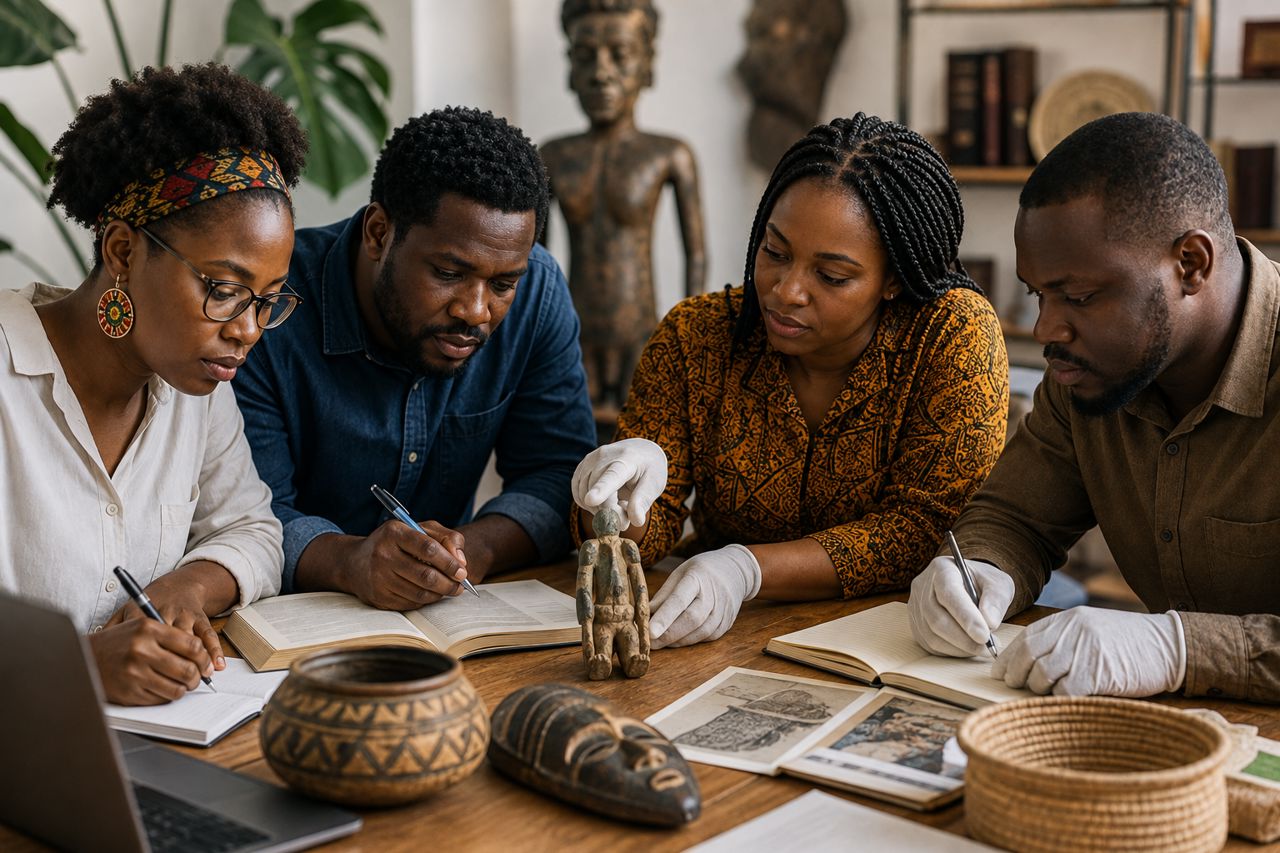
The first course, Protocols of Justice for the Restitution of Cultural Property, focuses on the legal, ethical and justice questions that shape restitution.
- Art & Culture
Devdiscourse News Desk
| Pretoria | South Africa
Southern African heritage professionals are gaining practical skills to support the return, restitution and long-term care of cultural property through a regional training initiative led by UNESCO, AUDA-NEPAD and the University of Pretoria. The programme comes at a time when calls for the return of African cultural objects are becoming more visible, increasing the need for people who understand the legal, ethical, technical and community dimensions involved in bringing heritage back to its places of origin.
The initiative, titled Reclaiming Our Heritage: Harnessing Educational Pathways for the Return and Restitution of Cultural Property in Southern Africa, is being delivered through two online, non-credit-bearing certificate courses from 11 to 28 August 2026. Twenty-seven participants from Botswana, Eswatini, Lesotho, Malawi, Mozambique, Namibia, South Africa, Zambia and Zimbabwe are taking part, bringing experience from museums, cultural institutions, government bodies and heritage organisations across the region.
Restitution Requires More Than the Return of an Object
The first course, Protocols of Justice for the Restitution of Cultural Property, focuses on the legal, ethical and justice questions that shape restitution. Participants are examining international conventions and protocols alongside national and customary legal systems, while also looking at the threats cultural heritage can face and the different approaches used to protect it.
Case studies are helping professionals connect these frameworks with real situations in their own countries and institutions, giving them space to consider how restitution should work when communities, museums, governments and other stakeholders have different responsibilities and expectations. This practical focus is important because decisions around cultural property are rarely simple, especially when objects carry deep historical, spiritual and social meaning.
Indigenous Knowledge Takes a Central Place in Conservation
The second course, Integrated Indigenous Conservation Methods, turns attention to what happens before, during and after cultural objects are returned. Participants are exploring museum practice, safe object handling, storage, documentation, materials, oral histories and conservation methods that make use of locally available re
A key part of the course is the connection between Indigenous knowledge systems and international conservation practices. Returned cultural property may require specific forms of care that go beyond standard museum procedures, especially when communities hold knowledge about how objects should be stored, handled, interpreted or used. Bringing these perspectives together can make conservation more relevant to the people whose history and identity the objects represent.
The programme also recognises that successful restitution does not end when an object physically crosses a border. Communities and institutions need the skills, facilities and knowledge to conserve that heritage, explain its significance and reconnect it with local traditions, education and cultural life.
A Regional Network Is Taking Shape
Participants are also learning from one another, sharing experiences from different national settings where heritage protection, museum re. This exchange is building a stronger regional understanding of the challenges that may appear during future restitution negotiations and conservation work
UNESCO, AUDA-NEPAD and the University of Pretoria see the courses as part of a wider effort to develop a network of heritage practitioners, mediators, negotiators, policymakers and conservation specialists who can support restitution processes across Southern Africa. Such a network could become increasingly valuable as more countries seek the return of cultural objects held abroad and as institutions prepare for the responsibilities that come with receiving them.
The broader goal is to strengthen Southern Africa’s ability to approach restitution in a way that is legally informed, ethically responsible and closely connected to communities. Cultural property often carries stories of displacement, colonial history, identity and memory, which means its return can have value far beyond the object itself.
READ MORE ON
Indigenous KnowledgeCultural PropertyHeritage ProfessionalsCultural PreservationHeritage ConservationUNESCOSouthern AfricaMuseumsCommunity HeritageCultural RestitutionAfrican HeritageUniversity of PretoriaAUDA-NEPADCultural HeritageRestitution