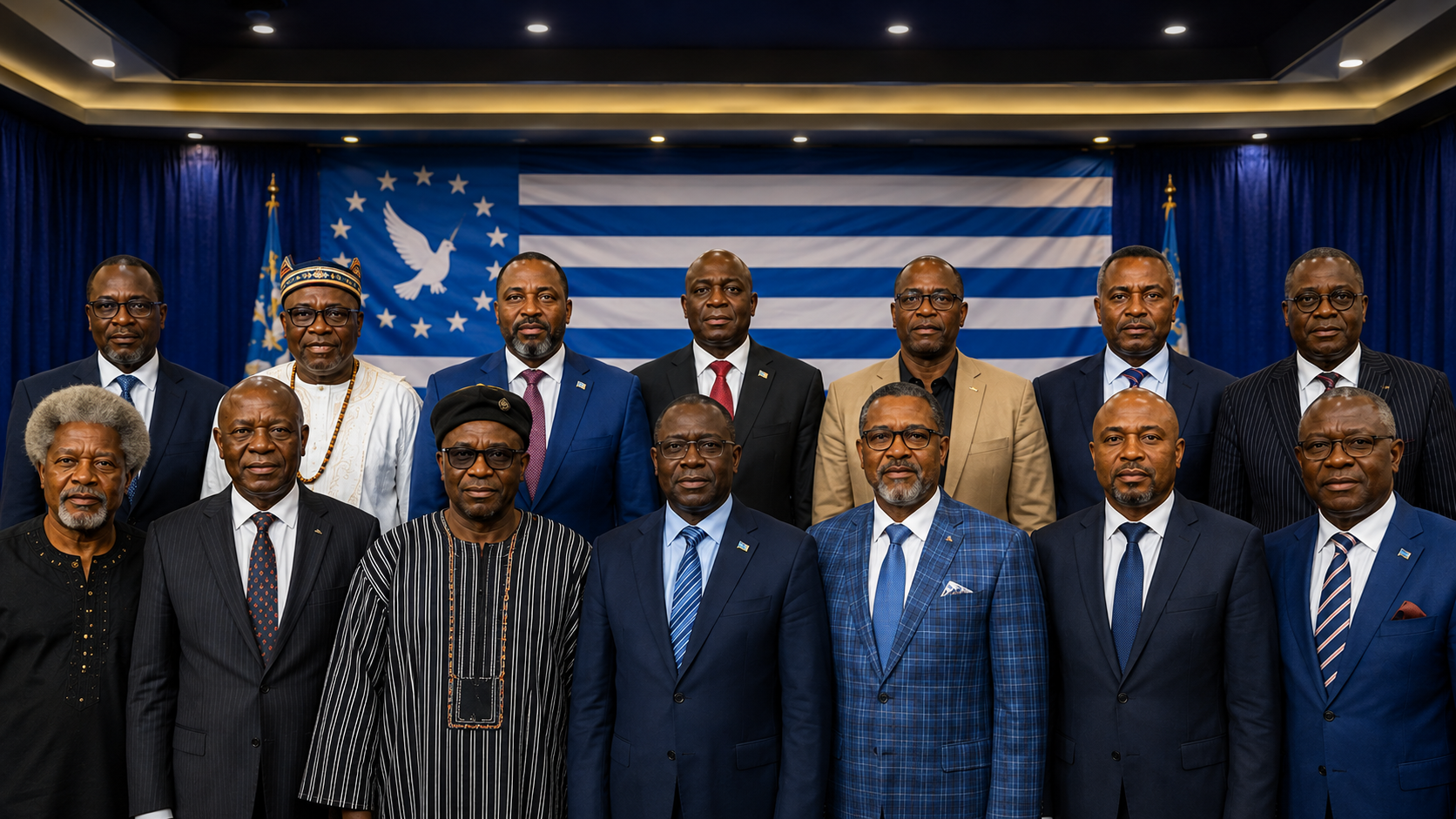
I attended Saturday’s Townhall meeting with Issa Tchiroma Bakary, not with preconceived conclusions, but with an open mind. Like many of you, I wanted to hear for myself what message one of Cameroon’s most influential political figures had chosen to bring to the people of the Southern Cameroons at such a consequential moment in our journey for freedom.
I left with two overriding conclusions.
The first is that the meeting, in both tone and atmosphere, resembled far more a federalists’ convention than a gathering of a people who, almost a decade ago, declared themselves an independent nation.
To be clear, I have no objection to engaging Issa Tchiroma (my friend)—or anyone else willing to listen to us. Dialogue has always been part of politics. Every serious liberation movement speaks to friends, adversaries, and everyone in between. There is nothing wrong with conversation.
But there is everything wrong with forgetting where we stand before the conversation even begins.
At moments during the meeting, one could easily have concluded that federalism had already become our collective destination. Even some of the conveners, whom I have long regarded as voices rooted in the independence movement, spoke with such enthusiasm that one almost forgot we were addressing a politician from La République du Cameroun rather than welcoming the leader of our own state.
I deliberately leave aside the substance of the questions and the answers given. Those deserve careful examination another day.
What worries me is something far more fundamental. Why do so many who identify as independentists become visibly excited whenever federalism is mentioned?
What exactly is this federalism we are so eager to embrace? Who has defined it? Who has negotiated it? Who has guaranteed it?
And why should an independence movement begin negotiating against itself before formal negotiations have even begun?
If federalism is ever to become part of our national discussion, shouldn’t it arise only at the negotiating table? It should never become the starting and focus point of any discussion simply because someone in Yaoundé chooses to pronounce the word.
If the organizers of the Southern Cameroons Townhall have consciously embraced a federalist vision, then honesty demands clarity. Let them say so openly. The townhalls emerged from within the independence movement. Our people deserve transparency, not coercion and political ambiguity.
My second conclusion concerns the repeated calls made during the meeting for the revival of the townhall meetings. Speaker after speaker yearned for it. Others suggested that Townhall organizers join SCAUF and occupy seats around the table.
With respect, I believe we are yearning for the wrong ideas, with good intentions though. Those who sincerely fight for, or support independence, do not need all the groups, factions, and leaders anymore.
Southern Cameroons/Ambazonia needs one movement.
For years we have multiplied governments, councils, initiatives, platforms, committees, conferences, conventions, and leadership structures. Each emerged with its own leader and intentions. Yet the result has been fragmentation instead of consolidation, competition instead of coordination, and exhaustion instead of progress.
History is presenting us with a moment unlike any we have witnessed since this struggle began.
Cameroon is approaching what may become the most significant political transition since independence. Whether it unfolds in the aftermath of Paul Biya’s departure from power or under a future administration led by figures such as Issa Tchiroma, opportunities that once seemed distant are beginning to emerge before our eyes.
We anticipated this moment years ago. It would be a historic tragedy if, after preparing for this political transition, we allowed internal ideological divisions to deny us the opportunity we have long awaited.
Let federalists organize around federalism, and let unionists organize around unionism. They have the right to do so.
But those of us who believe in the independence of the Southern Cameroons must stop pretending that dozens of competing organizations can somehow function as one movement.
They cannot.
Meeting occasionally while remaining divided in direction is not unity. Issuing joint communiqués while maintaining competing structures is not unity.
Agreeing on one statement today and returning to separate agendas tomorrow is not unity.
Unity requires one political home, one national strategy, one diplomatic voice, one fundraising structure, one command of purpose, and one people moving in one direction.
That is precisely what we achieved in Nigeria during the formative years of this struggle when independent groups came together and entrusted Sisiku Ayuk Tabe with leadership. That moment was not perfect, but it demonstrated something invaluable: when our people unite behind one national purpose, they become infinitely stronger than when they compete against one another.
I am not calling for another collaboration or coalition of leaders. We’ve tried that before; it failed. Coalitions preserve existing structures and divisions.
I am calling for the complete regrouping of the independence movement—leaders and ordinary citizens alike—into one national structure capable of confronting the extraordinary political realities now unfolding in Yaoundé.
This would allow us to think together, plan together, mobilize resources together, engage the international community together, and act together when history demands decisive action.
This is no longer about personalities. It is no longer about governments in exile. It is no longer about whose flag flies over which office. It is about whether Ambazonia will recognize its hour when history finally knocks on our door.
History seldom gives oppressed nations a second chance. When ours arrives, let it never be said that we failed—not because we lacked courage, nor because we lacked international sympathy, nor because we lacked sacrifice—but because we lacked the wisdom to become one people with one purpose.
To every independentist out there who shares this vision, I extend a sincere invitation. If you believe the time has come to regroup our movement under one umbrella—not merely the leaders, but our entire people—then reach out to me without delay. Let us begin assembling a dedicated team whose sole mission is to facilitate this national regrouping before the window of opportunity emerging in Yaounde closes.
The future will not wait for us. Neither should we.