Press releasePublished20 Oct 2026
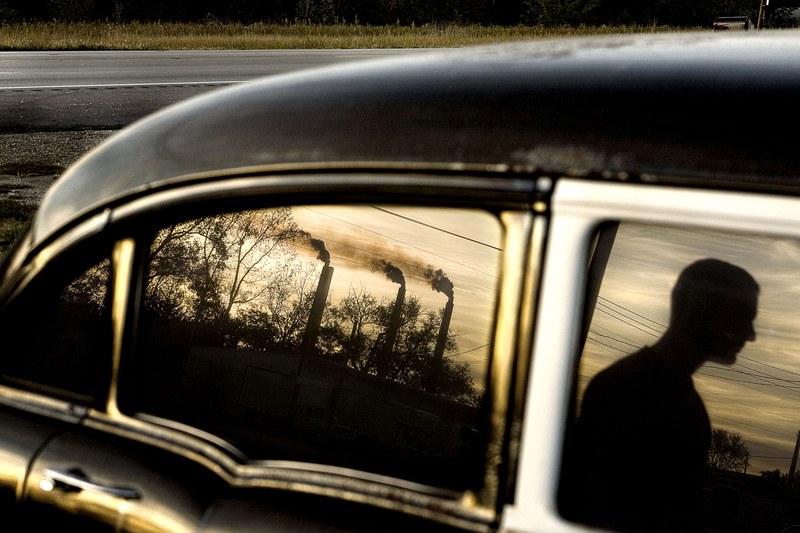
ImageJavier Arcenillas, ImaginAIR /EEA
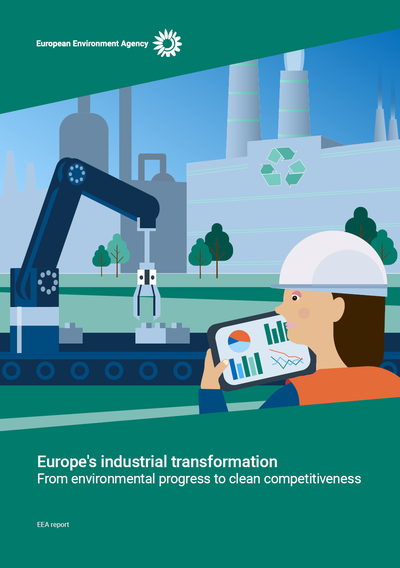
Europe can strengthen its industrial competitiveness while cutting climate and environmental pressures, but progress needs to accelerate. A new report from the European Environment Agency (EEA) finds that the transition of key industrial sectors offers opportunity and explores the policies, investments and enabling conditions needed to drive clean, circular and decarbonised production at scale, delivering prosperity.
The easier wins are behind us and deep industrial decarbonisation must now accelerate, shows the EEA report ‘Europe’s industrial transformation — from environmental progress to clean competitiveness’.
European policy has delivered significant environmental improvements over the past 15 years. Industrial pollutant emissions have declined markedly and greenhouse gas emissions have fallen even as economic activity has continued to grow.
Yet the sectors responsible for the largest share of industrial emissions remain far from a net-zero pathway. In particular, progress on emissions per tonne of product in cement, iron and steel production has been moderate since 2010. Reaching climate neutrality will require the deployment of transformative technologies at scale.

The challenge is no longer technology, but scaling its deployment
Further efforts are needed, at a faster pace and greater scale, given industry’s significant contribution to environmental pressures and the EU’s renewed ambition to strengthen industrial activity. Europe’s clean industrial transformation is increasingly constrained by a lack of system readiness rather than technology readiness.
To achieve a clean industrial transformation, the European Union needs to support a strong enabling environment. This will require:
- an ambitious policy framework and support to close the EUR 30 to 60 billion annualfunding gap for industrial transformation by 2030 by attracting private capital;
- measures to overcome slow infrastructure development, including for electricity, hydrogen and carbon capture and storage, insecure access to materials needed for the transition, and systemic weaknesses in the EU’s technical skills base; and
- accelerating access to low-cost renewable electricity. Electrification offers a key pathway to strengthen energy security while improving industrial competitiveness.
Although it is clear that, in the long run, a clean, refront costs to industry will be high. This means that, in the short to medium term, industry may face competitiveness challenges, and stricter environmental regulation, an ambitious carbon price or even a stronger enabling environment may not be sufficient on their own
EU industrial policy matters
A clean industrial policy framework presents a critical opportunity to provide direction and align the EU’s competitiveness policies with environmental and climate objectives. This requires a carefully designed and integrated policy approach that balances:
- shielding: protecting industry during the transition;
- scaling: creating markets and accelerating investments; and
- restructuring: changing the EU’s industrial model.
Looking ahead, Europe’s clean industrial transformation will depend increasingly on its ability to turn available technologies into change at scale. This requires a coherent policy approach that provides long-term certainty, mobilises investment and develops the infrastructure, clean energy, materials and skills needed for transformation. Combining measures that protect industry through the transition, create markets and scale up clean solutions, and reshape industrial activity around clean value chains can help Europe align its competitiveness and resilience with its climate and environmental ambitions.
Our latest press releases