

This transcript is from a CSIS event hosted on June 17, 2026. Watch the full video below
Image
June 17, 2026 • 9:00 – 10:00 am EDT
Hosted by The CSIS Bipartisan Alliance for Global Health Security
Katherine E. Bliss: The African continent, with an estimated population of some 1.6 billion people, has 20 percent of the world’s vaccine market but produces just a tiny fraction of the world’s vaccines. Vaccines produced in the United States, Europe, or Asia can travel long distances, often by plane and then truck, bicycle, boat, or even on foot to reach children, adolescents, and other vulnerable populations to prevent outbreaks and respond to pandemic threats. During the COVID-19 pandemic this became a huge challenge as the continent saw new vaccines developed to combat the virus being produced and then used by people in other regions before they became available.
In 2024, the Africa Vaccine Manufacturing Accelerator was launched at the Health and Prosperity Through Immunizations Summit to remedy this problem with a goal of allocating up to $1.2 billion over 10 years to incentivize and diversify the development, expansion, and sustainability of a commercially viable regional vaccine manufacturing industry. It has a goal of producing more than 60 percent of vaccines used in Africa by 2040.
Now, as AVMA reaches or nears its second anniversary and the Gavi board – the board of Gavi, the Vaccine Alliance, which hosted by the summit at which AVMA was launched – as the board convenes at the beginning of July to consider additional financing and new means to both support vaccine manufacturing and shape the regional vaccine market, what progress has been made? What are countries and companies seeking? And how will regional and national organizations measure success over the next several years? We’ll discuss these topics and more on today’s CommonHealth Live.
J. Stephen Morrison: (From video.) This is the CommonHealth from the CSIS Bipartisan Alliance for Global Health Security, engaging senior leaders on questions of how to address our common health security challenges in this post-COVID moment
Ms. Bliss: Welcome today’s conversation about the Africa Vaccine Manufacturing Accelerator, the state of immunization services in the region, and prospects for the development of a thriving vaccine production industry on the African continent. I’m Katherine Bliss with the CSIS Global Health Policy Center
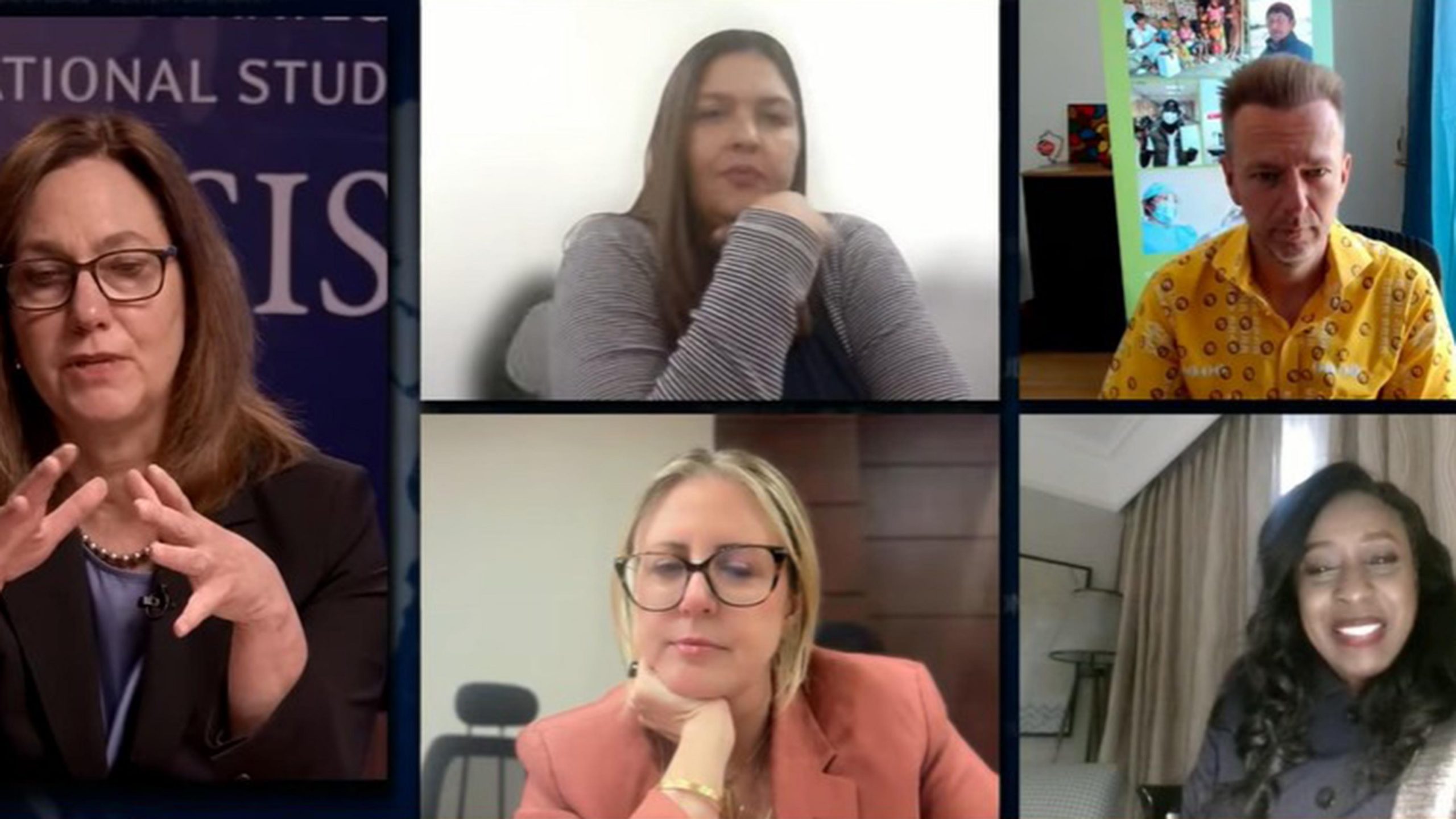
And I’m joined today by four experts who have been working on AVMA, on regional immunizations, and thinking about how to bring these issues together and, you know, move forward from diverse perspectives. It’s a pleasure to welcome Shanelle Hall, principal advisor to the director general of the Africa CDC; Farrah Losper, chief commercial officer at Biovac in South Africa and chair of the Africa Vaccine Manufacturing Initiative board; David Kinder, director of development finance at Gavi, the Vaccine Alliance; and Folake Olayinka, director of immunizations at Africa CDC.
Let’s dive in. So, Farrah, I wanted to start with you and ask you to say a little bit – you know, you’ve been with – you’re the chair of the board at the Africa Vaccine Manufacturing Initiative, which has been around for a number of years really advocating for industry across the continent. And so I’d like to ask you to just kind of start off by saying, you know, how did regional vaccine manufacturing come to be a high priority for the region?
Farrah Losper: So it’s a – it’s a great question, and thank you so much for having me. Hi to all my friends who are also on the panel. This is indeed a passion project for all of us, Africa’s vaccine sovereignty. And so thanks for the question and thanks for having me
I think it’s an obvious one, in terms of just, you know, Africa has been at the center of this push for vaccine sovereignty and for pharma health sovereignty for the longest time, but it really became a focused mandate post-pandemic because we saw how, you know, Africa was at the back of the queue in terms of vaccines whilst in the first world, you know, people were sort of stockpiling and able to get vaccine stores. So I think that highlighted the need for pandemic preparedness, and it really rallied our Africa Union around this push for vaccine sovereignty. And I think, ultimately, where we are now is in a very good position because we’ve got this strong political will, but when you get to asking me what needs to happen now, it will be about how we convert that political will into actual procurement policy on the ground.
But I think that’s, from my perspective, what sort of pushed us to get to where we are. And we did see global response in support of helping Africa to get to this position that we are in now – just on the cusp of actually supplying vaccines to our own continent. But there are some challenges ahead, and I’m hopeful that we’ll get some time to explore them a little bit later. Thank you
Ms. Bliss: Thank you. So, you know, these issues had really been under discussion for quite a long time, but that process during COVID, where we saw some of the high-income countries, you know, purchasing and, as you said, stockpiling millions of doses more than could ever possibly use really kind of struck a chord and galvanized a lot of the discussion, you know, around these issues. But as you pointed out, I mean, procurement and many of the other elements of the system all have to kind of fall in place.
Folake, I want to turn to you to kind of help set the stage a little bit for, you know, just understanding, you know, what some of the procurement and delivery challenges with respect to routine immunizations have been in the past, and the current need and demand for vaccines kind of across the different countries that Africa CDC works with. What are – what are kind of country immunization managers saying they need most as they kind of look ahead to the size of the population, the children and, you know, cohorts that they will have to be supporting over the next several decades, and also thinking about pandemic preparedness and really being ready to get vaccines out to populations? What are some of the – what are you hearing from the different countries as they think through kind of the future of vaccine demand?
Folake Olayinka: Thank you so much, Katherine, and it’s a pleasure to join you here on this podcast and also wonderful – other wonderful people on the on this discussion today
Let me build up from what Farrah had put forward, and that this is really an inflection time/inflection moment for Africa as a continent. COVID-19 was the – was the trigger, but since then there has been a lot of momentum to really establish a leadership and ownership and action around continental immunization by the Africa CDC. And so this elevation of immunization coming at this time really takes forward the strains felt during COVID, but it also takes on the ambition expressed in the Addis Declaration on Immunization in 2017. And it sets forth – of the 10 commitments it sets forth, one of the 10 was African-based manufacturing of vaccines. And then you have the 2040 Vision as well, which further expresses the entire African Union’s vision of manufacturing 60 percent of the vaccines that are used on the continent in the continent. Right now we are at less than 1 percent.
And so when you look at the broader picture of things, this is a population of about 1.5 billion. We also have the youngest population, which means that there are a large reproductive age group and also the highest in terms of growth rate, or fastest in terms of growth rate
When we also turn to the aspect of causes of diseases or causes of deaths in under-five children, it is still largely vaccine-preventable diseases. When you also look at the numbers of zero-dose globally – those who are not receiving any immunization – this is still the highest in the African region, and in 2024 this increased to almost 8 million. And so when you talk about the state of immunization in the continent, there is great recognition by African leaders, African member states, and globally that this is a top priority and will remain a top priority until we are able to ensure that the benefits of high coverage, lower mortality, as well as the health of the populations are achieved. So this will remain a top priority.
Now, in terms of the systems approach to this, I just want to bring a systems lens. And we recognize in the African continent that there is no health resilience without a reliable access to vaccines that are needed in terms of both the supply, the quality, and the type of vaccines that we need on the continent. So the routine childhood vaccines, as I mentioned, we are still far from the global target in terms of coverage and in terms of reducing the number of zero-dose by 50 percent by 2030. So there’s a lot of work to be done there. And then when you look at the broader health systems, the experience of prevention and preparedness includes having access to vaccines for outbreaks and for pandemics; and to ensure that they are accessible, they are available, and they arrive where and when needed. So the aspect of developing vaccines, ensuring that they are easily accessible whether these are virtual stockpiles or they’re physical stockpiles that are closer to the sources of outbreak and pandemics, are really part of building that resilience in Africa.
I’ll just end on this point, Katherine. In April this year, the Africa CDC, together with the 55 member states, launched the first African-led Continental Immunization Strategy. And this really puts forward immunization primarily as a highly effective tool and intervention to save lives, reduce mortalities. But it also repositioned immunization as an important pathway for ensuring healthy populations can be productive, and this productivity can contribute to improved economic growth in Africa. It also links the vaccines and vaccination to health emergencies, either as part of prevention, preparedness, or as medical countermeasure in response. So just to say that the leadership to address this, both politically, strategically, and technically is something front and center for Africa CDC and the African continent.
Ms. Bliss: So it sounds like, I mean, you’ve got, on the one hand, demographically, like, a young and potentially dynamic growing population for some period of time. So there’s the demographic – the need there. But also questions around cost and proximity, and, you know, really bringing all of those together to respond not only to routine needs of children, adolescents, and adults, but also really having that capacity to respond quickly when pandemics and – you know, pandemics that can be prevented through vaccines, you know, can – or through immunizations can arise.
Now, David, I –
Ms. Olayinka: That’s exactly right
Ms. Bliss: Yeah
Ms. Olayinka: Yeah. That’s exactly right. I mean, let’s speak about the Ebola Bundibugyo strain right now. There is no vaccine that is approved at this point in time. But responding to a context and looking at the diseases that are great significance in the African region, this is something that needs to be fast tracked in terms of developing a vaccine against this particular strain, and other diseases that are particularly marked in the African context. So, again, just linking the context, the needs, the diseases, the pathogens to the vaccines that need to be manufactured as well. Thank you.
Ms. Bliss: So that gets me, you know, to a question, David, I want to pose to you. So, you know, Farrah and Folake have pointed out – I mean, this conversation has – you know, the conversation around sovereignty, around, you know, the need – the many different reasons for need for local manufacture have been going on for some time. But it really was at the summit in 2024 that all of this came together to launch the AVMA, you know, which I guess had been approved back in December and then – of ’23 – and then, you know, work had been moving forward. Can you say a little bit about all the different factors that came together to really, you know, make that launch happen in June of that year? And could you also say a little bit – I mean, it’s generally described as kind of a financing mechanism for vaccines. So could you explain, you know, how the vision for AVMA, and how this is – how this works, and who some of the funders behind it are?
David Kinder: Yeah. Thank you very much for that, Katherine. That was great. I mean, it’s fantastic to be here on this panel with – and it’s great to be on a panel with friends and partners. And I think one of the things that’s really important about that African Vaccine Manufacturing Accelerator and Gavi’s work is that it is a partnership between us and those that you see on the screen. Gavi is a public-private partnership, a complex beast, but one that really does try and work with the countries that Gavi supports, with the agencies that support, like Africa CDC, and, of course, with manufacturers themselves. Because you need all of those factors to come together to pull something as ambitious as this off.
So just going back to your questions on the factors, I mean, I think the first thing that I should probably say is just really quickly, on Gavi and what Gavi is, we’re a vaccine alliance. We were established 25 years ago to accelerate the introduction and scale-up of new and underused vaccines in developing countries. Originally supporting over 70 countries. Some have graduated. Now we support 57 countries. And we bulk buy vaccines so that we can send signals to manufacturers to introduce new vaccines and lower prices. And actually, increasing supply and regionalizing vaccine production has been one of the things we’ve tried to do for 25 years.
We started off buying vaccines with the support of agencies like UNICEF, our partners at WHO. There were only five or six producers who were willing to produce the types of vaccines that were needed for routine immunization in Africa. Now, over time, with the market signaling and the financial approach we were able to take, that has grown to now over 20 suppliers of vaccines globally. And the majority of those are actually in developing countries. But the issue is, at the moment we do not procure one from Africa. And actually, whilst we’ve been very successful at reducing prices and increasing vaccine availability, to counter some of the points that Folake made – so routine immunization levels in Gavi-supported countries have gone from 59 percent, when we started, up to 82 percent. So more lives are being saved, more access is there.
The pandemic, as you described, really did say that there are many facets that are important in vaccines, vaccine security, and immunization. And actually, regional security is an important factor there. So we realized, partly to address some of the timing, the equity, and the very, very important strong political course coming from Africa, that Gavi needed to look at what we could do to provide a financial underpinning to make some of this transformation, to achieve some of those goals that have been set – really ambitious goals that have been set by the African Union.
So ahead of that summit we basically had a two-year process of design with multiple partners, everybody you see on the screen here, manufacturers in Africa, also outside of Africa, because tech transfer is an important part of this, with the donors who actually had supported Gavi generously during the COVID-19 pandemic through COVAX, but who realized that actually the African sovereignty agenda and vaccine manufacturing was really important. So we have a broad set of 13 sovereign donors who have generously donated the 1.2 billion (dollars) that actually we have now within the African Vaccine Manufacturing Accelerator.
And I think really it was that combination of financing, political support, and partnership that really pulled the African vaccine manufacturing together. And it certainly is a – you know, it was a real feat to be a part of. And I think really we’re in the process now where we need to make it a reality. And I think that’s what Farrah, Folake, and Shanelle have talked about. And we’re happy that we also have the forthcoming Gavi board in a month’s time that’s going to actually try and modify some of the original terms to deliver that.
But just very, very briefly you asked me the question, how does it work as a financing organization, or the instrument? So, Gavi has this history of building long-term financial mechanisms. We call them pull mechanisms. So we set long-term objectives, and the idea is that they provide extra financing support to manufacturers that allow them to make decisions and also attract financing from others to become commercially sustainable over time. So AVMA has this series of milestone payments that manufacturers receive when they get WHO prequalification for their vaccines, and a set of subsidies that allow African manufacturers to compete sustainably with the other manufacturers within the GAVI and UNICEF system.
And the aim is, over 10 years, to bring manufacturers online so that they can be competitive globally and so that Africa ends the decade with a sustainable base of suppliers that provide not just routine immunization, but have the ability to scale up in pandemics and emergencies, just like we’re seeing in Ebola at the moment
Ms. Bliss: So, you know, kind of a mix of subsidies, incentives, and really a lot of coordination to, you know, kind of identify where country – or, where companies and others may need support
Shanelle, I want to turn to you, because, you know, we’ve heard about, you know, the need and the context, and that these – you know, this discussion had been emerging for quite a long time. David has, you know, talked about kind of what came together as far as the launch and how the financing mechanism works. But, you know, it seems that there’s probably a lot that has to happen in the different countries to prepare for, you know, a workforce and to prepare the environment in order to really kind of move toward that kind of high-level, scaled-up manufacturing, when that happens.
Could you say a bit about, you know, the work that Africa CDC has done with member countries and with partners to, you know, think about things like workforce training, regulatory environment, quality assurance, and some of these other elements that that are certainly in play as this work moves forward?
Shanelle Hall: Sure. And thank you. And thank you so much, fellow panelists, as well
Maybe to start with just a little story, because, as Folake mentioned, it’s a bit of a watershed moment for African vaccine manufacturers. One of the best things about markets is that they’re very dynamic. They really aren’t static. And all of the inputs that that you described – having a healthy workforce, having all the inputs needed for production, having a regulatory environment, these are regulated products – one of the most regulated products that there are. Of course, all health products are, but vaccines even more so. So all of these things come together and are inputs to a market.
I bought my first dose of vaccine when I was at UNICEF in 1999. And at the time, there was – we had just been notified that WHO had approved the first Indian-manufactured vaccine. And it was a tetanus toxoid vaccine, so the family of TT, and TD, and DT. And at the time, it was very novel. We were very excited. We were given pretty low prices. The vaccine manufacturer had been manufacturing in India for the domestic market for quite some time. But it was one product among many products, and one manufacturer of, you know, maybe 15 manufacturers that that UNICEF was buying from.
And if we fast forward to 15 years later, you know, at that point it was that it wasn’t even a – almost a measurable percentage of the number of doses that that UNICEF was buying for countries, but by 15 years later India was making up maybe more than 60 percent of the doses that that UNICEF was buying. We couldn’t have imagined it in 1999 or 2000, that the market would make such a shift. It wasn’t even in our thinking that there could be such a change, because it was a displacement of major multinational corporations – Custermiriyo, Chiron, Merck, GlaxoSmithKline, all of the giants, if you will – Connaught – that were manufacturing and had been manufactured for decades, and were the original multinational manufacturers.
And yet, 15 years later their footprint was very decreased. And, as you mentioned, a large portion of the of the supply, and even an increasing portion thereafter, came from the Indian manufacturing base. And I give that parallel because, to some extent, it can be hard for there to be an imagination that Africa could meet the target of 60 percent – of producing 60 percent of its vaccine. The target for 2040 is also 15 years off, by the end of the year. So we are incredibly, I would say, optimistic and realistic about that bold target. And currently what this watershed moment that we’re in is, in the next 12 to 24 months we will have between five and seven products manufactured from African manufacturers that will be submitted to international qualification, so the WHO prequalification.
And that’s in a pretty small, short of time – period of time, from – you heard Farrah talk about the origin of this. Even it predates the incredible incentive that Gavi put forth with AVMA, which was launched a couple of years – a couple of years back. So it’s terribly exciting for us. But what we know is that the African manufacturers are entering a market that is dominated by suppliers that have benefited from decades of sales, even subsidies, and kind of different special types of contracts when they entered the market. They have mature regulatory pathways, integrated supply chains. So the African manufacturers are – in many ways have a structural competitive gap that, when I drew the parallel, that didn’t really exist back in the 2000s, because most of the MNCs also decided to move to the next generation of vaccines. So the Indian manufacturing base, the new manufacturing base, was filling a gap. They didn’t have to compete in the same way that the African manufacturers currently have to compete.
And maybe just to give a note. As Folake mentioned, the continent, OK, 1.4, 1.5 billion. About the same population size as India and China. And those industries have – well, China has, let’s say, around 5,000 manufacturers of health products, dozens of manufacturers of vaccines. India has 10,000, around, manufacturers of health products, and, you know, upwards of nearly 100 different vaccine manufacturers. And Africa is a very big market for them. So, you know, what we’re currently looking at is how do we support the African manufacturers, which is critical for health security and health sovereignty – let’s remember that at post-COVID at every G-20 meeting there was a statement about health security. And a part of the pathway to health security is decentralized vaccine manufacturing, decentralized manufacturing of all MCMs. So this is critical to the agenda, let alone the economic and GDP benefits of having an industry on continent.
So for us this, you know, it’s critical to the future and the agenda. But as we watch these manufacturers entering the – just a second – entering the market, we can see that it’s really tough – it’s really tough for them. And this is why the AVMA is a critical component of it. But we also know what happened with COVID. When there was an African vaccine that was approved and ready, it wasn’t procured. And this is top of the memory of the vaccine manufacturers. It’s top of the memory of the heads of state of government of Africa. So one of the things that we’re looking to do is to support the ecosystem, because there are many things that need to come together for a manufacturer to commercialize. It’s not just getting qualified, which represents one of the major barriers to market, it’s also where the buyers buy from them.
We’re seeing, first of all, countries expressing demand and preference for African vaccines when they’re starting to signal this to, for example, Gavi, and also their own internal buyer buying mechanism, certainly to us. But – and we also know the cycle time for procurement can be long. So for us, the worst case scenario is a manufacturer gets approved and then their manufacturing line stays idle for one year, two years, they don’t get any material orders. And then the pressures that they have from their board of directors, from their investors, is, well, maybe this wasn’t going to be a successful venture anyway.
So working with the buyers, so that they can open pathways to procurements and contracts, you know, with not-so-distant timeline between when a manufacturer is approved and when a first contract can be secured, working with countries so they readily have their products registered so countries are prepared to receive them in their switching vaccine plans, et cetera, there’s a lot of these small things, we call it a critical path approach, that we want to help the ecosystem work together so that the African manufacturers that are coming to market are commercially successful, which provides a demonstration to them, to themselves, their investors, and to other manufacturers, that it’s possible.
And this early stage is where – you know, we’re right at the beginning part. And, you know, everyone is watching this. Can these manufacturers be a success? And it really will have a big impact on how quickly we can meet the 2040 target, is in these coming two years. So it’s super exciting. Farrah knows the pressure that she’s under. David knows the pressure that he’s under, that we’re all under. But we have been waiting for this moment. So it’s really exciting. And thank you for the opportunity to shed a light on this. Thank you.
Ms. Bliss: Well, thank you. I mean, you really painted a picture of a very complex situation, but where – you know, one where there is a history, there are lots of lessons that can be – can be learned and shared, and, you know, lots of new and fresh thinking about how to – how to really move all of these different elements forward
Farrah, I want to ask you to say a little bit about just what – you know, how – what companies are seeing, how – you know, what the – you know, what the field has, you know, kind of experienced in the last couple of years, and, you know, where there have been challenges, but also opportunities, for both, you know, individual company thinking about, you know, how to move forward, but also collaboration.
Ms. Losper: Thanks, Katherine. I could have the whole hour to talk about that, but let me try and be brief
OK, so I think firstly we have to give credit to Africa CDC. Post-pandemic, we saw – I mean, we saw hundreds of announcements of things happening in Africa, partnerships, collaborations. And there was a real need – you know, it’s one thing to say to an AU member state, please buy local. Buy what, from who, by when, right? And so Africa CDC played this coordination role through sort of clear, focused pathway of which vaccines will be ready by when. And this provided visibility. And I remember it was about – it was a couple of years ago at the World Health Assembly in Geneva when they could finally put up a slide to say to member states and to ministries of health that these are the vaccines that we expect to come from these countries by these dates. So when we say please buy, this is what we want you to buy, and by when.
So I think that coordination role, post-pandemic, was really the starting point. And that’s something that we’ve really used as a guiding light, even with what I’ll mention next. Which is, an African manufacturer can do a technology transfer, which could take many years but let’s call it two years. Then they need another two years for a local NRA approval. Then maybe another two years for WHO prequalification. All these two years could be five years. So I’m saying, at best case you have a six-year timeline to get to market. At this point, can you be competitive? Probably not. So in a market you’ve really got to compete with incumbent high-volume, low-cost manufacturers.
And so the fact that the WHO is now looking at doing different things – doing things differently to support manufacturers, such as African manufacturers, is also a big tick forward. And manufacturers are feeling hopeful, because – just to mention one – the DG of the WHO has just approved a parallel process for SAPRIN, South Africa, and the WHO to review a dossier in parallel. So you don’t wait for the two years and then the two years. You can do it at the same time. So that is leveraging some of the pandemic learnings to accelerate an African manufacturer’s ability to access the market. Doesn’t mean we don’t have to go through the same quality checks and rigorous assessments, but we can try and do it in parallel.
Also, now the WHO has just released a call for comment on revising its PQ procedures entirely, right? So I think one of the lessons here is we can’t expect something different if we’re going to follow business as usual. And we’ve seen that with the WHO now. We’ve seen it – AMA, our African Medicines Agency, I’d like to say that AMA is up and running and we’ve got exciting DG, and it seems all systems go. But you get questions and challenges as to why is it taking so long. Well, let’s reflect on the fact that EMA took 27 years for the countries in Europe, right?
So I think we’ve got to support and push the likes of AMA because that – again, what is it doing, Katherine? It is taking 54 markets and creating one market. If we can get regulations through AMA, we have access to market and access to volumes. So that’s another thing that industry has really appreciated. Then, I mean, AVMA – we’ve spoken about it now – but AVMA has truly been catalytic. It is a financing mechanism, but what has it done? It had its intended purposes. Take a company, such as Biovac, for example. Biovac has been on a four-year journey to find funds to grow its facility, to build a new plant. Only recently this funding has been concluded. Why? Because the business case is stronger through AVMA.
Now I think – let me just segue to where the challenges are, because those are some of the positives. I think ultimately, if I can leave one message today, it’s that – I think Shanelle mentioned it earlier – any facility that we have in Africa, if it is left idle, if there are no volumes through these facilities, all of what we’ve done is for nothing because we need sustainability through volumes. Manufacturers in Africa can only compete if they get volumes through the facilities, and therefore they can reduce their costs.
So I think AVMA, as great as it has been, we are seeing a world of change in the landscape with the decline in funding, which I personally see as an opportunity for us to take our agency back as a continent. But still, that decline in funding for Gavi has meant that Gavi is spending less to buy vaccines. And if they’re spending less to buy vaccines, an African manufacturer has an even harder task to come in at an even lower price point than before. And so we need to see some changes to AVMA that hopefully makes it more fit for future. It is fit for purpose, but more fit for future. And I think we’re seeing that Gavi is sort of working in that – in that pathway.
And then I think the last thing I want to say is, if we go back to the fundamental premise of volumes through facilities, and my first statement that I made, that we can’t have business as usual if we’re expecting to shift the needle so significantly, where we are importing 99 percent of our vaccines and we want to move to 60 percent by 2040, then we have to do things differently. And, you know, we have to see the likes of UNICEF, who buy vaccines, actually buy big volumes from African manufacturers. Because if AVMA is working, if WHO is working, if AMA is working, and UNICEF doesn’t buy meaningful quantities from African manufacturers, again, we are in trouble.
So, Katherine, I just want to say a lot of exciting sort of progressive steps for manufacturers. Particularly we need to see the first phase manufacturers, those that will bring the first eight. We need to see them successful to set up the ecosystem for those that follow. And if we can’t fill those capacities with volumes, we really have a trouble. So very good progress, but there’s a lot that needs to happen imminently to take this over the line. Thanks.
Ms. Bliss: Great. Thank you
David, if you can – I know that your time is tight. I hope I can just turn to you for just some thoughts. I know the Gavi board is meeting the 1st and 2nd of July. And one of the – one of the issues that they will take up is kind of the future of AVMA, this AVMA+ that has been, you know, kind of discussed and I think Gavi is looking for additional financing; but also, some different ways to continue to support companies and countries in thinking about this complex ecosystem that really has to be nurtured and supported along the way. Can you just say a bit about how important this upcoming discussion is going to be and what we’re likely to see?
Mr. Kinder: Yeah. No, no, of course, really happy to do that. And really great to add onto the comments of others
I do think it’s an important moment. And I like how Farrah just phrased it about how AVMA has been a catalytic instrument so far that has built on some of the momentum that Shanelle has talked about. And you know, our job and responsibility at Gavi and at the board and with investors is to make sure it keeps being fit for the future because commercial realities change. Long-term financial instruments need to change with them as well in a – in a stable and predictable way that allows for investment to continue.
So I guess a few things just briefly that I’ll say. One of them is I am really hopeful, as Shanelle has kind of talked about – she’s mentioned the sort of five to seven potential antigens on the African continent that might get regulatory approval. So I’m really hopeful that maybe the first one of those may get that as soon as this year, and that would allow AVMA to begin dispersing the funds that it – that it is designed to do. Now, that’s going to be a process that’s going to start slow and then increase over time as some of these volumes come through. So I really do hope that we’re moving from concept and catalytic nature to conversion of some of this, and we really hope that’s happening soon.
Two, three things I’ll say that are important about the Gavi board in the – in the 1st and 2nd of July. I think what we are doing with AVMA+ – and basically, the background to that is we set ourselves a fundraising target of a billion dollars for AVMA. We actually managed to raise $1.2 billion, which I think is a sign of the political commitment that we’ve talked about today and the importance of this agenda. So the board is deciding on how best to allocate the additional 200 million, roughly, that we have to look at, and it’s doing it in two ways.
One way is to provide support to the ecosystem and to some of the partners, like Africa CDC and others, whose work is so fundamental to get this over the line. It will hopefully enable more things like the parallel reviews of WHO that Farrah has talked about. So I think that’s important
Secondly, it’s changing the way slightly that some of the subsidies work of AVMA and allowing more money to go to some of the vaccines themselves, particularly from some of those first five to seven antigens. And that will hopefully boost what Farrah has talked about, the need to get volumes early on
So I think those two things are about strengthening the ecosystem, getting money out of the door faster and in a way that helps build sustainability
And then, thirdly, we are asking the board if it would like us to just recheck all of the calculations we did when we set up AVMA to look at what makes manufacturing sustainable over 10 years. The geopolitical environment has changed a little bit. Do we need to adjust and move and look again at some of those levels? And we will be asking the board to endorse a quick review of that over the next six months, really to ensure that we do make sure AVMA is fit for today and fit for the future.
Thank you
Ms. Bliss: OK. Thank you. So really, you know, kind of taking stock of where things have been, you know, is what’s being done sufficient, and reviewing to really kind of look forward and take account of the changing context over the past couple of years. Thank you
Mr. Kinder: Thank you very much for having me today, and apologies
Ms. Bliss: Thank you. Thanks for joining us
Folake, I want to come back to, you know, a point that you made that Shanelle and Farrah have also, you know, touched on, which is that, you know, there was early on with AVMA and Gavi a – you know, a prioritization of certain – you know, that certain vaccines that are relevant for the population would perhaps be prioritized. So these included, you know, measles, malaria, Ebola, some of the cholera, and a number of others.
Folake, you mentioned, of course, the current outbreak of the new – well, the strain of virus in Bundibugyo, which doesn’t have a vaccine at the moment. You know, can you say a bit about how, you know, thinking with – you know, among the different – among the different countries with the immunization – you know, the advisory groups and managers, you know, really is, you know, kind of thinking about what priority – what priorities really should be for – you know, for the region, and how to – you know, how to communicate that kind of to the – to the population at large?
Ms. Olayinka: Thanks very much. And I really want to just take a moment to emphasize building resilient immunization and primary health-care systems, such that the routine immunization as well as when there is an outbreak or pandemic we are also prepared. So think of it as a spectrum or a continuum where we can effectively have strong routine immunization services that are able to reach the population that assure that we don’t have zero dose, we don’t have those that are unimmunized, right? But then to have resilient systems that allow us, when there is an outbreak, to be able to surge supports, surge services and vaccines as a medical countermeasure. And so this is the systems resilience that we’re looking at within the African continent.
Now, having quality services where they need to be and by providers who are skilled and knowledgeable, all of this help(s) to build that community trust and that engagement so the service experience itself is positive and will continue to engage key stakeholders at every level
And I just want to go back to another point in terms of the robust regulatory – regulation that is with – that is behind all the vaccines that come to a country. That is one level. But even within a country you have independent experts and advisory group(s) who also rigorously review the evidence and the data, the context, the epidemiology, and all of that to be able to look at their context, the relevance of this vaccine, the effectiveness. And they also independently provide these type of recommendations to their government. So there is an in-country process of prioritization and optimization. So are these the antigens that we need, for example, in a high-burden malaria country, right, to have malaria vaccines, versus a country that perhaps has very, very low prevalence of malaria? And so they’re able to look at the epidemiology, bring together the vaccines portfolio, and be able to make recommendations as to which vaccines to prioritize.
But you can also have changes to vaccine products. So you have products that are increasing the spectrum of a particular strain – so, for example, meningitis. Meningitis A vaccine had previously been a really top priority, especially within the meningitis belt in Africa. But we are seeing a change in in the epidemiology and the strains. We’re not seeing so much of the A strain, but we’re seeing other strains. So countries along this meningitis belt, for example, will likely be considering we need to change to a five-valent meningitis product that allows us to ensure that we have vaccines that are effective against the now-dominant strains of meningitis in our country, for example.
So these are the kind of technical and expert reviews that are taking place and inform the priorities and optimal schedule or products that a country needs to change to. So back to you, Katherine
Ms. Bliss: So, yeah. I mean, I think the word of the day here – (laughs) – is complexity in terms of the system. But you know, talking – I mean, the AVMA is, you know, very much focused on production and supply, but it really does depend on the – you know, the needs and, you know, what is actually needed in a particular context, but also the delivery system. And of course, we’ve talked a bit about demand – like, what – you know, what people will actually take once it’s available.
Farrah, Shanelle, I wanted to come back to each of you just to, you know, ask if you could say a bit about, you know, in terms of particularly the, you know, measles and malaria vaccines which have been so, so important in recent years, what – is there, you know, a – is there a pipeline of locally produced – or maybe not a pipeline, but are there plans for locally produced products that you’re seeing, you know, will be part of this kind of five to seven, you know, antigen group that is coming online in the next few years? Shanelle, maybe I’ll turn to you first.
Ms. Losper: I feel like this is a Shanelle question. Shanelle, go ahead
Ms. Hall: (Laughs.) I mean, the short answer is yes, that there’s a variety of antigens that are coming onboard, including MR, including – sorry, I’m in a public room and they don’t realize I’m on a public broadcast. But anyway –
Ms. Bliss: Oh. (Laughs.)
Ms. Hall: (Laughs.) So, yes, there – we know that there’s an MR candidate. We know there’s IPV. We know there’s multiple PCV candidates. There’s hexavalent. There’s rotavirus. There’s oral cholera. So there’s quite a few antigens in the pipeline. We also are excited about the proposition of the next generation of Zaire Ebola vaccine potentially being transferred, or the Bundibugyo vaccine even in the very early year of production being considered to be produced on the continent.
And I will say that it’s – you know, the ecosystem is understanding the shift, and it’s never been faster in terms of looking at achieving the hundred-day milestone from when an emergency is declared and a new vaccine is available, which is underway for – currently for the Bundibugyo. But it’s more than that. It’s also the developers, the financers, and of course us, the ecosystem, looking at: Can we already design it, so African R&D experts are involved and African manufacturers are part of the initial planning for production? So we really are seeing a shift. So we think that the pipeline is just – is very large, but in the near term I kind of went through what the key ones are. So thank you.
Ms. Bliss: Great. Thank you
Ms. Hall: And sorry for the noise
Ms. Bliss: Oh, no, thank you
So we’re coming close to the – to the end of our time here, and I just want to ask each of you to, you know – again, looking ahead, I mean, basically, you know, as AVMA, you know, gets ready to enter its third year, I think some of the facilities, you know, will really be kind of moving towards the next phase in the next several months, and you know, we’re likely to see quite a bit of progress, you know, over the next few years. I just wanted to ask each of you to reflect on, you know, what success looks like from your particular perspective, you know, whether it’s from the industry perspective, from kind of looking at these systems kind of overall or specifically from the perspective of the routine immunization and health system. What, from your – from your particular point of view, will be the clearest signal that AVMA is really fulfilling its promise both to transform access, transform manufacturing, and really bolster access to vaccines for children and adults in the Africa region? So, Farrah, let me start with you.
Ms. Losper: OK. Again, I could speak for a while –
Ms. Bliss: (Laughs.)
Ms. Losper: – but pick one or two
I think the first big signal that AVMA – and it’s AVMA plus the rest of the ecosystem because AVMA’s only one part of the solution, but I think AVMA is a catalyst for change that we need to see. So I think one big key success factor would be once we’ve unlocked the market potential and we’ve created one market out of the 54 markets within the continent. I think that would be a key success factor. And that’s regulatory. That’s the work that Africa CDC is doing with AU member states, et cetera.
I think the second one that leads from that is volumes through facilities – where we have existing facilities that have WHO prequalified vaccines, that there is significant uptick of their vaccine capacity. I think that is a critical key success factor. And there’s many different stakeholders who would play a role, one of which is Gavi’s AVMA but then it’s also the AU member states, it’s UNICEF.
So I’ll pause there, because I think that’s the biggest key success factor for us, is if we see the volumes for WHO-prequalified products actually being taken up by the continent. I think that would be a win. Thanks
Ms. Bliss: All right. Thank you
Let’s see. Folake, let me turn to you. How do you measure success?
Ms. Olayinka: Thank you very much. I would say that ensuring that we are building resilient systems that can reach every zero-dose child and community is so critical, because vaccines, irrespective of where they’re manufactured, if they don’t get into the target population, the arms or the – it is not – it is not going to be very, very helpful. So making sure that we are using an end-to-end approach in terms of the manufacturing, the procurement, but also the systems that deliver the vaccines to the right population. And as I mentioned before, building resilient systems for the routine immunizations, typically we’ve seen that under five but now evolving to ensure that we can have a life-course approach to the different populations at different ages that need it, whether within a routine vaccination system or within the context of an epidemic or pandemic or outbreak.
The last thing I will just add is that Africa’s vision is not to have 1 percent – less than 1 percent of its vaccines to be manufactured on the continent. That is not the vision. The vision is to have sustained high volumes of the vaccines that are manufactured on the continent. We put a target of 60 percent by 2040. I think, really, we are on the pathway for doing that. And this is really where we need continued partnership, sustained political momentum, as well as the right strategy and financing behind it.
Ms. Bliss: All right. Thank you
Let me turn to Shanelle. What are the signs or signals of success, from your perspective, over the next few years?
Ms. Hall: Well, I agree with everything that has been said, so it’s hard to add much more. But, first, that there’s no idle manufacturing capacity in the near term. Second, that R&D is initiated on the continent. I think that’s a great sign of a healthy market where there is confidence in the capabilities and also the uptake and the production. I think I would put it on these two, and of course that we meet the 60 percent target.
Funny enough, I’m sitting here in a room in Cairo where we’re meeting about an African market-shaping council – the meeting should have begun a couple of minutes ago – but to discuss exactly some of the things that we’ve discussed here, not only for vaccines but other health products. You know, what are these barriers that we really need to look at? What we can do to influence the African manufacturers’ success, since they’re mostly entering markets that are so competitive.
So I think vaccine is a really pioneering space. It always has been. And the industry will really learn from the success and also the challenges from what exactly we’re talking about today. So thank you so much for giving a profile with these topics
Ms. Bliss: Well, thank you all for taking the time to share your experience, your expertise, and your perspectives, not only on kind of the state of routine immunizations and vaccines for pandemic preparedness and response today, but how the vaccine manufacturing industry in the African region is evolving and what we can really, you know, hope to see in the years ahead. I mean, there are too many different elements of this discussion for me to try to summarize, but you know, we talked about, you know, the catalytic nature of AVMA; the importance of coordination, not just through Africa CDC or AVMI, but also the work that WHO and UNICEF, Gavi, and others are doing to bring all of these different elements together; and also the role of community – not only the community, perhaps, of advocates and manufacturers, but the importance of really engaging with communities on the ground to ensure that their needs and goals are being met. Because if all of these products are produced and we – even if we don’t have, you know, idle manufacturing or anything else, if there’s not a will and a – and an ability to get these – get these important products to people, then, you know, perhaps that’s the biggest challenge of all.
So I want to thank all of you for taking the time to speak today. And of course, there’s so much happening over the next few weeks and months, so we’ll keep an eye on this space and look forward to future conversations. So thanks very much
(END.)