Tata Elxsi has partnered with Bengaluru-based start-up Sarla A
The two companies signed a memorandum of understanding under which Tata Elxsi will support avionics, including flight-control systems, software integration, testing, verification and validation and certification.
Sarla will continue to lead the design, development and type certification of Shunya. The partnership could later expand into sensor-fusion-based navigation software, structural and industrial design and airworthiness testing.
Tata Elxsi to support avionics and certification for Shunya eVTOL
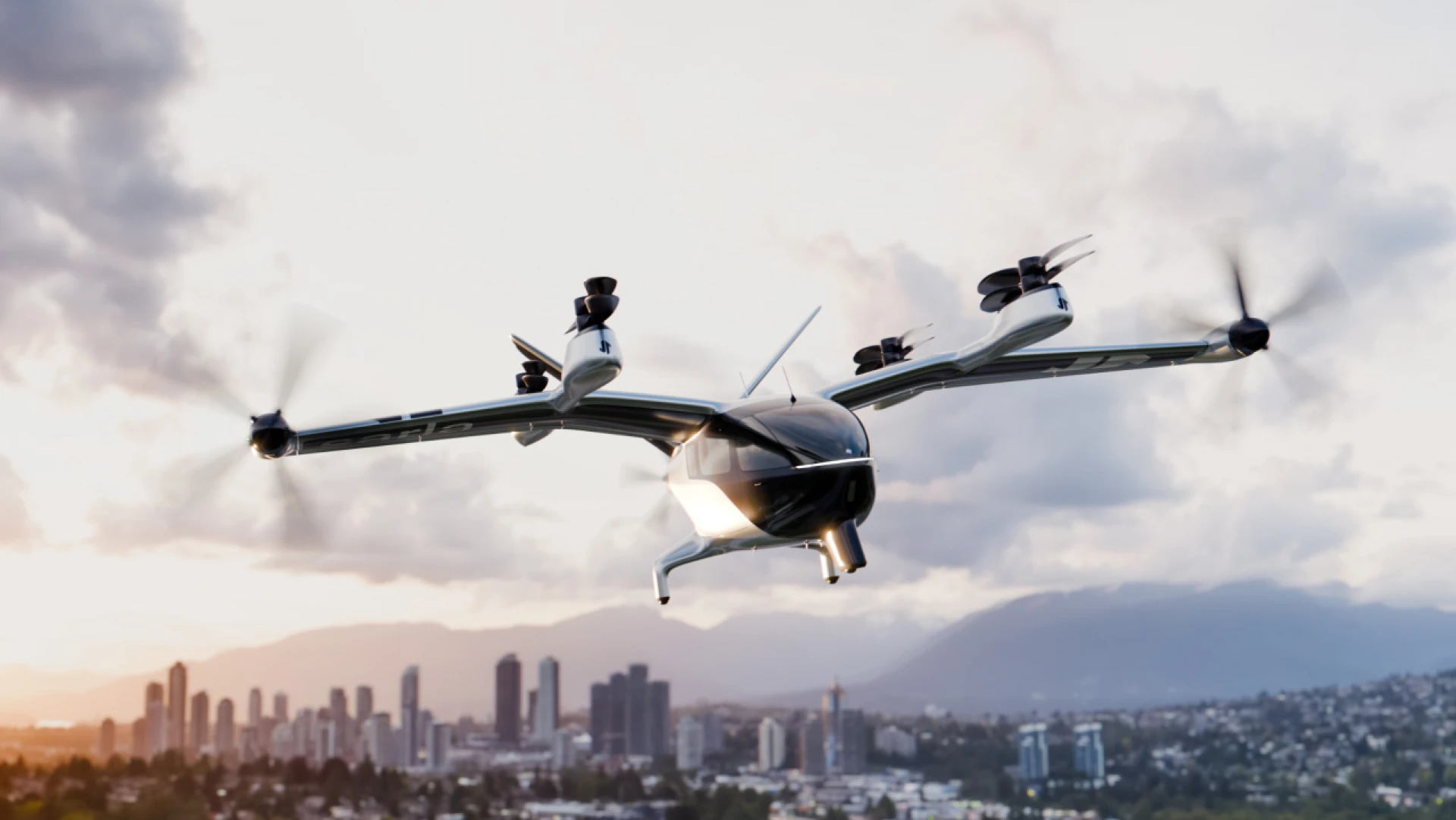
Shunya is being designed to combine vertical take-off and landing with fixed-wing cruise and for flight operations beyond 300 km. Sarla is targeting a first flight within the next 18 to 24 months, after which certification activities are expected to follow. Shunya combines VTOL capability with fixed-wing cruise efficiency, enabling runway-independent operations and improved propulsion efficiency.
The agreement comes as Sarla moves from technology demonstration towards development of its passenger-carrying aircraft.
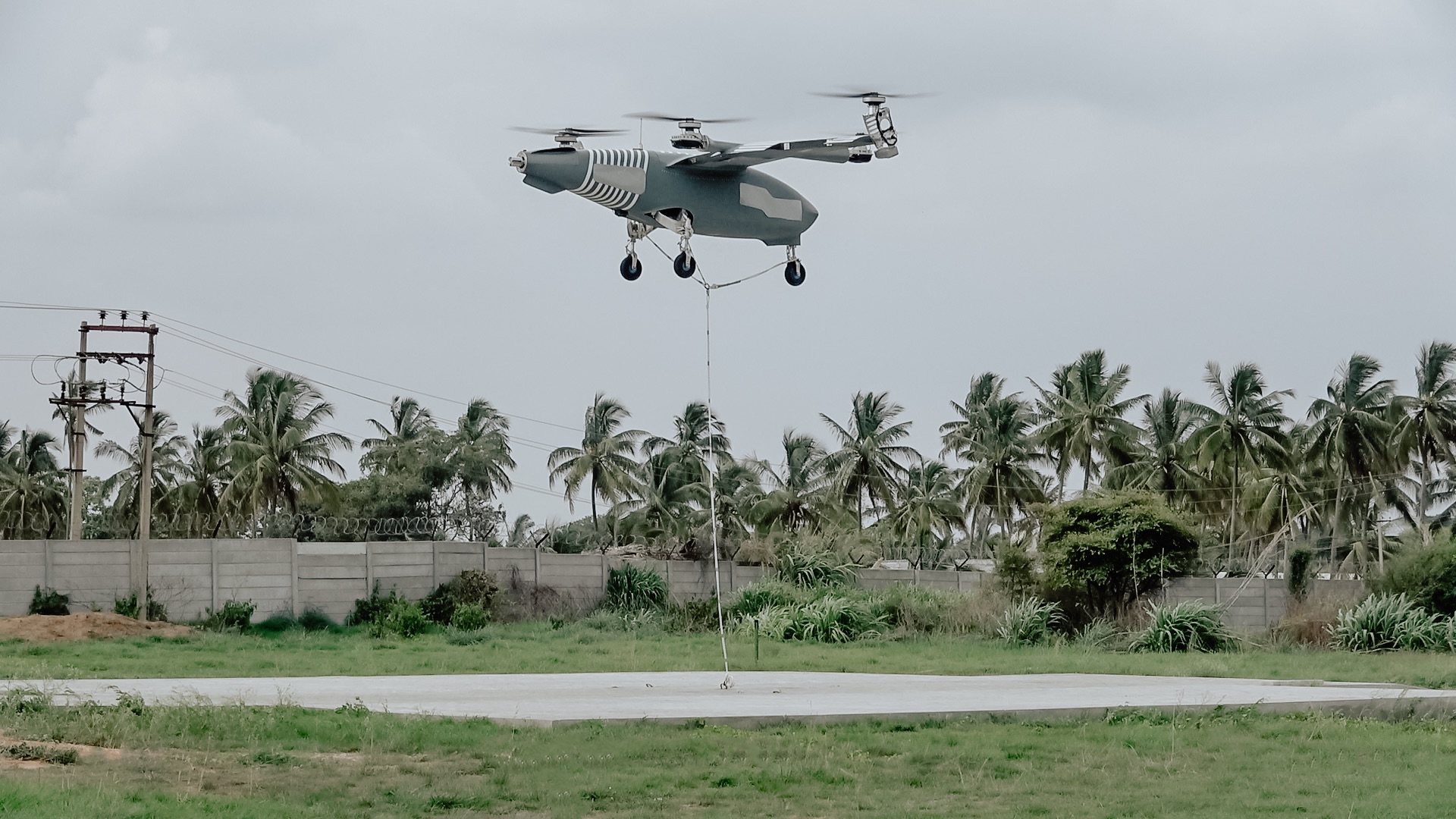
Earlier this year, its half-scale Sylla demonstrator completed a six-month flight-test campaign involving more than 500 test points and over 18 hours in the air. The 700 kg-class aircraft, with a 7.5-metre wingspan, was built to test the technologies that will eventually feed into Shunya.
Tata Elxsi brings flight-critical engineering expertise as Shunya moves towards first flight
Tata Elxsi’s role is significant because Sarla is now moving into areas where an eVTOL programme must progress beyond proving that an aircraft can fly.
Flight controls, avionics integration, verification, validation and the evidence required for certification become increasingly important as a programme advances towards a passenger-carrying aircraft.
“Building a new class of aircraft is not simply an engineering challenge,” Sarla co-founder and CEO Adrian Schmidt said. “It requires bringing together people and organisations willing to solve problems that have never been solved before in this market.”
Schmidt said Tata Elxsi’s experience in complex aerospace systems would give Sarla access to capabilities needed as it takes Shunya “from concept to reality”.
Tata Elxsi already works across electric a, flight controls, avionics software, systems integration and certification support. It also signed an agreement with India’s CSIR-National Aerospace Laboratories in January 2025 covering UAVs, urban air mobility and eVTOL technologies
Manoj Raghavan, CEO and Managing Director, Tata Elxsi, said: “Every major shift in transportation has been enabled by a combination of engineering innovation and ecosystem readiness. Advanced air mobility is no different, and Sarla Atransformation. Initiatives like this create opportunities to apply expertise built across aerospace, mobility and digital technologies to entirely new a
Shunya air taxi set for airport transfers and medical missions
Shunya is the first step in a much larger mobility plan that Sarla set out in November 2024.
The company deliberately chose a relatively large aircraft for its initial service. With six passenger seats, Sarla believes it can divide aircraft and operating costs among more travellers and offer fares comparable with premium ground transport.
Phase One would concentrate on passengers for whom saving time carries the greatest value, particularly business travellers using airport routes.
In Bengaluru, Sarla has used the journey between Kempegowda International Airport and Electronic City as an example. A road trip that can stretch to around two-and-a-half hours could, according to its plan, be cut to less than 20 minutes by Shunya.
Medical transport would form the other part of the first phase. Sarla’s 2024 plan envisaged charging commercial passengers while providing medical flights free of cost.
How Sarla A
The second phase depends on scale.
Sarla plans to reinvest proceeds from its initial operations into increasing aircraft production, seeking the type of economies of scale that helped bring down manufacturing costs in the automotive industry.
That would allow the network to move beyond premium airport transfers and connect places people use every day.
Residential communities equipped with landing facilities could be linked directly with offices, schools, universities, parks, sports venues and other organised destinations.
The ambition is for Shunya to evolve from an airport air taxi into a regular urban transport option, while taking some pressure off congested roads.
Sarla A
Sarla’s third phase is more radical and would involve another aircraft altogether.
Once Shunya is operating across heavily travelled point-to-point routes, the company plans to develop a smaller autonomous flying taxi with a much smaller footprint and a new propulsion system.

Instead of depending primarily on larger dedicated hubs, Sarla envisages the aircraft eventually reaching rooftops and potentially large balconies. A much denser network of landing points could create thousands of connections and, in Sarla’s vision, bring the cost of individual flights below today’s auto-rickshaw fares.
The company ultimately wants such aircraft to become mass transportation rather than a premium a
Its longer-term target is 2035, when it envisages thousands of points of interest being connected by a network that dramatically increases the practical radius within which people can live, work and travel.
Sylla flight tests pave the way for Shunya eVTOL development
For now, Sarla’s development programme remains several stages removed from that vision.
Sylla was never intended to carry passengers. It was built as an engineering testbed to see how the electric propulsion system, batteries, distributed propulsion, flight-control software, airframe and landing gear behaved together in flight.


The next demonstrator, Sylla 2.0, is intended to tackle one of the programme’s most important technical hurdles: transition from vertical lift into sustained wing-borne flight.
Data from the first aircraft is already being incorporated into Sylla 2.0 and the Shunya programme. Sarla CTO and co-founder Rakesh Gaonkar said the demonstrator had delivered the data the company set out to collect and that those lessons were shaping the next aircraft.
The immediate path is therefore more conventional than Sarla’s eventual vision suggests: prove transition flight, mature Shunya’s flight-critical systems, fly the full-scale aircraft and work through certification.
The Tata Elxsi agreement adds another engineering partner to that effort as Sarla tries to turn the four-phase mobility plan it laid out in 2024 into a certifiable Indian-built aircraft.
Like Jayaraj Rajapandian, Head of Aerospace, Tata Elxsi, said,“Shunya is a reminder of how quickly aerospace innovation is evolving in shaping the Technology landscape in India. As aircraft become increasingly fly-by-wire, electrified and connected, entirely new opportunities are emerging to rethink how people, goods and critical services move.”
Read the latest eVTOL news on AGNRead the latest eVTOL news on AGN
News
AogyUrban Air MobilityAdvanced Air MobilityElectric Ay
Sign up for our newsletter and get our latest content in your
inbox.
1
Greece signs $3.5bn deal for Israeli air-defence systemsGreece signs $3.5bn deal for Israeli air-defence systems
Air defence
2
FAA announces first remotely piloted hybrid-electric cargo flightFAA announces first remotely piloted hybrid-electric cargo flight
Advanced Air Mobility
3
B-2 vs B-21: How America’s stealth bombers compareB-2 vs B-21: How America’s stealth bombers compare
Northrop Grumman B-21 R…
4
Why NASA still needs wind tunnels in the age of supercomputersWhy NASA still needs wind tunnels in the age of…
NASA