Tems Was Once Told She Wasn’t Afrobeats. Now She’s Redefining What It Means.
Following her <a href="https://absafricatv.com/robins-first-outing-ends-in-a-bat/” title=”Robin's first outing ends in a bat”>first hometown performance in more than four years, Tems talks to Complex about the evolution of Afrobeats and why she refuses to be boxed into one genre.
ByDimas Sanfiorenzo
November 16, 2026

Key Takeaways
- Following her first Lagos show in more than four years at Spotify’s Surround Sound concert, freshly Grammy nominated singer Tems talks to Complex about homecoming, musical identity, and Afrobeats’ evolution.
- Tems rejects rigid genre labels—“Tems is my genre”—and argues that Afrobeats isn’t dying but transforming through new sounds, suggesting it may be more movement than genre.
- She prioritizes artistic growth over credit for influencing others, names Kate Nash’s “Mariella” as a surprising favorite, and says a new album could arrive next year without committing to a timeline.
“Spotify told me they were going to invite my fans, and I was like, ‘You’re sure?’ They say I don’t have fans in Nigeria, so I was a bit confused.”
Tems said this a couple of minutes into her first hometown show in more than four years. The occasion was Spotify’s inaugural Surround Sound concert at Livespot, an intimate venue in Lagos. In September, Tems and Runtown performed there on separate nights, each playing for a crowd of around a 1,000 of their most engaged fans on the platform.
The performance comes at an interesting time for Tems, who released her latest EP, theGrammy-nominatedLove Is a Kingdom, in 2025 but has continued dominating the charts with “What You Need” and her work on Dave’s “Raindance.” And yet, even as she’s enjoying some of the biggest success of her career, the conversation around Afrobeats, the genre she’s most associated with, has become increasingly chilly, with questions about its future dominating the discourse. Tems herself has never fit neatly into the genre, something she’s been careful to point out.
“I’m not exactly Afrobeats, but I’m not exactly R&B, but I’m also not exactly alternative,” she tells Complex a day before her performance, as her band preps. “So I feel like trying to box me—it will never make sense. So I think I would say I’m just Tems.”
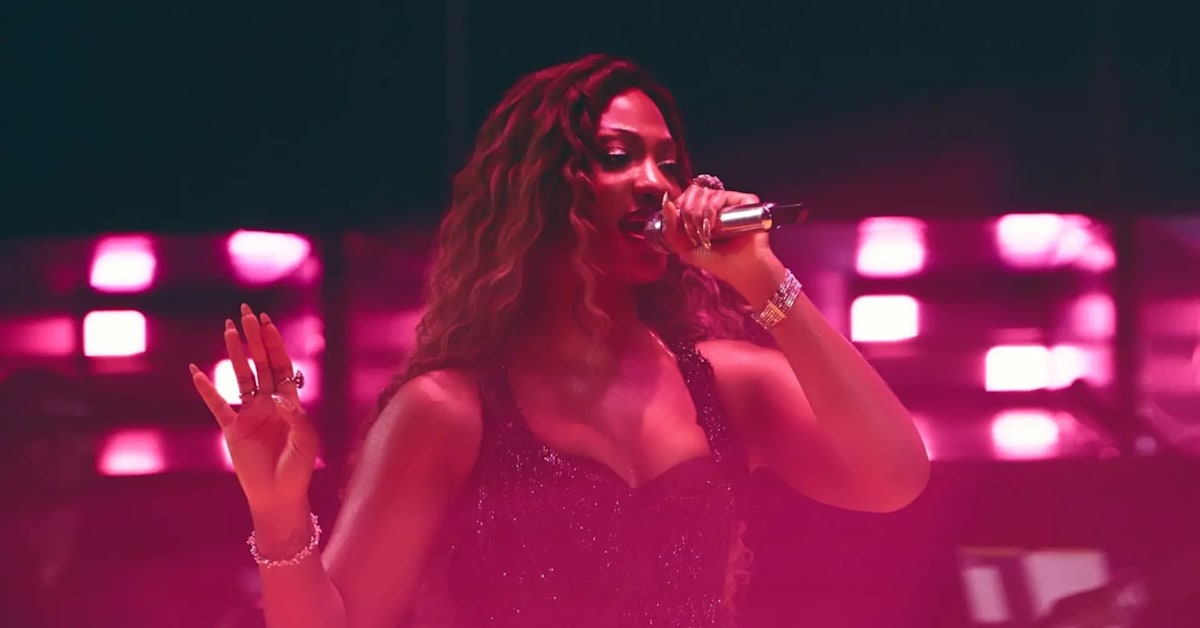
For her performance, which you can watch on Spotify, Tems looked elegant but was in a playful, alluring mood as she ran through her greatest hits, including, most memorably, early gems like “Try Me” and “Ice T.”
The setup placed Tems at the center of a circular stage, giving everyone in the audience something resembling one-on-one time with the singer. It was a dynamic Tems had fun with throughout the night, occasionally locking eyes with audience members and holding their gaze for an almost uncomfortable amount of time.
We spoke to the singer about Afrobeats, how the scene has changed over the years, and what’s next for her.
This interview has been condensed and edited for clarity and readability.
Tell me about your last show in Lagos before this one.
It was a bit of a blur. I know I was late because I was stuck in traffic and they had to send police to pull me out of the traffic and it was a bit crazy. I was also a different person. I was much funnier, I think.
I think I am still funny now, but then I was unintentionally… I was really, really unfiltered.
Wait, was it like your team telling you to calm down or did you feel like you had to do it?
No, it wasn’t something that was conscious. It wasn’t something that consciously happened. I just over time realized that I’ve changed.
How is performing at home from Lagos different than performing in the States or UK or around the world?
I think it’s different because this is my home country, this is where I’m from, these are my people. And I think they see you in a different way than from people who never had context to you at all.
I was born and raised here, so it’s like coming back to your family. It’s like coming back to your family and reuniting and seeing people that you haven’t seen in ages. Obviously I’m meeting a lot of people for the first time, but it just feels more familiar.
You obviously have been on the scene for years. I’m curious to hear your thoughts about how West African music has changed since you started versus now. Like what’s different? What’s the same?
Well, around the time when I was still coming up or when I released my first song, I know that Afrobeats was a bit more on the traditional sounding side. There were less variations of Afrobeats. And I think since after I started, there’s more variations of different types or different versions of Afrofusions.
I think that’s how it’s changed. There’s different things. There’s Afro pop and Afro soul and R&B, and there’s just different types of music that I don’t even know what genres they would fit in, but I think that’s a difference between when I started and now.
What do you like to call yourself? Because you do obviously touch it all. So how would you describe that?
I feel like I don’t really know. I think I just like to make music. I think most of my music is… It’s just like a blend of many different genres. There’s Afro influences in there for sure, but would I call it pop? I’m not sure. Would I call it R&B? I’m not sure. Would I call it… I think I’ll call it alternative, but what’s the definition of alternative? It’s other. It’s just music that isn’t pop or R&B. So I think it’s kind of a blend of all those things.
Is there a label that frustrates you that people give you?
Nothing really frustrates me because I think people would naturally want to tend to put you into a box and you just kind of have to continue doing what you’re doing without thinking too deeply about what people want to label you. I feel like Tems is my genre.
And I know it’s a genre because I feel like there’s sometimes when you hear someone and you hear Tems in them and you can hear that influence. So maybe Tems is the new genre. Who knows?
Do you feel like you hear people using your style a lot?
I wouldn’t say they use the style. I think I can tell when someone has been inspired by my music because I’m sure people that I’m inspired by can listen to certain aspects of my songs and see their influence in it.
And I think it’s something that maybe only me might see. I don’t know if it’s something that would be hearable to most people. I think it’s just for me to know or it’s just I can see myself in a lot of music that some people put out. Honestly, I think that’s a blessing because in the same way I have a lot of influences in my music. I feel like some people might pick out some things. It’s not always definite.
It’s cool that you call it a blessing because I feel like another artist would be annoyed like, “Oh, I’m not getting the credit.”
Yeah. I think I’ve removed myself from the thoughts of like, “Oh, I need to get the credit.” I don’t really care too much about that because what’s more important to me is actually reaching a level of music artistry that would make me continue to grow. I just want to continue to evolve musically, and that’s really my concern. It’s natural for people to be inspired by your music and take things from your music and you can’t really stop it. And if they don’t give you credit, you can’t force them, you can’t beat them, and it doesn’t really matter. It really doesn’t, because you’re one of one, they’re also one of one too. You also have influences too. A lot of artists don’t say they’re influences either. So I think when you remove credit out of it, you can be free because you can focus on what’s really important.
We were just talking about it, so I’m curious, what do you think of the idea that Afrobeats is on the low point or dying?
Afrobeats—it’s transforming into something else. I don’t think it’s dying. It’s more like there’s a cocoon phase and then there’s a caterpillar phase and there’s a butterfly phase and they don’t look like each other.
A butterfly does not look like a cocoon. And I think Afrobeats is actually spread so much that it’s changing. It’s what I was saying, there’s now different variations, so it’s transforming into many different things at the same time. And so I think it’s more diffusing. I think it’s more being infused into people’s music and being spread out than maintaining… Because of its impact, it wouldn’t stay the same. It’s going to transform into different things and be expressed in different ways through different artists.
And I think because the variations look different, it might look like to some people that it’s dead, but I think it’s just transforming into something else.
New album. Any updates?
Maybe next year. I’m not sure.
Why are you saying maybe?
Because we never know.
Before we go out, give me one song that you’re listening to that people in your fans would be surprised.
Kate Nash’s “Mariella.” They’ll definitely be surprised by that.
Anything else you want to add? Anything else you want to say?
Well, when it comes to Afrobeats, I think I was always… When I first started, I was told that I wasn’t Afrobeats.
Who told you that?
I used to do a lot of auditions and the kind of music that I was making at the time wasn’t seen as Afrobeats. And actually I was advised to do Afrobeats, so I always thought that I wasn’t Afrobeats, and I kind of went with that because I didn’t want to disrespect the nature of Afrobeats. If you’re saying you do Afrobeats, you have to sound like Afrobeats, but now I’m realizing that maybe Afrobeats is a movement rather than a genre. So maybe it’s good that it’s being diffused or spread so that it’s clearer that it’s not about a genre called Afrobeats and more about a movement.