Modernising power systems remains a critical development priority in emerging economies. Most countries face the challenge of balancing affordable energy access, providing energy security and ensuring environmental sustainability.
For governments, this tension manifests differently depending on the stage of their country’s economic development and the maturity of their power grids. In much of Africa, the focus centres on expanding energy access to transform livelihoods and foster economic growth. In Asia, by contrast, notably in India – where electricity access is near-universal – the focus has shifted towards integrating renewables, strengthening grids and improving reliability.
The trajectory of India’s energy development and the state of most African power systems present a unique opportunity for collaboration. By working together, African nations can leapfrog legacy constraints by embedding flexibility, digitalisation and storage at an early stage, rather than carrying out costly retrofits later.
Emerging economies are future-proofing grids
Energy storage has become a vital catalyst for national grids to move from basic energy access towards energy abundance and system reliability. Utility-scale batteries enable the integration of low-cost renewables, driving productivity, reducing reliance on fossil fuels and powering industrial growth.
READ MOREThe lowest solar tariff in Africa was never a real deal
The <a href="https://absafricatv.com/india-africa-cooperation-in-a-fragmented-global-order/” title=”India–Africa Cooperation in a Fragmented Global Order”>Global South has already made notable advances in deploying battery energy storage systems (BESS), creating a foundation from which to scale. Key examples include:
- India’s First commercial standaloneutility-scaleBESS (20MW / 40MWh) and the largest in South Asia: Enhances power quality and delivers reliable 24/7 power to more than 100,000 people; the system will also prevent 1.8 million tonnes of CO2 emissions – equivalent to taking 20,000 cars off the road in India every year.
- South Africa’s Red Sands BESS(153MW / 612MWh): Eases grid congestion through load shifting and peak balancing to support a resilient, decarbonised power sector.
- Egypt’s Obelisk Solar-Plus-Storage Project (1GW solar; 100MW / 200MWh BESS):Leverages a multilateral financing package to provide dispatchable energy and stabilise demand using stored solar output.
- Namibia’s Utility-Scale BESS (51MW / 51MWh): Smooths out renewable energy fluctuations and stores affordable regional power.
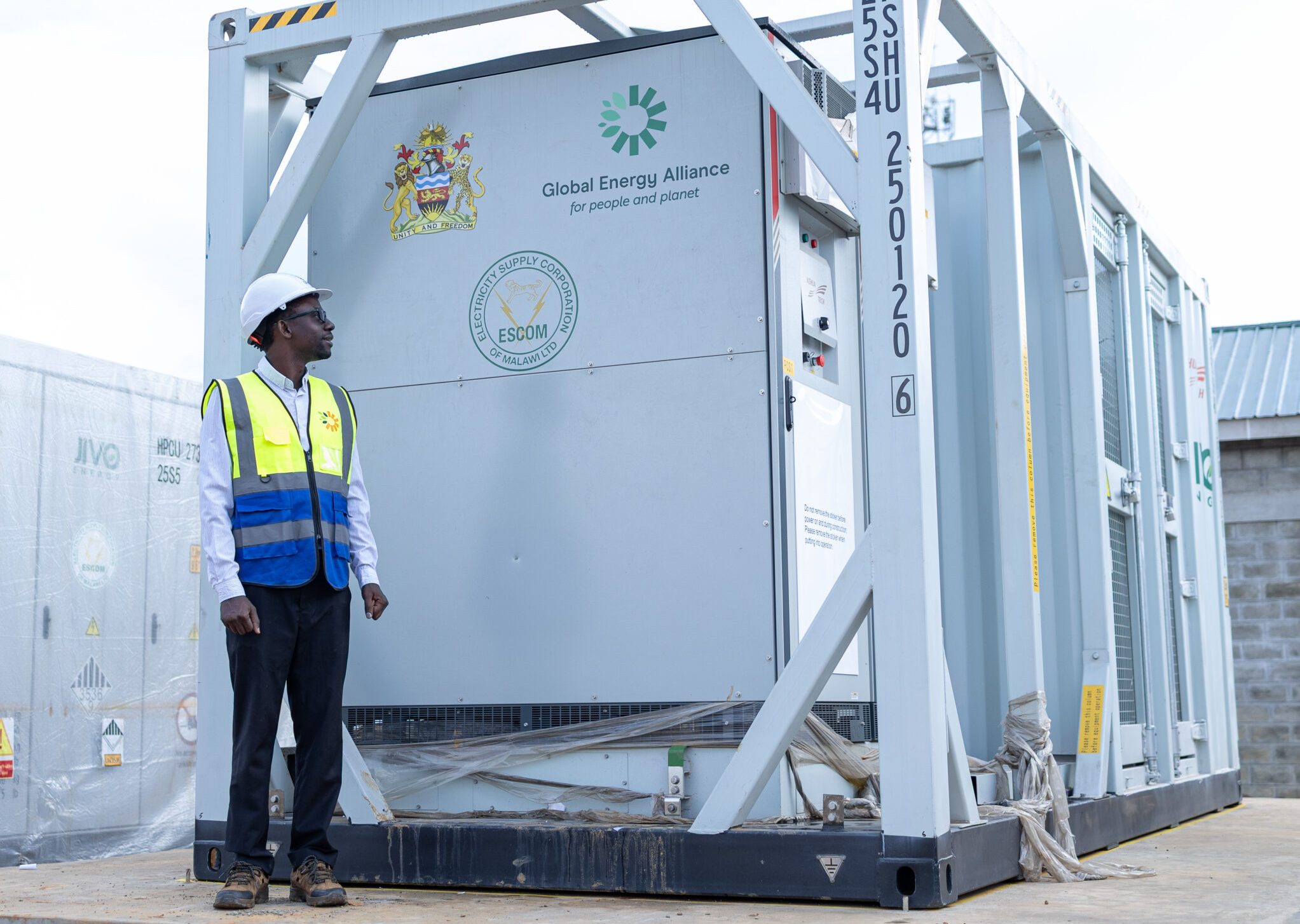
- Malawi’s First Standalone Utility BESS (20MW / 40MWh): Improves national grid stability, integrates low-cost solar power and reduces load shedding during peak hours.
- Mongolia’s Baganuur Battery Station(50MW / 200MWh): Improves grid resilience, offsets a 200MW winter deficit and advances broader energy reform goals.
These examples show that when emerging market and developing economies (EMDEs) integrate storage into their power markets, renewables shift from an added cost to a reliable, income-generating backbone for growth.
South-South collaboration empowering the transition
South-South collaboration offers a clear path to scaling the deployment of clean, reliable and affordable energy across Africa. Partnerships rooted in shared realities are practical, cost-effective, and build local ownership.
For instance, India’s first commercial, standalone, utility-scale BESS project was delivered at a record 55% below the previous benchmark tariff, setting a new affordability standard in the country. Backed by catalytic capital from Global Energy Alliance for People and Planet and its partners, the project attracted strong private-sector interest, proving how blended finance can make grid-scale storage commercially
READ MOREUS, Russia and China vie for nuclear dominance in Africa
The project implemented by BSES Rajdhani Power Limited (BRPL) has since proved to be a replicable playbook for modernising energy systems across emerging economies. In India alone, there is an estimated pipeline of 55GWh potential storage capacity, earmarking an estimated $5bn-$6bn in anticipated investment.
Similarly, Malawi’s newly commissioned Kanengo BESS facility serves as a critical case study. Designed to stabilise a hydro-dependent grid and unlock new solar capacity, it offers lessons that can be replicated across EMDEs.
Anchored to the facility is the Southern Africa Battery Energy Storage System Centre of Excellence (SABESS CoE), established at Mzuzu University in Malawi. The centre will serve as a regional hub for collecting, analysing and sharing BESS performance metrics and project development tools from Malawi, the wider African continent and the global market. Demonstrating its immediate impact, the centre’s website has already logged more than 260 downloads of development tools from the Kanengo BESS.
READ MOREKenya: Mandatory battery storage for solar, wind projects sparks early tariff pushback
The energy transition in the Global South is poised to move beyond isolated projects towards coordinated, scalable systems that deliver reliable power. The focus is squarely on power reliability – the kind of consistent electricity that supports businesses, strengthens institutions and improves people’s lives. Energy storage and digital grids make this possible, so clean energy delivers tangible gains for households, utilities and national economies.
The Global South has already demonstrated its ability to move with speed and inclusion. With sound market design, the right policy environments and catalytic finance, emerging economies can lead the next phase of the world’s clean energy transition and deliver the foundation for long-term economic growth.