The growing importance of North Africa’s trade corridorshttps://en.majalla.com/node/334151/politics/growing-importance-north-africas-trade-corridorsPolitics
The growing importance of North Africa’s trade corridors
Power in this part of Africa was once determined by land and territory. Today, it is more about control of transit routes, chokepoints, gateways, and connection hubs
AFP
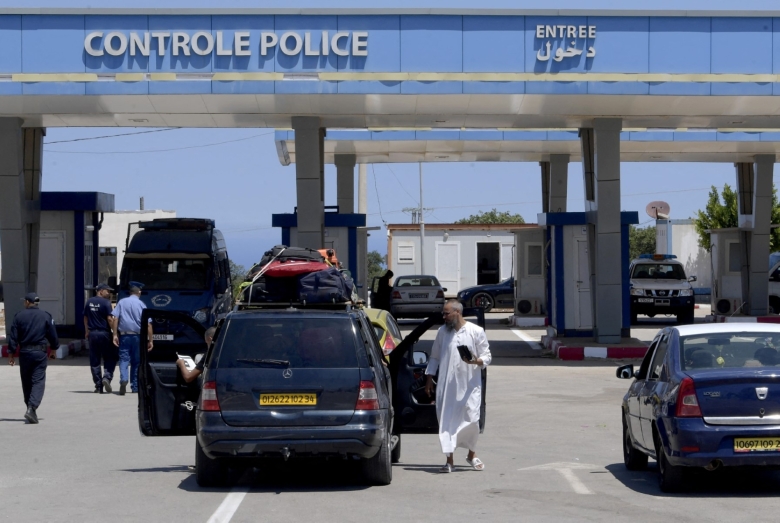
Cars cross at the north-western Tunisian Tabarka border post with Algeria, on the first day of its reopening on 15 July 2022.
Rabia Abdul Salam
last update on
12 Nov 2026
In North Africa, land border crossings are not just customs checkpoints regulating the movement of people and goods. Today, they are seen by many as vital corridors through which regional powers aim to expand their influence and reshape political alignments.
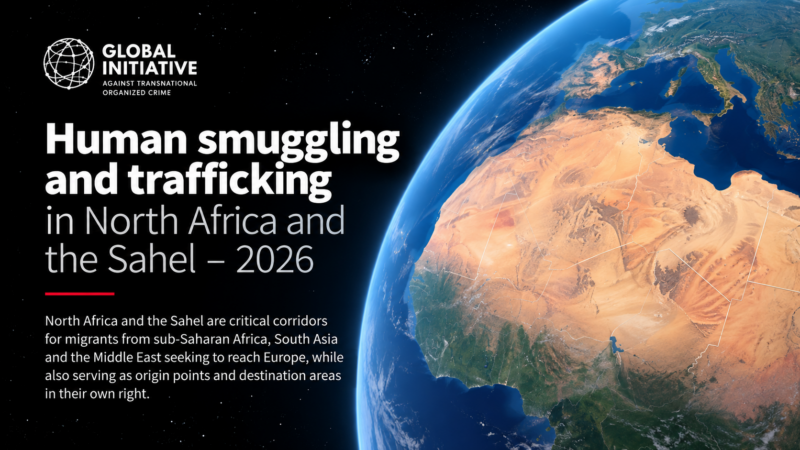
The background to this shift in emphasis over these vital routes is the patchwork quilt of bitter rivalries that stretch across the Maghreb and the Sahel, where borders and crossings acquire new dimensions. This is no longer just about sovereignty; it is about shaping the regional balance of power.
In an unsafe region, the protection of these corridors requires states to possess unified military structures. The absence of such structures creates a vulnerable flank for organised criminal networks and terrorist groups to exploit, expanding their reach and establishing parallel supply routes such as the ‘Salvador Corridor’ or ‘Salvador Pass,’ a remote desert mountain pass and trans-Saharan transit route at the border intersection between Algeria, Niger, and Libya.
Envisaged as a major logistics artery, Algeria and Libya committed to re-establishing the Debdeb-Ghadames border crossing before the end of 2026. This followed intensified diplomatic engagement between Algiers and Tripoli, both of which want to contain threats along their frontiers. The crossing has considerable historical and geographical importance.
Algeria-Libya
First established in 1955, it links Debdeb, a town in Algeria’s far south-east, with the historic oasis city of Ghadames in south-west Libya. It has long been one of the three principal land crossings between the two countries, alongside Tin El Koum and Tarat. Its strategic value comes from its position near where the borders of Algeria, Libya and Tunisia meet. This gives the crossing social and economic importance, linking communities whilst facilitating overland trade across the northern Sahara.
Algeria first suspended traffic through the crossing in 2011 as security deteriorated in Libya and armed clashes intensified. A complete closure followed in 2014, with a small number of humanitarian crossings being the only exception. Ahead of the reopening of the Debdeb-Ghadames crossing, Algerian authorities have undertaken extensive work to ensure its operational and technical readiness, including the modernisation of security, customs, and service facilities.
“);
googletag.cmd.push(function () {
onDvTagReady(function () {
googletag.display(‘div-gpt-ad-3341368-6’);
});
});
Control over strategic corridors can give any actor the power to slow or accelerate flows of energy, trade, and supplies, turning geography into a political instrument
Political scientist and researcher Hamza Berhail
Premises used by national security services and customs authorities have been reorganised to strengthen border controls and facilitate the movement of travellers and goods. The facility now includes a dedicated reception hall for official delegations, modern scanning systems, advanced surveillance cameras, measuring equipment, and weighbridges for heavy goods vehicles.
Roads have been upgraded, with a 3.5km stretch at the entrance to Debdeb converted into a dual carriageway to ease traffic. Extensive parking is planned, along with holding areas for passenger vehicles and freight convoys heading to Libyan and other African markets. Utilities to the area have been improved, too, including a new water reservoir and the expansion of the drinking water network to the crossing. Finally, the facility is being equipped with modern lighting, new signage, and tree-planting to improve the appearance of its surroundings.
Functional space
The planned reopening of the Debdeb-Ghadames crossing forms part of a broader structural transformation across North and West Africa, as new corridors reshape the Sahara. Political scientist and researcher Hamza Berhail said states’ international standing will increasingly depend on control over corridors, infrastructure, and logistics networks that regulate the movement of energy, goods, and data.
“Strategic corridors have become one of the most prominent expressions of functional space,” Berhail told Al Majalla. “Control over these points offers more than commercial profits; it can give a state, or any influential actor, the power to slow or accelerate flows of energy, trade, and supplies, turning geography into a political instrument.” States no longer need to control vast territories to wield influence, he said, because control of chokepoints or trade routes that cannot be easily bypassed is just as important.
This suggests a move from the more traditional and territorial ‘spheres of influence’ model to a more functional, networked space, the practical expression of which is a series of transport corridors redrawing routes across the Maghreb and the Sahel. One prominent example is the continental Tunis-Ras Jedir corridor, launched by Tunisia in coordination with Tripoli. It aims to connect logistics facilities in Ben Guerdane, a Tunisian coastal town close to the border with Libya. through routes across Libya to six countries. This direct access to the Mediterranean offers an alternative to lengthy maritime shipping routes.
Connecting the Sahel
Sahelian trade arteries have gained prominence following a series of coups in West Africa, which exposed the vulnerability of established transport routes. The Cotonou-Niamey overland corridor illustrates the problem. For many years, it was Niger’s principal supply artery, until regional upheavals and sanctions suspended traffic. These disruptions led countries across the Sahel and North Africa to explore more flexible alternatives to safeguard the flow of essential goods and raw materials.
Another element in this emerging network is the development of maritime access corridors for landlocked countries. The Atlantic Initiative, for instance, seeks to overcome the geographical isolation of Sahel states by connecting them to international seaports to facilitate trade.
Efforts to develop and reopen corridors can face serious challenges that stem from the institutional vacuum that prevails across vast desert regions and borderlands. This includes the absence of unified military structures capable of controlling and securing the routes used by freight vehicles and overland trade convoys. This leaves the corridors exposed, creating a vulnerable flank in areas where effective state authority is lacking and where tribal loyalties are prioritised.
National security
Another challenge comes from the organised criminal networks that make money smuggling drugs, people, and weapons. Armed groups and smugglers exploit the porous borders between Sahel countries (particularly Niger, Chad and Mali) to establish their own supply routes. These networks compete with regulated transport arteries and threaten critical infrastructure, including oil and energy facilities.
Efforts to reopen the Debdeb-Ghadames crossing between Algeria and Libya offer a revealing example of the challenges, given the political and military rivalry between competing authorities in eastern and western Libya. Ashrif Abdullah, director of the Libyan Centre for Security and Military Studies, recently addressed these concerns on Sha’an Aam, a political programme broadcast by Masar TV.
“The absence of a unified security and military institution opens the door to the entanglement of regional interests over borders, energy, and influence,” he said. Algeria regards south-west Libya as a direct extension of its strategic security perimeter, he said, where concerns about the spread of extremist groups and organised crime intersect with vital oil and gas interests, particularly in the Ghadames Basin.
Algeria is determined to bring the Debdeb-Ghadames crossing into full operation before 2027 to help the Algerian army establish a security and surveillance perimeter around the shared Ghadames Basin. The crossing would also serve as a key overland logistics gateway for major Algerian companies, like the state-owned energy group Sonatrach. It would facilitate the transport of heavy equipment and the deployment of technical and support teams at a sustainable cost. For countries like Algeria, these corridors are as much about national security as they are about trade. Their importance will only grow.
Algeria is determined to bring the Debdeb-Ghadames crossing into full operation before 2027 to establish a security perimeter around the shared Ghadames Basin
Connecting the Sahel
National security
+ / –
SAVE
SHARE
Related topicsSahelinternational tradecorridorsborder crossingNorth Africa
“);
googletag.cmd.push(function () {
onDvTagReady(function () {
googletag.display(‘div-gpt-ad-3341368-4’);
});
});
“);
googletag.cmd.push(function () {
googletag.display(‘div-gpt-ad-3341368-5’);
});