


byZainab PatelinCulture & Lifestyleon 21st July, 2026
Henna may be temporary, but the meaning behind it and the relationships created through it can remain forever
Here at AMALIAH, we are huge fans of henna. Sitting still with anticipation whilst our hands are decorated with florals, paisleys and domes is truly a feeling like no other. It brings us joy to sit together, with friends, family and even strangers, whilst we share the valuable moments only henna can bring. It’s a huge part of womanhood and a great symbol of historical and cultural preservation.
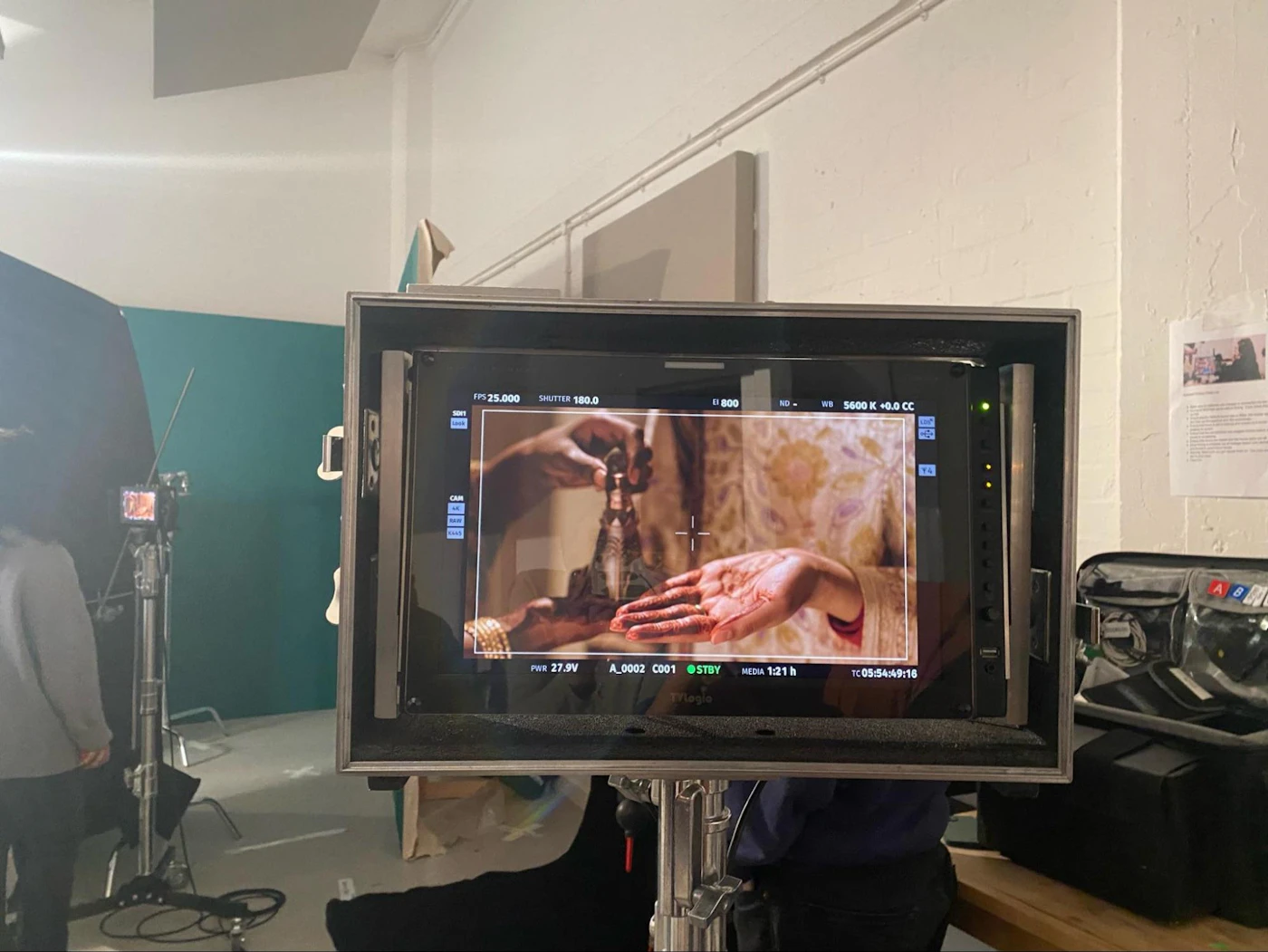
We recently celebrated the sixth edition of Henna Hands for Eid al-Adha, featuring a screening of Basma Khalifa’s film Henna. It was a wonderful opportunity for the Amaliah community to celebrate this cherished ritual by adorning their palms with henna while learning more about its history and significance across cultures.
For Sudanese director and writer Basma, henna means community. Whilst it may be applied to one’s own body, it brings joy to others to see it and absorb it, says Basma. “That sense of connection and community is really, really special.”
Heritage & History


Some researchersbelieve that henna’s origin and popularity stemmed from India, whilst others believe that it originated in the Middle East and North Africa, and that the Egyptian Mughals brought it to India in the 12thCentury. But Aboriginal people in both Egypt and India shared a connection with Earth’s substances, like henna, to promote its special use, beauty and profusion. As henna has cooling properties, they would make a paste with henna and soak their hands and feet. It was also used to treat aches and burns.
Henna is mentioned in the Hadith as a treatment for wounds, inflammation and burns too.
“She said that God’s messenger never had a wound or a bleeding foot* without ordering her to put henna on it.” (Miskhat al-Masabih, 4541)
Whilst the origins of henna may remain a debate, it’s true that how we use henna to decorate our bodies doesn’t belong to a single homeland. In fact,
it’s the one ritual practised in various ways across different cultures and religions, giving henna a worldwide heritage.
In Sudanese culture, henna can distinguish a life-changing moment in both a man’s and a woman’s life. Henna is “a real rite of passage, a sort of symbol of marriage and a symbol of union,” says Basma. Men wear henna to announce their marriage and match their bride. Once a woman is married, she is allowed to decorate both her hands in henna, rather than just one. “When I was growing up, that was what we were taught, which I always thought was really fascinating,” said Basma.
The lead model for the film, Hana, who is also Sudanese, got engaged the day before the shoot. “It all came about so beautifully. I had this henna on my palms that I had done one or two days before the shoot, which came in so nicely as decoration for my surprise engagement.” Henna plays a huge role as a marker in the different stages of a woman’s life.
Growing up, Sudanese women would put henna in their hair. When they get married, there would be henna parties where female relatives surround the bride, ululate, and sing. When they have a child, they’d get henna done again.
Sudanese henna consists of big flowers and leaves, rather than the intricate fine designs we see in South Asian mehndi. “Very traditional Sudanese henna covers the tips of your fingers, nails and the soles of your feet as well. They put natural ointments on it to make it go dark, and the darker the henna, the more beautiful it is,” says Hana.
Furvah Shah, a journalist of Pakistani descent, was a hand model for Basma’s film and describes henna as something she grew up with. “My sister and I would often apply henna on each other or go and get it done. I’ll always make the effort, because it’s a big part of Pakistani culture.” Women from South Asian backgrounds apply mehndi to their hands and feet, especially when they get married, and brides often hide the groom’s name in the wedding mehndi.
“A lot of people in North or East Africa do henna with hair dye, which is the black henna, but mehndi’s always red and orange, which I also loved because that is pure henna,” says Basma.
Humaira is a henna artistfrom London, and she describes the ritual as a special, intimate setting for herself and her brides. “I get to end up having very nice conversations at a moment when they’re feeling so many emotions. When they’re getting something semi-permanent on their hands, they literally have to sit still and take it all in.”
She, too, is of Pakistani descent, but does various styles of henna, including African, Khaleeji and Fessi. Khaleeji (Arabian Gulf) henna consists of large, floral designs with vines that wrap around the arm. Fessi (Moroccan) henna is very intricate, geometric and symmetrical. Humaira describes Pakistani henna as very dainty, like the embroidery on Pakistani clothes.


After Basma moved to London, she was exposed to a lot of mehndi and was fascinated by the differences between her cultural experience with henna and others.
“Henna means so much to so many of us, and yet we all have a different relationship with it.”
She describes henna as a “marker of all the biggest moments” of a woman’s life, such as puberty, marriage and pregnancy, which is what her film is all about.


Through the Seasons
The film reflects a woman’s cycle from childbirth to adulthood, using henna as a symbol of life’s transience. “As women, we go through a huge hormonal shift every month, and every four months we go through a shift of the seasons.” The film is chaptered into four seasons: spring, summer, autumn and winter to showcase the seasonal change which both the henna plant and women experience. “I think there’s something really beautiful about how we walk alongside this plant that sort of does the same thing as we do as humans, and especially for women. “They’re living organisms; plants are living, they grow, they die [and] they’re birthed.”
After producing the film, Basma sat on it for three months, confused about what the dialogue should be. She wanted the audience to relate but also express her own thoughts. Eventually, she decided to talk as if she were the henna plant, to give it a voice and meaning. After meeting the henna artist for the film, Medina Trevathan, Basma realised that Medina would always talk about the henna plant before talking about the art.
“We are all from the earth, and from the ground, and it’s really interesting to me that you put this thing on your skin and your body consumes this plant,” said Basma.
After reading and learning more about henna, she recognised that it’s “deeper than decorative things for weddings, parties and Eid. It actually is a really deep-rooted, important cultural moment.”
In Western society, henna has been reduced to the term“henna tattoos”and is done at music festivals with no credit to its heritage. “I was seeing so much henna being done at festivals like Glastonbury and Coachella, and I was like, ‘What is happening?’ We’re not understanding the depth of [the ritual].” Henna stencils are now available to buy, but this entirely defies the true, creative concept of henna.
It shows just how rushed and fast-paced our capitalist society is, where people have forgotten how to enjoy art in its slow form. Henna patterns not only honour the culture from which it stems, but also honour the artist.
No amount of ready-made stencils can replace the captivation and beauty of the process.
Basma explains that it’s important for people who are from countries where henna exists to hold on to their culture. In fact, in 2024, theUnited Nations Educational, Scientific and Cultural Organisation(UNESCO) inscribed henna on the Representative List of the Intangible Cultural Heritage of Humanity, which means that henna has been recognised to have outstanding universal value that should be preserved properly. UNESCO works to safeguard heritage and ensure access to information.

Culture & Society
“My proudest thing about this film is that it is made up of women from sixteen different countries, where henna is present.” Basma hopes that the audience, no matter where they’re from, can see themselves in it, not just through the henna patterns, but also in the zaghrouta in the background and the making behind the scenes. “In a way, by representing everyone, I was hoping to represent no one.”
After Sudan was plunged into a war in April 2023, which then developed into an ongoing genocide by the Rapid Support Forces (RSF), Basma felt a duty as a storyteller to ensure Sudanese stories, as well as other cultural stories, are preserved for future generations. “We don’t know when we will be able to go back to the land that we’re from, and I just thought of my little cousins, nieces and nephews, and thought, how will people know about Sudan? How will people know about Palestine and Lebanon?”


Women and girls from a range of backgrounds have the henna ritual in common, which fosters love, friendship and familiarity, especially in a time of widespread displacement. When Palestinians marry, the henna ritual usually takes place at thesahra, which is when the groom officially asks for the bride’s hand in marriage. Henna can even have a day of its own or take place at the bridal shower, where women make a paste which is spread on a tray with flowers before the bride’s hands are decorated with it. Before the newlyweds enter their new home, they’ll press a handful of henna into the doorframe to bring blessings.
In Baalbek, an ancient city in Lebanon, renowned for its heritage and hospitality, couples getting married take part in Laylat Al-Henna (Henna Night). This is a symbolic and emotional pre-wedding tradition in which the groom’s family arrive carrying the henna tray that has been passed down through generations. It’s filled with flowers, incense and candles to represent purity, prosperity and love. The couple dips their pinkie finger into the henna bowl, and an elder relative ties a white cloth around their fingers, marking the beginning of a shared life.
Henna can even help raise awareness. For instance,InkVisibleis a campaign by the agency Impact BBDO, which turned henna into a symbol of marital abuse against Pakistani women. It was released in March 2025 as a call for help. Henna would be placed on the bride’s bruise, whether it be her eye, neck or lip, to raise awareness of violence. This led to a 24% rise in helpline awareness and a new law which made domestic abuse a punishable crime in Pakistan. The campaign is now shared across social media worldwide.
It’s fascinating to see how many of us grew up with henna around friends and family, but may have been oblivious to the deep-rooted meaning of it. Henna can hint that there’s a significant mark in our lives to strangers who just so happen to glance at our hands. It celebrates a chapter of our lives with our loved ones. The story of how henna came about remains unknown, but it’s here for all of us to use wherever we’re from, to bookmark the stories of our lives.
Zainab Patel
Zainab Patel 19 years old London, UK Muslim Produces written & video journalism on topics she believes matter. Her interests include: Reading, writing, sewing & travel.

