

Now that the Supreme Court appears to have filled out its oral argument docket for the 2025-26 term (unless it opts to fast-track a case), it seems an apt time to survey the Second Amendment landscape and highlight some of the biggest issues that the justices have not yet tackled.
As a reminder, the current era of Second Amendment jurisprudence is relatively new in the world of Supreme Court case law. Indeed, it was less than 20 years ago that the court decided District of Columbia v. Heller, holding that the Second Amendment protects an individual right to possess a firearm for self-defense. Fast forward to 2022, when the court brought about another sea change with its decision in New York State Rifle & Pistol Association Inc. v. Bruen and established (or at least formalized) a new test for Second Amendment cases: text, history, and tradition. Specifically, under the Bruen framework, courts must first ask whether the “plain text” of the Second Amendment is implicated by the challenged firearm conduct; if so, the government must then show that the law restricting gun rights aligns with this country’s “historical tradition of firearm regulation.”
Until now, the only other Second Amendment case decided since Bruen was United States v. Rahimi, in which an eight-justice majority upheld a federal statute that temporarily disarms anyone subject to a domestic-violence restraining order. While Rahimi gave some guidance on how to undertake Bruen’s historical analysis, lower courts nevertheless continue to struggle and split on several gun-related matters.
Which brings us back to the present. This term, we will get two Second Amendment decisions from the court. In Wolford v. Lopez, the justices are considering whether a Hawaii law that presumptively prohibits carrying handguns on private property open to the public unless the property owner has affirmatively consented violates the Second Amendment. And in early March, the court will hear oral argument in United States v. Hemani, on the constitutionality of a federal law that prohibits firearm possession by individuals who are “unlawful user[s] of or addicted to any controlled substance.”
These cases may provide some much-needed guidance for litigants and lower courts on how to apply the “history and tradition” framework to Second Amendment challenges. But they leave many significant issues concerning gun rights on the table. Below are some of them.
Semiautomatic rifles
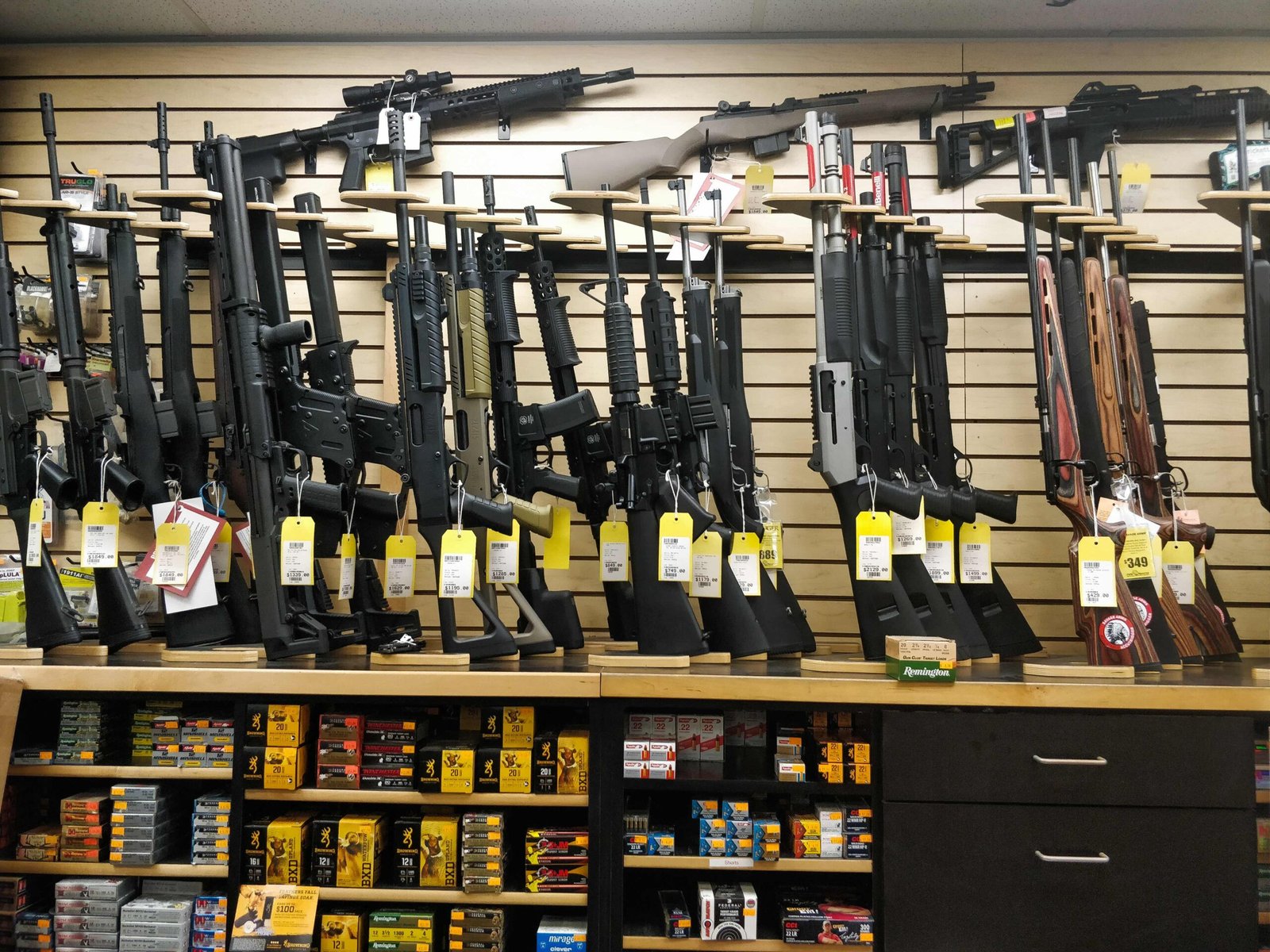
The status of semiautomatic rifles (like the AR-15) is probably the most prominent issue concerning the Second Amendment yet to be decided. As Pete Patterson recently explained to Haley Proctor on SCOTUSblog, the Supreme Court said in Heller that the Second Amendment protects arms that are in “common use” for lawful purposes, but not “dangerous and unusual weapons.” Semiautomatic rifles demonstrate, at least in the view of some courts, the conflict that arises from this formulation. The AR-15 is said to be the most popular firearm in the United States and therefore is arguably in “common use.” On the other hand, courts upholding bans of these firearms have pointed to the AR-15’s firepower and accuracy to conclude that it is more appropriate for military combat than civilian self-defense and therefore qualifies as the type of “dangerous” weapon banned at the time of the founding.
Last June, the justices denied a petition for review challenging Maryland’s ban on semiautomatic rifles. Justices Clarence Thomas, Samuel Alito, and Neil Gorsuch all indicated that they would have taken up the case. Although Justice Brett Kavanaugh did not vote to grant review, he wrote a short statement respecting the denial. Kavanaugh explained that he was doubtful that the U.S. Court of Appeals for the 4th Circuit was correct in upholding Maryland’s ban on such weapons. But because other circuit courts were in the process of deciding similar cases, he wrote, the time was not yet ripe for the Supreme Court to get involved. Nonetheless, Kavanaugh concluded by stating that the court “should and presumably will” address the issue of AR-15s shortly, “in the next Term or two.” Perhaps we will see this prediction come to fruition soon: the court is currently considering whether to grant two pending petitions – Viramontes v. Cook County and National Association for Gun Rights v. Lamont – on this question.
Large-capacity magazines
Although the laws vary slightly, a number of states have enacted bans on what are commonly referred to as large-capacity magazines. Typically, this category includes any magazine that holds more than 10 rounds of ammunition. A handful of federal courts of appeals and state supreme courts have held that large-capacity magazines are not “Arms” within the meaning of the plain text of the Second Amendment. This means that these cases have been tossed out at step one of the Bruen inquiry, before the burden shifts to the government to demonstrate a historical tradition (or a “historical analogue”) of banning such items. Other courts have found (or assumed) that large-capacity magazines are “Arms,” but ultimately concluded that the challenged regulations were constitutional because there was a sufficient historical tradition justifying bans on them.
Currently, there are at least two petitions on this question pending before the court, which have been relisted at several conferences. For example, Duncan v. Bonta has been considered by the justices at the last five of these. Given this, it seems only a matter of time before this issue is considered by the court.
Possession of guns by people convicted of felonies
Another federal law, commonly known as the “felon in possession” statute, effectively makes it illegal for anyone convicted of any crime that is punishable by more than one year in prison to possess a firearm or ammunition. Many individuals have brought challenges to this statute (and similar state statutes), arguing that it is unconstitutional to disarm them on the basis of past felony convictions when the underlying felony was nonviolent – such as in the sale of controlled substances or for fraud.
While these challenges are prolific, they have also been relatively unsuccessful. Of the nine federal circuits that have decided a case on this issue, only the U.S. Court of Appeals for the 3rd Circuit has held the statute unconstitutional in any respect. In Garland v. Range, that court held it was unconstitutional to permanently disarm Bryan Range for a decades-old conviction for food-stamp fraud. In addition, the U.S. Courts of Appeals for the 5th and 6th Circuits have indicated a willingness to consider individual challenges to this statute based on the type of crime, although six other circuits that have weighed in have seemingly decided that individuals convicted of felonies have no recourse at all, regardless of what their underlying convictions may be.
Just last month, the justices denied a large number of petitions on this issue. The court did not act, however, on two cases presenting this question – including a petition for review filed by Melynda Vincent, who is banned from owning a firearm because of her nearly two-decades-old conviction for attempting to pass a bad check. Although Vincent’s case lived to see another day, it seems unlikely that the court will grant it in light of the other denials.
Sensitive places
In Heller, the court emphasized that nothing in its opinion was meant to call into question (among other things) restrictions on firearms in “sensitive places such as schools and government buildings.” But what about anywhere else? Many states and municipalities have regulations restricting the carrying of firearms in a variety of locations, including places of worship, parks and zoos, public transportation, and places where alcohol is consumed. These cases thus highlight two interrelated questions: what, exactly, qualifies as “sensitive,” and why?
The justices may provide answers if they choose to take up a case like Schoenthal v. Raoul, which is a petition currently pending before the court. Specifically, Schoenthal is a challenge to an Illinois law that bans possession of firearms on public transportation. According to the gun owners who brought the lawsuit, history demonstrates that individuals retain their Second Amendment right of self-defense in public spaces unless the government decides to bear the burden of securing them (typically by supplying things like armed guards and metal detectors) – therefore, only places where the government has assumed such a burden may be deemed “sensitive.”
Of note: Wolford also included a challenge to Hawaii’s sensitive place restrictions, but the Supreme Court did not agree to hear or decide that aspect of the case. It is therefore unlikely that we will get much in the way of clarity on this issue in the Wolford decision, and it will then remain ripe for resolution in a future case.
Minors
Multiple federal and state laws prohibit individuals under the age of 21 from purchasing or possessing firearms. After Bruen, there have been numerous challenges to these restrictions as they apply to 18-to-20-year-old adults. Prior Supreme Court decisions, such as 1968’s Ginsberg v. New York, have indicated (though not without criticism) that “minors” may have less expansive constitutional rights. Nonetheless, a good deal of these cases seem to assume that minors are younger than 18, and that once an individual turns 18, they are an adult who enjoys robust constitutional rights, which may include the Second Amendment.
Another wrinkle comes from the historical presence (or absence) of such laws, which, as we’ve established, is quite important since the court’s decision in Bruen. Lower courts have split on this issue, whether in considering the age of maturity at the founding or the nature of 18th-century regulations of university students. There are currently at least two relevant petitions pending at the court, including Paris v. Second Amendment Foundation, in which the government argues that laws setting a minimum age of 21 for gun rights are consistent with history from the time of the founding through the 19th century. That said, the justices have not considered either case at a conference since November, so it does not appear that the justices are looking to decide this issue anytime soon.
What counts as history?
This final category is a bit more abstract than the others, centered not on a particular type of regulation but instead on the legal framework concerning them. In Wolford, the petition included two questions presented. In addition to the question the justices agreed to hear (regarding firearms on private property), the challengers also argued that the U.S. Court of Appeals for the 9th Circuit erred by relying on historical evidence from the Reconstruction era and later – rather than relying only on the historical evidence available at the time of the Second Amendment’s ratification.
The justices have acknowledged that the question of the time period on which judges should rely when conducting historical inquiries is unresolved, but they have so far declined to offer any insight of their own. In Rahimi, for example, the majority opinion explicitly referenced this ongoing issue but deemed it “unnecessary” to decide in that case. This matter, which has not only split courts but originalists in general, is likely to land on the court’s docket again in the near future.
So what now?
Overall, there appear to be more questions than answers when it comes to the Second Amendment. While some observers have called this area a “mess,” others suggest this is just part of the “normal science” of constitutional law. Regardless of which view is correct, it remains an area in serious need of some guidance from the court.
Cases: New York State Rifle & Pistol Association Inc. v. Bruen, United States v. Rahimi, Wolford v. Lopez, Vincent v. Bondi, United States v. Hemani, Paris v. Second Amendment Foundation, Duncan v. Bonta, Viramontes v. Cook County, National Association for Gun Rights v. Lamont, Schoenthal v. Raoul
Recommended Citation:
Alex Rivenbark,
The Second Amendment landscape,
SCOTUSblog (Feb. 9, 2026, 9:30 AM),
https://www.scotusblog.com/2026/02/the-second-amendment-landscape/
