


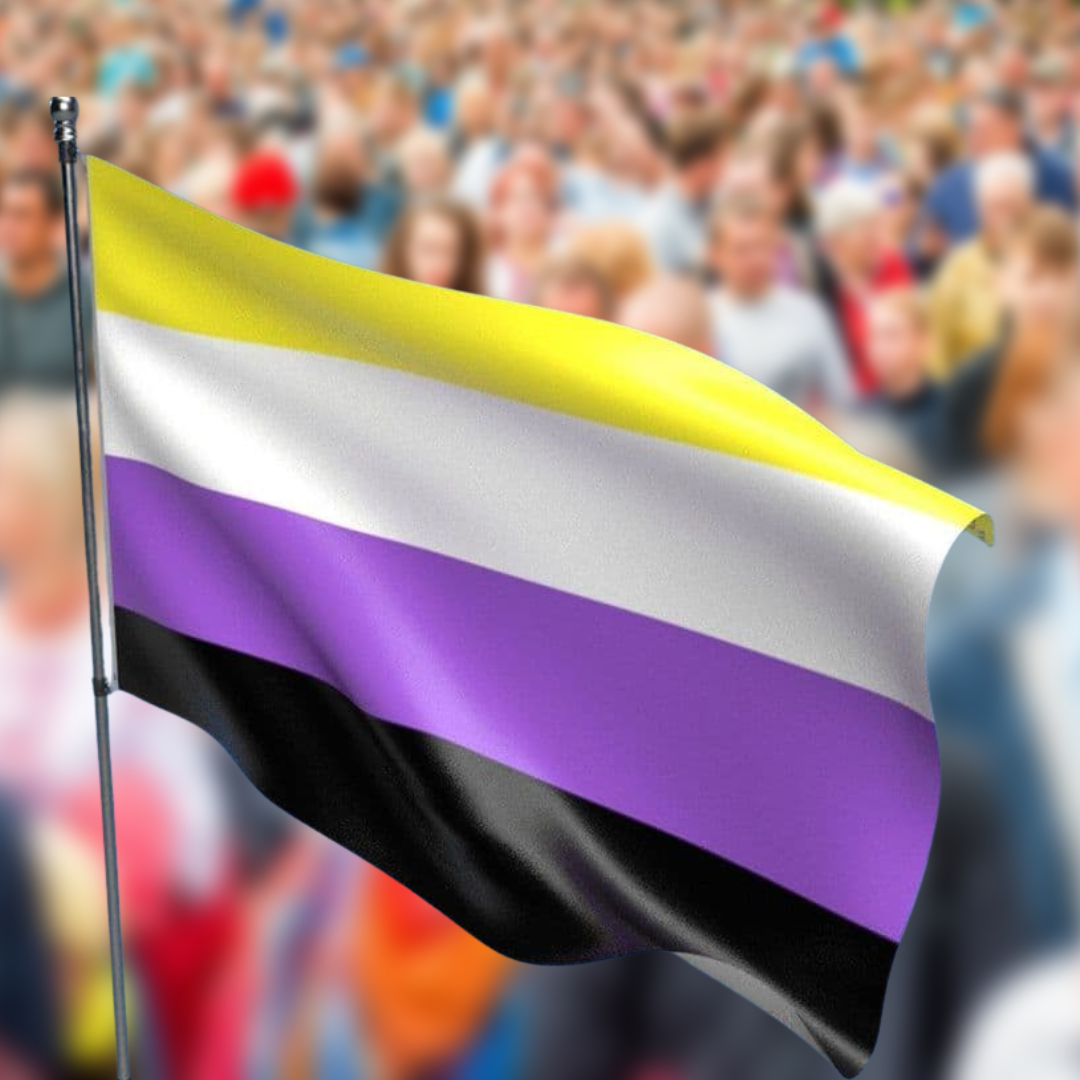
More European countries recognise non-binary identities, while others are taking steps forward
- Blog
- Legal Protection
- Non-binary
M/F/X/Other: Do you know what non-binary gender markers can be registered today in Europe? To mark International Non-Binary People’s Day, we commend the countries that have introduced the registration of gender markers other than male or female, those using no gender markers at all in their official documentation, and those who are working to adapt their systems to recognise non-binary identities in the near future.
Allowing for non-binary gender markers in official documents is primarily an issue of accuracy, privacy, and respect for a person: non-binary people who must choose between only ‘male’ or ‘female’ gender markers are unable to have their documents match their identities, and as a result are often exposed to privacy violations because of assumptions about their sex assigned at birth.
When your government does not acknowledge or respect who you are, the psychological consequences can be significant. A major survey of LGBTI people, conducted by the EU Agency for Fundamental Rights (FRA), indicated that over 50% of trans respondents identified somewhere outside of the binary, while in the EU Trans Study, released in June 2020, one-quarter of the respondents who had not changed their legal gender said that the gender marker they needed was absent. Public opinion is also moving toward supporting non-binary markers.
However, while more European countries now recognise non-binary identities and others have taken active steps towards doing so, legal recognition remains the exception rather than the rule.
Countries recognising non-binary identities
Iceland
Since 2019, Icelandic given names are no longer male or female in the national registry, thanks to the Gender Autonomy Act. Moreover, Icelanders registering their gender as “X” can take gender neutral family names meaning “the child of” instead of surnames designating an individual as someone’s son or daughter. However, this option is not available to those registered as male or female.
Germany
The category “divers” was introduced on driving licences, birth certificates and other official documents in 2019, thanks to the efforts of activists and in particular, Vanja, a German citizen whose demands to be officially registered as “other” were rejected until 2017. However, this third gender category is technically only available only to intersex people who provide a medical certificate at the moment, which means it excludes trans people, non-binary people and intersex people who cannot present a certificate.
Malta
Since 2018, people who do not want to register their gender as male or female in Malta can mark “X” on their IDs. Not many laws in Malta differentiate according to gender. However, as ILGA-Europe found out in this research on non-binary gender registration models in Europe, individuals with an “X” on their IDs may encounter obstacles in the healthcare system, similar to those experienced by intersex people or trans men when, for example, trying to schedule gynaecologist visits. As stated in our research, “this is why it is crucial for anti-discrimination laws to cover gender identity, gender expression and sex characteristics in all spheres of life, including public and private actions.”
Austria
Following a Constitutional Court decision in 2025, the Ministry of the Interior issued a new directive on civil registry, allowing non-binary people to choose from four gender markers. Later, Austria issued its first gender-neutral passport to a non-binary Austrian citizen, marking an important step forward in the legal recognition of non-binary people in the country.
Countries taking steps forward
Belgium
In January 2022, the government introduced a draft bill that will remove gender markers from identity cards. This follows a Constitutional Court ruling from 2019 that partially revoked the gender recognition legislation passed in 2017, stating it was discriminatory for non-binary people, as their gender identity could not be recognised. The ruling stated: “Persons having a non-binary gender identity should have the possibility of adapting the sex shown on their birth certificate to reflect their gender identity.” However, gender markers will only be removed from identity cards and not from the National Registry.
In 2025, Interior Minister Bernard Quintin proposed not introducing a third gender option (“X”) on identity cards but instead allowing non-binary people to request the removal of the gender marker. The proposal would establish two types of identity cards: one displaying the gender marker (M/F) by default, and another without any gender indication available upon request. LGBTI organisations criticised the proposal, stressing that it does not provide full legal recognition of non-binary identities and could expose individuals to discrimination, particularly in countries hostile to LGBTI rights.
The Netherlands
The Dutch government seeks to end “unnecessary” registration of gender where it is irrelevant. The cities of Amsterdam and Utrecht have already removed gender markers in some documents. In a few cases, the judiciary has ordered a non-binary gender marker to be inscribed. For example, an Amsterdam Court ruled in July 2021 that ‘X’ can be retroactively entered as a gender marker in birth certificates, instead of ‘sex cannot be determined’. However, these cases do not set legal precedents. At the moment, there is no law in place offering the possibility, without obstacles, to have a non-binary gender marker.
Greece
In September 2020, the Magistrate’s Court of Kallithea in Greece recognised non-binary gender identities, stating that the right of the individual to their names is a “statutory element” of their identity.
Legal developments continue elsewhere in Europe. Non-binary EU citizens are currently pursuing cases seeking recognition of their legal gender in other Member States based on Court of Justice of the European Union case law. While these cases are still pending, they reflect continued efforts to secure legal recognition across borders.
With our Rainbow Europe module, ILGA-Europe continues, alongside our member organisations, to monitor countries across Europe and Central Asia for legislation affecting the lives of LGBTI people and their human rights situation. To find out more about Rainbow Europe, click here.
Read our previous overview of legal recognition for non-binary people in Europe, published in 2022, here.


