



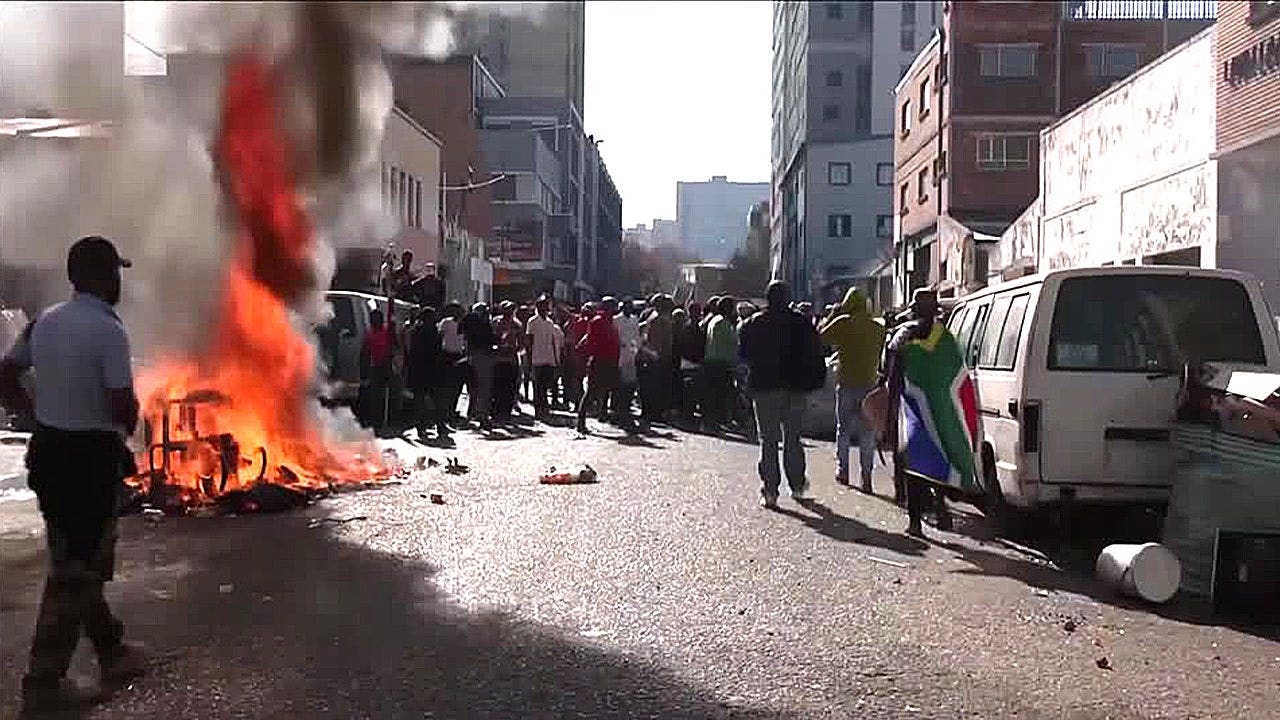
Thousands of police officers have been deployed across South Africa in response to large-scale protests against illegal immigration that erupted on Tuesday, with destructive clashes spreading across multiple cities. The unrest, which involves thousands of protesters, broke out ahead of a June 30 deadline set by some organizers demanding the departure of all illegal migrants.
The marches have drawn thousands of mostly poor or unemployed South Africans, who claim that foreign migrants have taken jobs by accepting lower wages, while also fueling higher crime rates. At least four people have been killed as violence and looting spread across the country. The clashes mark the largest migration-related protests since anti-migrant violence erupted in South Africa in 2008.
While thousands of foreign nationals from other African countries had already fled ahead of Tuesday’s so-called deadline, tensions have remained high. Multiple businesses and properties were vandalized in several areas, according to reports. In anticipation of further attacks, many shops reportedly closed, with foreign workers staying home. Landlords in Durban and Johannesburg also evicted foreign tenants illegally to avoid further trouble, witnesses alleged.
Reuters reported that 100 Congolese nationals were left sleeping on the streets of Durban. While many marches were considered peaceful, police reported that they arrested several looters and fired rubber bullets to disperse crowds. National broadcaster SABC added that protesters looted shacks belonging to foreign nationals in the Soweto township. In Thembisa, a suburb of Johannesburg, rioters reportedly threw stones at police and suspected migrants, with witnesses saying sporadic gunfire was heard.
Police deployed tactical vehicles and fired shots in Benoni, east of Johannesburg, after being confronted by a group of roughly 500 protesters. Thousands of police officers have been deployed nationwide, while the military was placed on standby, a defense spokesperson said in a statement. “To those who intend to break the law tomorrow, our message is simple: do not test the resolve of the State,” Lt. Gen. Tebello Mosikili said.
The “March and March” group, one of the more prominent organizations behind the unrest, addressed the violence, saying it cannot be held responsible for spontaneous incidents breaking out during the demonstrations. “Unfortunately, we can’t be in every single community telling them … how to behave,” Jacinta Ngobese, leader of the March and March group, told Reuters two weeks ago. Ngobese said the group plans to hold weekly marches until its demands are met, despite the government rejecting the deadline and saying only authorities can enforce immigration laws. “For the next six months, we are asking for our national retry. From building to building — they must go,” Ngobese said.
Despite South Africa’s high unemployment rate, the country remains Africa’s largest economy and continues to draw migrants. The immigrant population stands at about 3 million, or roughly 4% of the total. The situation remains volatile, with many foreign nationals living in fear of further violence and intimidation. Reuters contributed to this report.





