


Contributed by In On Africa (IOA)
Africa’s 2026 top 10 trends to watch
IOA goes beyond the listing of key developments that will shape African affairs in economic, political and societal matters that usually characterise predictions of the year ahead. IOA surpasses these routine projections and identifies the trends that will push these developments towards resolution.
Important developments shaping the Africa of 2026 will not always be pan-African in nature. Some key advances in trade and security will affect every African Union (AU) member state. Other developments may be local in nature but have repercussions that are concrete in some instances or merely symbolic in others. These local events will reverberate beyond the primary countries involved.
How these matters develop are subject to identifiable trends that, from the vantage point of the year’s beginning, can be seen as pushing them forwards. Diverse factors are behind these trends, international financial and political interests seeming to be the most prominent.
Here are the top 10 African trends to watch as 2026 unfolds:
Africa’s positioning in a multi-polar world
The trend: Finding alternatives to the formerly US-centric geopolitical and monetary order
The US isolationist policies put in place in 2025 – including tariffs on African goods and an end to developmental programmes like PEPFAR (President’s Emergency Plan for AIDS Relief) and humanitarian services like USAID (United States Agency for International Development) – have reshaped Africa’s external partnerships. These shifts have either forced or, depending on one’s perspective, enabled African countries to seek trade and developmental partnerships elsewhere. Yet while Europe and Asia beckon, they are not fulfilling humanitarian aid requirements.
Ultimately, Africa’s best strategy is to position itself as a global power in a multi-polar in which regional confederacies of smaller nations such as in Southern Asia and Africa can provide a counter balance to the vacillating influences of China, Russia and the U.S. This can be achieved by forging stronger intra-Africa trade, developing greater investment and development partnerships, and conforming foreign policy goals on a regional level through existing regional blocs across the continent. Watch for this on a continental level as African member states of the AU use the organisation for foreign partnerships and as a unified voice in global affairs.
Application of the African Continental Free Trade Area
The trend: African countries will prioritise more trade with one another
Nothing will lessen dependency on undependable foreign markets than increased intra-Africa trade. With African countries signed onto the African Continental Free Trade Area, the treaty’s mechanism will expedite cross-border trade. Be on the lookout for more African countries targeting additional crossborder business by passing legislation to open borders and encourage investment.
The importance of the US market is evident in the projected 2026 decline in African exports – a 30% drop in agricultural goods and a 70% drop in industrial goods – resulting from new US import barriers. Because of these, alternative markets are required for these goods, and Africa as a recipient of its own production will be a continuing trend. The energy sector will take a leading role. Electricity exports are projected to grow up to 52% in 2026, gas exports by possibly as much as 48% and crude oil exports by up to 21%. The production of Africa’s coveted critical minerals could be up by 41%.
Resolution of the Congo and Sudan conflicts
The trend: International pressure applied for the sake of investors may help end Africa’s most serious armed conflicts
Look for Africa’s civil wars, militant incursions and cross-border conflicts to be reframed by the international community as more than isolated incidents. Instead, such conflicts will increasingly be perceived as encumbrances to regional development and to continental economic and security growth.
Africa’s two major conflicts – in the Democratic Republic of Congo (DRC) and in the two Sudans – are based on the desire of foreign powers or local warlords to control the valuable resources of those areas. In the case of Congo, those are mineral resources, and in South Sudan, it is oil.
Conflict brings regional insecurity and chases away investment. Just as attempts by Islamic militants to destabilise Mozambique’s natural-gas extraction are being countered in defence of foreign investors and local economic interests, efforts to end the lengthy Congo conflict are again being taken up by African and international players who wish to stabilise the deadly chaos. Economics is the stimulus for peace seeking, but a political ramification may be the end of an age when warlords oppress populations to make personal fortunes from their nations’ natural resources.
Water conflicts
The trend: Negotiating the life-dependent issue of water security, specifically Egypt and Sudan against Ethiopia
A natural resource that is valued less for its monetary worth than its essentialness in sustaining human lives and agricultural production, water is now recognised as a potential source of conflict that could set one African nation against another. Such tensions were evident in Egypt’s and Sudan’s criticisms of Ethiopia’s management of Nile River water through the Grand Ethiopian Renaissance Dam, which became fully operational in 2025. Ethiopia dismisses the concerns of the two other Nile River beneficiaries, but for the first time, the prospect of a water war seems a possibility in 21st century Africa.
As water security issues proliferate in 2026 with the worsening effects of global warming on water resources, the year will find other areas where shared water reserves cause worry. Strong and sincerely observed bilateral and regional water use treaties and effective communication during times of crises like drought will lessen the prospect of conflict. Look also for more emphasis on water conservation and water use policies in the year ahead.
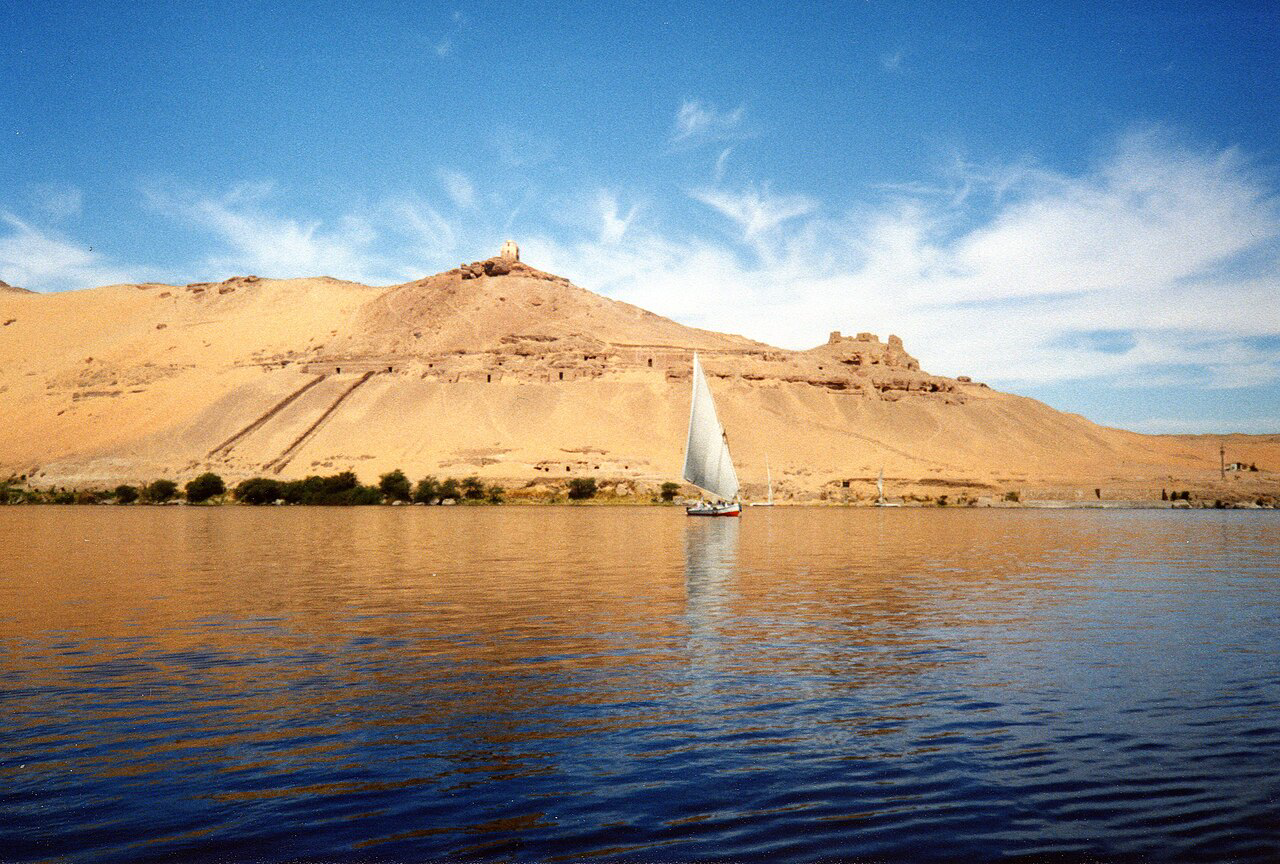
Image Courtesy: Alchemica/Wiki Commons
Independence of territories
The trend: International recognition is determining whether new countries come into existence, specifically Somaliland and Western Sahara
In 2026, the political fate of African territories may be shaped less by their own people and more by foreign powers seeking to influence outcomes. This dynamic could lend weight to independence claims like in Somaliland or, in the case of Western Sahara, to another country’s claim of ownership.
Western Sahara’s sovereignty may be determined this year not by the Sahrawi people, who have already made clear their desire for independence, but by countries persuaded by Morocco that Western Sahara is part of Morocco itself. Rabat has made progress in the past decade nullifying the AU’s stance against their absorption of the territory by campaigning for support from other African countries.
Another disputed territory will command attention in 2026, and influence security alignments in East Africa. Israel’s recognition of Somaliland’s self-proclaimed independence in the final days of 2025 was certainly seen by political observers as premature, presumptuous and possibly mischievous. The United Nations has never recognised the independence of Somaliland, which is part of the Federal Republic of Somalia. Somalia is firmly opposed to independence for the federation member state.
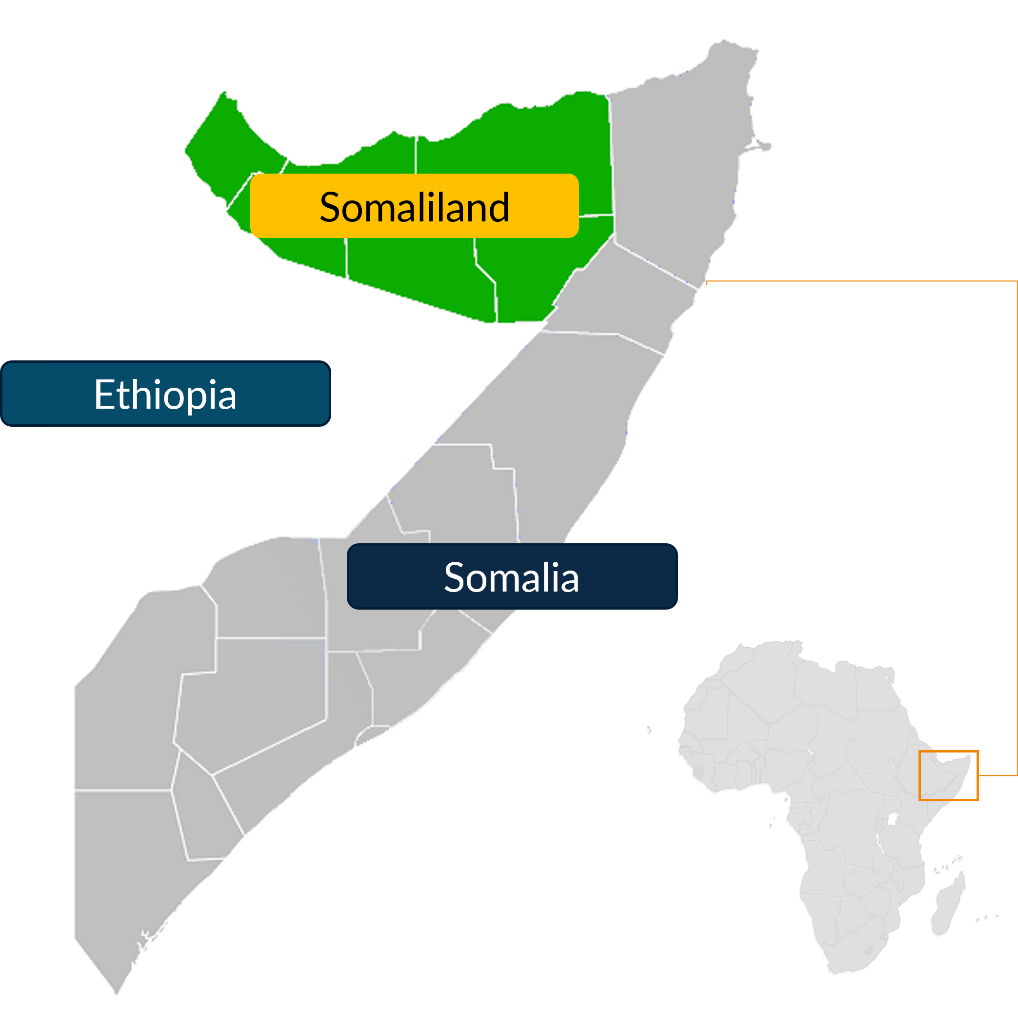
Image Courtesy: WikiCommons
Transportation security
The trend: Transporters and investors find ways to circumvent conflict zones to keep African commerce rolling
At the start of 2026, Iran declared that commercial shipping and maritime infrastructure were potential targets in the event of a US military attack on Tehran. Africa’s maritime commerce has already been curtailed by the avoidance of the Suez Canal by shippers due to security concerns. However, commercial transporters always find a way to endure, and shipping companies and African shippers are strategising ways to keep goods flowing.
2026 will see continuing reliance on the rerouting of vessels around the Cape of Good Hope, which adds 10 sailing days for cargo ships between Europe and Asia. Similarly, the expansion of the Trans-African Highway Network, as new sections are opened in 2026, will give land transporters alternative routes to circumvent conflict zones that hinder road freight traffic.
Space industry growth
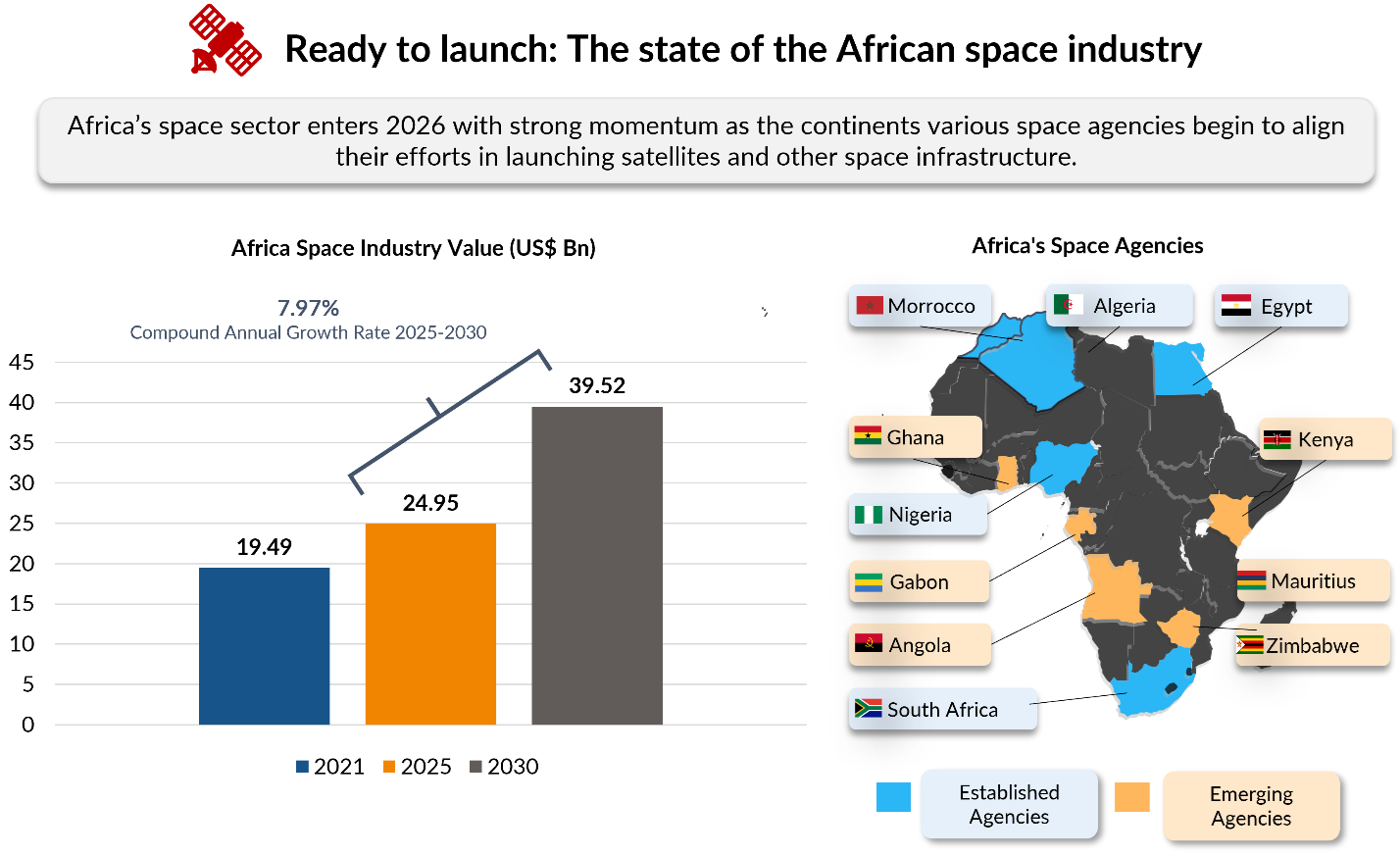
The trend: Africa has utilised space for the collection of essential data, and investments are paying off Africa’s space economy, defined by the investment and facility worth of the agencies and private firms that engage in space research, was valued at US$25 billion in 2025. Investment trends point to an 8% annual growth rate in this sector that will see Africa’s space economy value rise to US$40 billion by 2030.Investment in space data collection has significantly surpassed projections made earlier in the decade.
Created by the governments of Algeria, Egypt, Morocco, Nigeria and South Africa, Africa’s first space agencies are being joined by the newer agencies of Angola, Gabon, Ghana, Kenya, Mauritius, Rwanda and Zimbabwe. Meanwhile, the need to mine space for data collection of use on the ground has spurred new space programmes in Botswana, Côte d’Ivoire, Djibouti, Namibia, Uganda and Zambia.
2026 will see additional countries expand Africa’s space economy. Watch public and private partnerships investment in data-collecting satellites and ground facilities, which receive and process this data, increase in the coming year. Also look for the AU and regional economic blocs starting to formulate policies to allow greater co-operation between countries in space programme development.
Equalising gross domestic products
The trend: Efforts to ensure that the African people reap the rewards of Africa’s robust economic developments
In 2026, Africa will have the fastest-growing economy of all the world’s regions, with the African Development Bank projecting a 4.2% surge in activity. For ordinary Africans, particularly those who continue to struggle with poverty, benefitting from this wealth will require structural economic reforms. This is particularly true because high inflation, projected to be 10% or more on average continentally in 2026, impacts the poor and middle class the hardest.
Economic equality will be a policy initiative and political campaign rallying point this year. This will be achieved through such agitations as street demonstrations and political boycotts usually mounted by political opposition parties, who make life uncomfortable for foreign investors through mass demonstrations.
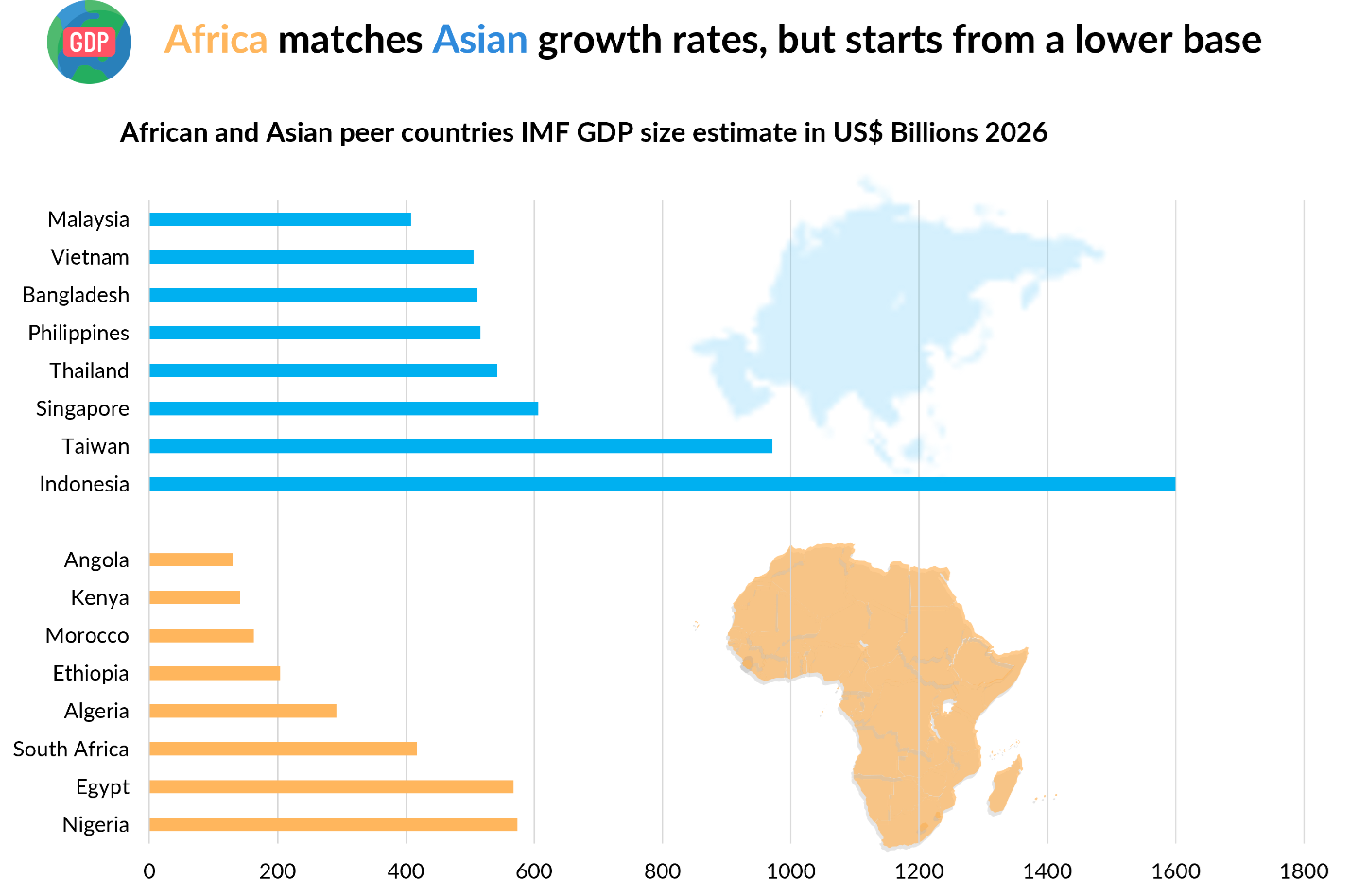
Data Courtesy: IMF; 2025
Autocracy over democracy
The trend: As more African national governments fall to military juntas, unelected autocrats consolidate power
Autocracies will continue to solidify and expand their control over former democratic countries in 2026 –
a trend that began in 2021 when a military junta took over Senegal. The trio of Sahel countries whose democracies fell in military coups d’état in 2023 – Burkina Faso, Mali and Niger – remain firmly in the grip of their dictatorships. No intervening international forces with the military or economic will to oust the juntas exist, nor have any shown an interest in doing so.
Late in 2025, the military took power in Guinea-Bissau. Likewise, Guinea, Sudan and South Sudan will continue under the control of non-democratic rulers. These trends are unlikely to change in 2026, in the absence of the same international will that has prompted intervention in the DRC and Mozambique on behalf of investors.
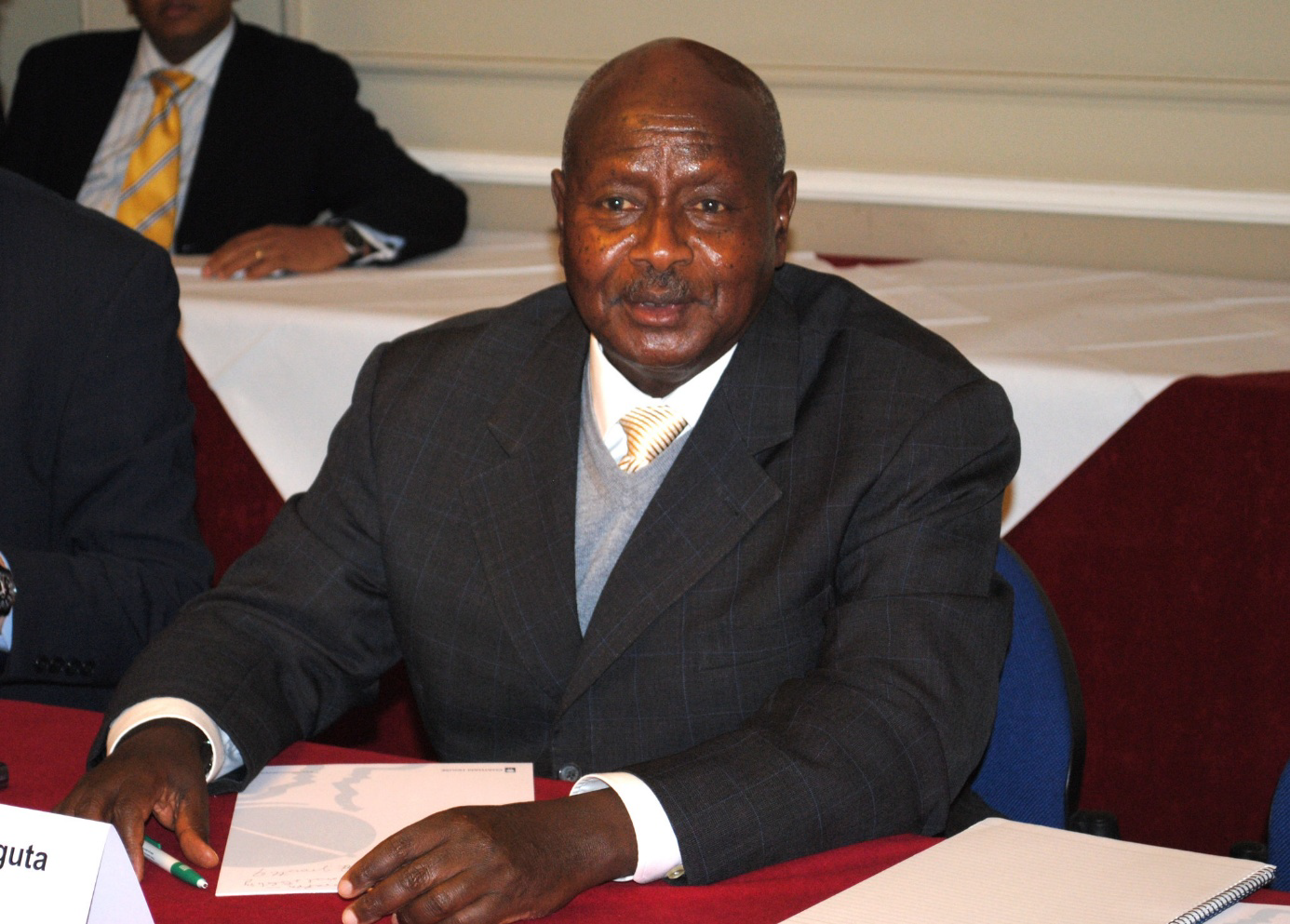
Ugandan President Yoweri Museveni.
Image Courtesy: Chatham House, Flickr
Elections in 2026
The trend: The power of the incumbency will again prove insurmountable
The remainder of the year will see several national elections held throughout Africa. Many of these will find long-standing leaders seeking to extend their time in power. Incumbents will use their grip on state media – from government radio and TV stations to newspapers – to their advantage. State resources, such as security forces, will be made available to ensure incumbents’ victories. Opposition leaders will be harassed, arrested and otherwise sidelined.
In the Congo, President Denis Sassou Nguesso has been in power since 1997 after a break from when he held office from 1979 to 1992. He is up for a re-election that he will win without some surprise development. In Uganda, President Yoweri Museveni has held office since 1986. The ipso-facto president for life will be found firmly ensconced in power by year’s end. He is decimating his political opposition through imprisonments and harassments to achieve this end as he has done in the past.
This may solidify Museveni’s power and has created a perception of political instability in much of the continent, which is frightening away investors. Foreign interests have historically propped up incumbents financially through campaign contributions demanded by government leaders as a cost of doing business in their countries. One trend shows that this practice is no longer automatically accepted.
Elections in Ethiopia, where democracy still exists, will likely not take place in 2026 due to the same conflict and insecurity issues that have made voting impossible there since 2021. On the other hand, Libya’s parliamentary elections set for 2026 may yet happen, if security concerns complicating voting are overcome. The United Nations is confident that this is possible.
Elections are also scheduled in Algeria, Benin, Cape Verde, the Gambia, Morocco, South Sudan and Zambia. Cameroon’s President-for-Life Paul Biya may have been 92 when he ran for his eighth term late in 2025, but he confirmed the power of the incumbent leader that will likely continue to prevail in other national elections this year.
Illustrations:
CHART: The projected valuations of Africa’s space economy by 2030 (Source: Space In Africa) https://spaceinafrica.com/2026/01/06/africas-space-ambitions-milestones-to-watch-in-2026/
PHOTO: Uganda’s President Yoweri Museveni will show the power of the incumbency as he runs for reelection in 2026 (Source: Chatham House via Flickr) https://www.flickr.com/photos/chathamhouse/6923079355/
Chart: Africa’s projected GDP growth compared to the rest of the world (Source: Intelpoint) https://intelpoint.co/insights/imf-projections-indicate-that-africa-will-surpass-other-regions-in-realgdp-
growth-from-2026-to-2029/
Chart: Of the world’s US$ 124-trillion economy in 2026, Africa’s is projected to be US$ 3.32 trillion (Source: Mark-Anthony Johnson via LinkedIn) https://www.linkedin.com/posts/mark-anthony-johnson-55615926_naturalresources-gdpforeigninvestments-
activity-7388485095218790401-Asw6/
Photo: Nile River water, seen here flowing passed Aswan, Egypt, will continue to cause tensions on the Horn of Africa in 2026 (Source: Alchemica via Wikimedia Commons) https://commons.wikimedia.org/wiki/File:River-Nile-near-Aswan.jpg
Map: Somaliland is positioned at the top of the Federal Republic of Somalia (Source: Wikimedia Commons)
https://commons.wikimedia.org/wiki/File:Somalia-Somaliland.png

Originally published at www.inonafrica.com
In On Africa (IOA) is a Johannesburg-based research and advisory firm offering data-driven insights across all 54 African countries. Through in-depth research, analysis, and strategy support, IOA empowers organizations seeking to understand Africa’s opportunities, risks, and long-term market trajectories.
