


Listen to this article
Estimated 3 minutes
The audio version of this article is generated by AI-based technology. Mispronunciations can occur. We are working with our partners to continually review and improve the results.
U.S. President Donald Trump on Sunday said no more Venezuelan oil or money will go to Cuba and suggested the communist-run island should strike a deal with Washington, ramping up pressure on the longtime U.S. nemesis.
Venezuela is Cuba’s biggest oil supplier, but no cargoes have departed from Venezuelan ports to the Caribbean country since the capture of Venezuelan President Nicolás Maduro by U.S. forces on Jan. 3 amid a strict U.S. oil blockade on the OPEC country, shipping data shows.
Meanwhile, Caracas and Washington are progressing on a $2-billion US deal to supply up to 50 million barrels of Venezuelan oil to the U.S., with the proceeds to be deposited in U.S. Treasury-supervised accounts — a major test of the emerging relationship between Trump and interim President Delcy Rodríguez.
“THERE WILL BE NO MORE OIL OR MONEY GOING TO CUBA — ZERO! I strongly suggest they make a deal, BEFORE IT IS TOO LATE,” Trump wrote on his Truth Social platform on Sunday. “Cuba lived, for many years, on large amounts of OIL and MONEY from Venezuela.”
Trump did not elaborate on his suggested deal. U.S. officials have hardened their rhetoric against Cuba in recent weeks.

Venezuela’s government has launched a far-reaching crackdown on dissent after Nicolás Maduro’s ouster, detaining journalists and civilians. Caracas-based reporter Román Camacho and Venezuelan politician Freddy Guevara speak to Hanomansing Tonight about the situation in the country.
Cuba defends import rights
Cuban Foreign Affairs Minister Bruno Rodríguez said in a post on social media platform X on Sunday that Cuba had the right to import fuel from any suppliers willing to export it. He also denied that Cuba had received financial or other “material” compensation in return for security services provided to any country.
Thirty-two members of Cuba’s armed forces and intelligence services were killed during the U.S. raid on Venezuela. Cuba said those killed were responsible for “security and defence,” but it did not provide details on the arrangement between the two longtime allies.
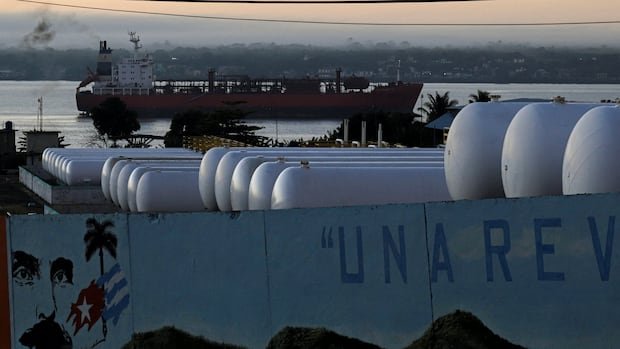
Cuba relies on imported crude and fuel — mainly provided by Venezuela, as well as smaller volumes from Mexico — purchased on the open market to keep its power generators and vehicles running.
As its operational refining capacity dwindled in recent years, Venezuela’s supply of crude and fuel to Cuba has fallen. But the South American country is still the largest provider, with some 26,500 barrels per day exported last year, according to ship tracking data and internal documents of state-run PDVSA, which covered roughly 50 per cent of Cuba’s oil deficit.
Mexico has emerged in recent weeks as a critical alternative oil supplier to the island, but the supply remains small, according to the shipping data.
Mexican President Claudia Sheinbaum said last week that her country had not increased supply volumes but that given recent political events in Venezuela, Mexico had turned into an “important supplier” of crude to Cuba.
U.S. intelligence has painted a grim picture of Cuba’s economic and political situation, but its assessments offer no clear support for Trump’s prediction that the island is “ready to fall,” Reuters reported on Saturday, citing three people familiar with the confidential assessments.
The CIA’s view is that key sectors of the Cuban economy, such as agriculture and tourism, are severely strained by frequent blackouts, trade sanctions and other problems. The potential loss of oil imports and other support from Venezuela, for decades a key ally, could make governing more difficult for President Miguel Diaz-Canel.
