U.S. Africa Command is hustling to adopt AI assets, unmanned systems and other modern technology products as it pivots to do “more with less” of a physical force presence on and around the sprawling continent.
For example, “the command is examining commercially available vessel data and sensor technologies that could help identify illicit maritime activity, including illegal, unreported, and unregulated fishing and narcotics trafficking,” Africom’s first Chief Innovation Officer Lt. Col. Jared “CLiF” Bindl recently told DefenseScoop.
He and other senior military officials shed light on the command’s newly defined strategic innovation priorities, and what shaped them, during discussions this month at and after the National Defense Industrial Association’s Emerging Technologies for Defense Conference.
Africom Commander Gen. Dagvin Anderson appointed Bindl to serve as the command’s inaugural innovation chief earlier this year.
“In this role, I help identify and address capability gaps across [Africom] through process innovation, emerging-technology adoption, and a command-wide governance strategy that aligns headquarters, component commands, and operational partners,” Bindl said.
Under the second Trump administration, America broadly seeks to reduce its global footprint in favor of homeland defense and a deeper focus on threats in the Pacific. Africom has been pulling back its troop presence on the ground in support of that vision — while also pushing its African partners to assume more responsibility for their own security.
Onstage at the NDIA summit, Anderson spotlighted various elements contributing to Africa’s growing strategic importance to the U.S. and other countries. He also suggested that extremist groups and criminal activities are escalating, alongside threats associated with rising competition between America, Russia, China and others for critical re
Anderson described technological innovation as one of several, core security and acceleration levers that Africom will use to amplify its effects around the continent.
“Every [logistical] movement in Africa is contested at some point. It’s just a challenging environment to operate in, and I think all of our partners understand that,” the commander told NDIA’s audience.
Africom’s innovation pursuits have been organized across five focus areas that align with his key requirements and are informed by operational demands at both the Defense Department and combatant command levels.
“Our innovation ecosystem aims to simultaneously solve Joint Force problems in parallel with our specific capability gaps,” Bindl told DefenseScoop last week. “What we find consistently is that combatant commands share many of the same challenges with some unique nuances or modifications per [their area of responsibility, or] AOR.”
Enhanced battlespace awareness marks one of Africom’s top five innovation priorities in the near term.
Work in this area focuses on improving indications and warning in places “where limited force posture can constrain traditional intelligence, surveillance, and reconnaissance,” the chief innovation officer noted.
He confirmed that the command is implementing non-traditional ISR approaches — like affordable ground sensors, long-endurance airborne platforms, and commercial space-based capabilities — to improve awareness of evolving conditions across the continent.
“Contested logistics and austere medicine is another major focus area,” Bindl said, “which includes assessing short- to medium-range autonomous aerial resupply capabilities that could improve the delivery of medical supplies and other critical material in remote or austere environments.”
That work also involves exploring what he referred to as “novel operational energy vignettes or tactical edge production nodes” to enable more robust supply chain resilience.
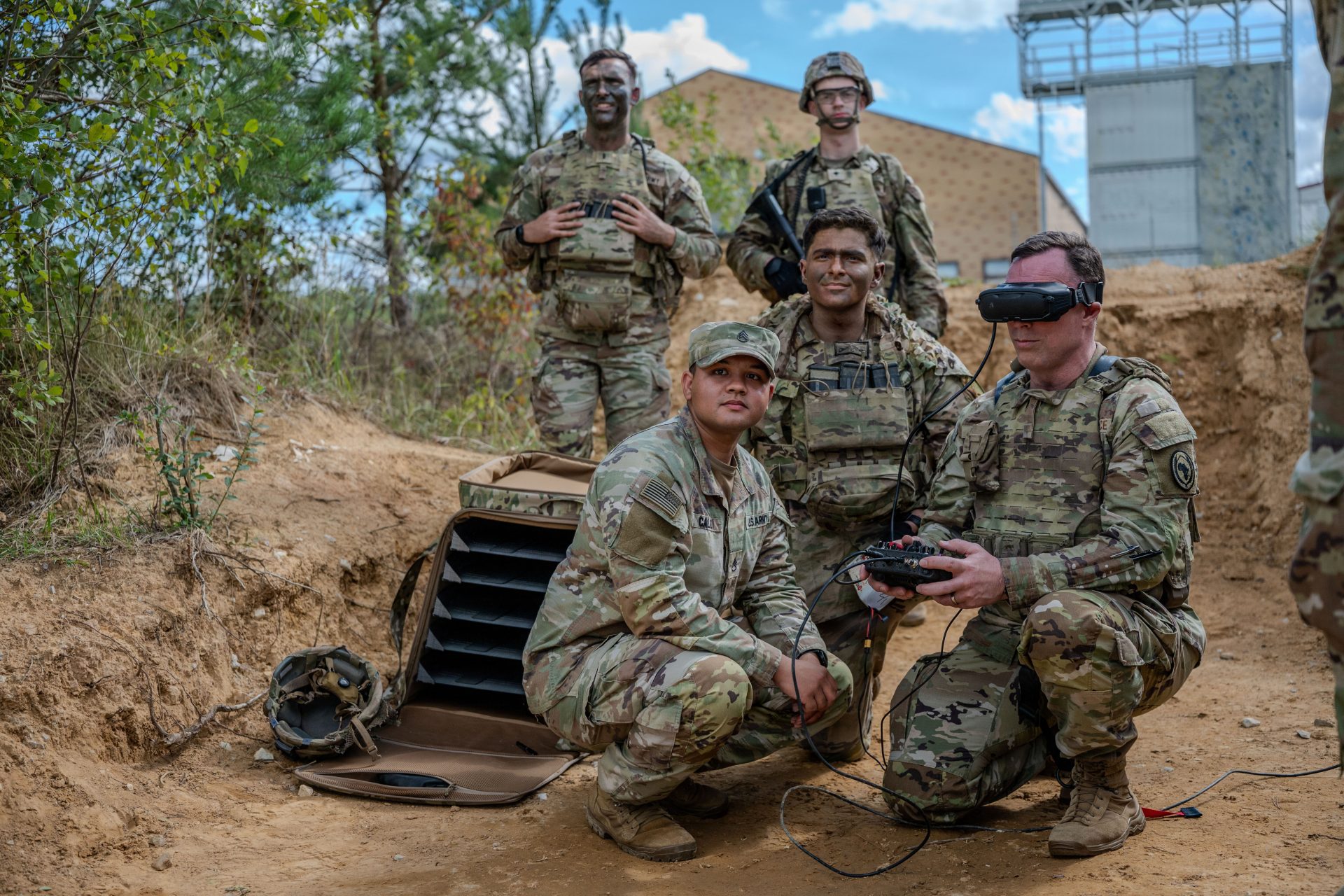
The command is additionally evaluating drone and counter-drone systems under its asymmetric attack and defeat portfolio.
Those efforts include expeditionary and fixed-site applications, and evolving threats posed by one-way attack systems. Bindl said the command is also developing a co-production drone-manufacturing initiative modeled in part on U.S. Special Operations Command’s nascent Theater Edge Innovation Labs.
“These proposed innovation nodes would provide equipment such as 3D printers, lathes, and consumable materials to enable partners to develop, modify, and employ small unmanned systems closer to the tactical edge,” he noted. “Near-term opportunities are being explored with Morocco, Ghana, and Djibouti, with potential collaborative partnerships under consideration in Kenya and Nigeria.”
Africom’s fourth focus area is AI-enabled combined joint all-domain command and control.
Those endeavors aim to improve campaign planning, information integration, and interoperability across the Joint Force who added that the primary objectives will be to shorten decision cycles, better connect relevant operational networks, and accelerate responsible AI adoption across Africom’s headquarters and deployed formations
Africom’s fifth innovation portfolio covers multi-domain collaborative autonomy.
Officials are examining how the command can help integrate emerging autonomous software and related capabilities across air, land, maritime, space and electro-magnetic domains. Bindl said Africom’s AOR may offer opportunities for operational assessments and evaluations that complement testing conducted in the continental United States.
“The Africa Multi-Domain Training and Experimentation Center in Morocco is coming online to support experimentation opportunities for industry and the Joint Force,” he told DefenseScoop.