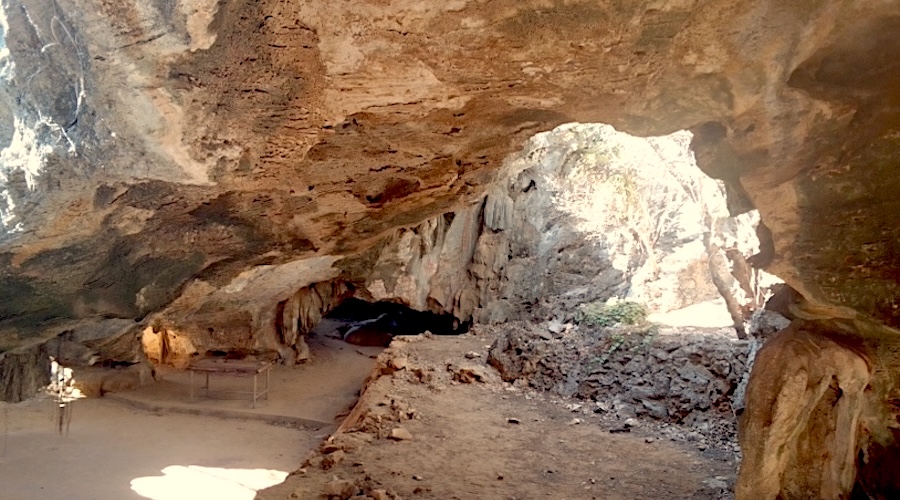
The Ampasindava project is in the northwest coast of Madagascar.
(Image of clay
Harena Rare Earths (LSE: HREE) has secured United States government backing for its Ampasindava rare earths project in Madagascar, underscoring Washington’s strategy to challenge China’s dominance of critical minerals supply chains.
Harena said last week the U.S. International Development Finance Corporation (DFC) committed up to $4.8 million for pilot plant work, laboratory testing and environmental programs, positioning the project for potential future financing.
The investment aligns with Washington’s strategy to expand U.S. involvement in <a href="https://absafricatv9491.live-website.com/10-african-countries-with-the-weakest-currencies-in-july-2026/” title=”10 African countries with the weakest currencies in July 2026″>African mining sectors long dominated by “opaque, predatory investments from our adversaries,” a State Department spokesperson told Reuters on Tuesday. Madagascar offers opportunities to increase U.S. and allied investment in critical minerals, the spokesperson added.
Strategic shift
Ampasindava contains neodymium, praseodymium, dysprosium and terbium, rare earth elements used to manufacture permanent magnets for electric vehicles, wind turbines and defence systems including fighter jets and precision-guided missiles.
China dominates global rare earth mining and processing and has reinforced its grip on supply chains through export controls. This has prompted Western governments to seek alternative
Harena expects Ampasindava to produce about 4,000 tonnes of rare earth oxides annually, including 1,700 tonnes of high-value magnet rare earths NdPr and DyTb. Executive chair Ivan Murphy said the company expects to receive an exploitation permit within the next few weeks and remains on track to begin production by mid-2028.
Processing options
Harena is also evaluating processing options in the U.S. and Europe, with MP Materials (NYSE: MP), USA Rare Earths (NASDAQ: USAR) and Belgium’s Solvay among potential refining partners.
Although the DFC commitment represents only a small portion of Ampasindava’s estimated $150 million development cost, Murphy said it could pave the way for more substantial U.S. financial support as the project advances toward construction. A DFC official confirmed the agency could consider additional financing, subject to due diligence and regulatory approvals.
Ampasindava reflects a broader shift in Africa’s critical minerals sector. While Chinese companies have dominated investment in the continent’s copper, cobalt and lithium industries for years, Western governments are increasingly backing rare earth developments to diversify supply chains for strategically important minerals.