

For decades, Africa’s financial conversation has centered on attracting foreign capital. Yet the continent’s next financial revolution will not be driven by overseas investors—it will be powered by mobilizing African capital more effectively.
Across Africa, billions of dollars remain concentrated in government securities, bank deposits and illiquid real estate, leaving investors exposed to inflation, currency depreciation and subdued long-term growth. The continent does not suffer from a shortage of savings; it lacks investment vehicles capable of preserving and compounding those savings in an increasingly interconnected world.
Kenya has quietly demonstrated that there is another way.
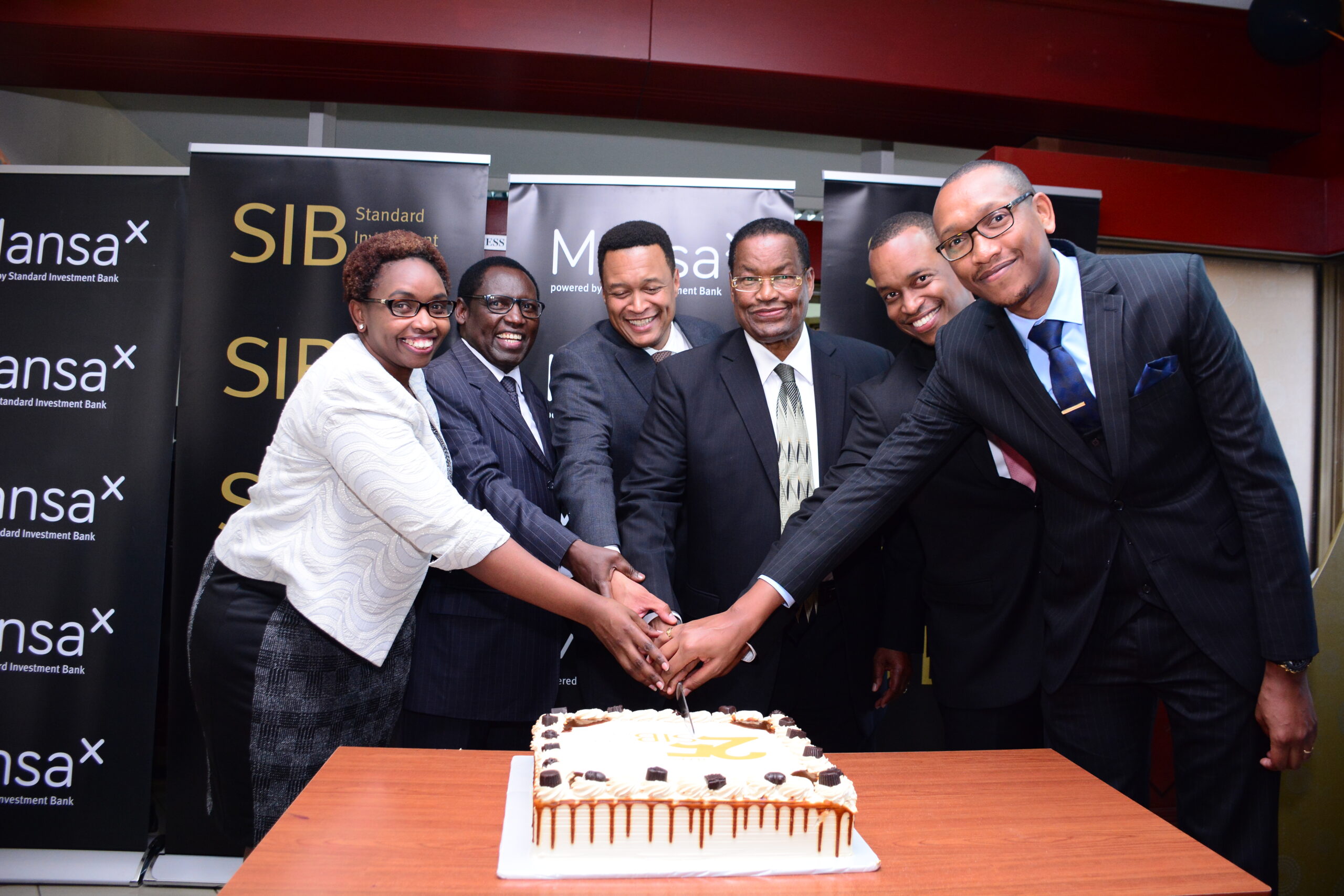
Since its launch in 2018, Standard Investment Bank’s MANSA-X has pioneered Kenya’s Special Funds market by introducing a regulated collective investment vehicle that applies investment principles more commonly associated with hedge funds—including global diversification, active portfolio management and absolute-return investing—within Kenya’s Collective Investment Scheme framework.
It challenges the long-held belief that sophisticated global investment strategies were the preserve of wealthy international investors and demonstrated that Kenyan investors could access institutional-quality portfolio management through a regulated, transparent and professionally governed structure.
Loading…

Its influence extends beyond the success of a single fund. It challenges the assumption that wealth preservation should rely primarily on treasury bills, bank deposits or domestic real estate. Instead, investors could diversify into global equities, exchange-traded funds, fixed income, commodities and alternative investments to reduce concentration risk and protect purchasing power.
The numbers reflect this transformation. According to the Capital Markets Authority’s Collective Investment Schemes Quarterly Reports, Money Market Funds accounted for more than 90% of Kenya’s industry assets in 2021. By March 2026, their share had declined to 51.9% of the sector’s KSh 851.7 billion in assets.
Special Funds have become the fastest-growing segment of Kenya’s collective investments industry. MANSA-X now manages more than $1.3 billion across its conventional and Shariah-compliant strategies and is on course to become the country’s largest Collective Investment Scheme. Its significance lies less in its size, and more in what it represents: African investors are willing to embrace globally diversified investment strategies when they are offered through transparent, well-regulated and professionally managed investment vehicles.
This transformation did not happen through innovation alone.
Kenya’s Capital Markets Authority deserves considerable credit for recognizing that protecting investors and encouraging innovation are complementary objectives.
Kenya’s experience offers an important lesson for policymakers across Africa: the best regulators do more than supervise markets—they help create them. Markets flourish when regulation provides clarity, consistency and room for responsible innovation.
Regulation alone, however, cannot build an industry. Every mature financial market is supported by strong industry associations and self-regulatory organizations that promote professional standards, investor education, ethical conduct and constructive engagement with policymakers.
Around the world, alternative investment associations have helped establish best practices, improve transparency, attract international capital and develop industry talent. Africa should pursue the same path.
The Kenyan model is also highly transferable because many African countries already possess the essential ingredients. Nigeria, South Africa, Ghana, Botswana, Namibia, Rwanda, Tanzania, Uganda, Zambia and Côte d’Ivoire all have established capital markets that could support regulated alternative investment industries.
They need not replicate Kenya’s framework in every detail. Instead, they can adopt the principles that made the model successful: progressive regulation, professional fund management, independent custody, robust governance and diversified global investing.
Collaboration is equally important. With strong industry associations that promote collaboration and self-regulation, these foundations can mobilize domestic savings, deepen capital markets and provide investors with greater resilience against local economic shocks.
Alternative investment funds are not designed to replace traditional money market and fixed-income funds. They complement them by giving investors access to a broader range of professionally managed investment solutions.
As global markets continue to evolve through advances in technology, artificial intelligence, healthcare innovation and the energy transition, African investors should have efficient access to these opportunities through regulated investment vehicles.
Professionally managed alternative investment funds can also become powerful engines of domestic repanies, private credit, <a href="https://absafricatv9491.live-website.com/lagos-bets-on-rail-waterfronts-digital-infrastructure-to-make-tourism-investment-ready/” title=”Lagos bets on rail, waterfronts, digital infrastructure to make tourism investment-ready”>infrastructure, venture capital, real estate and regional expansion while maintaining prudent diversification through global allocations
Special Funds such as MANSA-X have also demonstrated something equally important: Africa is capable of mobilizing significant pools of domestic capital for deployment into global investment opportunities.
For decades, African economies have relied heavily on foreign capital while local savings remained concentrated in a narrow range of domestic assets. Special Funds help rebalance this dynamic. They demonstrate that African capital can compete globally while remaining managed, regulated and ultimately owned within Africa.
Regional integration will accelerate this transformation through harmonized regulation and stronger cross-border investment infrastructure.
Ultimately, Africa has spent decades asking how to attract global capital. The more important question is how to deploy African capital more intelligently.
Kenya has shown what is possible. Through the combination of innovative fund managers, supportive regulators, strong governance and collaborative industry institutions, the country has demonstrated that regulated alternative investment funds can reshape investor behavior, deepen capital markets and unlock domestic wealth.
Achieving this vision will require collaboration. Policymakers must continue modernizing regulatory frameworks, while pension trustees embrace diversification. Asset managers must maintain the highest standards of governance, transparency and fiduciary responsibility.
Equally important, fund managers should recognize that they are not simply competitors. They are partners in building an industry. A collaborative model has been instrumental in the growth of leading financial centers such as London, Singapore and Dubai, where industry associations work alongside regulators to promote professional standards, investor education, policy dialogue and market development.
The next chapter belongs to the rest of the continent.
Governments that embrace thoughtful regulation, empower industry associations and encourage responsible innovation will strengthen their capital markets and advance Africa’s financial independence.
The continent’s greatest untapped natural refricans. The next era of African prosperity will belong to the countries that learn not only to attract global capital, but also to mobilize African capital with equal ambition
Related Topics:#Alternative Investment Funds, #Be a Mansa, #Collective Investment Scheme, #Diversification, #Ethical investing, #Mansa-X Special Fund, #Money Market Funds, #Shariah Compliant Investments, #SIB, #Special Collective Investment Scheme, #Standard Investment Bank.