

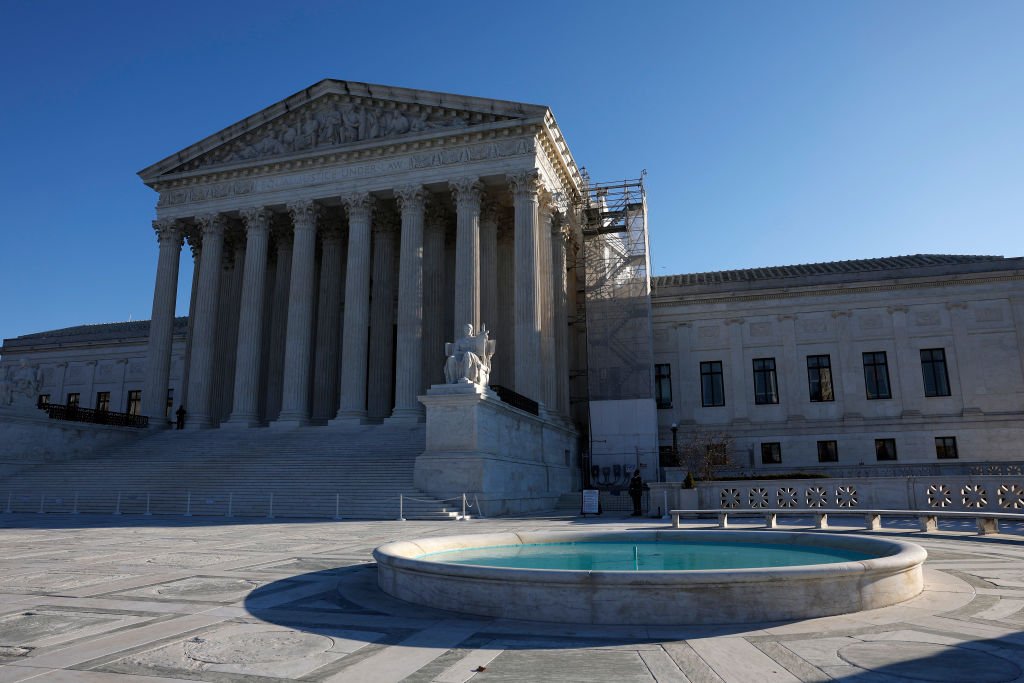
On Nov. 5, the Supreme Court heard oral argument in the challenges to President Donald Trump’s authority to impose broad tariffs through a series of executive orders that he issued in 2025. As is often the case with high-profile cases, there is enormous interest in how the court will rule. But with U.S. importers paying billions of dollars each month in tariffs, another pressing question for many is when the court will issue its decision.
The short (and perhaps frustrating) answer is that the justices will release their opinion when they are ready. So far, they have not signaled that they regard this dispute as the kind of emergency that many in the outside world do, suggesting that they may not release the opinion at least until they take the bench again on Feb. 20.
The dispute also illustrates an important, but often underappreciated, aspect of the court: many of its operations are governed by informal practices or unwritten internal rules, rather than formal guidelines.
Here is a brief explainer of how the court goes about drafting and issuing opinions, and how that process might be playing out in the tariffs dispute.
The opinion-writing process
The Supreme Court heard oral argument in the tariffs dispute on Wednesday, Nov. 5. The justices would have voted on the dispute at one of their conferences that week – likely on Friday, Nov. 7.
Once the justices vote on a case, the senior justice in the majority (which would be either Chief Justice John Roberts or, if he is not in the majority, the justice who has been on the court the longest) determines who will draft the majority opinion; the senior justice among the dissenters decides who will write the main dissenting opinion.
When the draft of the majority opinion is finished, the author sends it to the other eight justices. Those justices may opt to “join” the majority opinion as it is drafted, or they may ask the author to make changes to the majority opinion before they agree to sign on. The New York Times reported, for example, that Justices Clarence Thomas, Neil Gorsuch, Brett Kavanaugh, and Amy Coney Barrett all agreed relatively quickly to join Justice Samuel Alito’s draft opinion in Dobbs v. Jackson Women’s Health Organization, holding that there is no constitutional right to an abortion.
Once the majority opinion has been circulated to the court, the author of the dissent will then send that opinion to the rest of the court. Some justices may also decide to write their own opinions. For instance, they may agree with the result that the majority reaches but not its reasoning, or they may agree with its reasoning but write separately to explain or elaborate on an additional point. Similarly, justices may write separate dissenting opinions – either because they disagree with the main dissent’s reasoning or because they want to raise another argument.
Drafts of the various opinions go back and forth between the justices, who sometimes make changes to respond to each other. This takes time. When the justices are divided – particularly if there are more opinions than just a majority opinion and a dissent – it often takes even longer to finalize the opinions. (A former Supreme Court law clerk once described to me a lengthy exchange between the justice for whom he worked, who was writing a dissent, and the author of the majority opinion, over a footnote that was ultimately deleted from the final draft.) Once the opinions are ready to go, the court will release them to the public.
Which brings us to the tariffs dispute. In this case, the conventional wisdom after the oral argument was that a majority of the justices were skeptical of Trump’s power to impose sweeping tariffs under the International Emergency Economic Powers Act. But even if that proves to be true, it was not necessarily clear that there was a consensus on why Trump would lack that authority. For example, Roberts suggested that Trump’s assertion of power under IEEPA might violate the “major questions” doctrine, which is the idea that if Congress wants to grant power to make decisions of vast economic or political significance it must say so clearly. But Justice Elena Kagan potentially saw a different problem: she contended that Congress, rather than the president, has the power to impose taxes and regulate foreign trade.
For his part, Alito appeared to be sympathetic to the Trump administration. He observed, for example, that statutes like IEEPA which confer emergency powers are often phrased in broad terms, so that it wouldn’t matter if IEEPA did not specifically authorize the kind of tariffs that Trump imposed here.
All of this at least suggests that the tariffs dispute could be one in which there are multiple opinions – not only a majority and a dissent but perhaps also concurring opinions. And if there are, it would make sense that this is taking some time to draft.
Releasing the opinion
The justices normally announce their opinions in the courtroom, with members of the public in attendance. At least until June, when the justices add “opinion days” to their schedule so that they can release all of their decisions before the court’s summer recess begins in late June or early July, “opinion days” generally take place on days when the justices were already scheduled to take the bench, either to hear oral arguments (typically on Tuesdays and Wednesdays) or for what are dubbed “non-argument sessions” – brief sittings when they admit new lawyers to the Supreme Court bar (typically on Fridays, until later in the term, when they switch to Thursdays).
The court is now in the middle of its winter recess, and the justices are not scheduled to take the bench again until Friday, Feb. 20, when they will hold another “non-argument session.” Although there is no way to know for sure, it is entirely possible that the court will not release the tariffs opinion before then. That’s because the Supreme Court tends to hew pretty closely to the calendar that it announces well in advance. To put it another way, if the justices hadn’t planned to take the bench before Feb. 20, they may see no reason to deviate from that plan, even for a ruling as monumental as in the tariffs dispute.
Of course, another option for the court – assuming the tariffs decision is ready to be released before Feb. 20 – would be for the justices to release the opinion without actually taking the bench and announcing it in the courtroom. This route would help them to deal with logistical issues, such as gathering a critical mass during a time when some of them had planned to be out of town.
However, three recent cases in which the justices have issued opinions outside their normal schedule and without taking the bench have been cases in which they moved on a faster track than they have in the tariffs dispute.
In 2025’s TikTok v. Garland, in which the justices ultimately upheld a federal law requiring TikTok’s Chinese parent company to sell the U.S. company or shut down, the court heard oral argument (with expedited briefing) just over three weeks after granting review, on a day that had originally been designated as a “non-argument” day. And the court issued its decision one week after that without taking the bench – two days before the deadline that the law set for the company’s sale or shutdown.
In 2024’s Trump v. Anderson, in which the court ruled that Colorado (and other states) could not remove Trump from the ballot for his role in the Jan. 6, 2021, attacks on the U.S. Capitol, the justices heard oral argument during what would have otherwise been their winter recess, just over one month after they granted Trump’s petition for review. The court issued its decision, without taking the bench, just under one month later, and one day before the Super Tuesday primaries; it announced on a Sunday that it would issue opinions that Monday morning.
And in two challenges to the Biden administration’s vaccine mandates, National Federation of Independent Business v. Department of Labor and Biden v. Missouri, that came to the justices on their interim docket, the court acted on a highly expedited schedule: it heard oral arguments approximately three weeks after receiving the requests to pause the lower courts’ rulings (once again, on a day when it had not been scheduled to hear arguments), and it issued its rulings six days later. The court did not take the bench to announce those decisions.
By contrast, although the justices acted quickly in taking up the tariffs dispute, the court did not move as swiftly in hearing oral arguments. It scheduled those for just under two months later, during the court’s regular November argument session – perhaps signaling that it does not regard the dispute as being as urgent as cases like TikTok and Anderson.
But what about the refunds?
Although the challengers prevailed in the lower courts, those courts put their rulings on hold to give the Supreme Court time to weigh in. This has allowed the Trump administration to continue to levy billions of dollars in tariffs while the litigation continues. And it is because of those billions of dollars in tariffs that businesses are hoping that the court will act quickly – both so that they can stop paying the tariffs if the court strikes them down and because they fear that, as the tariff revenue that the government collects rises, it will make the process of refunding that revenue increasingly complicated.
There are several possible reasons why, despite the ongoing tariff payments, the justices may not be in as much of a hurry to act as the litigants (and other importers) would like. The first is that, despite the justices’ apparent skepticism at oral argument, the majority could be writing an opinion that upholds the tariffs, in which case no refunds would be necessary.
But even if the justices do strike down some or all of the tariffs, that might still not be enough to spur them to issue an opinion soon. As I noted in an earlier story, they could leave the question of refunds for the lower courts, in which case – at least in the justices’ view – an additional month or two to finalize their ruling might not make much of a difference. Along the same lines, they could decide that the tariffs are invalid but hold either that they will not apply going forward (ruling out refunds for tariffs that had already been paid) or delay the implementation of their ruling, giving Congress time to enact a solution.
Whatever the result, one thing is clear: the court acts on its own timeline, rather than on the schedule that litigants, court watchers, and the press might prefer. And there is no evidence that pressure from these groups (or any others) will change that.
