
Super Bowl vs. World Cup: Which Is the Bigger Event?
Key Takeaways
- The Super Bowl is strongest as a single U.S. broadcast event, while the World Cup is stronger in global reach and tournament scale.
- The Super Bowl creates value through concentrated attention, while the World Cup creates value across many matches, markets, and audiences.
- A one-game championship and a monthlong international tournament require very different business and operations strategies.
- Students interested in sports business can compare how the Super Bowl and the World Cup use the same U.S. market, venues, sponsors, and media attention in very different ways.
Very few sports debates reveal the difference between national popularity and global reach quite like the Super Bowl vs. World Cup comparison. The Super Bowl is the NFL’s annual championship game and the biggest single broadcast in American television. The FIFA World Cup is a five-and-a-half-week global tournament followed across continents and cultures.
Both events are enormous, but in different ways. Comparing them means looking beyond simple fan arguments and asking better questions: audience size, media value, sponsorship power, cultural reach, host-city impact, and career opportunity. For anyone interested in sports business, the comparison shows how scale works differently in a domestic sports empire and a global sports ecosystem.
Super Bowl vs. World Cup: By the Numbers
Comparing the Super Bowl and the FIFA World Cup requires more than one statistic. The Super Bowl leads in concentrated U.S. media value, while the World Cup leads in global reach, tournament scale, and international participation.
Global viewership
Super Bowl LX drew 124.9 million average viewers, with 137.8 million as the peak in the United States in February 2026, the most-watched program in the network’s history. That’s an enormous number for a single broadcast in one country.
However, the World Cup operates on a different scale entirely. The 2026 World Cup final between Spain and Argentina drew more than 62.8 million viewers in the United States alone. FIFA has not yet released a worldwide audience figure for the final, but it estimated that 5.2 billion people had engaged with the tournament at least once by the end of the round of 16, with TV viewership records broken in markets around the world.


FIFA President Gianni Infantino has said that the World Cup’s roughly six billion cumulative viewers make it the equivalent of 104 Super Bowls packed into a single month—about three Super Bowls every day. The comparison is intentionally hyperbolic, but it captures the scale difference: one is the biggest broadcast moment in America, while the other is one of the few sporting events capable of commanding attention across nearly every continent at once.
Revenue and sponsorship
The Super Bowl alone generates millions of dollars per event for the NFL. That’s a substantial figure for a single game, and it sits inside a league that reported total revenue surpassing 23 billion dollars for the most recent fiscal year.
FIFA’s numbers are built around a four-year cycle rather than a single game. As the 2026 World Cup reached its conclusion, FIFA said the tournament’s commercial success had pushed projected revenue for the 2023–2026 cycle above 15 billion dollars, up from its previous record target of 13 billion. The final audited figure for the cycle has not yet been published.
Advertising costs
A 30-second ad spot during Super BowlLX carried a record price of eight to ten million dollars, and the network sold out its inventory nearly five months before kickoff. That pricing reflects the concentrated nature of the audience: Fox’s Super Bowl LIX broadcast generated more than 800 million dollars in gross ad revenue across all platforms.
World Cup advertising works differently because the audience is distributed across dozens of countries and broadcasters rather than concentrated in one network’s primetime slot. Fox reportedly paid over 400 million dollars for exclusive U.S. broadcasting rights to the tournament alone, reflecting the high value placed on live World Cup content even in a market where soccer isn’t the dominant sport.
The Super Bowl wins on per-slot premium pricing because of its concentrated U.S. attention. This is the one metric where it clearly outperforms the World Cup.
Scale and format
The Super Bowl creates one concentrated spike of attention, advertising, and cultural conversation. The World Cup creates sustained global attention through repeated matches, national storylines, and a final that sits at the end of a much larger event.
Mike Ford ’11, VP of Partnerships for the San Jose Earthquakes, explains how that longer timeline changes the opportunity for brands:
“The Super Bowl… is just a one-day event. It’s the culmination of the playoffs. And the World Cup, you’re partnering with an entire tournament. It’s almost like activating across all the NFL playoffs… And the World Cup just provides like a platform for you to really tell a story and develop a plan and engage with consumers who will come in and have their engagement peaked at different times.”
Instead of concentrating their campaigns within a few hours, World Cup partners had several weeks to develop their messaging and reach fans at different stages of the 2026 tournament.
Cultural and geographic reach

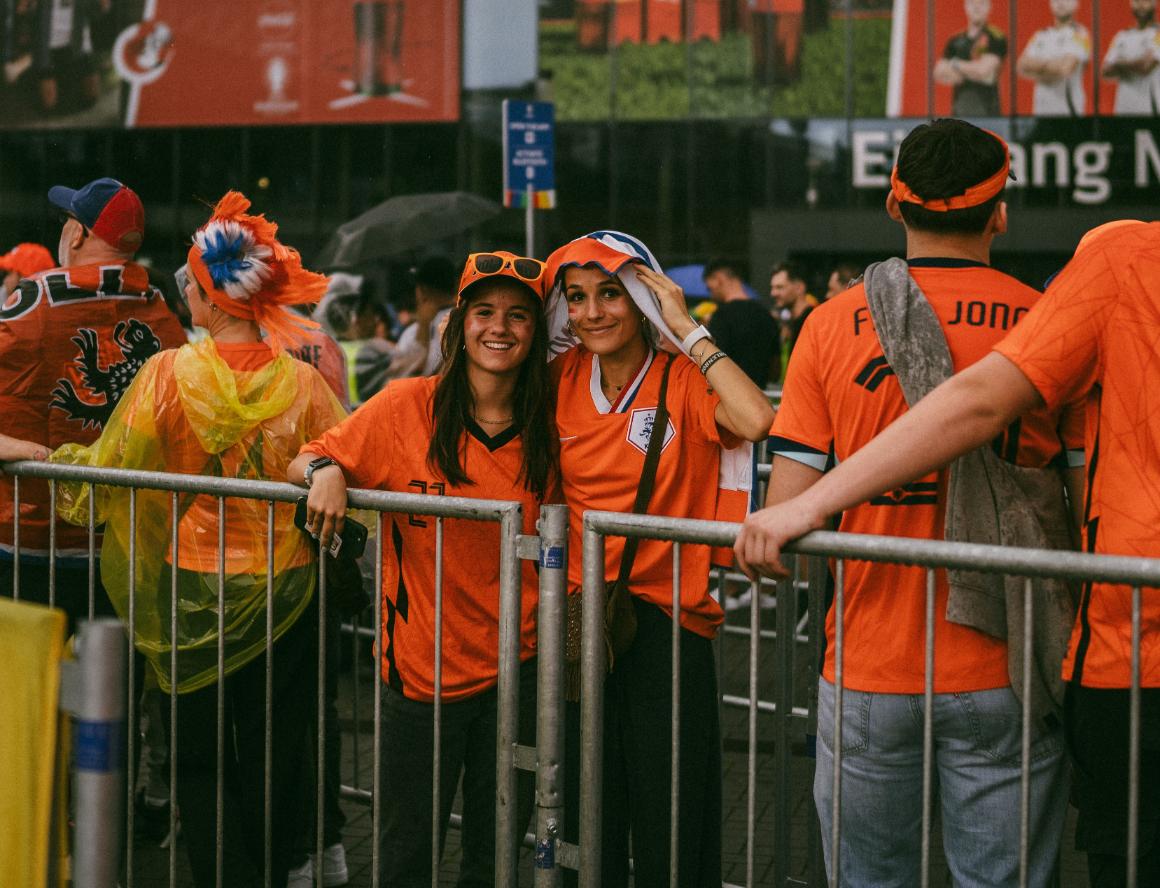
The Super Bowl is a U.S. cultural event with growing international reach. The NFL has expanded its global footprint through regular-season games in cities such as London, Berlin, Madrid, Dublin, and São Paulo, but the Super Bowl itself is still primarily watched, discussed, and commercialized through an American lens.
The World Cup is global by design. It is broadcast in more than 220 countries and built around national teams, which gives it a broader emotional geography. Viewers are not only following a league or a club. They are watching countries compete on the world stage.
This is where the comparison becomes clearest. The Super Bowl concentrates extraordinary attention on the world’s largest advertising market. The World Cup spreads attention across regions, languages, time zones, and national identities, making it less concentrated but far more global.
Why the Comparison Is Misleading
The numbers above show clear differences, but they should not be read as a perfect one-to-one comparison. The Super Bowl and the World Cup are not built to measure success in the same way.
A Super Bowl number usually reflects concentration: one game, one broadcast window, one dominant media market, and one premium advertising moment. A World Cup number usually reflects reach: many matches, many countries, many broadcasters, and a much longer global cycle.
That distinction matters because both events can lead in different ways. The Super Bowl is stronger as a single-game U.S. media and advertising event. The World Cup is stronger as a global sports property with a broader audience, participation, and geographic reach.
So the comparison is useful only when the metric is clear. Without that context, “bigger” becomes too vague to mean much.
What This Reveals About Sports Business in 2026
The Super Bowl and the World Cup show that sports business in 2026 is built around two different kinds of value: concentrated attention and distributed global reach. The organizations, venues, sponsors, broadcasters, and host cities that succeed are the ones that understand how to create value from both.
The Super Bowl shows the value of one massive shared moment. Its business model depends on bringing a huge audience together around one game, one broadcast window, and one national conversation. Levi’s Stadium in Santa Clara showed this model when it hosted the Super Bowl, turning the venue and surrounding region into the center of U.S. sports, media, advertising, hospitality, and tourism for a single peak event. That kind of concentration creates premium value because everyone is watching the same thing at the same time.

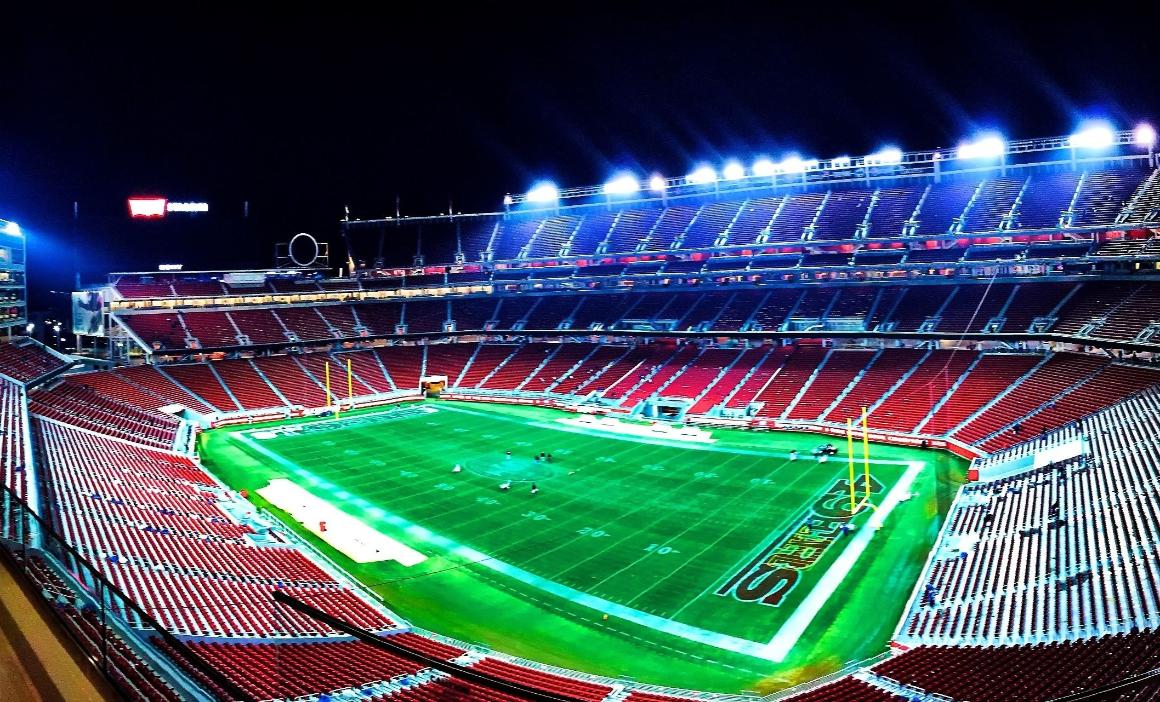
The World Cup shows the value of a global tournament system. Its business model depends on many matches, many markets, many time zones, and many national audiences following the same event in different ways. Levi’s Stadium shows this model too, since the same venue is also serving as a World Cup site. Instead of hosting one national sports moment, it becomes part of a larger international tournament network, with repeated matchdays, different fan bases, global broadcast needs, FIFA rules, tourism planning, and sponsorship activity spread across several weeks.
This reveals an important reality about sports business in 2026: value no longer comes from the game alone. It comes from the full system around the game, including media rights, venue use, sponsor activation, fan experience, tourism, technology, security, transportation, and international market reach. A stadium is not just a place where teams compete. It is a business platform that has to support different audiences, event formats, commercial partners, and operating timelines.
For people interested in careers in sports business, the insight is clear. The field now requires more than a love of sports or knowledge of teams and leagues. Careers in sports business increasingly demand an understanding of how major events are planned, packaged, sold, broadcast, sponsored, localized, and experienced by fans.
The Super Bowl and the World Cup use the same basic product, live sport, but they turn it into value in very different ways. Understanding that difference is one of the most important skills for anyone entering the industry.
Two Events. One Industry.
Nowadays, all major sports events are shaped by the business decisions around them: who broadcasts them, how venues are used, how sponsors reach fans, how tickets and hospitality are packaged, and how host cities prepare for the people, money, and attention those events bring. It all influences how millions, and sometimes billions, of people experience sports.
The 2026 sports calendar gave students interested in sports business an unusual opportunity to study two major events in the same market. Within five months, the United States, and the Silicon Valley area in particular, hosted both the Super Bowl and FIFA World Cup matches. Together, the events provided a real-world comparison of how organizations manage sponsorships, media rights, fan engagement, venue operations, and large-scale logistics for national and global audiences.
For students who want to understand how the industry works, the MS in Sports Business at the Leavey School of Business offers a direct connection to these industry dynamics. Located in Silicon Valley, the program sits near one of the world’s most influential technology ecosystems and close to organizations shaping the future of sports media, fan engagement, venue innovation, and event operations.
Frequently Asked Questions
How much do tickets cost for the Super Bowl and the World Cup final?
According to The New York Times, Super Bowl LX ticket packages started at $7,000 and reached $20,500 for club seats. World Cup 2026 final tickets were similarly expensive: FIFA initially priced many upper-deck seats at $4,210, while seats closer to the field cost $6,730, and prices increased further during later sales phases. Ahead of the final, The Athletic reported that tickets purchased through SeatGeek were averaging $12,751 on the resale market.
Why is American football less popular globally than soccer?
American football is less popular globally than soccer, largely because the latter has had a much longer head start building international culture, leagues, clubs, and national-team traditions across continents. American football developed into a major commercial sport mainly inside the United States, with rules, equipment, and player pipelines tied closely to U.S. schools, colleges, and the NFL. Soccer, by contrast, became embedded in local identity and international competition in many countries, which made its global fan base much broader before American football had comparable international reach.
How many people watch the World Cup compared to the Super Bowl?
The 2026 World Cup final between Spain and Argentina averaged 62.8 million viewers in the United States, while Super Bowl LX averaged 124.9 million U.S. viewers. Globally, the World Cup reaches a much broader audience, although FIFA has not yet released a final worldwide viewership figure for the 2026 final.
What are some World Cup jobs?
World Cup jobs span tournament operations, venue management, hospitality, media, security, and logistics, with both paid and volunteer roles available across all host cities.
Aug 19, 2026
—
Discover Your Next Step
This will only take a moment.
Loading…




![[In Photos] Cultural exchange and international connections at “Colours of Five Continents”](https://en-cdn.nhandan.vn/images/PGsdfWzXfw3FSVNqQeLLm0WnHh29tUBsJfHYyabQ5hyH7uFTZuIWeU4RI_lsfD99Q9Q5VVp3osY46m8wiCVU0mA2fjXfQYkPEupQcAI7i-g/sac-mau-nam-chau-minh-duy.jpg.webp "[In Photos] Cultural exchange and international connections at “Colours of Five Continents”")