

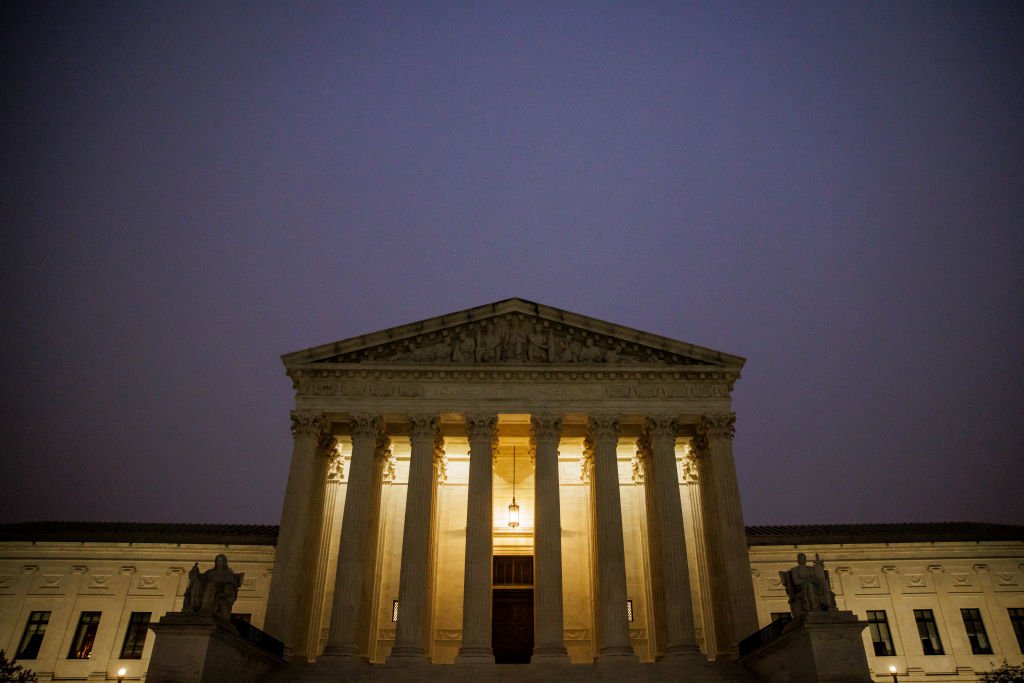
When I joined the SCOTUSblog team in June, I assumed that my days of working through dinner and into the night were behind me. The Supreme Court, I reasoned, conducts most of its business during normal working hours, unlike the sports teams I helped cover as part of my previous job. Oral arguments happen in the morning, as do opinion releases for merits cases. What could possibly disrupt my evening plans?
The interim docket, that’s what. As requests for such relief have become more common, so too have late nights for Supreme Court reporters. I failed to account for that when I was daydreaming about going out for happy hour drinks and cooking elaborate dinners.
To be clear, it’s not just the requests for interim relief themselves that lead to cancelled plans. Rather, over the past six months, it has felt as if the justices were waiting to release their interim docket decisions until everyone was about to slam their laptops shut for the weekend.
But is that feeling based in reality? Are late afternoon decisions at the end of the week really the norm? And if so, what does that say about the Supreme Court?
To answer these questions, I analyzed the timing of recent interim docket decisions and tried to determine what factors might be driving the results.
To be fair, my analysis was not exhaustive. I looked only at the orders in 26 disputes that were brought to the interim docket since July, when the court began using “25” (for the 2025-26 term) at the start of docket numbers, that were identified by SCOTUSblog as significant at the time the request for relief was filed, and that were addressed by the end of December. (This group also includes disputes that were resolved by a single justice, but not disputes that were withdrawn.)
Without further ado, here’s a look at my findings – and their larger implications.
Process and patterns
When the court receives a significant request for interim relief, a few things typically need to happen before the court will make – and then announce – its decision. For example, the justices almost always will wait to act until the party who won in the lower court files a response to the application and until the applicant files a reply to this response. And in most of the interim docket disputes tracked by SCOTUSblog, the justice who oversees the federal circuit (that is, region of the country or specialized court) from which the request originated will refer it to the full court, meaning the full court will need to discuss the application and vote on it before an order can be produced.
Unlike opinions in cases on the oral argument docket, which are almost always released at 10 a.m. on predetermined decision days, orders in interim docket cases can come at any time once a request is fully briefed. Sometimes applicants propose a deadline, which is often tied to when a challenged policy is set to take effect, but the justices don’t have to meet it. Weeks can pass between the filing of the final brief and the release of the court’s order, as the justices determine how they will respond to the application and write concurrences and dissents.
The court does seem to have certain preferences, however, when it comes to the timing of the release of interim docket decisions, and these preferences can be summed up with the phrase “late in the day near the end of the week.”
Over the past six months, more than half (16) of the court’s decisions on the 26 applications tracked by SCOTUSblog were released on a Thursday or Friday, and nearly all of them (22) were released in the afternoon. Twice as many orders were released after 4 p.m. (eastern time) than were released before noon.
The court’s apparent interest in late afternoon releases became even more pronounced when I limited my analysis to the 17 applications that were addressed by the full court (that is, the most significant cases), rather than a single justice. The orders in eight of these cases were released after 4 p.m. and just two were released in the morning. Eleven came on a Thursday or Friday.
Trump and Texas
Nine of the 26 applications from the past six months were filed by the Trump administration and addressed by the full court, meaning they were among the most closely watched cases of the current term. This heightened public interest did not appear to alter the justices’ typical process and patterns. Here, again, most orders came on a Thursday or Friday and nearly all were released in the mid-to-late afternoon.
Specifically, in four of these nine cases, the court’s decision came after 4 p.m. (but before 5 p.m.), and, in three others, the order was released between 3 and 4 p.m. Five of the nine came on a Thursday or Friday.
The timing of these decisions did not seem to depend on how much time had passed since briefing was completed. It was not as if the latest decisions came after the lengthiest decision-making processes to prevent court-watchers from having to spend another night waiting for a resolution.
The court’s order in the case that was resolved the fastest – involving the administration’s effort to remove protected status from Venezuelan nationals – came on a Friday at around 4:30 p.m., just three days after briefing was complete. The court’s order in the case that took the longest – a dispute over President Donald Trump’s effort to deploy National Guard troops in Illinois – came 36 days after the final briefs were filed, and was released just after 3 p.m. on what many felt was the equivalent of a Friday: the day before Christmas Eve.
The decision from the court that arrived latest in the day over the past six months also came in a high-profile case, although not one brought to the interim docket by the Trump administration. At 5:58 p.m. on Thursday, Dec. 4, reporters were notified that the court had issued its order in Abbott v. League of United Latin American Citizens, which cleared the way for Texas to use a new congressional map challenged as racially discriminatory in upcoming elections.
Out of the shadows
So now we know: The court really did mess with my dinner plans somewhat regularly. But should that matter to anyone besides my husband and me?
I believe it should, but not because I think anyone else needs to worry about my social life. It matters because public engagement with the Supreme Court matters, and public engagement is dulled when decisions come late in the day and late in the week.
Whether intentionally or not, the court regularly releases significant orders at exactly the time when they’re most likely to get lost in the news cycle. The breaking news alert arrives as people are commuting home, picking up their kids, or preparing to watch one of those sports teams I used to cover. By the next morning, new political developments or natural disasters often have crowded the court’s decision out of the spotlight.
Journalists refer to such an approach to releasing controversial information as a “Friday news dump,” and associate the phenomenon with scandal-plagued companies and politicians who want as few people as possible to notice the announcement. It would be troubling for the Supreme Court, which is already facing accusations that it has become a political institution, to play – or even appear to be playing – the same sort of public relations game.
I am not suggesting that the court should delay the release of an order until it will make the front page. But I do think the justices should reflect on the process that leads to so many late-in-the-day releases. In the case of the Illinois troop deployment, for example, the justices received all of the briefs more than a month before the order was released. Accelerating the decision by just 24 hours could have allowed them to avoid releasing their ruling two days before Christmas. Sticking with the current approach risks deepening the crisis of trust that’s hurting the institution – and squanders a chance to potentially boost public engagement with the court.
Recommended Citation:
Kelsey Dallas,
Why Supreme Court reporters don’t make early dinner plans – and what that says about the court,
SCOTUSblog (Jan. 12, 2026, 9:30 AM),
https://www.scotusblog.com/2026/01/why-supreme-court-reporters-dont-make-early-dinner-plans-and-what-that-says-about-the-court/
