

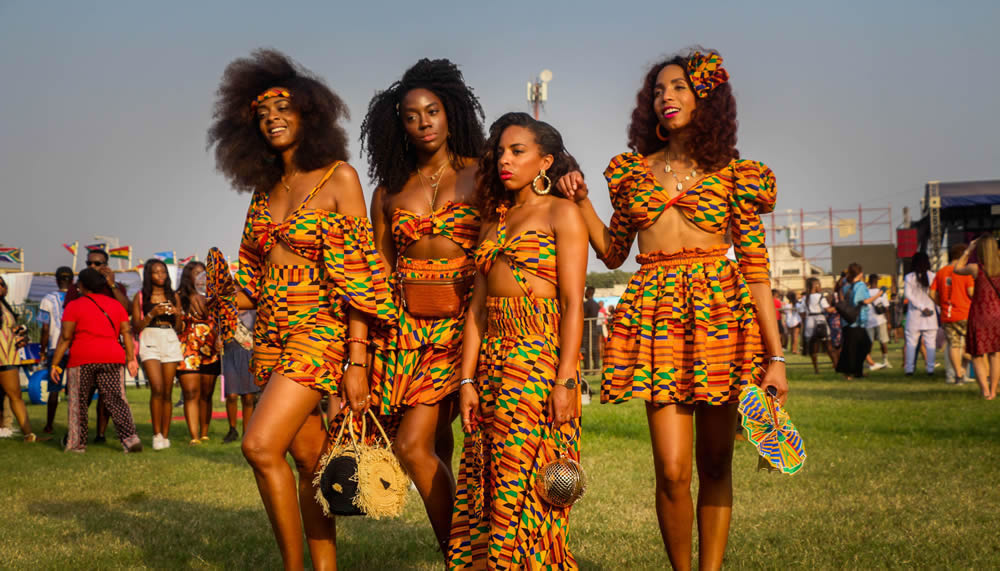
The energy at Afrochella in 2018 was palpable, electric, a heady mix of sound and movement that seemed to rise from the ground at Accra’s El Wak Stadium. It wasn’t just a music festival; it was a homecoming, a reunion of the African diaspora that stretched from Accra to Atlanta, Lagos to London. As the sun dipped below the horizon, the air filled with laughter, conversation, and music that vibrated deep in my chest. One felt proud, not just in being African but in being part of something larger: a story that had always been ours but was now reclaiming its rightful place on the world stage.
That night, as Daddy Lumba’s and King Promise’s voices soared over the crowd and Stonebwoy delivered anthems of solidarity, I personally began to see African music festivals for what they truly are: not just gatherings but stages of cultural negotiation. In their exuberance lies a deep political project—to reclaim narratives, bridge diasporic divides, and challenge the global commodification of African identity. Yet beneath the pride and possibility, these festivals also raise difficult questions. Who benefits from their growing global prominence? Are they amplifying authentic African voices or merely repackaging them for export? And what happens when a festival like Afrochella, a symbol of diasporic pride, becomes embroiled in disputes over intellectual property rights, as it did in its name debacle with Coachella in 2022?
——
In 1977, Lagos hosted the Second World Festival of Black Arts and Culture (FESTAC), one of the largest cultural gatherings in African history. With over 17,000 participants from 56 nations, FESTAC was both an artistic celebration and a bold assertion of African agency in a postcolonial world. The festival’s slogan, “Rebirth and Rediscovery,” underscored its dual mission: to reclaim African heritage and project its creativity onto a global stage.
Scholar Sylvia Wynter has argued that events like FESTAC challenged colonial epistemologies by foregrounding African art as a source of knowledge and power. The festival’s diverse performances—from traditional drumming to experimental jazz—redefined African culture as dynamic, countering Western stereotypes of Africa as static or primitive. Materially, FESTAC bolstered Nigeria’s position as a cultural leader in postcolonial Africa, but it also highlighted disparities in how resources for such events were allocated, sparking debates about the economic priorities of newly independent states. Nigeria in 1977 was under military rule, grappling with its identity as a nation-state composed of multiple ethnic groups. FESTAC’s Pan-African ethos was an attempt to unify these identities under a broader cultural banner, even as internal tensions persisted.
The Pan-African Festival in Algiers in 1969 exemplified the revolutionary potential of art. Hosted by a newly independent Algeria, the festival brought together artists, musicians, and freedom fighters from across the continent. Frantz Fanon’s belief that culture could catalyze political change was palpable. Performers like Miriam Makeba and poets like Aimé Césaire used their art to articulate visions of freedom and resistance. The festival not only celebrated African liberation movements but also cemented Algeria’s role as a hub for revolutionary solidarity during a period marked by anticolonial struggles across the continent.
Algeria in 1969, having recently emerged from a brutal war of independence against France, was eager to position itself as a beacon of postcolonial hope. The festival’s emphasis on liberation and solidarity echoed the nation’s broader political agenda, combining cultural expression with the strategic goal of uniting African and diaspora communities against neocolonial forces
The 21st century has seen African music festivals evolve into global phenomena, fueled by the rise of Afrobeats and the increasing connectivity of the African diaspora. Afrochella, launched in Ghana in 2017, has become synonymous with Detty December, the annual holiday season when diasporic Africans return to the continent. The festival positions itself as a diasporic bridge, showcasing Ghanaian culture while appealing to international audiences. Similarly, Afro Nation, which debuted in Portugal, expanded to Ghana, drawing thousands to see stars like Wizkid, Burna Boy, and Tiwa Savage. However, Afrochella’s rebranding as AfroFuture—prompted by a lawsuit from Coachella’s parent company—revealed ongoing tensions about cultural ownership and narrative control. Critics saw the lawsuit as Western cultural gatekeeping, but the festival’s new name, AfroFuture, emphasizes a vision embracing African culture’s past, present, and future.
Corporate sponsorships from companies like Heineken and MTN bring financial stability but also shape festival branding. UNESCO warns that such partnerships can risk diluting local authenticity in favor of a more globalized aesthetic. Festivals must navigate this tension carefully, balancing the financial support of global sponsors with the imperative to center local narratives and participants
Nyege Nyege, Uganda’s avant-garde festival, exemplifies how festivals can navigate—and challenge—these tensions. By embracing experimental sounds like East African techno and gqom, Nyege Nyege redefines African authenticity as dynamic and evolving rather than fixed. Cofounder Derek Debru describes it as a space for “freedom—to create, to experiment, to connect.” However, the festival’s openness to queerness and unconventional performances has sparked backlash from Ugandan officials, with critics invoking colonial-era morality laws to denounce it. These laws, legacies of British colonial rule, highlight the contradictions of modernity: The very frameworks used to police identity are colonial impositions.
The 2018 controversy, where Uganda’s minister of ethics and integrity, Simon Lokodo, sought to ban Nyege Nyege, underscored the festival’s role as a space of resistance. Critics of the ban noted the irony of invoking “Africanness” to enforce colonial-era values, while the festival’s programming resisted essentialist views of African culture. As RA Magazine
observes, Nyege Nyege’s blend of electronic innovation and traditional rhythms exemplifies Africa’s pluralistic cultural landscape, offering a model of authenticity grounded in creativity and diversity.
From bustling urban centers like Accra during Detty December to the serene natural settings of Uganda’s Nyege Nyege, these music festivals have turned cities into stages for cultural dialogue and celebration. Yet their impact is often fraught with contradictions, revealing the tensions between their lofty intentions and the realities of their execution
Accra, for example, transforms into a cultural capital during December, drawing diasporic tourists who inject energy and economic activity into the city. Streets bustle with pop-up markets, Afrobeat sound systems, and vibrant displays of local artistry. But many reports highlight that much of the revenue generated by these festivals flows to external organizers and upscale venues, often leaving small-scale vendors and local artists marginalized. Events like Detty December contribute to the gentrification of neighborhoods, driving up rents and displacing local residents. This raises questions about who truly benefits from these events, especially as the commercialization of cultural spaces often prioritizes global consumption over local empowerment.
The case of Lagos’s Nativeland festival further exposes the fragility of such events when profits overshadow the well-being of participants. The collapse of its stage in 2024, narrowly avoiding catastrophe, was emblematic of broader systemic neglect. What if a globally recognized artist like Wizkid had been injured during the incident? Such a scenario would likely have provoked greater scrutiny and more compassionate responses from organizers. Instead, the festival’s tepid acknowledgment of the event underscored a lack of accountability and the risks faced by local communities when safety takes a backseat to commercial gain. Nativeland’s logistical failures and profit-driven motives reflect a broader shift away from the grassroots ethos that once defined these gatherings. When cultural spaces are reduced to commodities, they risk losing their transformative potential.
Historically, festivals like FESTAC in 1977 offered an alternative model. These events were grounded in collaboration between state actors and local communities, fostering cultural pride and solidarity. Unlike contemporary festivals that often rely on elite sponsorships, FESTAC prioritized community participation and state-led support, creating spaces where culture intersected with political empowerment.
Despite challenges, festivals retain the capacity to democratize cultural production and foster meaningful connections. By revisiting the collaborative ethos of their predecessors, contemporary festivals can bridge the gap between commerce and community. Investing in infrastructure, centering local stakeholders, and fostering equitable participation could ensure these vibrant cultural events remain true to their promise—platforms for African creativity that honor the communities they represent.
Indeed, not all is bleak. Flytime Fest in Lagos offers a different narrative. As Africa’s longest-runningconcert series, Flytime has consistently celebrated Nigerian music and culture since 2004. Its 2024 edition, headlined by Olamide, Davido, and Ayra Starr at the Eko Convention Center, marked 20 years of breaking barriers. By organizing Nigeria’s first-ever multi-day music festival and serving as a launchpad for both local and international acts, Flytime has set a standard for live entertainment in Africa. Similarly, festivals like WeLoveEya in Benin provide meaningful platforms for francophone artists, while East Africa’sBlankets and Wine continues to be a staple of regional cultural expression. FEMUA in Côte d’Ivoire use of proceeds to fund educational initiatives exemplifies how festivals can create lasting change. These examples highlight how festivals can combine commercial success with cultural celebration, fostering pride while creating opportunities for artists and audiences alike.
African music festivals have become platforms for imagining new cultural, economic, and political possibilities. At their best, these festivals could be reimagined as spaces where local communities are not only included but centered as the most vital stakeholders. This means moving beyond the mere commodification of culture for a global or diasporic audience and instead fostering partnerships that empower the artisans, performers, and vendors who give these festivals life. Locals must not only benefit economically but also shape the narratives and values that these events promote. For instance, infrastructure investments should prioritize safety and sustainability, addressing both the immediate risks to attendees and the broader need for long-term cultural preservation.
These festivals also have the potential to set a global standard for cultural integrity and inclusivity, challenging exploitative practices while celebrating Africa’s dynamic, multifaceted creativity. By redistributing power and profits toward those who form the backbone of these events, African music festivals could evolve into truly transformative institutions—spaces that celebrate both the innovation of contemporary African artistry and the enduring importance of collective memory and cultural heritage.
——
As the final notes of Afrochella 2018 faded into the warm Accra night, I stood there, awash in pride and possibility. That night, I realized that African music festivals are not just events; they are movements. They tell the world that Africa’s cultural and artistic expressions are as diverse as its people, resonating with creativity and complexity
These festivals are spaces where Africa negotiates its past, asserts its present, and imagines its future. They remind us that music is more than entertainment—it is identity, history, and power. Reflecting on festivals like FESTAC and the Pan-African Festival of Algiers, it becomes clear that these gatherings were never just about music or art but about articulating a vision of African identity and sovereignty in a postcolonial world. They sought to reposition Africa as a cultural and intellectual leader, challenging global perceptions rooted in colonialism and celebrating the continent’s creativity as a force for solidarity and liberation.
Today, African culture occupies a more prominent place in the global imagination, but this visibility comes with new tensions. While artists like Rema, Tems and Tyla dominate international stages, and festivals like AfroFuture captivate diasporic audiences, questions of ownership, authenticity, and exploitation persist
This reflection is also a critique of myself. Over the past nine years, I’ve spent eight Christmases and New Years on the continent, immersing myself in these festivals. I’ve reveled in their joy and creativity, but I’ve also taken up space. In demanding accountability from organizers, I must also examine my own participation. How can I demand more equitable practices while ensuring my presence contributes meaningfully rather than detracting from local communities? The challenge now is ensuring that these platforms remain faithful to their origins as spaces of reclamation and resistance. As they evolve, their organizers, audiences, and stakeholders must remain vigilant, ensuring that these soundscapes of identity remain movements that uplift and empower rather than exploit and commodify.

