

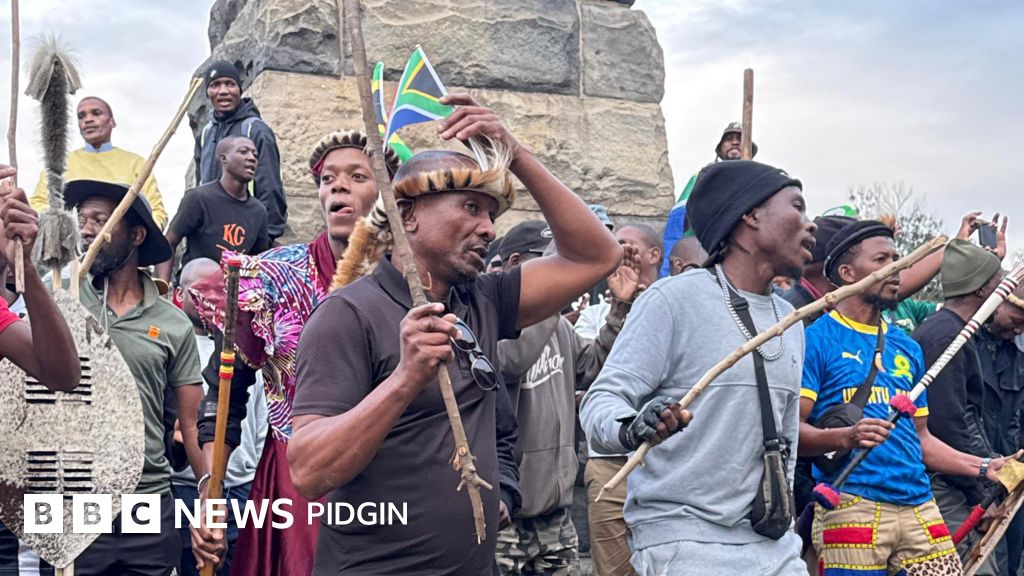
South Africa anti-immigration protests on June 30: Anti-immigration protests begin in South Africa as migrant deadline takes effect
Anti-immigration protests have commenced in South Africa as a deadline for migrants to depart takes effect.
Anti-migrant demonstrations have begun across South Africa, coinciding with the June 30 deadline set by the pressure group March and March for undocumented migrants to leave the country.
Protesters gathered in various locations on Tuesday, under a significant security presence, as authorities closely monitored the situation due to concerns that the marches could incite violence.
Police and other security agencies have been deployed across major provinces, such as Gauteng, KwaZulu-Natal, and the Western Cape, to uphold public order and avert a recurrence of past xenophobic attacks.
The South African government has distanced itself from the ultimatum, asserting that immigration enforcement falls under the purview of state authorities.
President Cyril Ramaphosa has advised those intending to participate in the protest to do so without “intimidation, threats or ultimatums”.
Ramaphosa has consistently cautioned demonstrators to behave peacefully and responsibly, while also acknowledging the necessity for immigration reforms.
“Some foreign nationals who live in South Africa are here lawfully,” he reminded citizens in his weekly newsletter.
“They work, study, raise families, invest in our economy, and contribute positively to our society. They are also entitled to the protection of our laws and our Constitution.”
“The right to protest and freedom of expression does not permit people to threaten or intimidate others, or to engage in acts of vandalism or violence,” he wrote. Many individuals have already departed South Africa to escape violence and intimidation. South African police report that 25,000 people have been repatriated to date, predominantly from other African nations.
Johannesburg, where one of the protests is scheduled, remained unusually quiet, with all shops in the planned gathering area for marchers closed.
In Durban, a city that has experienced some of the largest protests, the white tents housing mostly Malawians have been dismantled as authorities moved quickly to clear the transit camp.
Women in colorful sarongs sat atop their belongings, queuing to board a bus bound for Malawi.
Nelson Mbewe, one man, stated that he had traveled to South Africa seeking employment to support his family back in Malawi.
“But we have faced challenges – they told us to return home because we do not possess the correct documents,” he told the BBC. Authorities have granted permission for anti-migrant protests to proceed on Tuesday in Durban, Johannesburg, and other cities.
Organizers were warned to ensure the demonstrations do not escalate into violence, though authorities stated they are prepared for any potential disruption.
Police have declared that traditional weapons are prohibited. This directive could create tension between protesters and law enforcement, as many demonstrators are ethnic Zulus who customarily carry shields, whips, and sticks during protests.
According to government figures, over 12,000 immigrants have been deported or repatriated since a wave of protests began earlier this year.
Ghana, Malawi, Mozambique, Nigeria, and Zimbabwe have been organizing repatriations by air or bus over the past few weeks, with approximately 3,500 foreign nationals volunteering to depart.
South African authorities assert that over 500 repatriated Nigerians lacked proper documentation, a claim that Nigeria disputes.
Early photographs showed people gathering for the marches.

