

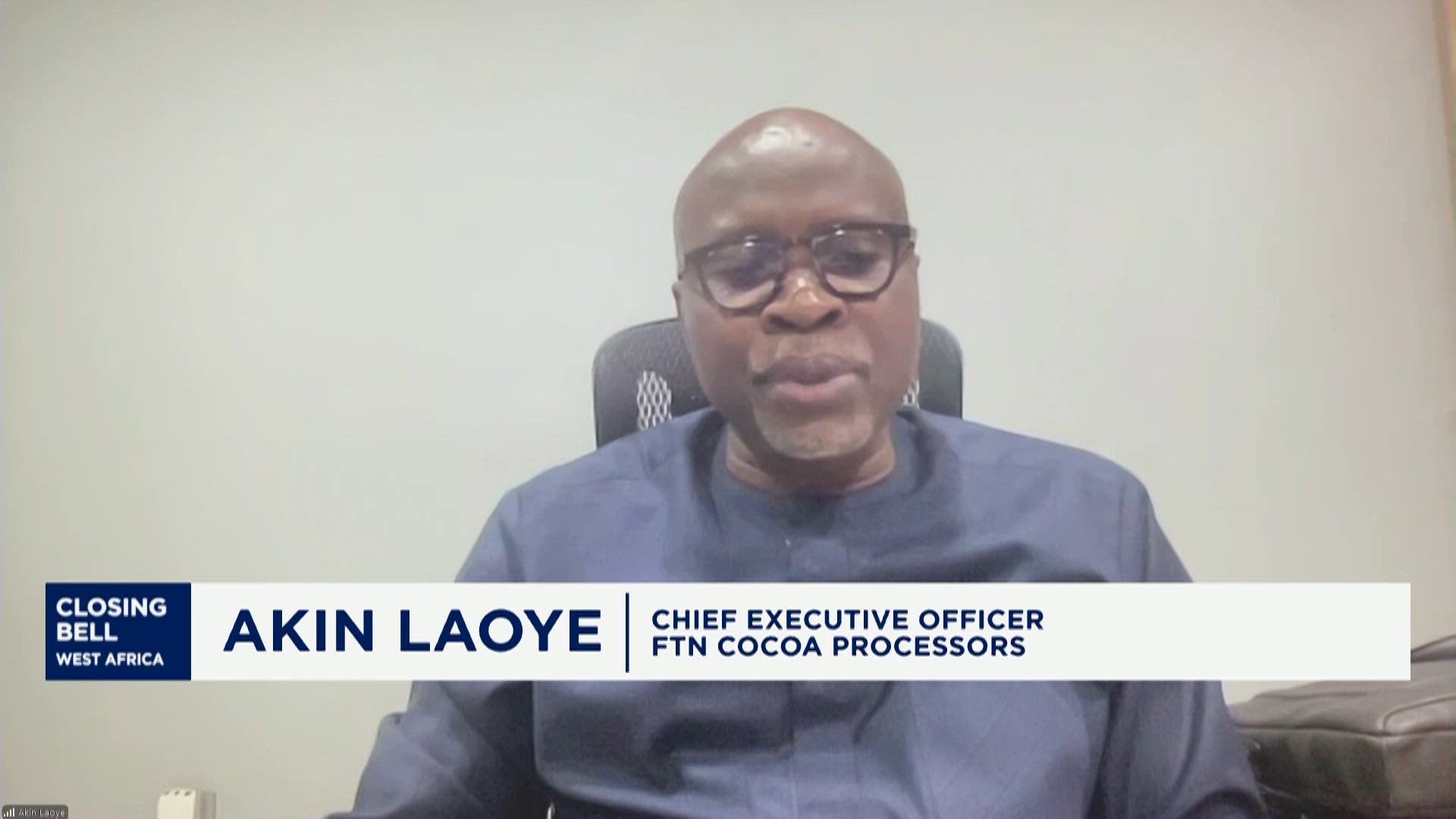
Côte d’Ivoire, Ghana, Nigeria and Cameroon are pushing to end decades of exporting raw cocoa beans while importing finished products at far higher prices. The bloc is focusing on retaining more value from the global chocolate industry. Will this move be achieved? Akin Laoye, CEO of FTN Cocoa Processors, joins CNBC Africa for this discussion.
Tue, 14 Jul 2026 14:46:15 GMT
Disclaimer: The following content is generated automatically by a GPT AI and may not be accurate. To verify the details, please watch the video
AI Generated Summary
Key Points:
- Côte d’Ivoire, Ghana, Nigeria and Cameroon are pushing to reduce raw cocoa bean exports and increase local processing.
- The four countries account for about 67% of global cocoa production, potentially giving them stronger negotiating leverage.
- Industry stakeholders say the first realistic step is processing beans into cocoa liquor, cocoa butter and cocoa cake rather than immediately shifting to full chocolate manufacturing.
- Political will and coordinated policy execution will be critical to making the regional strategy work.
- Farmer compensation and pricing mechanisms, including living income considerations, must be built into the new framework.
- Local processors will need greater access to affordable financing from banks and development finance institutions.
- Tariff structures in export markets may need to be renegotiated if West Africa ships more processed cocoa products.
- The EU Deforestation Regulation remains a concern, with calls for more negotiation over timelines and implementation.
- Laoi said Europe and the U.S. remain the key cocoa and chocolate markets, making negotiation more important than confrontation.
- Smuggling will remain a risk unless the bloc harmonizes pricing and reduces cross-border arbitrage incentives.
Topics
West Africa cocoaCôte d’Ivoire cocoaGhana cocoaNigeria cocoa processingCameroon cocoaAbuja Declarationglobal chocolate industrycocoa value chainAkin LaoiFTN Coco ProcessorsEUDRliving income differentialAfrica industrializationcommodity exportscocoa processing finance
West Africa’s leading cocoa-producing nations are moving to reshape their role in the global chocolate supply chain, with Côte d’Ivoire, Ghana, Nigeria and Cameroon seeking to end decades of exporting raw cocoa beans while importing higher-value finished products at a premium.
The effort, highlighted in discussions around the Abuja Declaration, reflects a broader push by the region to capture more value from an industry it largely supplies but does not fully control. Together, the four countries account for roughly two-thirds of global cocoa production, giving them substantial leverage if they can align policy, pricing, financing and trade rules behind a coordinated processing strategy.
Speaking in a television interview, Akin Laoi, CEO of FTN Coco Processors, said the move was overdue but timely, arguing that the region now has the capacity to make such a transition more realistic than in prior years.
“I think it’s coming at the right time,” Laoi said, noting that a similar conversation had surfaced during the administration of former Nigerian President Olusegun Obasanjo but did not gain traction across the region. “It’s good that it’s happening than not happening.”
At the center of the new push is a practical first step: keeping more of cocoa’s early-stage industrial processing within West Africa before products are shipped abroad. Rather than focusing immediately on finished chocolate manufacturing, Laoi said the bloc should prioritize converting raw beans into intermediate products such as cocoa liquor, cocoa butter and cocoa cake.
That distinction matters because it allows West Africa to claim more value from cocoa processing without directly challenging consumer preferences in Europe and the U.S., where major chocolate brands, recipes and distribution channels are concentrated. According to Laoi, processing beans into semi-finished products should not alter the quality standards global chocolate makers require, given the sector’s heavy regulation.
He said the region’s market power could be significant if the four countries act in unison. “The four countries actually produce about 67% of the world cocoa,” he said, adding that if governments show the political and economic will to insist on first-line processing before export, “they will just have to follow.”
Still, Laoi struck a pragmatic tone on how far the region should try to go in the near term. While some policymakers may ultimately want more chocolate manufacturing to happen in Africa, he said the immediate priority should be industrialization at the intermediate processing level, especially given the economics of local demand.
Chocolate remains too expensive for many African consumers, he argued, limiting the business case for a rapid shift into large-scale finished-product manufacturing aimed at domestic markets. In that context, pushing for full localization of the value chain all at once may be unrealistic.
“The first step is the industrialization, converting the cocoa beans into cocoa mass, cocoa butter, cocoa cake,” Laoi said. “Let’s take a step at a time rather than just saying we want to have every product come to Africa.”
The proposed shift also raises key questions around farmer compensation, pricing and the living income differential framework that has become central to discussions in the cocoa economy. Laoi said any regional pricing architecture must ensure farmers benefit meaningfully, warning that underpaying growers would further weaken the sector after years in which many farmers left cocoa production.
“We don’t want them to be shortchanged,” he said, adding that pricing systems should reflect international market realities while ensuring producers “have a feel of the cash flow or the benefit.”
Beyond pricing, one of the biggest constraints to scaling local processing is capital. Processors across West Africa will need reliable and competitively priced liquidity to buy cocoa from local farmers at a speed and scale that can rival international cash buyers. Laoi said the proposed policy reset should prompt commercial banks and development finance institutions to reallocate funding toward the processing segment.
He pointed to institutions such as Afreximbank, the African Development Bank, NEXIM and the Bank of Industry as players that could help unlock financing if the four-country agenda gains traction. In his view, a coordinated regional policy would force lenders to reassess the cocoa value chain and provide processors with better access to working capital.
“This step that these four countries are trying to take now is a game changer. It resets everything,” Laoi said.
Trade policy is another potential flashpoint. If West African countries begin exporting more processed cocoa products instead of raw beans, tariffs in destination markets could become a bigger issue. Laoi said tariff structures would need to be renegotiated as part of a broader package through bilateral, multilateral and international trade discussions.
For him, the shift is less about confrontation with Europe and the U.S. than about renegotiating a system in which Africa has historically captured too little value. “Africa is holding the short end of the stick,” he said, while stressing that all parties should work toward a “win-win” arrangement.
The European Union Deforestation Regulation, or EUDR, is another concern hanging over the sector. Some industry participants worry that stricter compliance rules could become a pressure point as West African producers seek more control over exports. Laoi said the regulation should be discussed and negotiated, particularly around timelines and implementation.
He argued that African producers have had little say in the design of such policies and should now use their market relevance to seek more realistic terms. “We need to be much more audacious in Africa,” he said, calling for producer countries to have a stronger voice over rules affecting commodities grown on the continent.
Even so, Laoi cautioned against viewing the strategy as a battle with traditional consuming markets. While Asia represents an opportunity, he said Europe and the U.S. remain the core centers of cocoa and chocolate demand. That means diplomacy and lobbying will be crucial.
“It’s not for us to say we want to draw a battle line and start fighting a war that we may not be able to win,” he said. Instead, he called for negotiations that frame cocoa processing as part of Africa’s broader industrialization agenda, job creation drive and economic development strategy.
Another issue likely to test any new pact is smuggling. Cross-border flows of cocoa have long been driven by price arbitrage, as farmers and traders move beans to whichever neighboring market offers better returns. Laoi said that unless pricing becomes more harmonized across the bloc, smuggling will remain a structural risk.
He compared the desired arrangement to OPEC-style coordination, with quotas, governance rules and aligned incentives to reduce arbitrage opportunities. In his view, smuggling is not simply a border control problem but a symptom of inefficient or inconsistent pricing policies within the region.
As policymakers push the Abuja Declaration from political signaling toward implementation, the success of the initiative may hinge on whether West Africa can do what it has struggled to do in the past: align governments, financiers, processors and farmers around a common strategy.
If that happens, Laoi suggested, the cocoa economy in Africa could look very different within a few years — less dependent on raw exports, more anchored in industrial activity, and better positioned to retain a greater share of the wealth generated by one of the world’s most lucrative agricultural commodities.
ChooseCNBC Africaas your preferred in business news
Join readers across the continent. It’s free, and you can unsubscribe at any time.
