

Mirage News
Mirage News
Mirage NewsWorld15 Jul 2026 11:46 pm AESTDate Time
The United Nations
ByDaniel Johnson, Geneva
Alongside gold, the little-known Sudanese commodity gum arabic–used in soft drinks, food, cosmetics and pharmaceuticals–continues to fuel the war.
In an alert on Wednesday, the UN human rights office, OHCHR , highlighted how the country’s warring parties have looted gum arabic and redrawn trading routes so that they can use the proceeds to perpetuate the conflict.
“Sudan’s vast wealth of natural reng today is anything but that,” said OHCHR spokesperson Ravina Shamdasani. “This wealth is only serving to undermine human rights and drive conflict, bringing pain and suffering on an enormous scale.”
Why this matters:
- All warring parties profit from gum arabic sales
- Commodity trade linked to arbitrary detention and other abuses
- Used in food and drinks trade, pharmaceuticals and cosmetics
- Smuggling routes extend through Chad, South Sudan, Kenya, Libya and Egypt
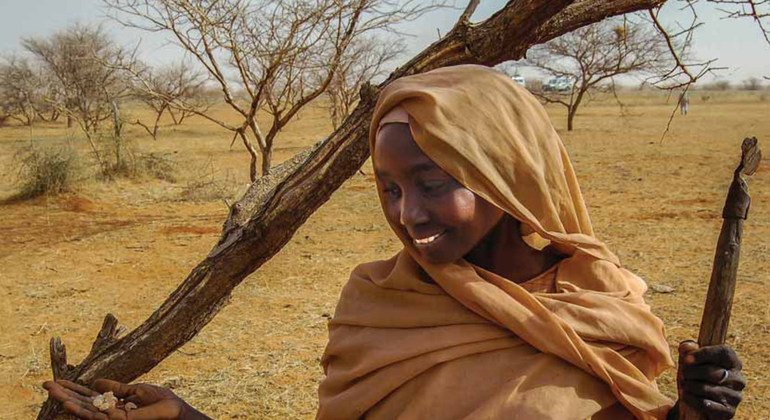
Across Sudan, gum arabic provides an important. It is harvested from the stems and branches of the acacia tree in areas heavily affected by the conflict, where serious violations of international humanitarian law and international human rights law have been documented
Sitting target
Before war erupted in April 2023 following the collapse of Sudan’s transition to civilian rule, the country accounted for roughly 70 to 80 per cent of global crude gum arabic exports. Annual exports of gum arabic were worth up to $183 million. This has made it a prized target for the paramilitary Rapid Support Forces (RSF) militia which are believed to have looted stocks from a major trading centre in El-Nuhud, West Kordofan, and redirected them west to Darfur and Chad, in May 2025.
Today, Sudan continues to account for a “substantial share” of the global gum arabic supply, despite the conflict and the serious human rights risks flagged by OHCHR.
“This war economy must be disrupted, and the international community must pay much closer attention to the commodities and trade routes that help keep it alive,” Ms. Shamdasani insisted.
Danger zone
According to a new OHCHR report, many Sudanese people who depend on or are linked to the gum arabic trade have faced “threats, arbitrary detention, looting and extortion” from the warring parties and their allies.
Traders using corridors that run through Rapid Support Forces-held parts of Darfur and Kordofan in west and central Sudan have faced confiscation, informal taxation and insecurity. Along the more secure northern and eastern routes towards Port Sudan and Northern state, merchants face numerous checkpoints, “formal and informal charges and some cross-border smuggling”, the report notes.
Prior to the conflict, production was concentrated across the so-called “gum belt”, including the Kordofan and Darfur regions, as well as Blue Nile, White Nile, Sennar and Gedaref states, where smallholders and semi-nomadic farmers relied on harvesting as an important off-season
Check mates
The report notes that “significant quantities” of gum arabic have been redirected by RSF in West Kordofan and parts of Darfur towards Souq al-Na’am, a demilitarized zone separating Sudan and South Sudan, and then deeper into South Sudan, Juba and onward to Mombasa port in Kenya.
Alternative routes have also reportedly emerged including towards Chad and onwards to Douala port in Cameroon and other cross-border locations, where the gum is relabelled before it is exported and processed.
Security Council -appointed experts have previously documented how looted gum arabic has been transported along routes leading to Chad, the Central African Republic and South Sudan. “Widespread looting of gum arabic by the RSF was used as a form of compensation for fighters in the absence of salaries” with at least 3,700 tonnes looted between January and June 2024.
Golden gift
Important as gum arabic is in sustaining the Sudanese conflict, gold sales are “a major revenue and paramilitary RSF, the OHCHR report’s authors maintain
In 2024, declared gold production in SAF-controlled areas was about 65 tonnes, of which about 28 tonnes were officially exported roughly 48.5 per cent of Sudan’s total exports
However, reports and official statements indicate that nearly 48 per cent of Sudan’s 2024 gold output was smuggled out of the country, the OHCHR report notes. There is no gold production data for RSF-controlled areas, although the precious metal is likely still being extracted and traded from mining areas in Darfur and Kordofan, including Jebel Amer in North Darfur, Songo in South Darfur, and Talodi in South Kordofan.
/UN News Release. This material from the originating organization/author(s) might be of the point-in-time nature, and edited for clarity, style and length. Mirage.News does not take institutional positions or sides, and all views, positions, and conclusions expressed herein are solely those of the author(s).View in full here.
