

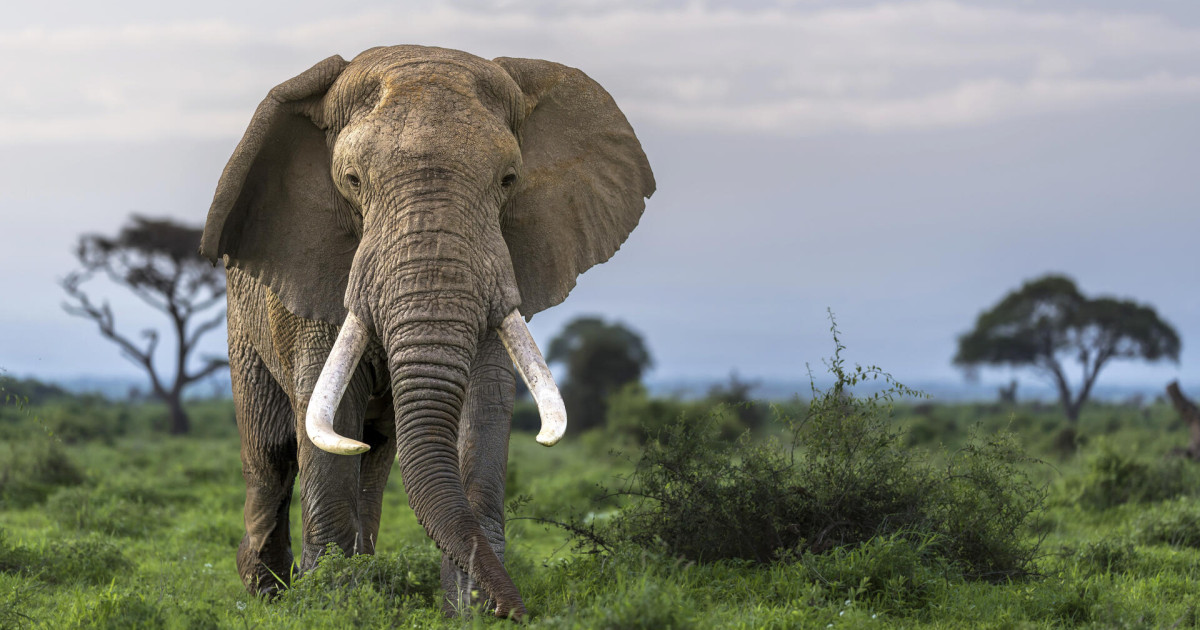
South Africa—Over half (60%) of international tourists would consider visiting a different country instead if elephant culling (mass or selective killing) of elephants) is reinstated in South Africa, according to a new survey commissioned by Humane World for Animals South Africa. Almost half of respondents (47%) explicitly stated they would be less likely to visit South Africa due to elephant culling
Amid growing concerns that potentially thousands of elephants could be culled according to parliamentaryreportsby two provincial management authorities, the survey found that elephant culling could significantly damage South Africa’s reputation as a leading wildlife and ecotourism destination within its top four overseas tourist source countries—Germany, the Netherlands, the United Kingdom and the United States. The survey also found that most South Africans (77%) believe that tourism would suffer if mass elephant killing was reintroduced there.
Large-scale culling officially ended in South Africa with a 1995 moratorium. Prior to that, over 14,500 elephants were systematically killed in Kruger National Park using lethal injections and large calibre weapons, resulting in international outcry and condemnation. Now, despite the availability of proven, non-lethal methods to manage elephant populations, more than 2,000 elephants across the North West Park’s Madikwe and various KwaZulu-Natal game reserves face potential slaughter due to claims by provincial management authorities of overpopulation.
With tourism contributing nearly 9% of South Africa’s Gross Domestic Product and supporting an estimated 1.5 to 1.8 million direct and indirect jobs—accounting for roughly one in every 12 to 18 workers—it’s clear that a return to mass elephant killing could have a devastating impact on tourism and the vital support it provides for local economies and communities. In every tourist source market surveyed, it was found that opposition to the killing of elephants outweighs support. In Germany, South Africa’s third largest tourist source country, 69% oppose culling and more than half (53%) of visitors would be less likely to visit South Africa due to lethal elephant control. Across all markets, 80% agree that non-lethal methods should be prioritised over killing wherever possible.
Dr. Audrey Delsink, elephant biologist and senior wildlife director at Humane World for Animals South Africa, says: “South Africa’s elephants are far more than an iconic wildlife species. They are a cornerstone of our natural heritage, a major drawcard for nature tourism and a symbol of the country’s global conservation leadership. South Africa’s elephant policy choices must protect both its conservation integrity and its wildlife tourism future. The research on elephant culling risks is clear: non-lethal, welfare-conscious management is not only ethically sound, but also essential to maintaining public trust, destination appeal and our global reputation as a responsible wildlife leader through a tourism economy that healthy elephant populations help sustain.”
Survey respondents demonstrated overwhelming support for humane, non-lethal approaches to elephant management. South African respondents, like their international counterparts, favoured expanding elephant ranges, creating wildlife corridors, managing water sources and using immunocontraception over lethal methods. The findings indicate that public confidence is strongest when elephant management is evidence-based and guided by both ecological science and animal welfare. The survey also reinforces the conclusion that protecting both elephants and South Africa’s wildlife economy are complementary objectives rather than competing priorities.
For the past 25 years Humane World for Animals South Africa has been leading the way with humane alternatives to elephant cullingtnership with University of Pretoria’s Veterinary Population Management Laboratory and partner reserves. To date, this initiative has safely vaccinated over 1,800 wild female elephants across 50 South African reserves outside the Kruger National Park
Last month, Humane World for Animals South Africa partnered with Ukwanda Puppets to release a moving new short film to raise awareness of the urgent need to protect South Africa’s iconic elephants from the imminent threat of mass culling.
- Culling context: While culling remains legal under the Norms and Standards of Elephant Management, it can only be applied as a last resort once non-lethal methods have been exhausted. Large-scale killing has not been implemented since the moratorium was introduced.
- The current threat: As wildlife becomes ever more commodified and monetized, political discussions have put mass killing back on the table. Commodification reduces living, sentient beings into goods to be killed, bought, sold and traded for human profit.
- Total population: There are approximately 44,000 elephants in South Africa, with approximately 35,000 within the Kruger National Park and the balance living in fenced reserves.
- Conservation status: The African savanna elephant is listed as endangered globally on the IUCN Red List.
- Human-wildlife conflict: Poor fence maintenance or acts of sabotage fail to keep elephants contained in reserves; as a result, elephant bulls’ natural migration instinct can cause conflict with humans.
- Humane solutions: A suite of highly effective, non-lethal strategies already exists to foster human-elephant coexistence. Humane World for Animals believes that lethal options should always be an absolute last resort, with current scientific data pointing to non-lethal methods being more effective.
Humane World for Animals works in countries across the globe to foster humane co-existence between people and wildlife. Around the world, we promote and support effective, science-driven and community-focused solutions to mitigate negative human-wildlife interactions. Our efforts span a wide range of species and contexts, including elephants in South Africa, dingoes in Australia, urban wildlife in North and Central America, rodents in the United Kingdom, jaguars in Costa Rica, snakes in India, coyotes in the United States and many more, reflecting our commitment to context-led, species-appropriate solutions that help both human and wildlife communities thrive together.
- Download behind-the-scenes photos and video of the elephant cull puppet filming HERE.
- Watch the short film HERE.
The survey was conducted by Savanta of 5,027 adults across five markets: South Africa (1,002), Germany (1,003), Netherlands (1,010), USA (1,011), and the UK (1,001). The survey was conducted online between 5–17 June 2026. Results were weighted by age, gender and region to be nationally representative within each market.
Media Contacts
Parapara Makgahlelapmakgahlela@humaneworld.org

