

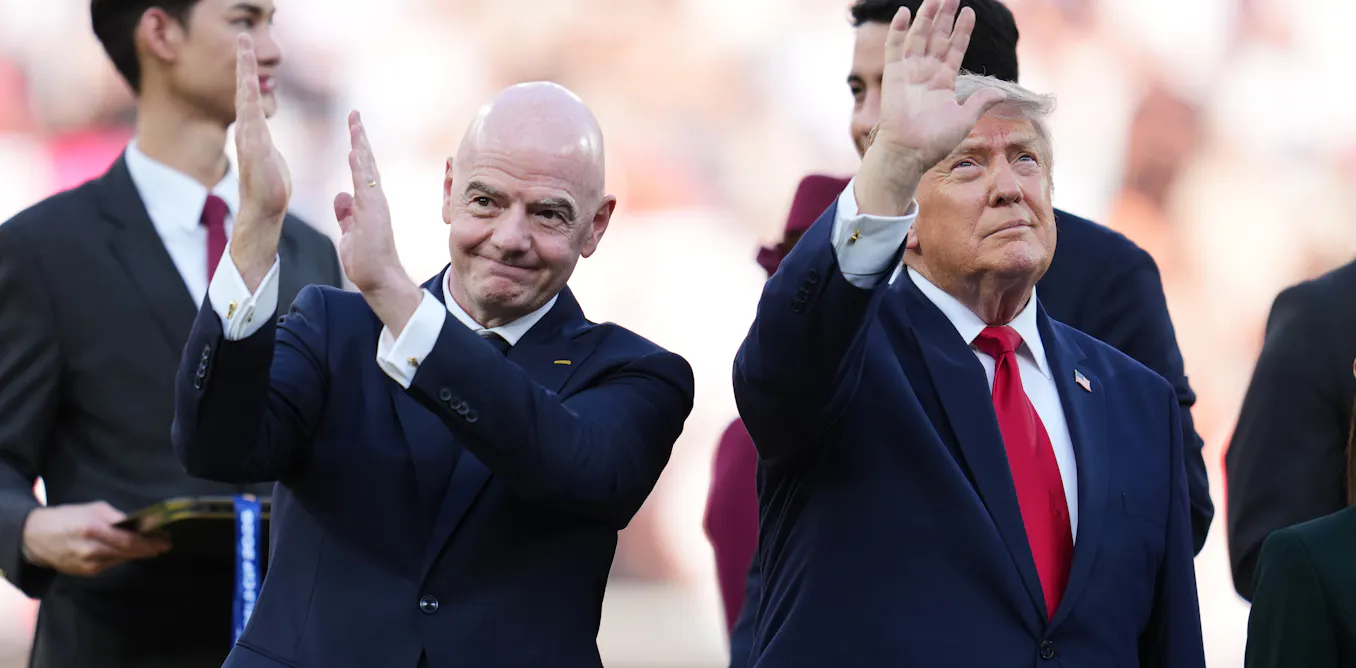
FIFA President Gianni Infantino recently cancelled plans to sell a 20 per cent stake in a company that would run the association’s tournaments, including the World Cup, to private investors.
The move came following widespread criticism from national soccer associations, fans and even other FIFA officials over handing private investors a financial stake in the competition.
On July 28, Infantino announced that the world’s largest soccer association would sell roughly one-fifth of the World Cup’s commercial future to investors led by Thrive Capital — the venture capital firm run by Joshua Kushner, brother of U.S. President Donald Trump’s son-in-law, Jared.
The investment vehicle was to be the FIFA Forward Enterprise, a commercial subsidiary holding the rights to FIFA’s competitions at a valuation near US$20 billion.
On July 29, Infantino set a deadline for member associations to claim their share of the proceeds, reported at roughly US$20 million each. Two days later, the plan was dead, killed by a revolt of the national soccer confederations. A week later, Infantino was apologizing at a crisis summit in Morocco amid calls for his ouster. On Aug. 11, Trump defended Infantino and said replacing him would be a “terrible mistake.”
UEFA, the Union of European Football Associations, called the plan a line “that football’s governing institutions should never cross,” voted to boycott future iterations of the World Cup and announced it had lost confidence in Infantino.
But what exactly was UEFA boycotting?
Soccer as a festival
From our perspective, UEFA’s objections were not against FIFA making money through the World Cup. It already makes staggering amounts; anyone who bought a World Cup ticket knows that. The objection is rather to what the tournament would become.
Soccer associations that opposed the plan see the World Cup as something closer to a public service — a public good — than to a portfolio asset. Think of a post office, regional hospital, museum or municipal library. Most do not expect these institutions to generate profits or maximize a return on investment.
Instead, these services foster a vibrant, sustainable community; we accept they run at a loss, made whole by transfers, subsidies, donations, and, in soccer’s case, sponsorship. The deficit represents the cost of the service they create.
Festivals work the same way. A festival suspends ordinary time so a community can rehearse what it values: who belongs, what counts as excellence, how strangers should treat one another.
For Canadian writer and critic Max Wyman, they are “testing grounds for new visions of how we live together, new ways to establish shared values.” We might consider soccer a social practice with goods internal to it: loyalty, collective joy and courage.
In fact, soccer is a festive practice and the World Cup is the largest such festival. Yet, the 2026 tournament in North America offered a dystopian glimpse of what we don’t want: ulterior financial motives shaping the contours of a beautiful game.
A focal practice
The German-born American philosopher Albert Borgmann gave us language to describe what is at stake in Infantino’s vision of soccer’s future. Borgmann called activities like soccer “focal practices”: things that gather people around a centre, demand attention and effort, and generate meaning through active, embodied processes.
He contrasted this modality with the “device paradigm:” modernity’s cultural pattern that splits a good from the practice that once produced it, then delivers it as a frictionless commodity while hiding the machinery behind it.
Heat, for example, arrives at the push of a button; the hearth that once organized a household’s evenings does not. The same can be said for soccer as a communal activity. The World cup is not merely performed on a sound stage ready to stream to passive consumers around the world; it is a collaborative, bottom-up performance: supporters gathering around the pitch (or a television), singing in support and performing rituals in its improvised community.
Financializing the World Cup appeals to the device paradigm, corrupting soccer’s largest festival. Once it becomes an investment vehicle, the World Cup shifts from serving the global soccer community to serving shareholders.
Dangers of commercialization
We don’t have to stretch far to imagine this absurdity. The 2026 tournament gave us a glimpse of this new vision.
Consider the hydration breaks: two per match, three minutes each, framed as protection for players facing the summer heat.
Well-being was the explanation, but advertising was the reality; two extra stoppages across 104 matches created hundreds of new commercial windows. Many fans did not appreciate the added interruptions and booed the hydration breaks.
Whatever one thinks of UEFA — and there is plenty to think — its members grasped something FIFA did not. Fiscal responsibility means enough revenue to keep the festival running.
An institution that belongs to everyone and to no one is a fragile thing. It survives on a shared conviction that some goods are not for sale — that some goods belong to the community. Infantino’s failed sale was useful precisely because it forced that conviction into the open and let us see the ugly face waiting in the wings.

