

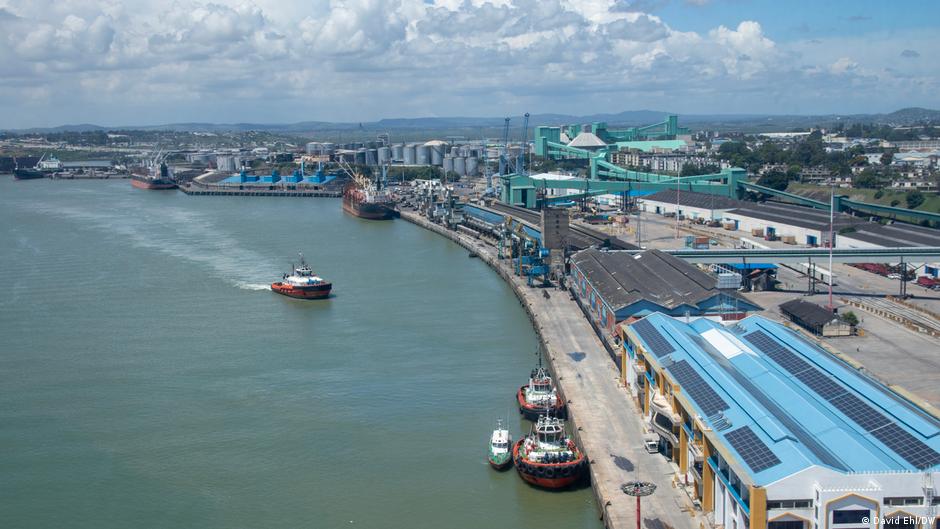
One of the principal arteries of world trade has been chronically blocked for almost six months. Maritime traffic in the Strait of Hormuz has been reduced to a bare minimum since the first US-Israeli airstrikes on Iran at the end of February. Cargo ships have at times been fired on by Iranian forces; at others, threats from Tehran or Washington have been enough to bring shipping to a standstill.
So far, various rounds of talks, a joint memorandum and third-party deliberations about the creation of a maritime mission have not succeeded in stabilizing the situation. It remains to be seen whether a deal between Iran and Oman on establishing a shipping route through the strait will do so.
The war has prompted fossil fuel prices to soar all over the world, with inflation rising as a result. Despite its relative proximity to the Gulf region, some parts of Africa have experienced serious shortages because of the bottlenecks, with long lines of cars at gas stations that have run out of fuel. As many fertilizers are also sourced from the Gulf region, this year’s harvests also threaten to be bad. African governments therefore have every reason to engage diplomatically in finding a permanent solution.
Cautious diplomacy
“I believe their long-term plan is still based on the assumption that the crisis in the Middle East may continue for some time,” says Liesl Louw-Vaudran from the International Crisis Group, an NGO that works to prevent conflicts.
The US and Iran signed a memorandum of understanding in June, but Louw-Vaudran, an expert advisor working with the African Union, comments: “We don’t see any evidence that there was some kind of optimism or revising of any economic planning after the MOU. I think everyone literally is just waiting to see how this is going to pan out in the next couple of months.”
It’s certainly the case that a low-key approach has dominated African diplomacy with regard to Hormuz in recent months. There have been numerous calls for negotiated solutions, praise for diplomatic initiatives and an emphasis on the rules-based order. Some African governments have also shown solidarity with the Arab Gulf states, which, as US allies, have come under fire from Iran.
The current African members of the UN Security Council — the Democratic Republic of the Congo, Somalia and Liberia — also backed a UN resolution adopted in March that strongly condemned Iranian attacks on the Gulf states.
The elephant in the room: Donald Trump
However, it is apparent from their communications that African governments are trying to avoid apportioning blame — especially to the US president, who, together with Israeli president Benjamin Netanyahu, was the one who started the war.
“Every rational human being in the world knows that this crisis has been occasioned by Mr. Donald Trump,” says Dismas Mokua, a political risk analyst with the Kenyan advisory firm Tricarta. “But the majority of African leaders, and indeed across the world, fear to call him out because of the consequences. And I’ve seen European leaders tiptoeing around this issue, I’ve seen leaders from Asia — leaders all over the world. I’ve not seen a single leader who has come out to call Mr. Trump, because I guess they fear the consequences of their speech.”
What if the whole of Africa were to speak with one voice — perhaps through the African Union? Louw-Vaudran from the International Crisis Group thinks a recent negative experience is still too fresh.
“The African Union Commission in Addis Ababa burned its fingers in the early days of the Ukraine war, in 2022, when the previous chairperson criticized Russia. And heads of state then immediately silenced him, and said that the commission doesn’t have the mandate to speak on foreign affairs issues on behalf of the continent,” Louw-Vaudran says.
She points out that the AU, with 55 member states, is “very much divided,” and says that, since then, “when it comes to political statements in this big, rapidly changing geopolitical situation, the commission has been hesitant.”
Ease the symptoms, don’t create new problems
The crisis also requires governments to take action rather than just make statements.
“For most countries, or even companies, to be successful wherever there is a disruption in this global supply, you have to reevaluate your supply chains and find out which fits your interest,” Mokua says. “And in my view, Kenya has managed to do that with a lot of success.”
He comments that he hasn’t seen anyone — and, in particular, commercial farmers — complaining about deliveries.
“And even for the supply of oil and gas products, people anticipated that there were going to be shortages. But there were no shortages. The suppliers have been constant and reliable, despite the increase in cost.”
But the experience of neighboring Ethiopia has been very different. Delivery bottlenecks forced the government to temporarily prioritize security agencies, public transport and agriculture when distributing fuel. Private individuals were stuck waiting at empty gas stations.
Before the war, Ethiopia was one of Iran’s most important African trading partners. That connection is now also at risk, since Ethiopia also relies on maintaining good relations with the United Arab Emirates and increasingly with Saudi Arabia, too.
Countries like Ethiopia and Kenya may also be about to feel another, delayed effect of the Iran war. If the rich Gulf states’ economies falter, East African migrant workers there will transfer less money back home.
Opportunity for African countries to work together
But there are also some African countries for whom the uncertain situation in the Gulf might actually be helpful. Nigeria’s huge new Dangote refinery came online at just the right time. Intended to ease fuel shortages in the oil-rich country, it’s now a mainstay of the world market. In April, the refinery became the world’s largest exporter of a
Responding to the Hormuz crisis, Nigeria has offered itself as a partner for African clients. The Dangote corporation is already planning another refinery in Kenya. And the government is standing with the Gulf states: On the oil market, countries seek to be partners, not competitors.
“Nigeria has been very smart, at least in terms of that economic positioning, having the crude itself,” says Liesl Louw-Vaudran. “But obviously Nigeria has got huge governance and security issues that are very difficult to overcome.”
Perhaps the least visible issue in the short term but one that is likely to have the most lasting impact: The crisis provides another argument for pressing ahead with the implementation of the African Continental Free Trade Area (AfCFTA).
“There are a number of countries that do not understand the meaning of dismantling these artificial borders. They fear that they are going to lose political control,” says the analyst Dismas Mokua.
But he added that he believes many African countries will eventually embrace the dismantling of arbitrary borders drawn up by European colonizers at the infamous Berlin Conference in 1885. “If you want to immunize yourself from the vagaries associated with the global disruption, then you must learn to trade within Africa,” he says.
This article has been translated from German.

