


The success of South Korean popular music or K-pop continues to power the Hallyu Wave, a term that describes the global obsession with the country’s pop culture production.
But before K-pop came the spread of K-drama, TV series from the country, starting in the late 1990s. By 2024 the melodrama Queen of Tears ranked as the most watched Korean series on Netflix, becoming the 14th most watched show of all time on the streaming service. It followed on the success of many other hits like Crash Landing on You and Marry My Husband.
K-drama has led to the development of another trend: Africa repeatedly appears as a homogeneous place full of savage danger or childish immaturity, and in need of a Korean saviour.
As a scholar of film and media, with a specific interest in global Black art and film practices, I recently studied how and why Africa became this trope in K-drama. This is particularly true in rags-to-riches romance stories and melodramas.
I traced Africa’s presence in three K-dramas – Shooting Stars (2022), Marry My Husband (2024) and Queen of Tears (2024). In them, Africa appears in three different negative ways:
-
a place of rebellion and savagery
-
a place of punishment for a “troubled” child.
My intention wasn’t to say why these portrayals are bad, but rather to understand what they reveal about South Korea. How they function as a scale for measuring and emphasising South Korea’s own development.
No longer the poor post-war country of the late 1950s, South Korea can now position itself among leading world powers. It has grown in the global economic and cultural landscapes.
Yet, as I argue in my study, what allows countries like this to define their developmental status is their ability to distinguish themselves from Africa. I propose that Africa’s presence in K-dramas is as a place maker, or specifically image-maker. Africa’s “savage” presence serves as a way of distinguishing the emerging soft power of South Korea, where what benefits the country’s global image is the ability to provide aid to Africa.
A place to do good
In his book On the Postcolony, Cameroonian philosopher Achille Mbembe describes Africa as Europe’s “signifier”. This means that the way Europe comes to know and define itself is only possible through how it defines itself against Africa.
But my study contributes to showing that this is not just the case in the west. The ever-growing presence of eastern soft powers such as China and South Korea means that longstanding stereotypes of Africa have found new sites of replenishment.
There are some major threads that connected Africa’s presence in the K-dramas I studied. One is its portrayal as a place where non-Africans could go to build character by participating in volunteer work as part of an NGO. In Marry my Husband, for example, the show’s antagonist Oh Yu-ra loses her job in the family business and is sent to “join a volunteer foundation in Africa to build character”.
In Shooting Stars, this idea of Africa as the epicentre of charity is even more apparent. The show’s opening sequence features the main character digging wells in Africa. He’s accompanied by smiling village children and a sound that one viewer described as “Lion King music”.
In both shows, South Korea is personified through the characters sent to Africa. While Yu-ra is sent as punishment, the character in Shooting Stars is an actor whose volunteer trip aids in his public image in South Korea. Africa becomes what builds the image and character of others, but only by being relegated to a cliché.
Yu-ra’s punishment shows how Africa becomes the K-drama’s vessel to hold the unwanted or defamed of other nations. It collects what disrupts the happiness of romance and, by extension, of nation-making, in South Korea. This figuration of the continent reappears in Queen of Tears.
A lawless continent
Queen of Tears does not follow the Asian-saviour-in-Africa trope. Instead, it presents Africa as a place for youthful inhibitions, with no sense of order or rule of law. The ideal place for the kinds of behaviours that might be illegal in the more “civilized” South Korean society that the character exists in.
In Africa’s brief cameo in the show’s third episode, the younger brother of the show’s protagonist, Soo-Cheol, reminisces on his rebellious days:
I’m reminded of when I went to Africa. My twenties were filled with wildness and barbarism.
When chided that he stayed in his hotel for most of the trip, Soo-Cheol comments, “I had enough of the wildness just looking out of the window.”
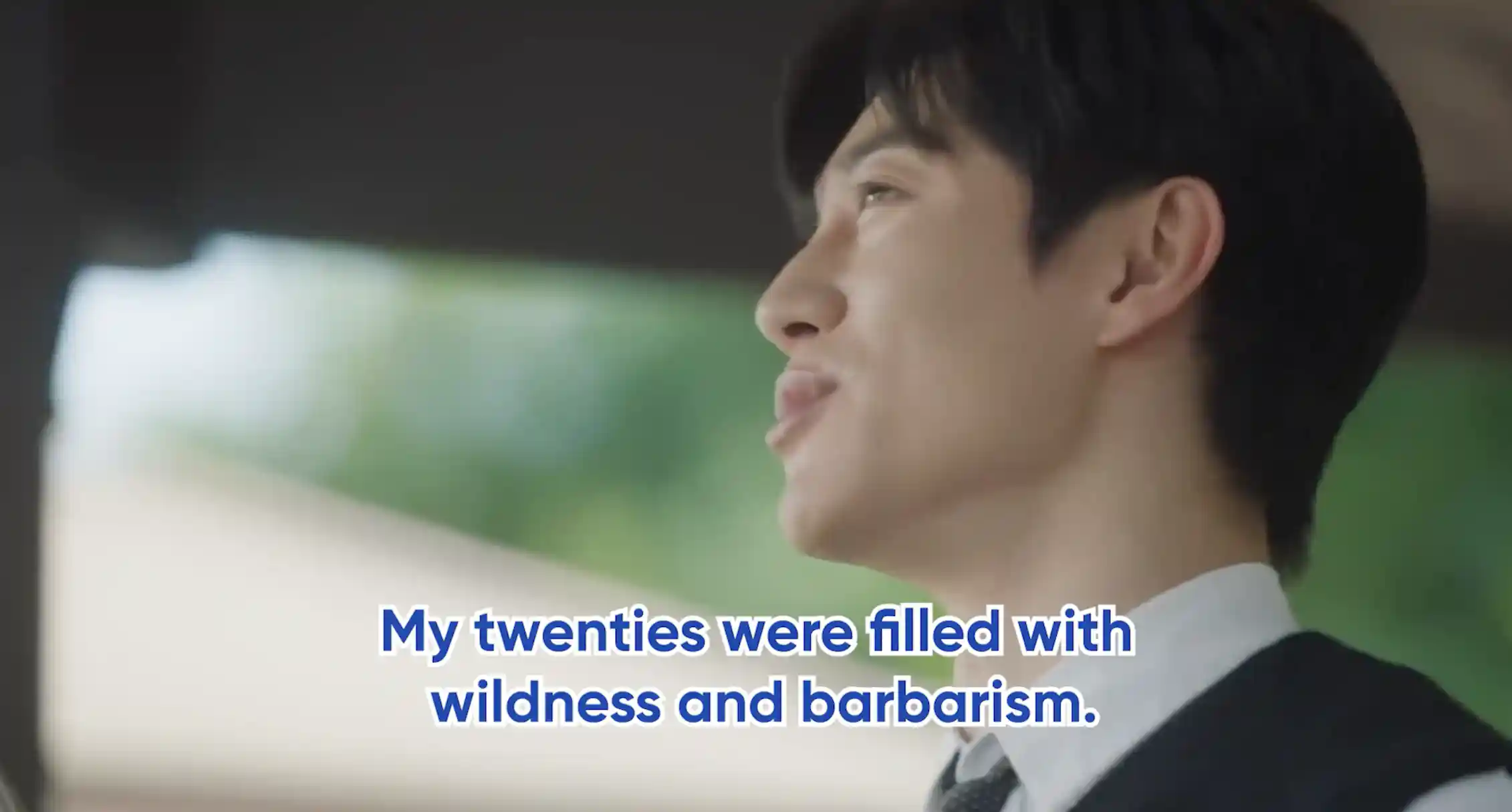
Screengrab/tvN/Studio Dragon/Queen of Tears
Here, Africa is understood in proximity to danger and savagery. Is it that there are no crime, criminals, or places and people in need of saving in South Korea? The obvious answer is no, but as my study finds, when viewed through these shows, the answer reads more like, “Compared to Africa, yes.”
Where will Africa go next?
This treatment of Africa began long before the shows in my study. Africa’s character-building qualities appear, for example, in the 2018 film Burning. The film’s female protagonist goes on a “soul-searching” quest to find life’s greater meaning.
In unscripted variety shows, African immigrants living in South Korea, like Sam Okyere or Jonathan Yiombi, often feature as hosts or guests, but not without their share of racist backlash.
Okyere, for example, was subject to racist comments after criticising a video of South Korean students recreating a popular video from his home country, Ghana. The same happened to Yiombi after South Korea was eliminated from the football World Cup because the DRC, his country of birth, defeated Uzbekistan, indirectly causing South Korea to be eliminated.
For better or worse, Africa’s metaphorical and literal presence has come to occupy South Korea’s cultural and aesthetic imagination. Despite Africa also being a continent full of modern urban life, cultural riches and innovation, the clichés remain.
This presence is only possible through the expected and invented image of the savage, helpless and primitive, who is in need, even after independence, of more civilising. And not only from western colonial powers, but also from the growing economies of the east.
A symbol of lack
K-dramas are increasingly popular in Africa, yet when constantly viewed this way, Hallyu’s success in Africa comes with a heavy representational price.
Despite their engagement with K-drama, African audiences can only ever seem to see themselves represented through a colonial gaze that benefits South Korea’s pursuit of global power. Africa then, while continuing to build South Korea’s cultural capital, can only ever exist as a symbol of lack.

