

Click the Play button to listen to article
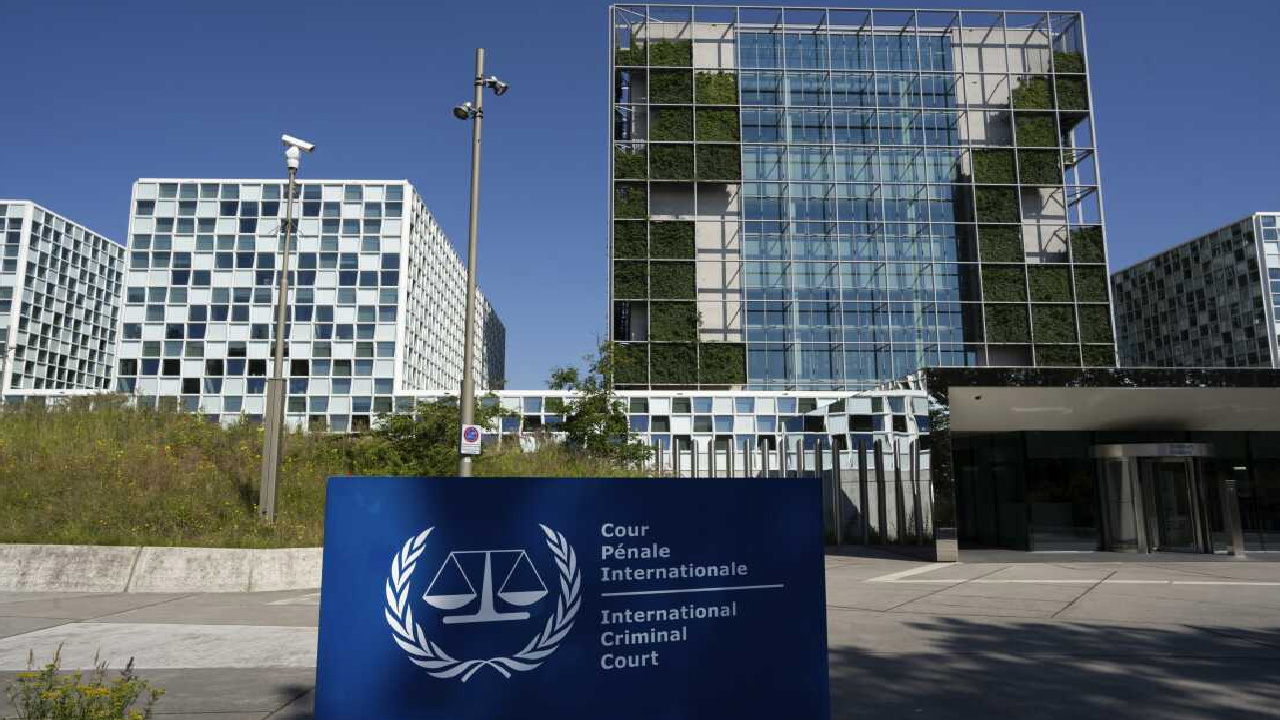
On 9th October 2026, the United States placed the International Criminal Court itself on its sanctions list, going further than its earlier measures against individual officials. The ICC regarded this as an attack on the rule of law and warned that “history will judge this moment”. President Tomoko Akane committed to the Court continuing to function independently, based on law and evidence. The issue at present is whether the ICC will be able to keep the practical means to carry out that promise.
Temporary Relief and Lasting Uncertainty
It would be incorrect to describe the announcement as one of an immediate shutdown. Together with the designation, the US Treasury issued General Licence 13, which allowed the transactions needed to keep the Court’s operations going or to bring them to a close until 12:01 a.m. eastern daylight time on 7th April, 2027. The licence specifically includes payments to member states, salaries, health insurance, rent and routine services. This represents considerable breathing room and also provides the crisis with a date by reference to which the Court will have to plan its future.
The situation is made even more complicated by other exemptions. General Licence 14 permits specified telecommunications, internet services and enterprise software, such as cybersecurity and data storage. Individual licences are granted for pension payments and for the continued detention of listed individuals. Since these provisions show that forecasts of a complete loss of all banking, software or detention services go beyond what the measures actually provide, it must be said that approval to carry on certain activities gives considerably less security than an organization needs in order to conduct investigations over a number of years.
How Financial Pressure Reaches the Court
It functions within the framework of Executive Order 14203, which was issued on 6th February 2025 using the emergency powers of the United States. This order prohibits the use of property located within U.S. jurisdiction or under the possession or control of U.S. persons by those who have been designated. Moreover, with regard to any applicable authorizations, it bans the provision of funds, goods and services to them and allows for the designation of foreign individuals who materially support the covered activities or sanctioned persons.
Its practical impact is therefore greater than the assets that are physically based in America. A foreign provider might worry about being exposed because of its business in the U.S., its financial connections, or the risk of being designated. However, this does not mean that every foreign transaction becomes automatically illegal. Instead, it simply means that businesses may become e more cautious than the law requires, which can make it harder to set up a legal business arrangement. For the ICC, the risk could cause providers to withdraw, request extra guarantees or refuse contracts that go beyond what is authorized. There are already signs that institutions are being disrupted. On 1st October 2026, Reuters reported that the ICC ended its agreement with the insurance company Axa and switched to a different health insurance provider because of the US sanctions.
The Limits of the Consent Objection
The Washington raised the point that the ICC had tried to assert its authority over people in the U.S. and Israel, even though neither country is a party to the Rome Statute. The 2025 executive order specifically targets the warrants issued for Benjamin Netanyahu and Yoav Gallant. Although this objection needs a legal examination, the fact that these countries are not members of the Statute does not simply resolve the question of jurisdiction.
With regard to the offences under consideration, Article 12 provides for jurisdiction on the basis both of the territory in which the alleged act took place and of the nationality of the accused. A citizen of a state which is not a party to the Statute may therefore be within the Court’s territorial jurisdiction. In February 2021, a majority of the ICC’s Pre-Trial Chamber held that jurisdiction in the case of Palestine covered Gaza and the West Bank, including East Jerusalem. That decision was concerned with the application of the Statute and not with arriving at a general settlement of Palestinian statehood.
The difference lies in distinguishing between imposing treaty obligations on a state that is not a party and in prosecuting an individual for actions carried out within a territory whose jurisdiction is accepted. Specific questions concerning jurisdiction are still open to legal challenge. Article 19 lays down the procedures for such challenges, and Article 17 gives priority to genuine national proceedings by means of complementarity. These safeguards should be examined through well-reasoned argument, and financial pressure does not provide a solution to the question of whether a chamber has correctly interpreted the Statute.
The sanctions also give rise to a serious incentive. Since the actual cost of looking into certain suspects is institutional instability, prosecutors might come under pressure to avoid exactly those cases which put the equality of international criminal law to the test. There is no need for any proven shift in how prosecutors make their decisions in order to realize that such a risk exists. A system in which some governments are able to impose such prohibitive costs on scrutiny will have difficulty in providing equal justice.
Judicial Independence Beyond the Courtroom
It is difficult to protect the judicial and prosecutorial independence guaranteed by Articles 40 and 42 when external pressure can affect the institution’s ability to pay its staff or maintain its essential contracts. Legal independence needs material backing, and the current situation highlights how much that support depends on commercial actors providing essential services to court. These actors cannot be expected to take on all political risks alone.
The impact of these issues on people goes beyond the officials in The Hague. If the investigations are disrupted, it can become hard to gather evidence and protect witnesses. Delays also affect the accused because their fair trials cannot be based on the negotiations between diplomatic representatives. It is therefore, important to protect defence rights and ensure fair hearings instead of seeing every problem as only a setback for prosecutors.
We do not have to accept every decision made by the ICC or overlook misconduct. Allegations against officials should be investigated by reliable methods and flawed rulings should always be open to review. Any organisation with power to judge others must also be accountable for its own decisions. However, using economic pressure on the organization is not a substitute for proving that someone has done something wrong or for finding a specific legal error.
It is also wrong to claim that all unilateral sanctions are automatically illegal under international law. The U.S. is not usually required to fulfil the obligations of the cooperation set out in the Rome Statute. When evaluating particular measures, it is important to identify the relevant legal responsibilities and the extent to which they apply. The main objection is that using financial exclusion to influence an independent court can make court’s decisions vulnerable to the pressure from powerful outside parties.
The label also does not cancel the Court’s arrest warrants or decide if anyone named in them is guilty or not. These problems are still left for the court to decide. When state consider cooperation requests, they must consider their applicable international obligations and not treat an American sanctions list as something that overrules the Court. Otherwise, financial pressure would have an influence over criminal proceedings which it legally does not have.
Protecting the Court Before Time Runs Out
States that support the ICC should use the temporary license to make sure there is no gap in operations once it ends. This means setting up dependable payment systems and contracts for essential services with the help of coordinated legal advice. Article 86 requires States Parties to fully co-operate in any investigations and prosecutions, and their political support will be of little value if the Court is not able to obtain the practical assistance necessary to carry out its mandate.
European governments should consider whether to extend the EU Blocking Statute to include these sanctions. This statute deals with foreign that have extraterritorial reach, but simply opposing Washington does not guarantee protection. Any extension should offer effective enforcement and practical assistance for the affected companies. Simply banning compliance is not enough to make the companies accept significant commercial risks.
The fact that the Court’s appeal to future generations and victims of mass atrocities is what gives this matter a human dimension. When financial pressure stops cases from moving forward, it is the people who are waiting for justice who suffer as a result. Governments therefore have to ensure that the ICC is able to carry out its investigations and render judgments independently, even if powerful states raise objections. The criterion should be whether victims can still get access to a working court, not whether they inherit an institution whose authority remains only on paper.

