

Senegal Oct 31– A four-month-old baby who was brought to a Nairobi clinic with a fever and a runny nose was found to have a congenital heart defect after an artificial intelligence (AI) tool flagged abnormalities in the child’s vital signs, prompting further medical examination
The discovery was made possible through AI Consult, a technology integrated into digital patient records at Penda Health, where clinical officer Vyonne Njeri was attending to the infant.
The system flagged elevated respiratory and heart rates, prompting Njeri to investigate further and refer the child for additional screening, which revealed the underlying heart condition.
For Njeri, the experience demonstrated how AI can provide an additional layer of support to healthcare professionals, helping them identify potential clinical oversights and make more informed decisions, particularly in busy primary healthcare settings.
She says her initial apprehension that artificial intelligence could eventually replace healthcare workers has given way to an appreciation of its potential as a tool that complements their expertise.
“AI is not perfect, and that is why it must never take over clinical judgement. It will make mistakes; I have seen that first-hand when it was first introduced,” Njeri said.
“We still need trained healthcare workers, we still need accessible clinics, we still need people who trust us to take care of them. I am the primary healthcare provider at the frontline, but AI has my back, and this support helps me focus on what is most important – the people.”
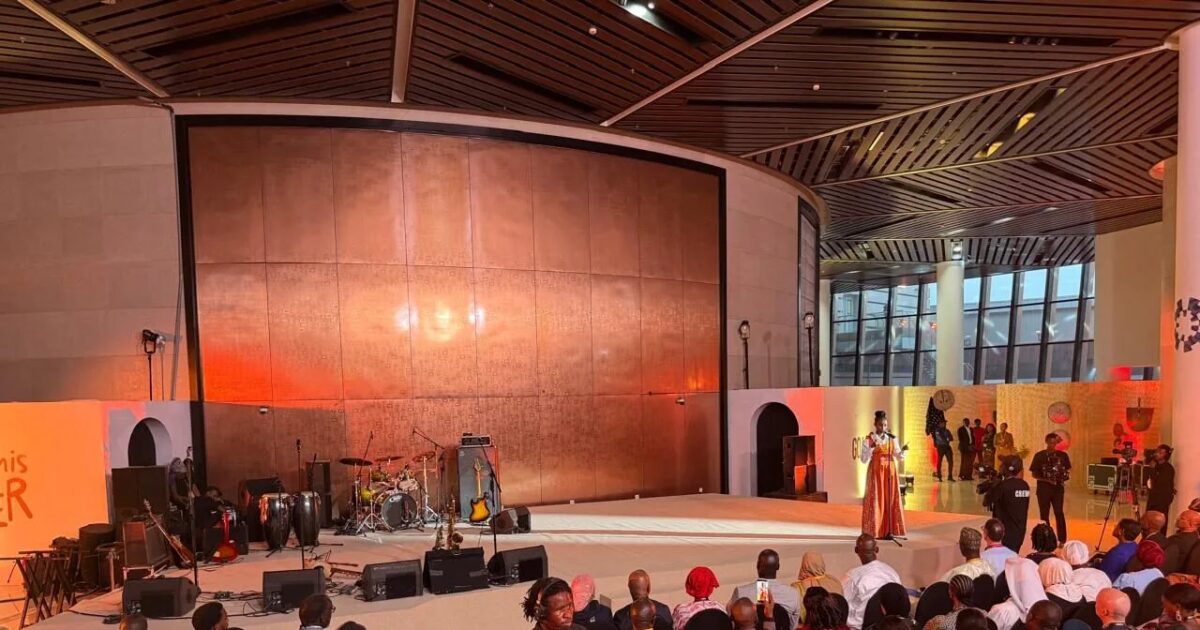
Her experience was among the African innovations and personal stories highlighted at the Gates Foundation’s Goalkeepers 2026 event in Dakar, Senegal, where the potential of artificial intelligence to improve healthcare, education and agriculture took centre stage.
Held on October 29 at the Museum of Black Civilisations, the gathering marked the first time the foundation’s Goalkeepers event was hosted in Dakar, bringing together African innovators, policymakers, development partners and other global stakeholders to examine how technology can address some of the continent’s longstanding development challenges.
Under the theme, “Make This Matter: AI, Equity, and the Choice We Can’t Delay,” the event explored how artificial intelligence can expand access to essential services while ensuring that communities often excluded from technological advancement are not left further behind.
The discussions were anchored on a central question: How can Africa harness the rapid growth of AI to improve people’s lives without deepening existing inequalities?
AI gives healthcare workers an additional pair of eyes
Njeri’s account illustrated one of the most immediate applications of artificial intelligence in Africa – supporting frontline healthcare workers who must make critical decisions while attending to large numbers of patients, often with limited re
In primary healthcare, where early detection and timely intervention can determine patient outcomes, AI-enabled systems could help clinicians identify warning signs, assess symptoms and flag potential complications that may otherwise require further investigation.
The experience at Penda Health demonstrated how such technology can complement the work of medical professionals rather than replace them.
However, Njeri cautioned against allowing artificial intelligence to assume the role of trained healthcare providers, stressing that clinical judgement, human interaction and trust remain essential to effective healthcare delivery.
Her account also highlighted the importance of ensuring that AI tools are developed and deployed responsibly, with appropriate human oversight, particularly when they are used in medical decision-making.
The healthcare discussion formed part of a wider conversation about how AI could help African countries address gaps in access to quality medical services, improve diagnosis and strengthen the capacity of health systems.
Breaking the language barrier in African education
Beyond healthcare, the Goalkeepers gathering turned attention to another major development challenge facing the continent – the language barrier in education.
Mamadou Ly, Executive Director of Associates in Research and Education for Development (ARED), shared how children in Senegal who grow up speaking indigenous languages often encounter difficulties when they begin formal schooling in French.
For many of these children, the transition means having to learn new subjects in a language they do not understand, creating an immediate disadvantage that affects their ability to follow lessons, participate in class and develop confidence in their education.
Ly said the challenge is particularly significant in Senegal, where many children enter school speaking local languages at home but are expected to adapt to French as the language of instruction.
To address this, ARED piloted an initiative that allowed children to learn in Wolof, one of Senegal’s most widely spoken languages.
According to Ly, the results demonstrated the potential of mother-tongue instruction to improve children’s understanding and participation in the learning process.
The pilot subsequently informed the country’s Ministry of Education’s bilingual education strategy.
ARED is now exploring how artificial intelligence can build on this progress by developing tools that support learning in local languages while helping teachers deliver lessons more effectively.
Ly said the absence of many African languages from existing AI systems risks excluding millions of children and communities from the benefits of the technology.
“The languages that are going to help children succeed in their education are not present in the AI systems. If we want to have AI that is inclusive, we need to create it through our language, our history, and our local context,” he said.
His concerns reflect a broader challenge in the development of artificial intelligence, where technologies trained predominantly on widely represented languages may struggle to serve communities whose languages and cultural contexts are poorly represented.
Senegal alone has numerous local languages, including Wolof, Pulaar and Sérère, underscoring the importance of developing digital learning tools that reflect the country’s linguistic diversity.
The challenge is not unique to Senegal. Across Africa, the development of AI applications that understand local languages could help expand access to education, information and essential services among communities that have historically faced barriers to digital inclusion.
African innovators showcase homegrown solutions
The event also provided a platform for young African innovators to demonstrate how technology developed around local challenges can deliver practical solutions.
One of the highlights was the “Qui Veut Changer Le Monde?” showcase, a Dragons’ Den-style competition in which young innovators presented their ideas to a panel of judges.
Three initiatives – Mosaan Health, MBOSS and Makeda – were presented, each addressing a different development challenge.
Mosaan Health showcased an AI-powered microscopy technology designed to support faster and more accessible disease diagnosis, particularly by improving the capacity to identify diseases through laboratory analysis.
MBOSS presented a smart irrigation solution aimed at helping farmers conserve water and improve agricultural productivity.
Makeda, a Senegalese reading application, demonstrated how technology can support children learning French through their mother tongues, including Wolof, Sérère and Pulaar.
The innovations were assessed by a panel that included Fatma Samoura, the former FIFA Secretary General.
Mosaan Health emerged as the winner, highlighting the growing interest in African-developed technologies that apply artificial intelligence to practical challenges in healthcare and other essential sectors.
The competition underscored the importance of supporting young innovators who understand the realities of their communities and are developing solutions around their specific needs.
It also reinforced the argument that Africa should not only be a consumer of artificial intelligence developed elsewhere, but should play a greater role in designing, developing and shaping technologies that will influence its future.
Bill Gates commits $1 billion to expand access to AI
The Dakar gathering came weeks after the Gates Foundation announced a commitment of at least $1 billion over two years to expand access to artificial intelligence and AI-enabled solutions, particularly in areas where the technology could have the greatest impact on people’s lives.
Announced on September 14, 2026, alongside the release of the foundation’s 10th annual Goalkeepers Report, the commitment is intended to support the development and deployment of AI applications in healthcare, education and agriculture, as well as digital infrastructure and underrepresented languages.
The funding is expected to be distributed across four priority areas, with 40 per cent allocated to education, another 40 per cent to healthcare, 10 per cent to agriculture and the remaining 10 per cent to digital foundations, including datasets and technologies supporting underrepresented languages.
In healthcare, the investment is expected to support tools for diagnostics, clinical decision-making, maternal and newborn care, and the development of medicines and vaccines.
In education, the focus includes AI-powered tutoring and tools that can help teachers personalise learning and improve classroom experiences.
For agriculture, the foundation is looking to support applications that provide smallholder farmers with advice tailored to their soil, weather and crop conditions.
The investment also recognises the importance of building the digital foundations required to make AI more inclusive, including developing datasets and applications in languages that are currently poorly represented in existing systems.
In the 2026 Goalkeepers Report, titled Make This Matter: AI, Equity, and the Choice We Can’t Delay, Bill Gates, chair of the foundation, warned that the benefits of artificial intelligence would not automatically reach the people who need them most.
He said the foundation was established partly to address a situation in which people with the greatest needs often have the least influence over where innovation and investment are directed.
“AI presents the same challenge, only at much greater speed. AI could be used to improve lives and livelihoods on a large scale, but achieving this will require deliberate choices by governments and technology companies,” Gates said.
“We can harness AI for good. But it will not happen by accident.”
The report argues that unless deliberate measures are taken, the development of AI could reinforce existing inequalities by prioritising wealthier markets and populations with greater access to technology, infrastructure and investment.
It calls for greater involvement of local communities in developing AI solutions, investment in digital infrastructure and ensuring that the technology is accessible and affordable to people across different economic backgrounds.
Investing in Africa’s digital future
The foundation’s commitment also includes support for initiatives aimed at strengthening the application of AI in African healthcare systems.
One such initiative is Horizon 1000, a $50 million collaboration with OpenAI, beginning in Rwanda, to support the deployment of AI tools in 1,000 primary healthcare clinics.
The initiative seeks to demonstrate how artificial intelligence can support healthcare professionals, improve access to information and strengthen service delivery at the community level.
Such investments come as African countries grapple with the need to expand healthcare access, improve education outcomes, strengthen agricultural productivity and build the infrastructure required to participate in the global digital economy.
However, the discussions in Dakar made clear that access to technology alone will not be enough.
The ability of AI to improve lives will depend on whether the solutions are relevant to local communities, whether they support existing professionals and institutions, and whether the people expected to use them have the necessary skills and infrastructure.
The contributions from Njeri and Ly illustrated two sides of this challenge: ensuring that healthcare workers have tools that strengthen their capacity to care for patients, and making sure children can access learning technologies that understand the languages they speak.
African voices at the centre of the AI debate
The gathering brought together voices from government, technology, development and the creative industries, reflecting the growing intersection between innovation and Africa’s development priorities.
Among those who contributed were Oulimata Sarr, former Senegalese Minister of Economy, Planning and Cooperation; Youssou N’Dour, the legendary Senegalese musician and Grammy Award winner; and Fatou Jupiter Touré, a United Nations ambassador who hosted the event.
Their participation, alongside innovators and frontline professionals, reinforced the need for a broader conversation about how Africa can influence the direction of technological development.
For a continent with significant gaps in healthcare access, education and agricultural productivity, artificial intelligence presents opportunities to improve the delivery of essential services and expand economic opportunities.
But the examples presented in Dakar also demonstrated that the success of the technology cannot be measured solely by its sophistication or speed of adoption.
It must ultimately be judged by whether it improves people’s lives.
From a clinician in Nairobi using AI to identify a potentially serious medical condition, to an education organisation in Senegal exploring ways to help children learn in their mother tongues, the innovations showcased at Goalkeepers demonstrated how technology can be adapted to address challenges that have long affected African communities.
As the continent considers its place in the emerging AI economy, the message from Dakar was that Africa must be more than a destination for technology developed elsewhere. It must help shape the innovation, investment and policies that determine who benefits from it.

