

Wonderland
Closing out four Australian dates with a Brisbane performance, the seven-piece London-based collective reflects on how their music continues to find new meaning all around the world.
There is something special about meeting a band for the third time. The introductions are familiar, the conversations have a history, and what we share can move beyond discovery into a continued dialogue. Having connected with Kokoroko, first in 2024 to talk about their EP, Get The Message, we reunited in 2025 to discuss their sophomore album, Tuff Times Never Last. This time, the setting is different. Thousands of kilometres from London, we find ourselves in Brisbane, Australia, talking about live music, the people it brings together and everything that happens once a song leaves the studio.
For KOKOROKO, whose sound is deeply rooted in and inspired by Afrobeats, jazz, R&B, West African disco, bossa nova, funk and neo-soul, playing on the other side of the world is a testament to how people from all walks of life can find an element to relate to in their sound.
Drawing from the musical legacies of pioneers such as Fela Kuti and Ebo Taylor, their sound carries the influence of West African musical traditions while embracing the improvisational spirit of jazz and the melodic warmth of soul. Whether it is the infectious rhythm of the percussion, the interplay between the horns or the emotion carried through their melodies, there is an element to every Kokoroko song that transcends geographical and cultural boundaries.
Formed in 2014 by co-founders Sheila Maurice-Grey and Onome Edgeworth, who first met while working at an arts organisation in Kenya, the group came together through a shared desire to reshape the sound of Afrobeats in the UK. Named after the Urhobo word for ‘to be strong’, KOKOROKO have since built a sound rooted in rich arrangements, collective musicianship and an unmistakable sense of identity.
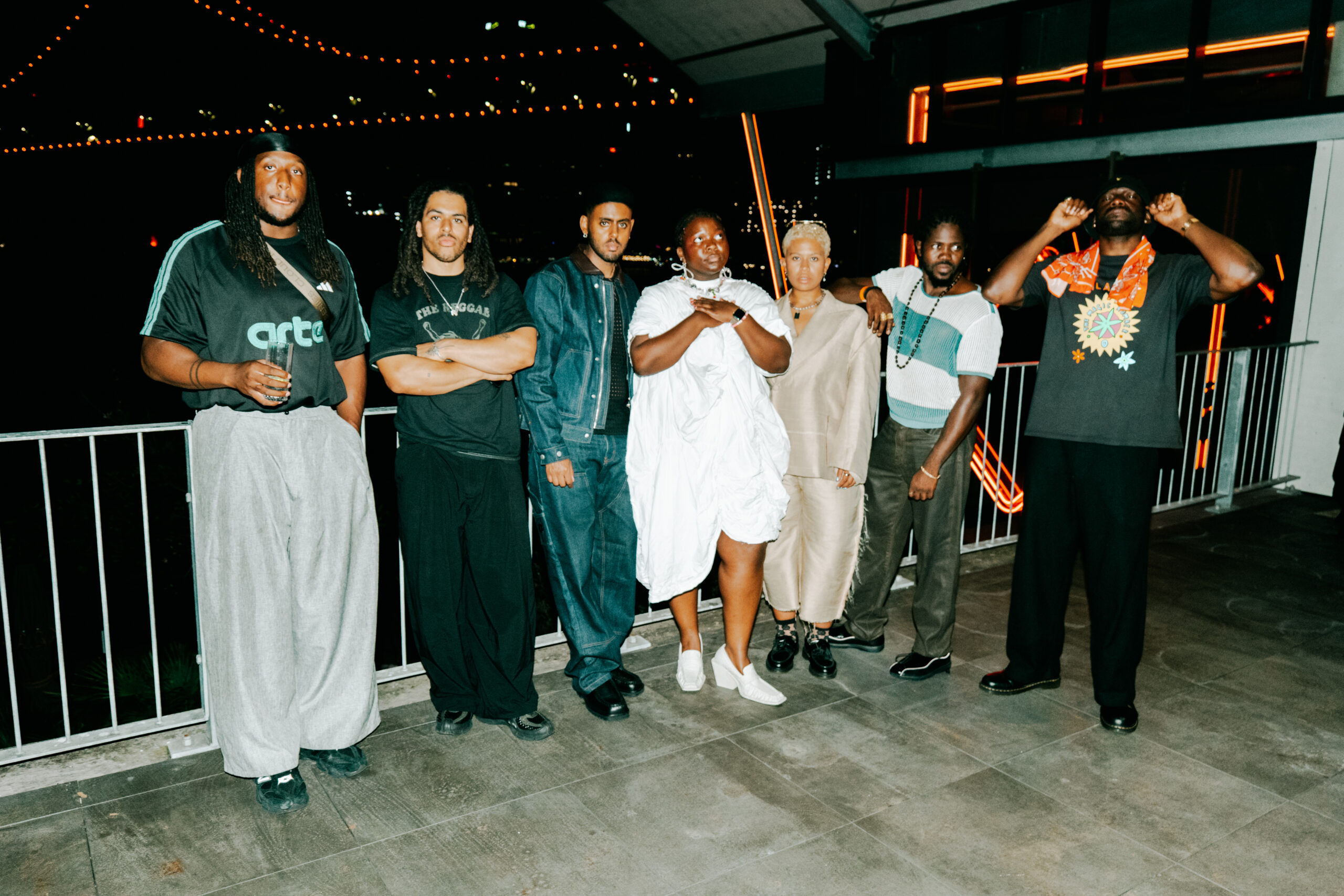
Each of the seven members (Sheila Maurice-Grey, Onome Edgeworth, Anoushka Nanguy, Tobi Adenaike, Yohan Kebede, Duane Atherley, and Ayo Salawu) lends their talents to make up the band’s unique sonic identity, coming from a background steeped in rich culture and history that has shaped and influenced the band’s distinctive sound.
When asked how much a Kokoroko song changes between its first live performance and its hundredth, Onome’s answer is revealing. “It’s pretty upside down by the hundredth time. Songs change every night. It depends on the crowd and the energy.” The feeling that stayed with the crowd after Kokoroko’s performance is a warm one. Reflecting on their Byron Bay performance the night before performing in Brisbane, Sheila describes the band being surprised by a crowd of hundreds of people whose response to the music was consistently supportive throughout the night.
Witnessing Kokoroko play live is a reminder that although the same song can be performed many different times, each time, a new groove that stretches a little longer can be found, a phrase will land differently, and new musical choices between bandmates send the music somewhere unexpected.
That exchange is central to what makes Kokoroko’s performances so compelling.“There is a moment during the live show when the whole band is locked in with synergy and communication, and you feel like you’re flying.” Onome says.
It is a fitting description of a band whose sound relies on movement. Kokoroko arrangements give their musicians room to respond, but that freedom only works when everyone is paying attention. The magic is not in playing independently of one another; it is in recognising when to step forward, when to pull back and when to let someone else lead.
That same desire to experiment and improvise extends beyond the stage. Their relationship with Brazil, for example, has grown into something that feels increasingly natural. “Tempos Difíceis Sempre Passam”, an EP released this past August that reimagines TuffTimes Never Last through a Brazilian sonic lens, carries the album’s central message that ‘hard times always pass’, into Portuguese. For Sheila, the project feels like a continuation of a relationship that has been developing for years. “Brazil has always been one of our favourite places to play,” Sheila says, pointing to the country’s consistent presence among the band’s top streaming audiences. “It makes sense to do some sort of collaboration with artists we love.”
Tuff Times Never Last is an opportunity to hear familiar material through different musical perspectives, but it also reflects the affection that can develop between artists and the communities that embrace their work. There is a sense that the exchange is only beginning. For all the preparation that goes into performing, some of the most valuable lessons arrive unexpectedly.
When we revisit the idea of TuffTimes Never Lastas a love letter to London, the conversation turns to the city’s ability to hold so many different worlds at once. Drawing a comparison between Brisbane’s South Bank and London’s Southbank, Sheila recalls the time members of the band spent by the river back home. Seeing something familiar on the other side of the world feels surreal. Brisbane, she suggests, has a little of London’s summer in it.
“We’re pretty mixed up musically,” Onome explains. “That’s the beauty of London,” Onome says. “Your surroundings are made up from a mix and mash of everyone in the world.”
When asked what they want to discover next, the answers are characteristically varied. More food, for one. Also mentioned is a visit to perform in Sierra Leone, and take the band on a West African tour. Yohan has his sights set on the Caribbean. Onome is interested in exploring collaborations and writing with other people in the studio, a process they feel could unlock something new for their future music.
Beyond the prospect of new places and new projects, there is also the feeling that the band themselves are still developing. Yohannes is excited by how much each member is improving at their craft, becoming more refined in their individual roles.
For now, the songs continue their journey. Kokoroko left London, passed through Byron Bay and arrived in Brisbane carrying the same foundations, but never quite the same experience. Each audience from each location has a renewed offering from the band. And somewhere between the music the band writes and the music the audience hears, Kokoroko keep finding new ways to carry the same joy that has preserved them this far to different audiences all around the world.
Checking In: The Residence Mauritius

