

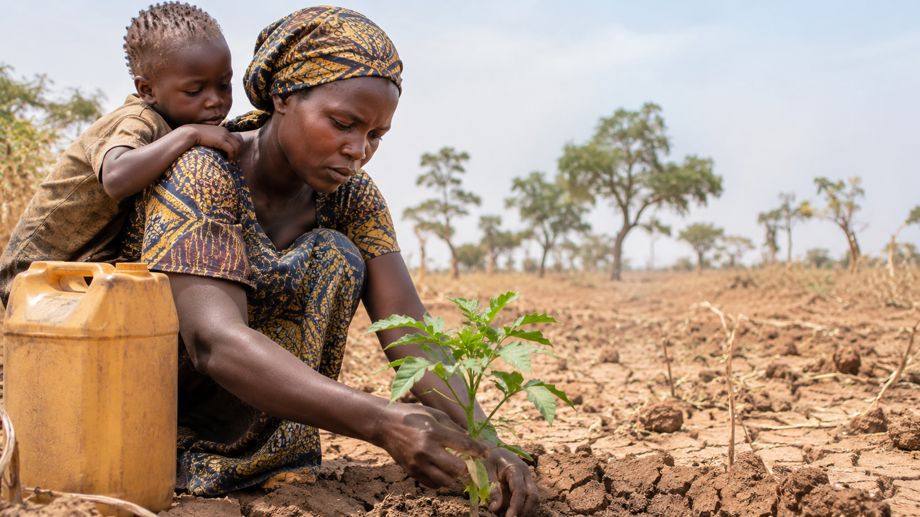
From Drought to Displacement: How Climate Change Is Reshaping Africa’s Security and Economic Future
The African Development Bank warns that climate change is worsening food insecurity, displacement and reeconomic stability. With climate adaptation funding far below Africa’s needs, the report calls for greater investment in climate resilience, conflict prevention and peacebuilding to protect vulnerable communities and support sustainable development
The African Development Bank Group (AfDB), through its Transition States Coordination Office and Climate Change and Green Growth Department, has warned that climate change, armed conflict and economic instability are creating interconnected crises across Africa. In its report, Advancing the Climate-Peace Agenda: Mobilising Climate Finance for Conflict Prevention, Resilience and Peacebuilding in Africa, the Bank explains how rising temperatures, droughts, floods and competition over natural resources are threatening livelihoods, food security and peace. The report calls for a new approach that connects climate financing with conflict prevention, poverty reduction and economic development, particularly in vulnerable regions such as the Sahel, Lake Chad Basin, Great Lakes and Horn of Africa.
Climate Change Is Deepening Africa’s Economic and Security Crisis
Africa contributes less than 4% of global carbon dioxide emissions but faces some of the world’s most severe climate consequences. Extreme weather events already cost African economies an estimated $7 billion to $15 billion annually, with potential losses reaching $45 billion to $50 billion by 2040.
Recurring droughts, devastating floods, desertification and unpredictable rainfall are damaging agriculture, disrupting trade and pushing food prices higher. Millions of households depend on farming, livestock and fishing, making them particularly vulnerable to environmental shocks.
The report highlights how climate change can worsen existing tensions over land, water and other rey cause armed conflict. Instead, it increases risks in communities already struggling with poverty, inequality, political instability and weak institutions
Food insecurity illustrates the scale of the challenge. Approximately 309 million Africans remain undernourished, while 167 million experienced acute food insecurity in 2025. Around 130 million of those facing acute hunger lived in conflict-affected countries.
For farmers and traders, destroyed crops, damaged roads and insecurity mean lost income and restricted market access. For consumers, these disruptions translate into higher food prices and reduced availability of essential goods.
From the Sahel to the Horn of Africa, Communities Face Growing Pressure
The report identifies several regions where climate pressures and insecurity are reinforcing one another.
Across the Sahel, prolonged droughts and desertification are reducing fertile land and grazing areas. Farmers and pastoralists increasingly compete for access to water, agricultural land and livestock routes, sometimes intensifying existing disputes.
In the Lake Chad Basin, environmental degradation, changing water availability and prolonged insecurity have weakened farming, fishing and trade. These challenges have forced communities to abandon livelihoods and move to safer locations.
Eastern Democratic Republic of Congo faces similar pressures as flooding, deforestation and land disputes interact with longstanding armed violence. Meanwhile, Somalia and other parts of the Horn of Africa continue to experience severe droughts, livestock losses and population displacement.
Displacement has become another major concern. Sub-Saharan Africa recorded approximately 17.3 million internal displacement movements in 2025, largely associated with conflict and disasters.
The arrival of displaced populations can place additional pressure on housing, healthcare, education, employment and public infrastructure. The Bank argues that climate resilience programmes must support both displaced families and host communities to reduce competition over limited re
Africa Needs Billions More to Protect Vulnerable Communities
Despite growing climate risks, financing remains far below what African countries require.
The report estimates that Africa needs more than $70 billion annually for climate adaptation, while tracked adaptation financing reached only $14.8 billion in 2023.
The gap is particularly severe in fragile and conflict-affected countries. Between 2014 and 2021, these countries received approximately $10 per person annually in adaptation finance, compared with $161 in non-fragile settings.
This imbalance means communities facing the greatest combined climate and security risks often receive the least financial support.
The African Development Bank has expanded its response. Between 2016 and 2025, the Bank and its partners committed approximately $35.7 billion in climate financing, including $19.4 billion for adaptation. In 2025 alone, climate financing reached $5.9 billion, representing 54% of total project approvals.
The Bank is also using initiatives such as the Transition Support Facility, Climate Action Window and Africa Disaster Risk Financing Programme to strengthen vulnerable economies.
These mechanisms support climate-resilient agriculture, water infrastructure, renewable energy, disaster insurance and stronger public institutions. The report also encourages innovative financing arrangements that attract private investment into countries where conflict and instability discourage traditional investors.
Turning Climate Finance Into a Tool for Peace and Development
The report argues that climate financing should do more than repair environmental damage. It should help prevent conflict, protect livelihoods and create economic opportunities.
Better early warning systems could help communities prepare for droughts and floods before disasters become humanitarian emergencies. Sustainable land management and improved water infrastructure could reduce competition over scarce re
Regional cooperation is equally important because climate risks, migration and insecurity frequently cross national borders.
The Bank also emphasises the importance of involving women, young people and displaced communities in planning and implementing development programmes. Their participation can improve local decision-making and ensure investments address real community needs.
The report recommends stronger climate data, improved coordination between governments and development partners, innovative financial instruments and greater institutional capacity.
Its central message is that Africa cannot address climate change, poverty and conflict separately. By linking climate investment with economic resilience, fair restitutions can protect vulnerable populations while creating more stable foundations for long-term growth
- FIRST PUBLISHED IN:
- Devdiscourse

