


- Share
- Tweet
The NNPC Exploration and Production Limited (NEPL)/Seplat Energy Joint Venture (JV) has graduated more than 110 young Nigerians from its Youth Entrepreneurship Programme (YEP), equipping them with renewable energy skills and start-up support to build sustainable businesses and improve energy access in their communities.
The graduation ceremony, themed “Lighting Up the Nation: Empowering Youths in Renewable Energy Solutions,” showcased projects developed by participants, including solar home systems, mini-grid prototypes, solar dryers, biogas digesters and energy audit tools.
The programme is designed to help young people turn technical training intonergy solutions for homes, schools, healthcare facilities and small businesses
Speaking at the event, Seplat Energy’s Chief Operating Officer, Samson Ezugworie, described the initiative as a long-term investment in Nigeria’s future.
He said the Youth Entrepreneurship Programme has been sustained over the years through the partnership between Seplat Energy and NEPL because of their shared belief that empowering young people is essential to national development.
Ezugworie noted that the programme goes beyond technical training by providing graduates with take-off grants to help them establish businesses capable of creating jobs and solving challenges within their communities.
He urged the graduates to focus not only on personal success but also on creating lasting social and economic impact.
Director of External Affairs and Social Performance at Seplat Energy, Chioma Afe, said the programme reflects the joint venture’s commitment to preparing young Nigerians for the future of work through practical renewable energy skills.
According to her, the growing demand for reliable, affordable and clean energy presents significant opportunities for youth-led enterprises that can support households, schools, healthcare facilities and businesses.
She explained that the initiative was created to bridge the gap between technical training and entrepreneurship, ensuring participants can convert their knowledge into sustainable livelihoods that benefit local economies.
Afe added that YEP is part of the JV’s broader education and community development initiatives, which include the PEARLS Quiz Competition, undergraduate scholarship programmes, the Seplat Teachers Empowerment Programme (STEP), solar-powered STEAM laboratories and other energy access projects across host communities.
The Managing Director of NNPC Exploration and Production Limited, Nicolas Foucart, represented by Olubukonla Oyegbami, reaffirmed the company’s commitment to partnerships that expand opportunities for young Nigerians and strengthen community development.
Beyond youth empowerment, the NEPL/Seplat JV also commissioned an upgraded classroom block and modern learning facilities for the visually impaired unit at Ihogbe College, Benin City, under its Diversity and Inclusion programme.
The project involved the renovation of three classrooms, an administrative office, and an inverter room, alongside the installation of specialised learning equipment to improve teaching and learning for visually impaired students.
The intervention is expected to improve access to quality education, provide a more supportive learning environment for students with visual impairments, and strengthen teachers’ capacity to deliver specialised instruction.
The joint initiatives underscore the NEPL/Seplat JV’s continued investment in education, entrepreneurship, renewable energy, social inclusion and long-term community development across its host communities.
FG Launches $3.05bn Programmes to Boost Healthcare, Education and Poverty Reduction
Yobe Approves N73.3bn for Agriculture, Infrastructure and Empowerment Projects

Business
Yobe Approves ₦460.8m Empowerment Package for Women-Owned Small Businesses

The Yobe State Government has approved ₦460.83 million to support women-owned small businesses across the state through an empowerment programme targeting female entrepreneurs, including akara sellers.
The approval was part of resolutions reached at the State Executive Council meeting presided over by Governor Mai Mala Buni in Damaturu.
Briefing journalists after the meeting, the Commissioner for Home Affairs, Information and Culture, Abdullahi Bego, said the intervention will provide beneficiaries with essential business inputs to strengthen their livelihoods and improve the performance of their enterprises.
According to him, the government approved the procurement of 1,780 bags of beans, which will be distributed alongside cooking oil, smokeless stoves, cooking utensils and kitchenware already procured by the Ministry of Wealth Creation, Empowerment and Employment Generation.
Bego said the initiative forms part of the state government’s broader strategy to support women entrepreneurs and strengthen small-scale businesses across Yobe.
The council also approved ₦364.48 million for the procurement of 1,000 Yamaha GX 390 grinding machines to support residents under the state’s empowerment programme.
In addition, the Executive Council approved projects and services worth ₦73.32 billion, including ₦28.53 billion for agricultural tools and implements under the state’s 2026 agricultural empowerment programme, ₦23.97 billion for road projects, as well as funding for housing, markets and other infrastructure.
Business
FG Pushes Freer Movement Across Africa to Boost AfCFTA Trade

The Federal Government has intensified efforts to promote the free movement of people, goods and investments across Africa as part of measures to strengthen regional trade, attract investment and accelerate the implementation of the African Continental Free Trade Area (AfCFTA).
Minister of Industry, Trade and Investment, Dr. Jumoke Oduwole, disclosed this in Abuja on Friday during an interview with the News Agency of Nigeria (NAN), while reflecting on the outcomes of the recently concluded Biashara Afrika 2026 Forum in Togo.
According to Oduwole, trade cannot flourish where entrepreneurs and investors face restrictions on movement, stressing that easier mobility is critical to unlocking the opportunities presented by the AfCFTA.
She said the Federal Government is committed to removing barriers that hinder trade and business mobility across African markets, noting that Nigeria joined other African countries in reaffirming support for the free movement of people, services and investments.
While acknowledging that visa policies remain the responsibility of individual countries, the minister said there is growing momentum across the continent toward business-friendly travel arrangements.
She commended the Government of Togo for its commitment to removing visa requirements for African travellers, describing the move as consistent with the AfCFTA’s objective of deepening regional integration and expanding intra-African trade.
Oduwole also praised Rwanda’s liberal visa policy, saying it has enhanced business travel, tourism and regional investment.
She added that Nigeria continues to engage through the AfCFTA Secretariat, the African Union and bilateral channels to promote simplified visa procedures, including visa-on-arrival arrangements and the mutual recognition of business travel documentation.
According to her, several African countries have already introduced reforms that make it easier for Nigerian business travellers to access their markets.
The minister said Nigeria is also addressing trade barriers through the AfCFTA Digital Trade Protocol, improved customs cooperation, digital trade facilitation, enhanced transport connectivity and better logistics, all aimed at reducing the cost of doing business across borders.
Although Nigeria cannot determine the pace of reforms in other countries, she expressed confidence that progress would continue as AfCFTA implementation advances.
Oduwole said freer movement across the continent would create new opportunities for trade, investment, job creation and economic growth.
She noted that improved travel would enable businesses to access new markets, attract investment and expand exports, with small and medium-sized enterprises (SMEs), women-led businesses and non-oil exporters expected to benefit significantly.
Highlighting Nigeria’s ongoing trade facilitation efforts, the minister said the country has inaugurated the Nigeria-Uganda Air Cargo Corridor in partnership with Uganda Airlines to improve export access to East Africa.
According to her, the initiative has reduced cargo costs and improved export opportunities, particularly for SMEs and women-owned businesses.
She added that Nigeria is expanding similar partnerships with RwandAir to improve regional connectivity and lower logistics costs, demonstrating the government’s commitment to practical trade facilitation beyond policy discussions.
Oduwole identified non-tariff barriers, fragmented regulations, high logistics costs, cross-border payment challenges, restrictions on business mobility and regulatory uncertainty for digital businesses as some of the major obstacles to intra-African trade.
She disclosed that Nigeria has already gazetted its Provisional Schedule of Tariff Concessions (PSTCs) to accelerate AfCFTA implementation.
The minister also revealed that the government has established dedicated air cargo corridors, helping reduce freight costs by 50 to 75 per cent, while implementing the National Single Window to simplify domestic trade processes.
In addition, she said the government has mapped more than 200 digital service firms across 17 sectors to strengthen regional digital trade and improve market access for Nigerian businesses.
Oduwole reaffirmed the Federal Government’s commitment to reducing trade costs, expanding market access and ensuring Nigerian businesses fully benefit from opportunities under the AfCFTA.
Business
China to Provide 5,000 AI Training Opportunities for Developing Countries

China has announced plans to provide 5,000 opportunities for artificial intelligence (AI) training and seminars for developing countries over the next five years, as President Xi Jinping called for a more inclusive global AI governance framework to prevent the technology from widening the gap between developed and developing nations.
Xi made the announcement on Friday at the opening ceremony of the 2026 World AI Conference and High-Level Meeting on Global AI Governance in Shanghai, where he unveiled a broad international cooperation agenda focused on AI development, capacity building and governance.
As part of the initiative, China will establish international AI application cooperation centres with the African Union (AU), the Association of Southeast Asian Nations (ASEAN), the League of Arab States, the Community of Latin American and Caribbean States (CELAC), the Shanghai Cooperation Organisation (SCO) and BRICS.
In another major initiative, China said it would enable 30 countries to access MAZU, an AI-powered meteorological early warning system designed to help communities prepare for extreme weather events and other climate-related disasters.
Xi said the initiatives are aimed at ensuring artificial intelligence becomes a tool for shared global development rather than a driver of inequality.
“AI development should not be a solo performance by a single country, but a symphony of international cooperation,” he said, stressing that no country should be left behind in the global AI revolution.
According to the Chinese president, the international community must adopt a people-centred approach to AI and establish a governance framework that ensures the technology is used responsibly and for the benefit of humanity.
He outlined four key priorities for global AI governance: promoting innovation through openness and international cooperation, strengthening safeguards to ensure AI remains safe and controllable, encouraging inclusiveness and respect for cultural diversity, and deepening multilateral cooperation to ensure equitable access to AI technologies.
Xi also called for stronger legal and regulatory frameworks, including monitoring systems, early warning mechanisms and emergency response measures to prevent the misuse of artificial intelligence.
He warned against turning AI into another arena for geopolitical rivalry, urging countries to avoid prioritising the security interests of individual nations over collective global security.
Highlighting the needs of developing economies, Xi said bridging the AI and digital divide is critical to preventing what he described as “new historical injustice” in access to emerging technologies.
He reaffirmed China’s support for international AI capacity-building initiatives under the United Nations and announced that the World Artificial Intelligence Cooperation Organization (WAICO) has been established in Shanghai to strengthen global collaboration and increase the participation of developing countries in shaping AI governance.
The announcement comes as countries across Africa, including Nigeria, accelerate investments in digital infrastructure and artificial intelligence to drive innovation in sectors such as education, healthcare, agriculture, security and public administration.
Xi said China remains committed to working with countries worldwide to ensure AI development stays under human control and is guided by international consensus.
The 2026 World AI Conference comes at a time when governments and technology companies are racing to establish global rules for artificial intelligence amid growing concerns over misinformation, cybersecurity, privacy, autonomous systems, job displacement and unequal access to advanced technologies.
Xi said the international community must ensure AI becomes “a mighty force that increases the well-being of humanity and advances human civilisation.”

Business4 years agoBREAKING: CBN announces New Withdrawal Policies, Pegs ATM Withdrawals Limit at N20,000 daily, N100,000 weekly

Business6 years agoFirst Bank Nigeria Joins SME Finance Forum
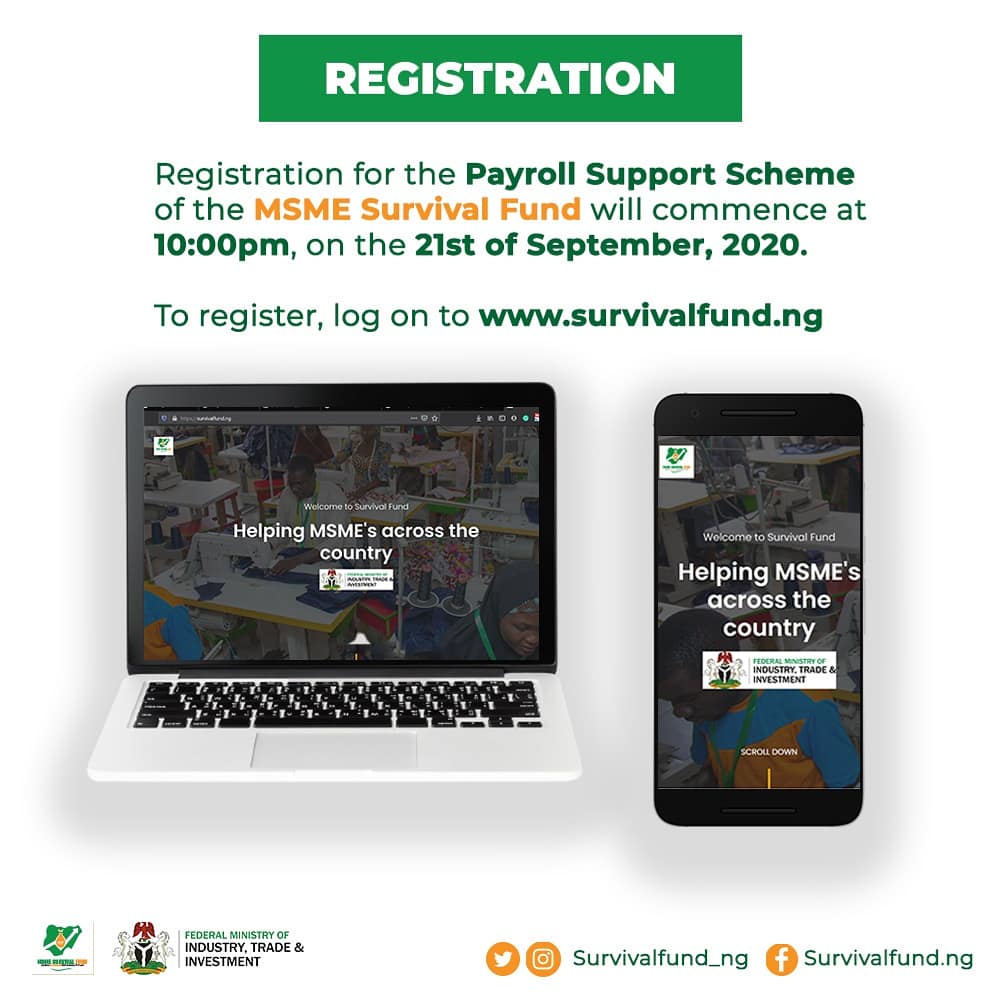
Business6 years agoFG Opens Application Portal for N75 Billion MSME Survival Fund 10pm Today, Releases Time-table for Payroll Support Scheme for different sectors

Business3 years agoCall for Applications: MTN ICT and Business Skills Training (N90 Million Grant for 300 Participants)

Business4 years agoCall for Applications: Rural Youth Skill Acquisition Programme for Nigerian Youths (receive N50,000 monthly stipend)

Business6 years agoHow to apply and benefit from free CAC Business Name Registration for 250,000 MSMEs

Articles & Resources6 years agoHow to put your house in order for tax purposes
Business4 years agoCall for Applications: Tony Elumelu Foundation Entrepreneurship Programme 2023 for African Entrepreneurs (get $5,000 seed funding)
