

Wednesday briefing: How Trump’s Iran gamble has produced a crisis reshaping the global order
In today’s newsletter: A White House operating without expertise, strategy or restraint is stuck in a conflict with no easy way out, which is sending economic shockwaves far beyond its own borders
Good morning. Within two hours of entering No 10 on Monday afternoon, Andy Burnham had his first call with Donald Trump. After chit-chatting about the football (both agreed England had an “excellent tournament”) and Manchester (our new prime minister invited the president to visit the city Trump once described as a “town”), they got on to far trickier territory: the strait of Hormuz.
The US has attacked Iran for the eleventh consecutive night, hitting aircraft hangars and drone storage sites across the country. It came after Iran launched retaliatory strikes on US air bases and neighbouring Gulf states, which have accused it of deliberately targeting desalination plants that are essential to life in the region. Each side now claims it is preventing the other from gaining control over the strait of Hormuz, through which 20% of the world’s oil was shipped before the war began. Vessels carrying crucial shipments of oil, gas and fertiliser remain at a standstill.
“Operation Epic Fury” started with the aim of regime change. Since then, its objective has morphed into reopening the strait and undoing the damage caused by the US and Israel’s decision to start the war. The president drastically underestimated Iran’s capacity for enduring pain, and is now trying to bomb his way out of a conflict that he created. For today’s First Edition, I spoke to Vali Nasr, professor of International Affairs and Middle East Studies and author of Iran’s Grand Strategy, about the war over the world’s most critical bottleneck. That’s after the headlines.
Five big stories
-
UK politics| Andy Burnham is under mounting pressure to explain how he will pay for his policy pledges as he implored his new cabinet to examine “all possible ways” to tackle the cost of living crisis.
-
UK news| A man has appeared in court charged with the murder of the former MP and Reform UK spokesperson Ann Widdecombe. Joshua Kerry, 28, is accused of killing the former Conservative minister at her home in Haytor, Devon, by hitting her on the head with a hammer 21 times.
-
Middle East| The US defense secretary, Pete Hegseth, told the Senate the US-Israel war on Iranhad cost $37.5bn so far, as he faced lawmakers furious over the conflict’s soaring price tag and the deaths last week of three American service members.
-
Climate crisis| About 23 million people will be banned from using hosepipes by this weekend, as England and Wales moves closer to drought status.
-
Ukraine| Volodymyr Zelenskyy has fired Ukraine’s commander-in-chiefOleksandr Syrskyi and offered a “prominent position” to the defence minister he sacked last week in a move that sparked nationwide protests.
In depth: ‘In his mind, this was a legacy-building transformation’
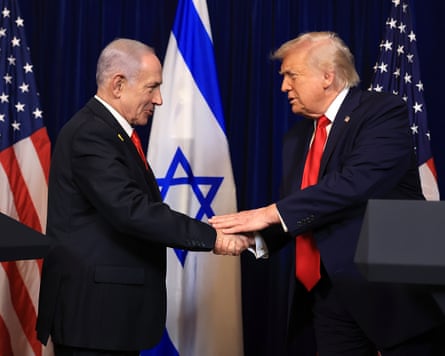
“I’m not going to start wars,” Donald Trump told voters on election night in 2024. His decision to bomb Iran on 28 February in partnership with Benjamin Netanyahuwas astonishing bothin its aggression and its audaciousbreak with this promise. Trump did nothing to prepare the US for war, gave seemingly no thought to the fact that Iran would inevitably hold the strait hostage if it came under attack, and resorted to contradictory explanations for his decision. In the war’s early days, he described “what we did in Venezuela” as a model for what he hoped to achieve. “He thought he would go down in history as the American president who had resolved the Iran problem,” Nasr told me. “In his mind, this was a legacy-building transformation that would be quick and cost-free.”
That has proven a fatal miscalculation. Pete Hegseth, the US self-styled “secretary of war”, said the early US strikes that killed Iran’s Supreme Leader, Ali Khamenei, had “cut off the head of the snake.” But regime change is now a distant prospect. Trump underestimated the resilience of the Iranian regime and overestimated the power of protests against it. After just five months, his misadventure is as unpopular with American voters as the Vietnam war was six years in. It could yet escalate into a wider regional conflict, with the Houthis threatening a maritime embargo on Saudi Arabia. Even Trump – whose private firm, The Trump Organization, is at work on a skyscraper in Dubai – won’t be insulated from the consequences of this violence.
What happened to the ceasefire?
The memorandum of understanding, a vague, short document that the US and Iran signed on 17 June, gave a brief respite from the strikes and (supposedly) initiated a 60-day negotiation period in which time both sides could reach permanent agreement on – among other things – the future of the strait. But it broke down when Iran fired on three commercial tankers that had used a shipping lane close to the shores of Oman, rather than a route off the Iranian coast approved by Tehran. “When ceasefires are violated, you have two options; either react to preserve the ceasefire, or use the violation as an excuse to end it,” Nasr says.
Trump went with the latter option, calling Iran’s leaders “scum” and declaring the ceasefire “over” earlier this month. This week, the US energy secretary Chris Wright said the US mission had shifted towards ensuring oil shipments could move through the strait. It’s worth remembering that the strait had never been closed for an extended period. Before 28 February, ships had been sailing through it without obstruction. The US is now framing the potential of a return to this old status quo as a victory.
Iran and the US are still negotiating, and Tehran has signalled its desire to permanently control the strait, including by charging tolls on passing vessels. “The US is now in a situation where it either has a long, protracted war, which would keep the strait closed, or keeps escalating to the next level with the hope of knocking Iran out,” Nasr says.
There are signs that Trump and Netanyahu seriously misjudged the likelihood that Iran would seize control of the strait. In an interview earlier this year, Netanyahu admitted “the problem of the Hormuz strait became understood as the war went on.” As our diplomatic editor Patrick Wintour wrote at the time, in a piece suggesting the consequences of Trump’s excursion could prove greater than the Vietnam war, this was an “astonishing admission.” The closure of the strait is the type of doomsday scenario that previous administrations, and most Iran experts, would have considered.
But the US government now has very few Iran experts, because Trump has instead chosen to surround himself with a royal court of loyalists. Nate Swanson, a former state department representative on Trump’s Iran negotiating team, was forced out earlier this year after far-right activist Laura Loomer accused him of disloyalty.
“Folks who’ve watched this Iranian system … would have told [Trump]: ‘They’re not businessmen from New York. They’re made of a different type of DNA’,” Alex Vatanka, a senior fellow at the Middle East Institute in Washington DC, recently told Guardian US political correspondent, Robert Tait.
Inflation caused by rising oil prices is making everyday life more expensive and hiking the costs of borrowing for governments (including Burnham’s here in the UK). If there is no agreement until 2027, some are predicting global growth could fall by 1.3%, if not more. Europe may be uniquely exposed: since the Russia-Ukraine war, the continent has turned towards the Middle East for its gas, particularly to Qatar, which has had to slow production during the conflict. We could be facing a winter of shortages, bringing to mind the 1970s oil crisis, when the British government enforced power cuts to conserve energy supplies.
Who’s in charge of the sea?
Many of Trump’s proposed solutions to the conflict seem to have been thought up on the spot. He briefly suggested that the US could charge tolls on ships entering the strait in exchange for safe passage, despite European leaders and even Marco Rubio, his own secretary of state, having previously said these would be incompatible with international law. The fact the US and Iran have even proposed such tolls is a sign of the wilful disregard for international law that has become a defining feature of this conflict (notably, Iran, the US and Israel are among a small handful of nations that don’t ratify the UN convention on the laws of the sea). Freedom of navigation is a cornerstone of international law: without it, shipping starts to resemble a protection racket, where nations extract fees from passing vessels.
Some experts now worry that other shipping routes could become more militarised, as coastal nations watching Iran use the strait as the ultimate bargaining chip try to take advantage of other important waterways. “A lot of other countries that feel they’re like Iran, and could use passageways as a deterrent” Nasr says. “If nations like the US and Israel can attack your country at any time, you’re going to resort to whatever you can in order to protect yourself.”
What else we’ve been enjoying

-
This thoughtful piece by Alice Lassman on how Gen Z has outh younger pals lately. Libby
-
Ed Miliband was trying to start a green energy revolution in Britain. Now he’s at the Foreign Office, what happens to that agenda? I enjoyed reading this piece by Fiona Harvey, which has some answers. Hettie
-
“It’s a crime that alters your whole reality.” Anna Moore on the impact of crime, here on the survivor-led campaign to end drug-facilitated sexual rape. Libby
-
If (like me) you feel creeped out by reading about Meta’s new “smartglasses”, which allow wearers to film people without their consent, it’s worth reading this piece by Gaby Hinsliff. Hettie
-
Herald writer Neil Mackay makes a powerful argument that the future health of the Scottish independence movement depends on Burnham’s success or failure in Westminster. Libby
skip past newsletter promotion
Sport

Cycling| Remco Evenepoel took back-to-back stage wins in the Tour de France, and eroded some of Tadej Pogacar’s overall lead, with victory in the stage 16 time trial from E
Tennis| The French Open has become the first grand slam tournament to offer players a share of the event’s revenue in a significant step forward in the row over prize money.
Football| La Liga’s president, Javier Tebas, has accused Fifa of “destroying the football industry” and called for its president, Gianni Infantino, to quit.
The front pages
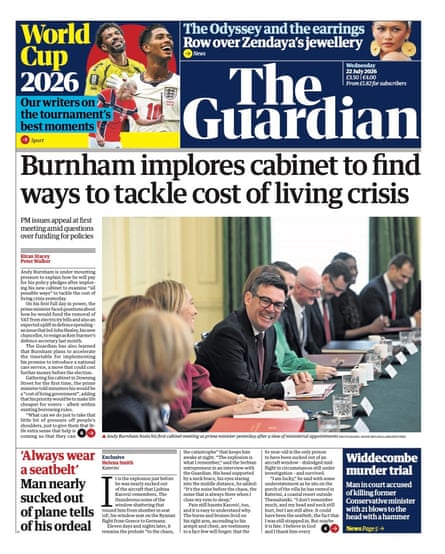
“Burnham implores cabinet to find ways to tackle cost of living crisis”, is the Guardian’s front page today, the Times writes “Burnham signals cuts to pay for spending pledges”, and the i Paper’s take is “Cost of living, cost of living, cost of living”. The Mail asks “Who’s going to pay the bill for Andy’s largesse?” and the FT has “Burnham backs away from rise in tax allowance ‘to show fiscal discipline’”.
Elsewhere, the Telegraph leads on “Pc Harper’s killers set for early release”. The Mirror, Sun, Metro and Express all splash on details from court with variations of “Ann ‘hit 21 times with hammer’”.
The Latest
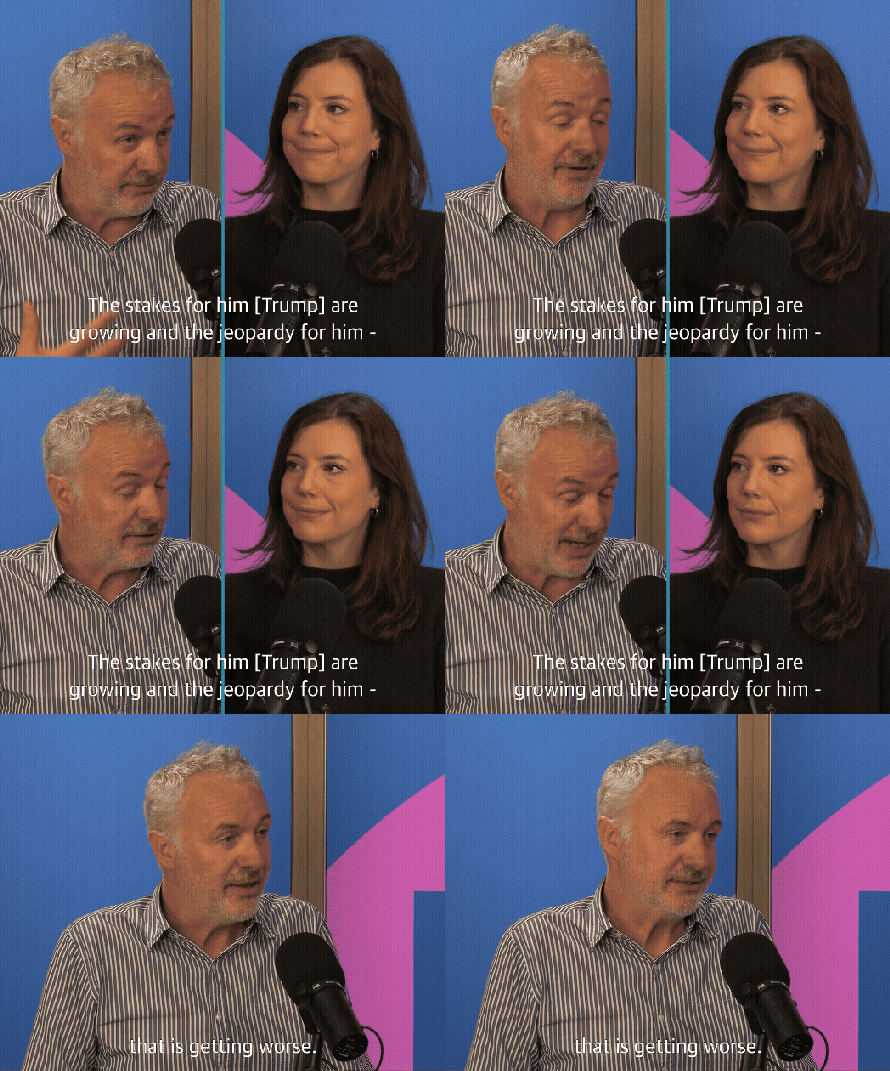
US soldiers killed: has Trump lost control of Iran war?
The US has carried out a fresh round of strikes against Iran, after three US soldiers were killed in action. The Pentagon has also admitted that nearly 100 US service members have been injured over the last two weeks, as Tehran launched a wave of reprisals to the tenth consecutive nights of attacks, even as peace talks mediated by Pakistan continue. Lucy Hough speaks to senior international correspondent, Julian Borger.
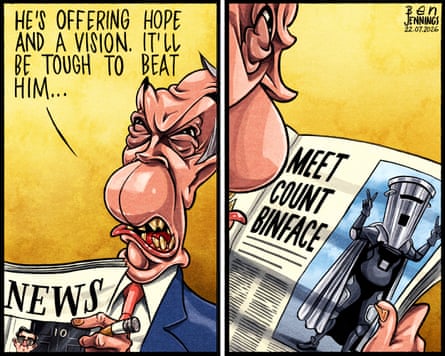
Cartoon of the day | Ben Jennings
The Upside
A bit of good news to remind you that the world’s not all bad
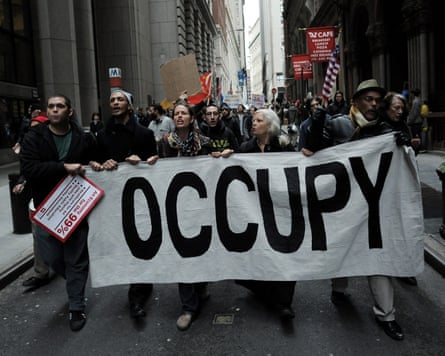
Yotam Maron, a key organiser in the Occupy Wall Street movement which spawned a global network in 2011, has worked on multiple social movements since then. He identifies a “politics of powerlessness” which too often hobbles them, mistaking “a healthy distrust of institutional power for a failure to build a strong, coherent strategy for political change”. Since then, he founded the Wildfire Project, a training organisation for grassroots groups to counter that misplaced internal logic and argues now, even with Democrat socialists in the ascendancy across some parts of the US, that people power must continue to be built through movements not elected politicians.
Bored at work?
And finally, the Guardian’s puzzles are here to keep you entertained throughout the day. Until tomorrow.
Explore more on these topicsShare
Reuse this content
