


There’s a moment on every safari when something small – a sound, a sighting, a feeling – flips a switch inside you. Guiding you from “this is lovely” to “oh, this matters.” For some guests, it’s a leopard in a marula tree. For others, it’s a sunrise so luminous you briefly reconsider your career choices. For Samantha Myburgh, one of our most seasoned Travel Experts, that moment arrived in Gorongosa National Park, standing in front of a group of girls who were more interested in becoming scientists than brides. And if you’re wondering why an entire Gorongosa safari can swing on something as un-safari as that… well, that’s exactly the point.
Morning light stretching the day wide open, Image Credit: Samantha Myburgh
So, Why Gorongosa?
When I interviewed Sam after her trip, she didn’t even start with wildlife. Didn’t throw out the usual bragging rights. She went straight for the thing most guests never think to ask: “How often do you get to see a conservation project that actually works?”
Because Gorongosa isn’t your regular safari circuit stop-off, it’s an enormous, living restoration project. The kind of place where you can move from a fever-tree corridor to a floodplain to a wetland in the time it takes to finish a story about broken airstrips.
And yes, the national park is MASSIVE – just under three times the size of Kenya’s Maasai Mara. Yet, Sam didn’t see a single other vehicle during her five-night stay.
Almost three times the size. Minimal vehicles. Just nature, behaving like nature.
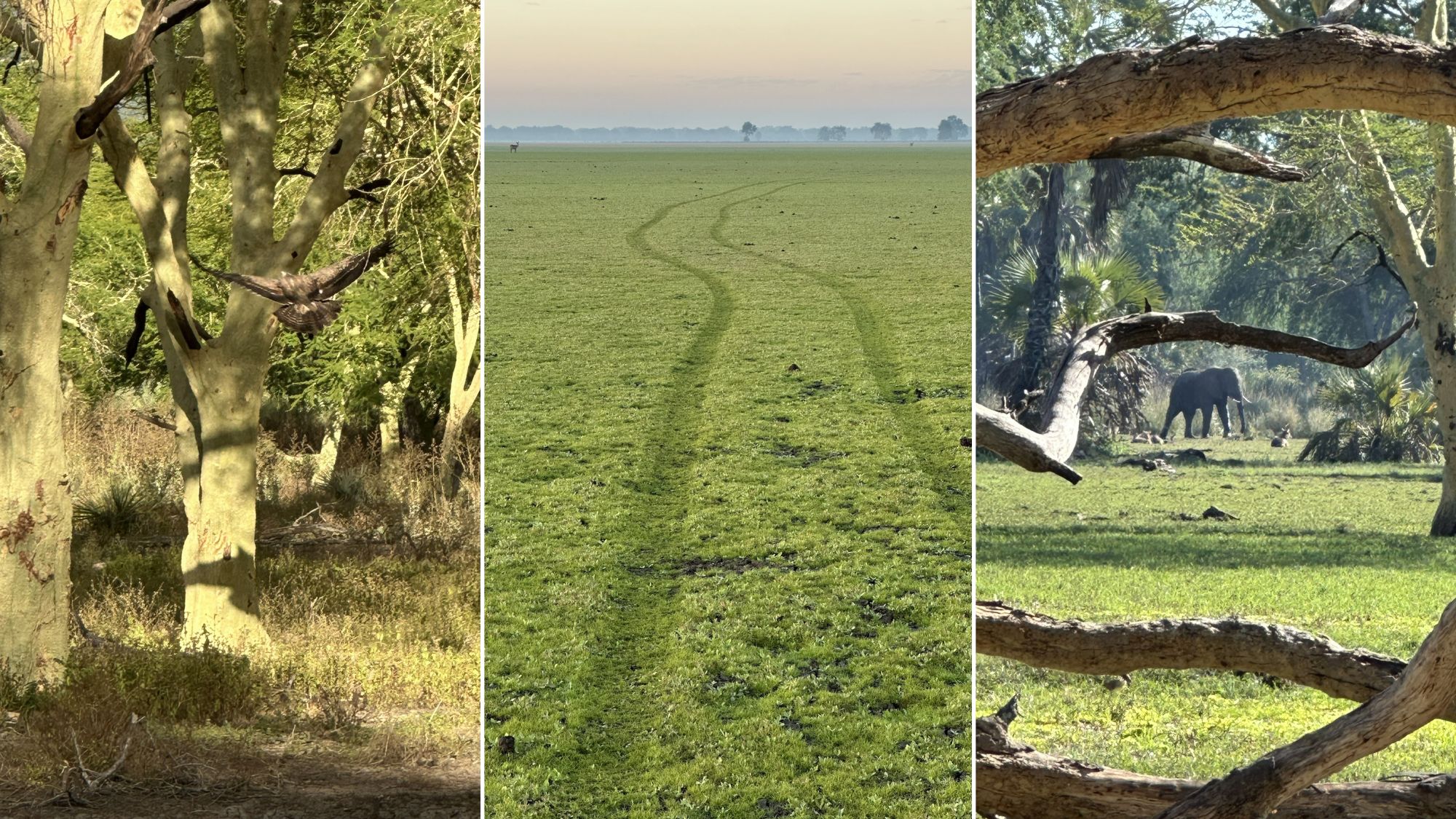
Wild spaces doing their own thing, exactly as intended, Image Credit: Samantha Myburgh
The Landscapes That Don’t Sit Still
Sam tried to explain the landscapes to me by comparing them to everywhere else in Africa – Mana Pools, the Okavango, Hwange, and some Serengeti-level plains. But then she admitted that none of those comparisons quite fit.
You shift gears, drive five minutes, and suddenly the backdrop has reinvented itself. Date palms. Fever trees. Open water stretches so far that you forget you’re in Mozambique. And then, like a punchline delivered with a straight face, thousands upon thousands of waterbuck, as if someone whispered “migration” and the antelope took it personally.
“And the bush pigs! Good grief, the bush pigs!” – Samantha Myburgh.
Yes, bush pigs. Sam saw them every day. Not once. Not twice. Every. Single. Game drive. Which, frankly, feels like a cosmic apology for every safari where all you get is the disappearing backside of one at 40 km/h.
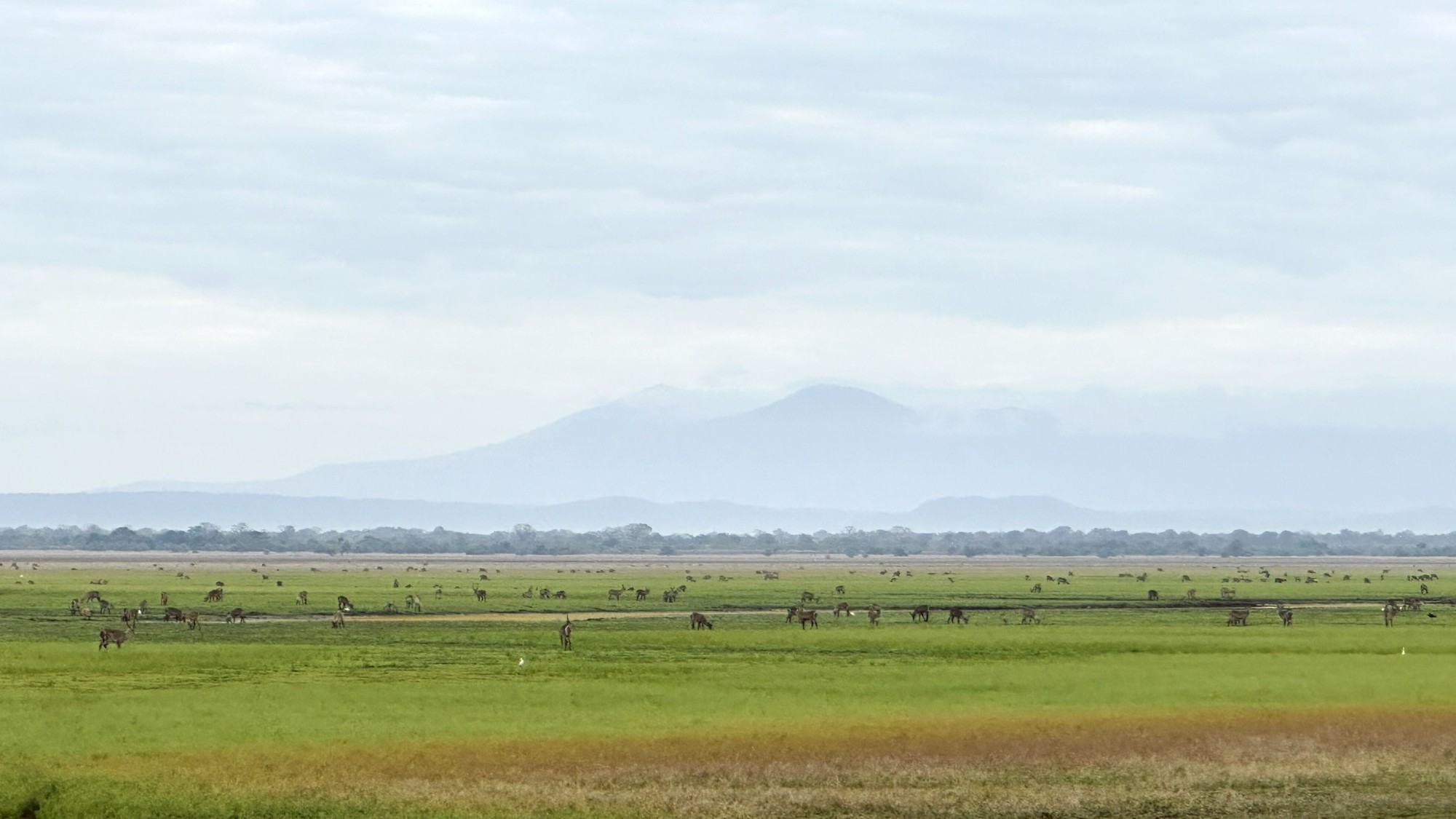
Where Gorongosa’s floodplains decide to rewrite the scale, Image Credit: Samantha Myburgh
The Wildlife: Incredible, But Not the Point
Yes, you’ll see lions. Yes, you’ll see elephants (slightly cautious, still remembering harder years). Yes, you’ll almost certainly encounter an African wild dog pack with a collared alpha, moving through the landscape like they own the place… because they kind of do.
Sam spent an entire afternoon with them, just her vehicle, watching them play, stretch, reorganise themselves, then rise as one and go off hunting. She didn’t have to “wait her turn.” She didn’t have to dodge ten lenses from ten angles. It was just her, the dogs, and the kind of silence you can’t manufacture.
But if you choose a Gorongosa safari for the Big 5, you’ve missed the plot. Sam said it plainly:
“You don’t come for the lodge. You don’t come for the game. You come for the work this place is doing.” – Samantha Myburgh.
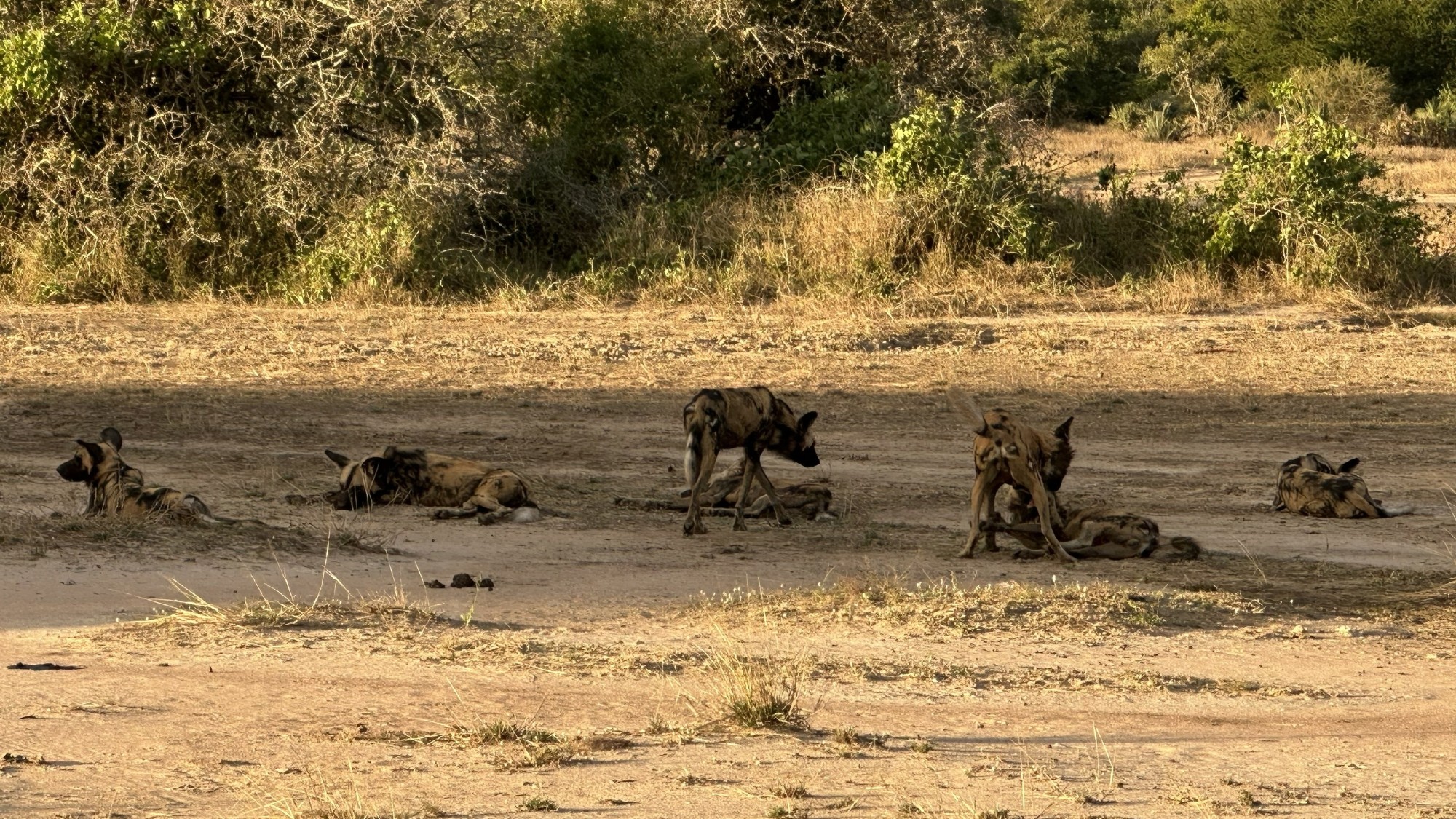
African wild dogs resetting the pace before the next move, Image Credit: Samantha Myburgh
Where the Real Magic Happens
A Gorongosa safari pulls you into its orbit in ways a traditional safari simply doesn’t attempt. Five nights gives the experience space to breathe – enough time for the park to show you how it actually works, not the polished version that usually ends up on brochures.
Below are a few moments Sam kept circling back to when she told me her story. These are the ones that lingered in her mind in that unmistakable “okay, this place got under my skin” way.
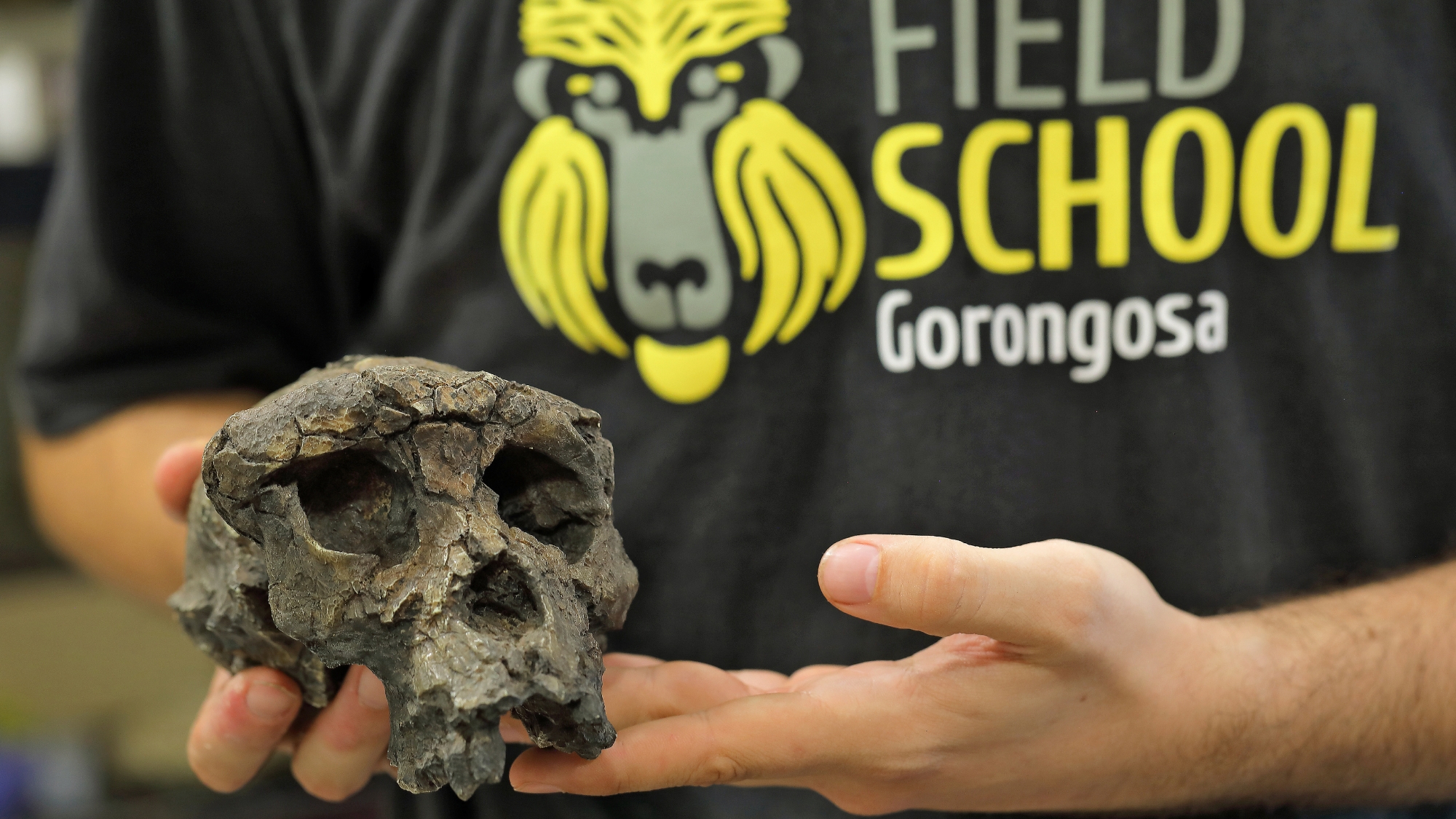
Tracing old stories that shape Gorongosa’s living future
Gorongosa Girls’ Clubs
The Girls’ Clubs were one of the first things Sam brought up when she described her time inside the communities around the national park (known as Gorongosa’s “Sustainable Development Zone”). Not in a “cute cultural stop” sort of way, but more in the sense that you suddenly grasp what long-term conservation actually needs to survive.
These clubs run every weekday, giving girls a space to study, access mentorship, career counselling, and build skills that previously weren’t accessible. The shift is visible – girls imagining futures outside early marriage, families understanding why education matters, and communities seeing conservation linked directly to opportunity.
“When you visit the Girls’ Clubs, you immediately feel it – girls being supported, educated, and genuinely excited about what’s possible for them.” – Samantha Myburgh.
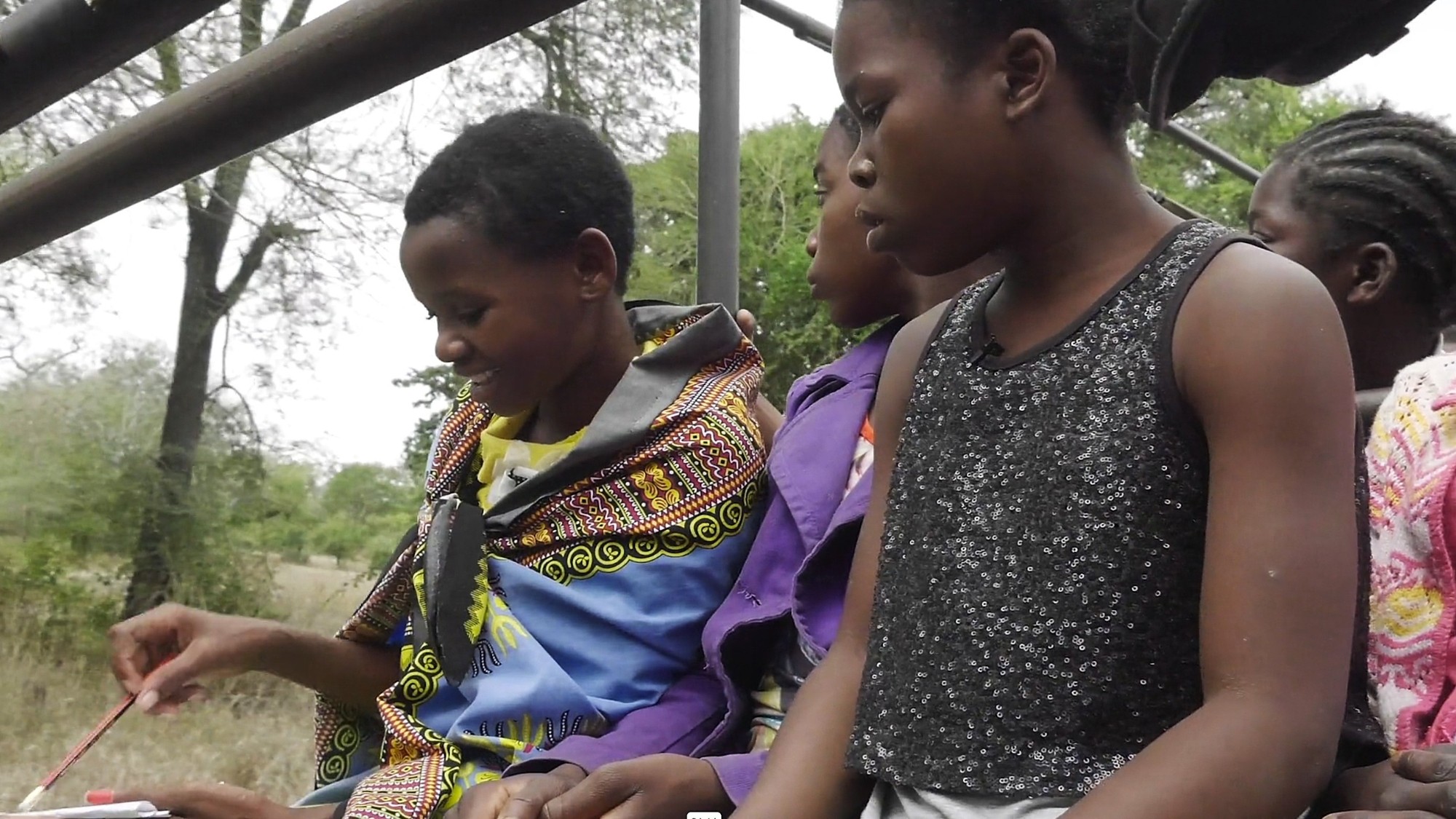
Where confidence grows, and futures start taking real shape, Image Credit: Gorongosa National Park
The E.O. Wilson Biodiversity Laboratory
When Sam described the research centre, her tone changed. Curious. Slightly animated. Like she’d found the part of the Gorongosa where everything snaps into focus.
Sam spoke about shelves filled with labelled finds, stories of new species being shared with institutions around the world, and researchers who were visibly invested in the landscape in front of them.
It’s one thing to read about biodiversity; it’s another to stand in the room where it’s actively being documented.
“Standing in the lab, seeing all the catalogued species and hearing how many new ones they’re finding – that’s when you realise just how biodiverse this place really is.” – Samantha Myburgh.
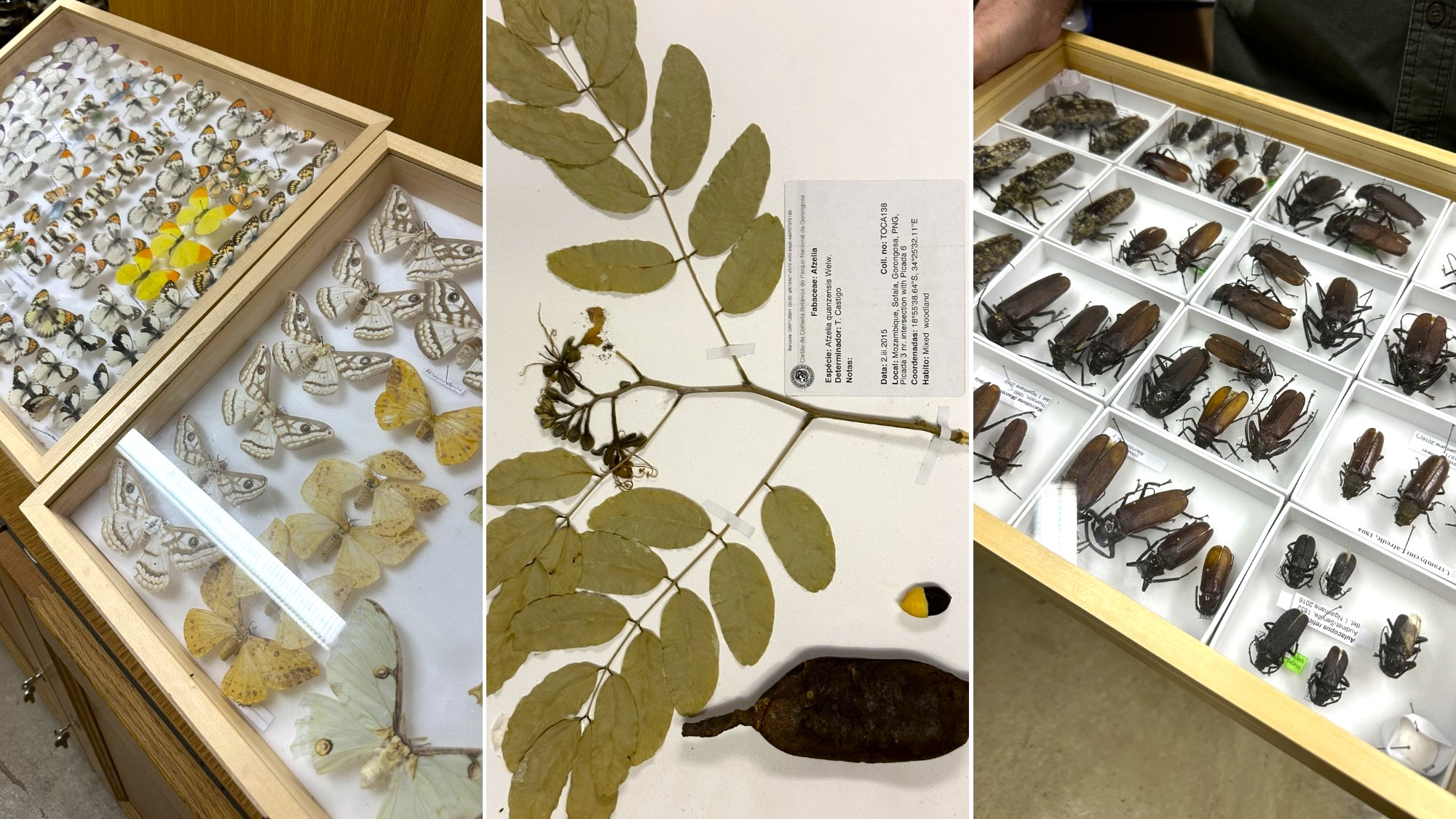
The catalogue of life grows, specimen by specimen, Image Credit: Samantha Myburgh
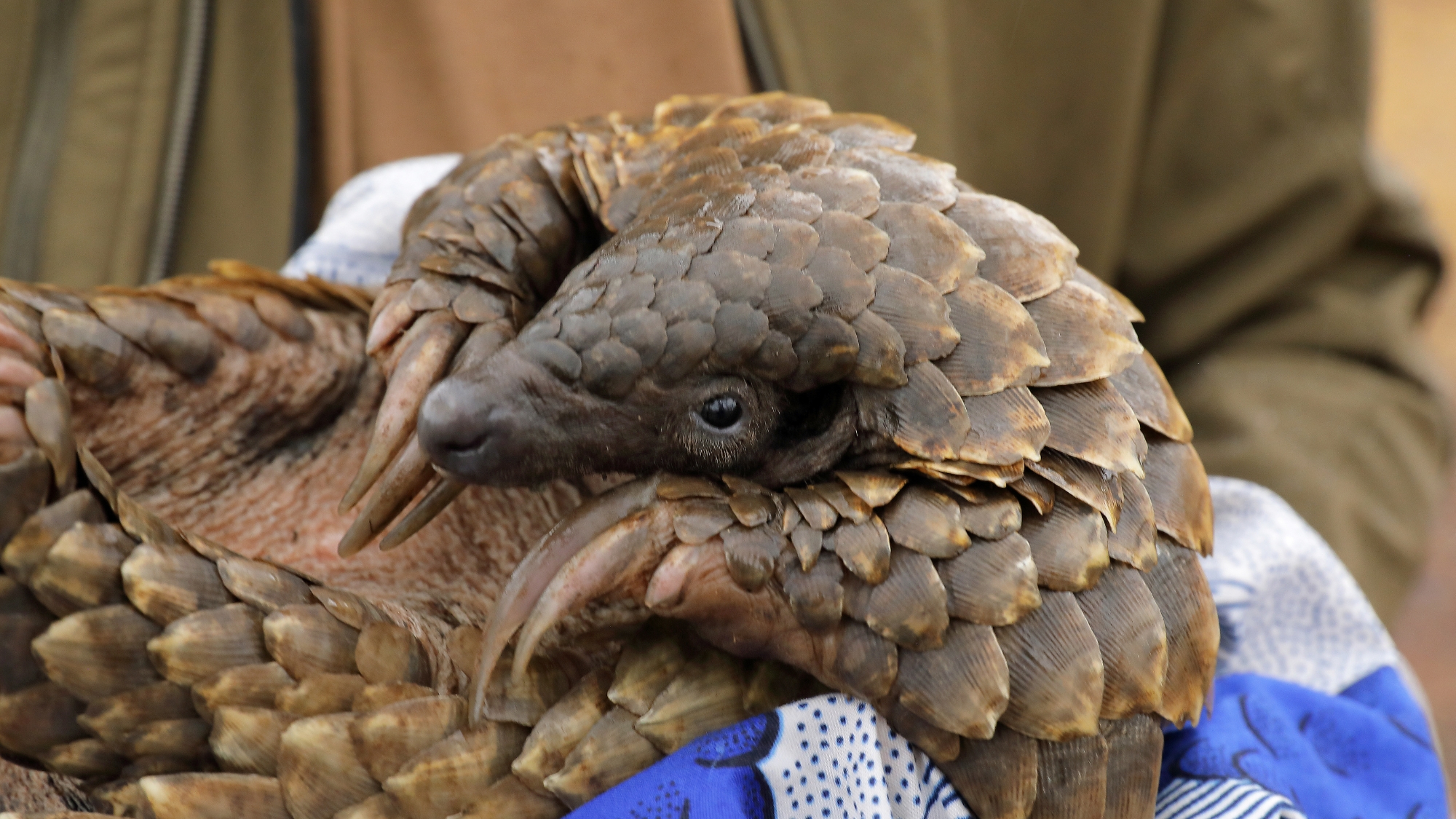
The Pangolin Project
If there was a moment that held onto Sam the most, this was it. She talked about the pangolin team with a kind of careful respect. In the sort of tone people use when they’re replaying something they haven’t fully processed yet.
Every pangolin at the unit has been rescued from trafficking, stabilised, and slowly prepared for release. There’s nothing theatrical about it. No big reveal. Just steady hands guiding one of the world’s most vulnerable mammals through rehabilitation and back toward independence.
You don’t forget the sight of a pangolin moving through the undergrowth with its carer a few steps behind. It lands somewhere deep and stays there.
“Being so close to a pangolin was beyond anything. Most people never see one in their lifetime, and here you watch them forage with the researchers right beside them.” – Samantha Myburgh.
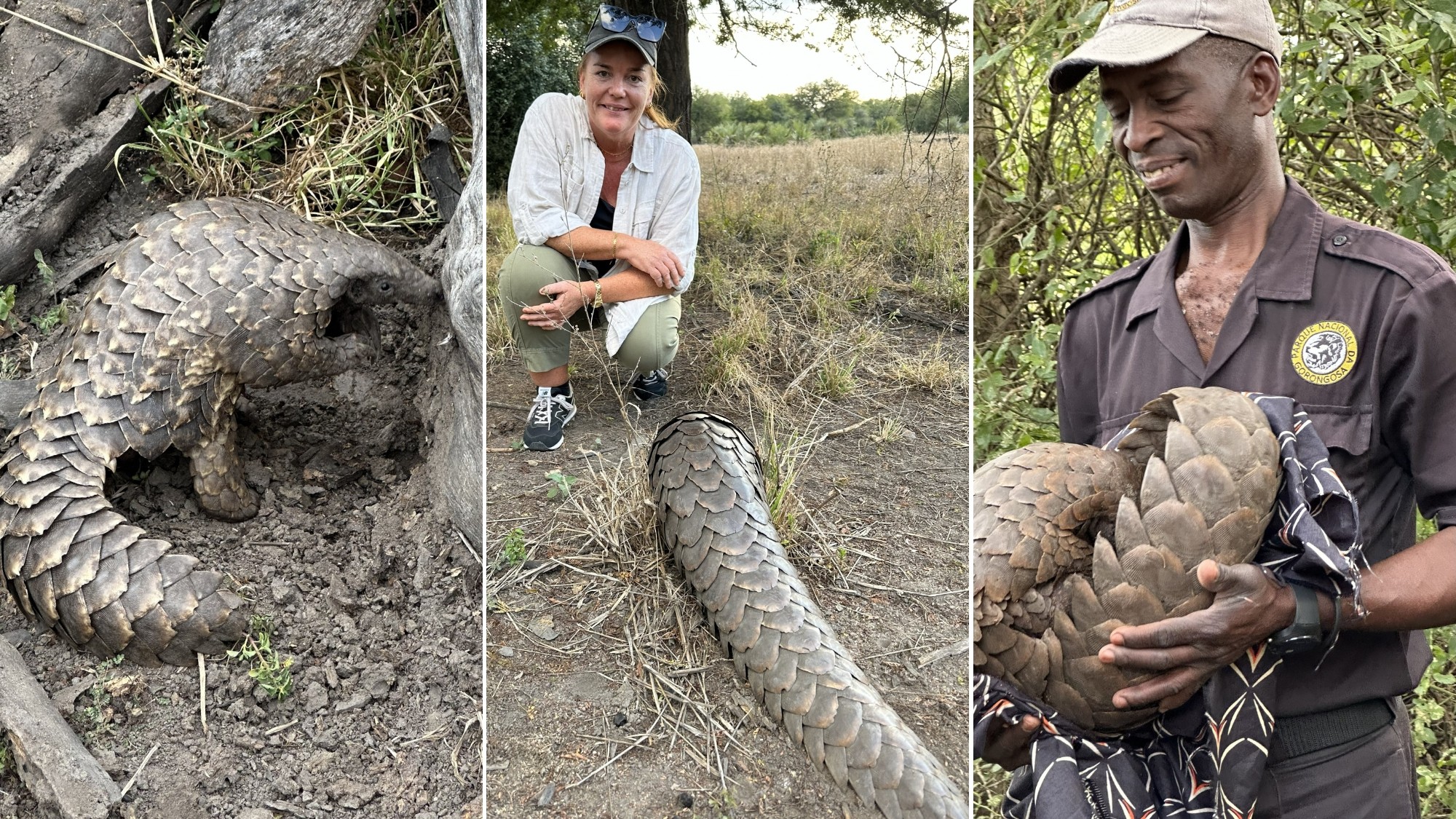
Steady hands helping a survivor find its footing again, Image Credit: Samantha Myburgh
Community Empowerment
Then there are the long-term development projects, the ones that actually shift daily life for the thousands of people who live around the national park. Think coffee growers, cashew farmers, and beekeepers building steady, sustainable income with support from the Gorongosa team. It’s practical, it’s local, and it’s shaping livelihoods.
When Sam visited the coffee plots and honey producers, she spoke about them as extensions of the landscape rather than side projects. These are family-run operations shaped around conservation principles: coffee grown where sustainable land use genuinely matters, honey harvested through methods that reduce conflict with wildlife, and income that stays within the communities instead of drifting outward.
“You visit the coffee plantations, the honey producers, the schools – all of it shaped around conservation, and all of it supporting local families.” – Samantha Myburgh.
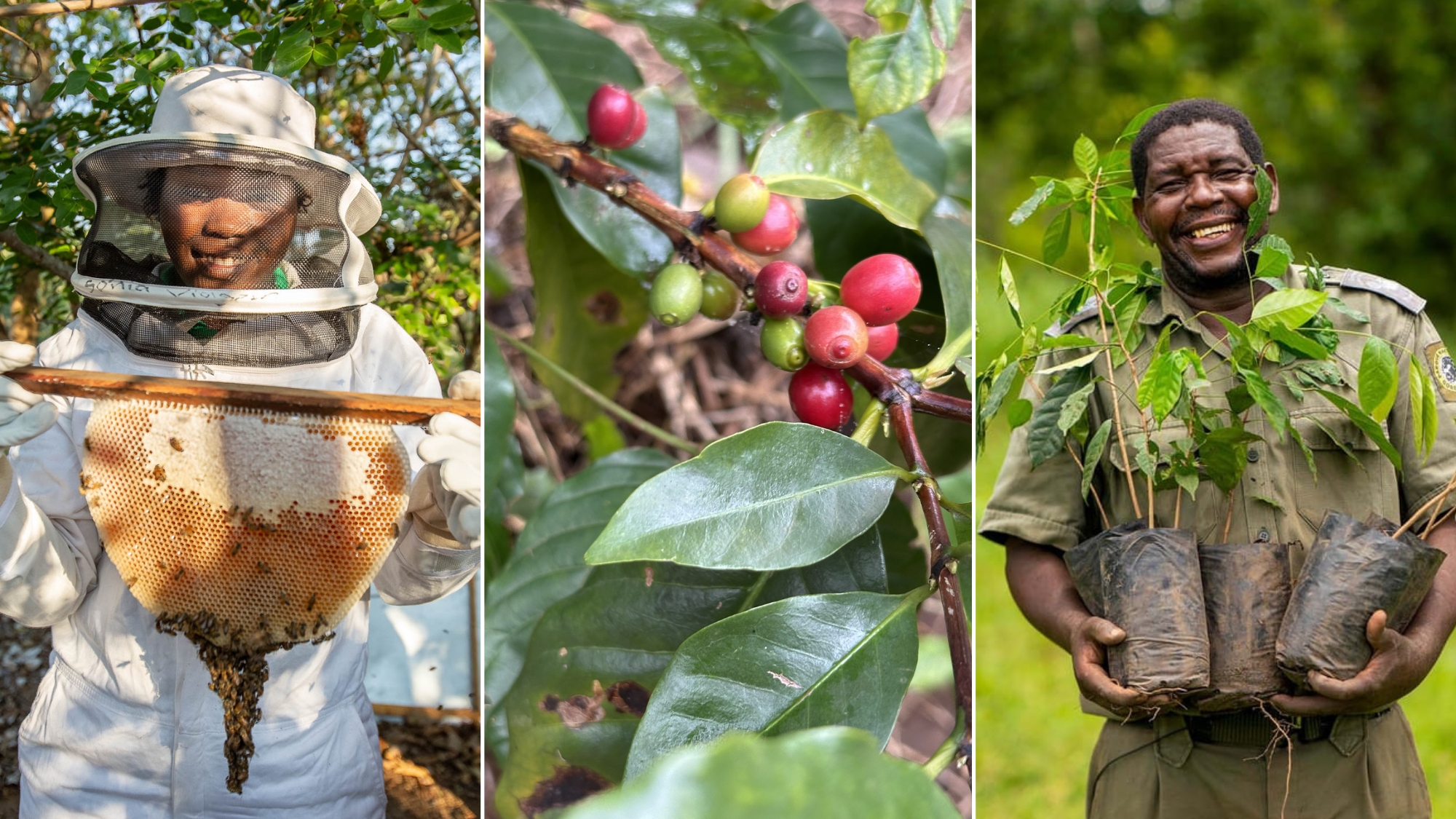
Local hands shaping futures rooted firmly in their landscape, Image Credit: Gorongosa National Park
Measuring Success Differently
Sam told me that the annual report for Gorongosa was roughly 30 pages long. And the majority of those pages were about community upliftment, education, research, and ecological restoration. Tourism gets less than a handful of pages, almost as a footnote. A necessary one, but a footnote nonetheless. And honestly? That’s how it should be.
This is travel as stewardship. Travel that shows its receipts. Travel where you don’t have to “trust the process” but can stand right smack bang in the middle of it.
“Their annual report was pages and pages of community work – honey producers, coffee growers, schools, Girls’ Clubs, and only a tiny section on the tourism side. That tells you exactly where their priorities are.” – Samantha Myburgh.
Stewardship looks like this: quiet care, real accountability
Let’s Talk Gorongosa Safari Abodes
Gorongosa keeps things simple – on purpose. Two permanent camps, two different personalities, one shared philosophy: let the landscape lead.
Both Muzimu Lodge and Chicari Camp are comfortable, well-run bases that give you a clear sense of place without trying to compete with it. Sam kept saying the same thing in different ways: these camps don’t overshadow the national park. Instead, they give you the headspace to actually see it.
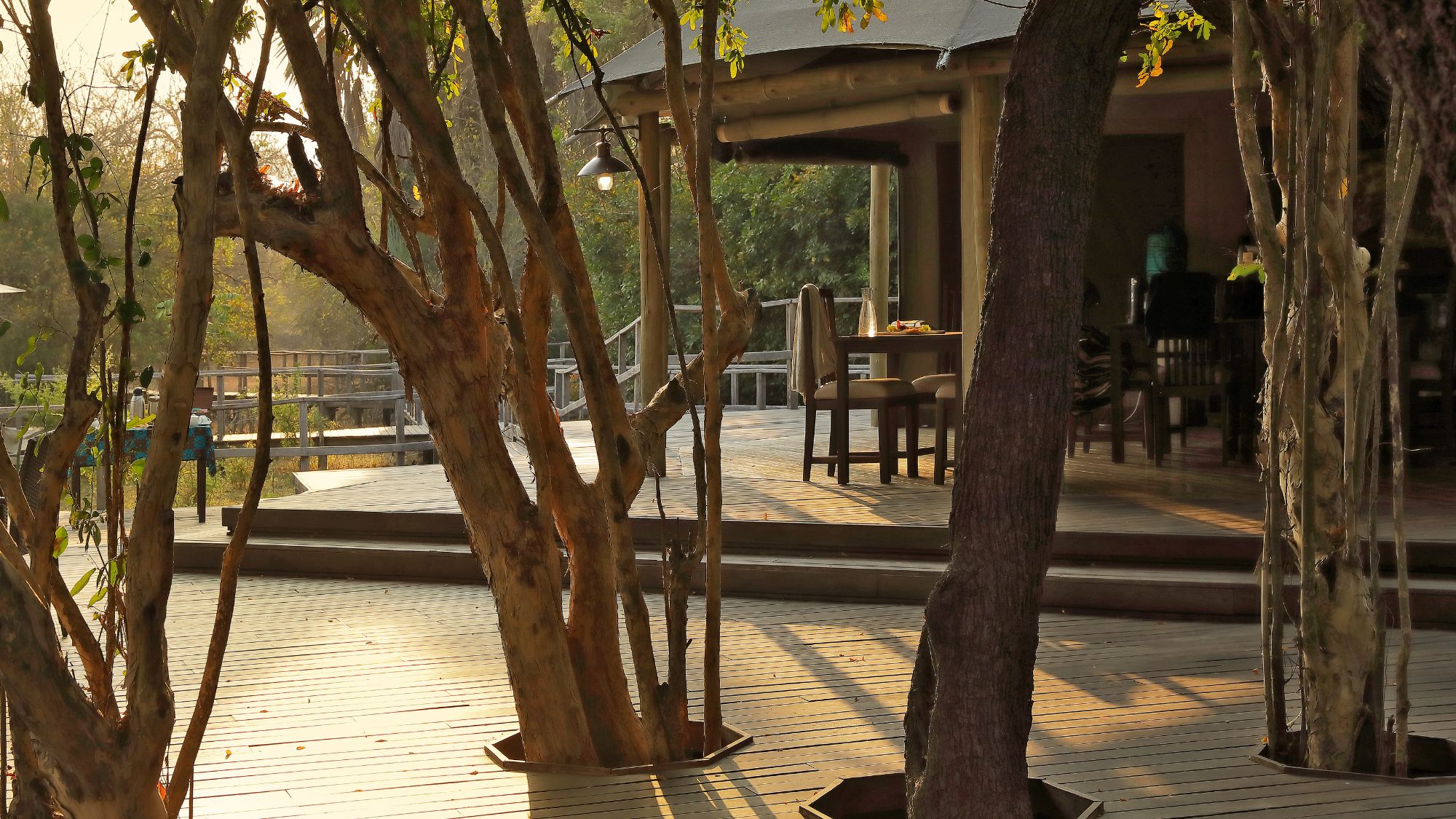
A lodge designed to stay quiet so nature speaks
Muzimu Lodge
There’s a grounded, steady quality to Muzimu. You step inside and immediately feel the shift. Nothing competes for attention, nothing performs hospitality. Just space and that soft hum of being exactly where you’re meant to be after a long morning in the floodplains.
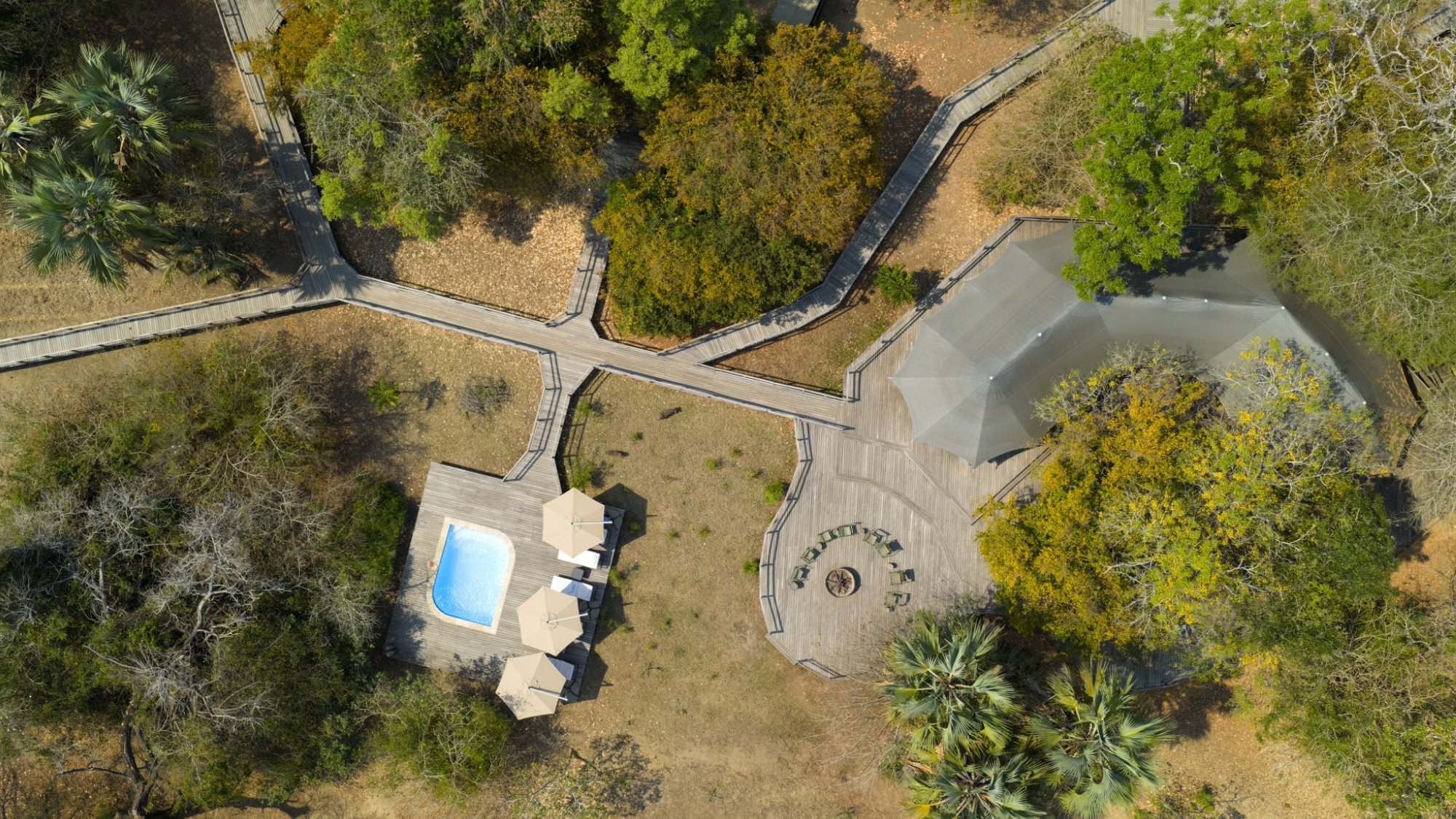
Muzimu keeps things simple so the place can breathe
There are six tented rooms, generous private decks, and a thoughtful layout that nudges you gently toward the landscape. It’s comfortable in that “I can exhale properly here” way – practical, grounded, and refreshingly uninterested in fuss.
Something about the pace here slows you without asking permission; mornings feel wider, afternoons stretch out, and evenings slip in gently in a way that makes you rethink how much noise you tolerate at home.
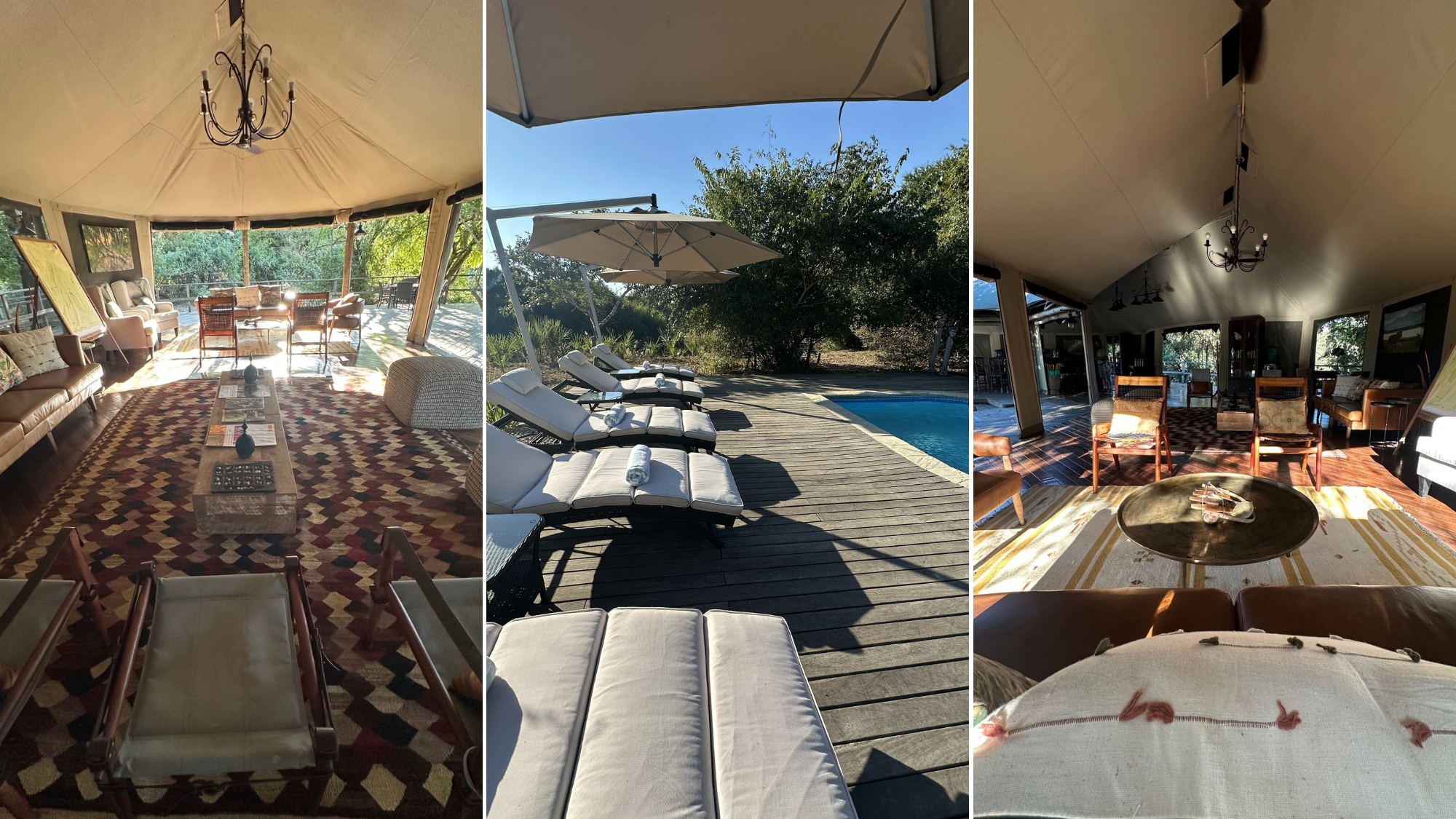
A quiet base that gives your mind real room, Image Credit: Samantha Myburgh
Chicari Camp
Chicari is Gorongosa’s newer camp with wide-open views and wetlands that make birders giddy with joy. The tents are compact but cleverly arranged, and the main area opens straight onto a sweep of water and reeds where life gathers from sunrise to dusk.
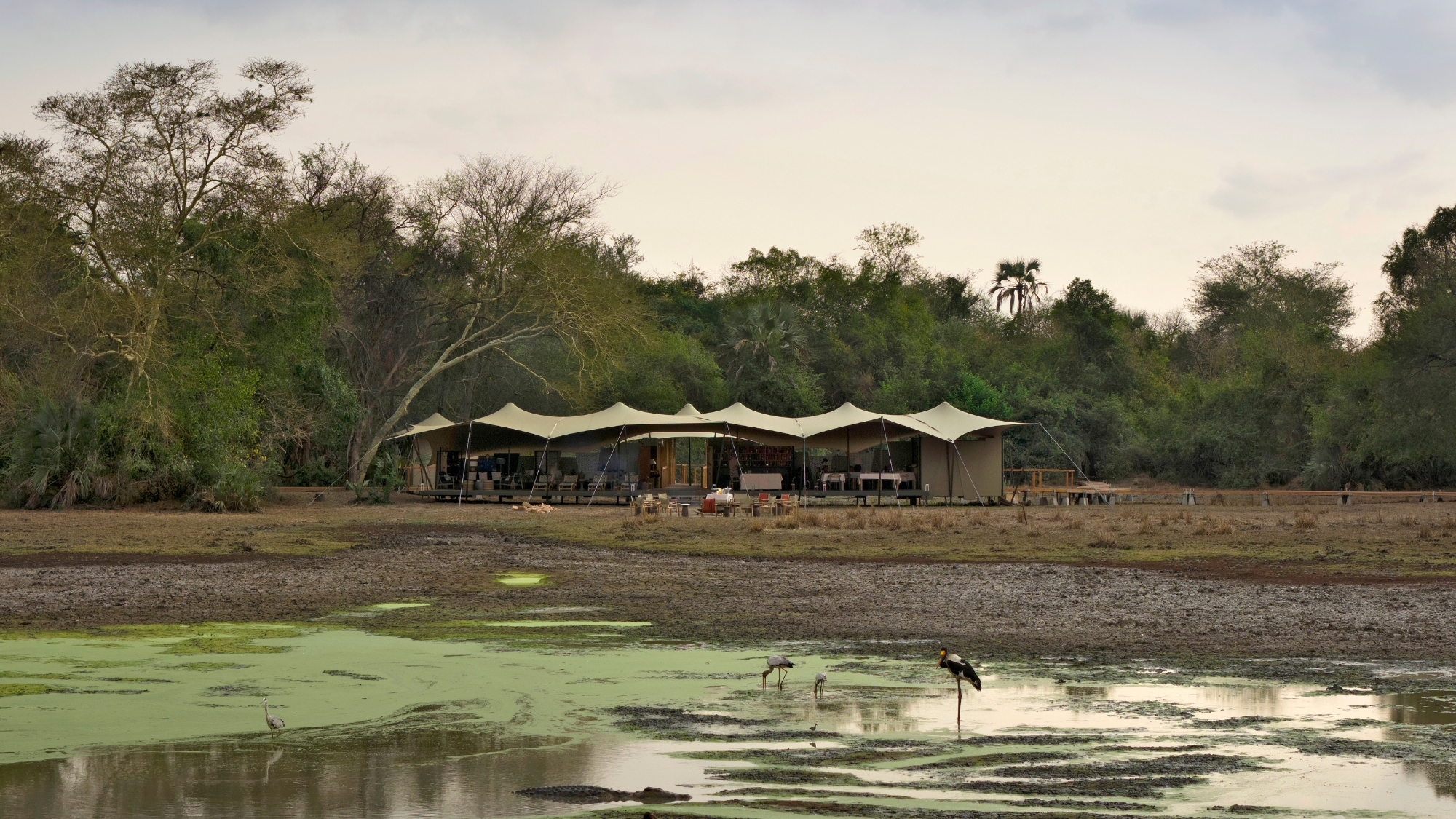
Chicari’s front-row seat to everything the wetlands hold
It feels bright, breezy, and quietly alive. It’s the sort of place where you end up watching the sky change colour without meaning to.
And yes, the Wi-Fi only works in the main area, which sometimes results in a sprinkle of guests staring at screens like they’re in a co-working space for introverts. Sam mentioned it with a laugh, but the point is: the camps are there to support the experience, not define it.
You rest here. You reset here. You don’t come for the rooms. Instead, you come for the work they’re doing, and the rooms simply give you a soft landing between the moments that you dream about.
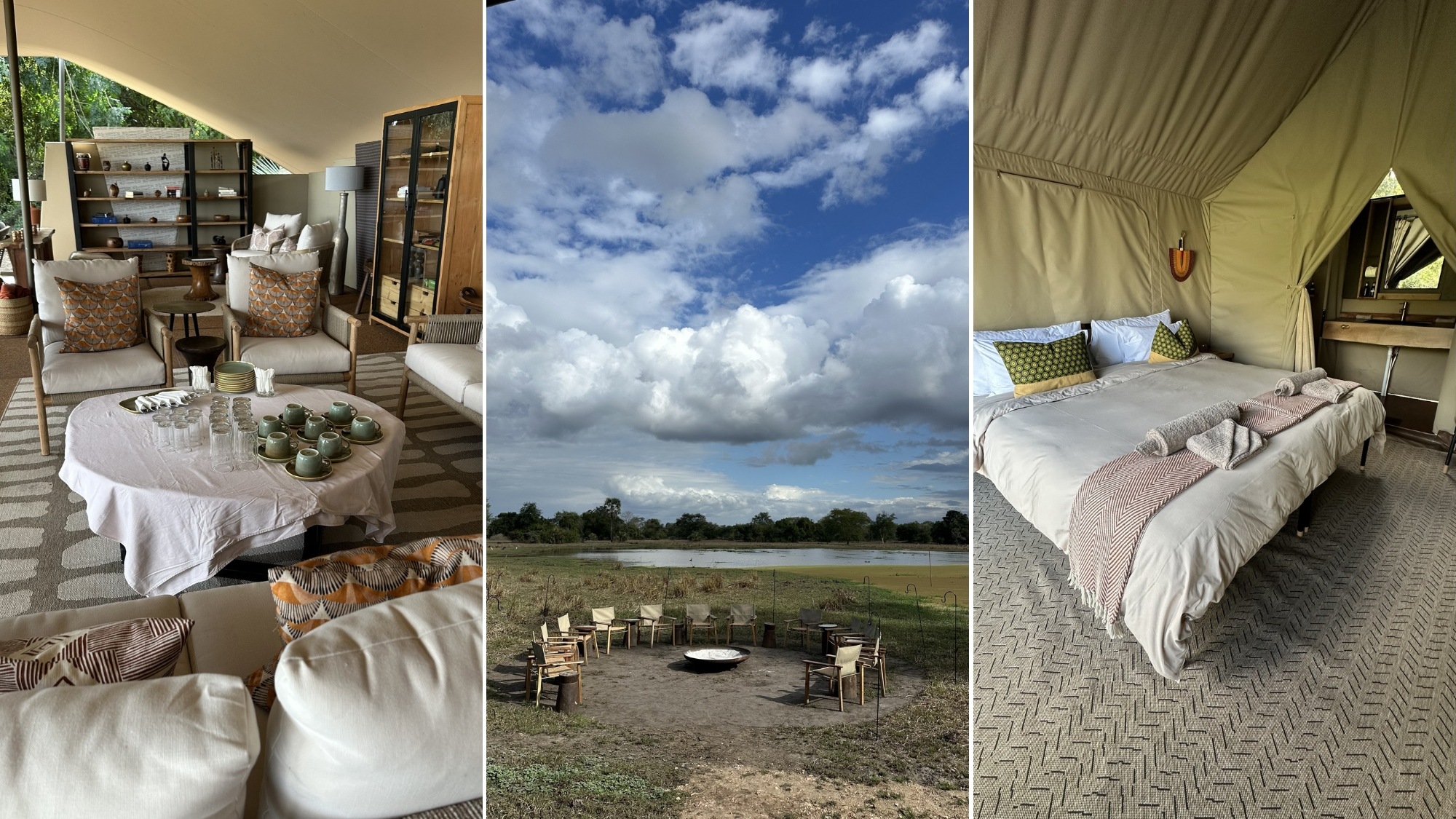
A soft landing between the moments you’ll remember most, Image Credit: Samantha Myburgh
Who Is a Gorongosa Safari Actually For?
Sam is clear on this:
- It’s for travellers who want wildlife, yes, but also want to understand why wildlife still exists here at all
- For those who love Africa enough to step off the conveyor belt and into something richer
- If you want goosebumps that have nothing to do with lion sightings
“Gorongosa is for returning safari travellers. The people who’ve already ticked the usual boxes and are now hungry for meaning, context, and connection.” – Samantha Myburgh.
This is a place that asks something of you – your curiosity, attention, and willingness to let the experience shift your understanding of what “safari” can be.
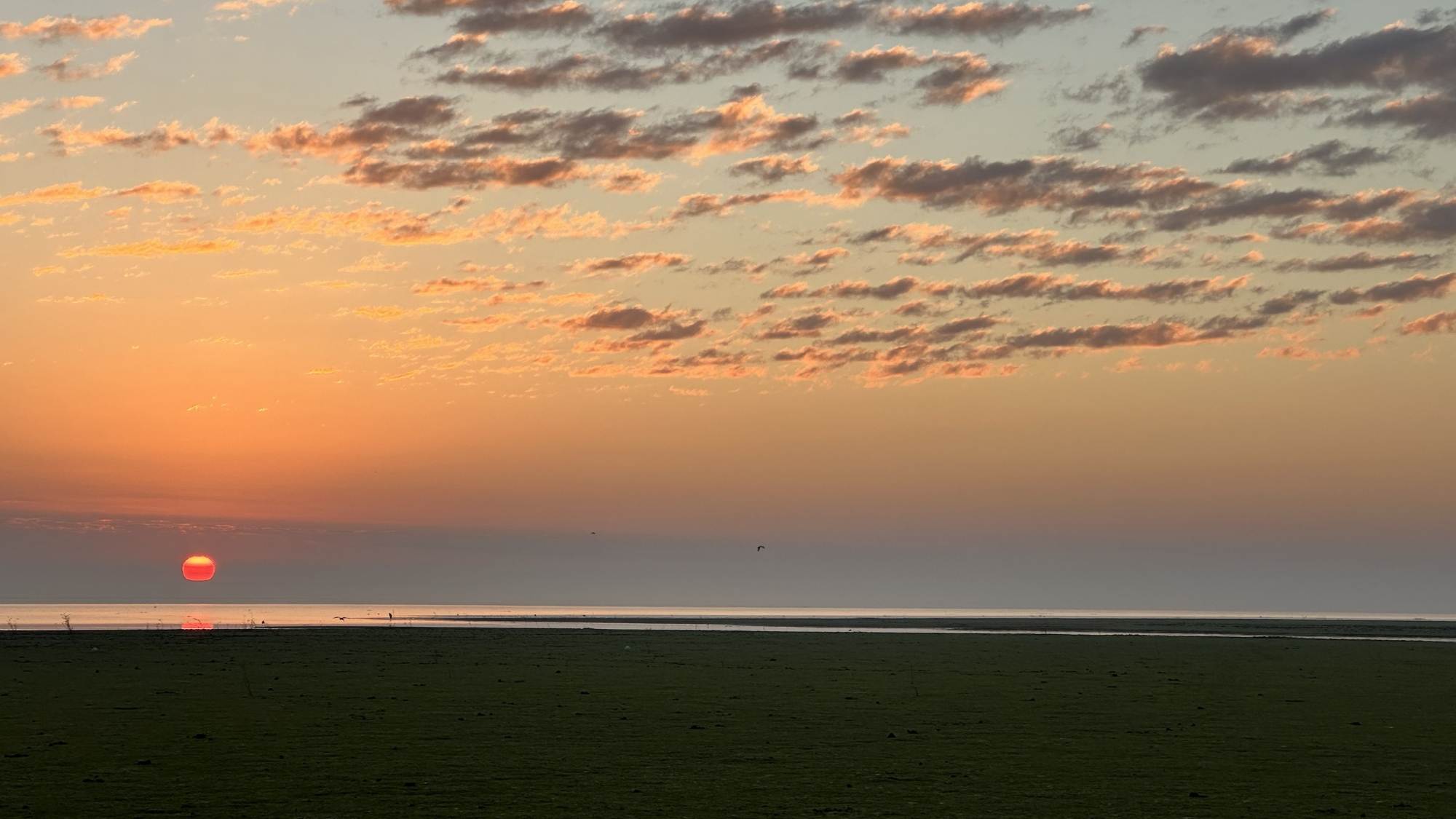
A sunrise that nudges you into paying better attention, Image Credit: Samantha Myburgh
What I Kept Thinking About
And this is the part I keep thinking about – the thing I felt the most after speaking to Sam about her Gorongosa safari. It wasn’t the African wild dogs or the fever trees or even those waterbuck crowds doing their own impression of a migration. It was that quiet, unmistakable feeling of having stepped into a place that’s choosing a future on purpose, and inviting guests to do the same.
Because Gorongosa doesn’t give you that shiver-your-body-decides-for-you moment by accident, it earns it. Not through luxury or spectacle, but through that rare combination of scale, silence, and sincerity. And the sense that your presence folds into a project far bigger than your own itinerary.
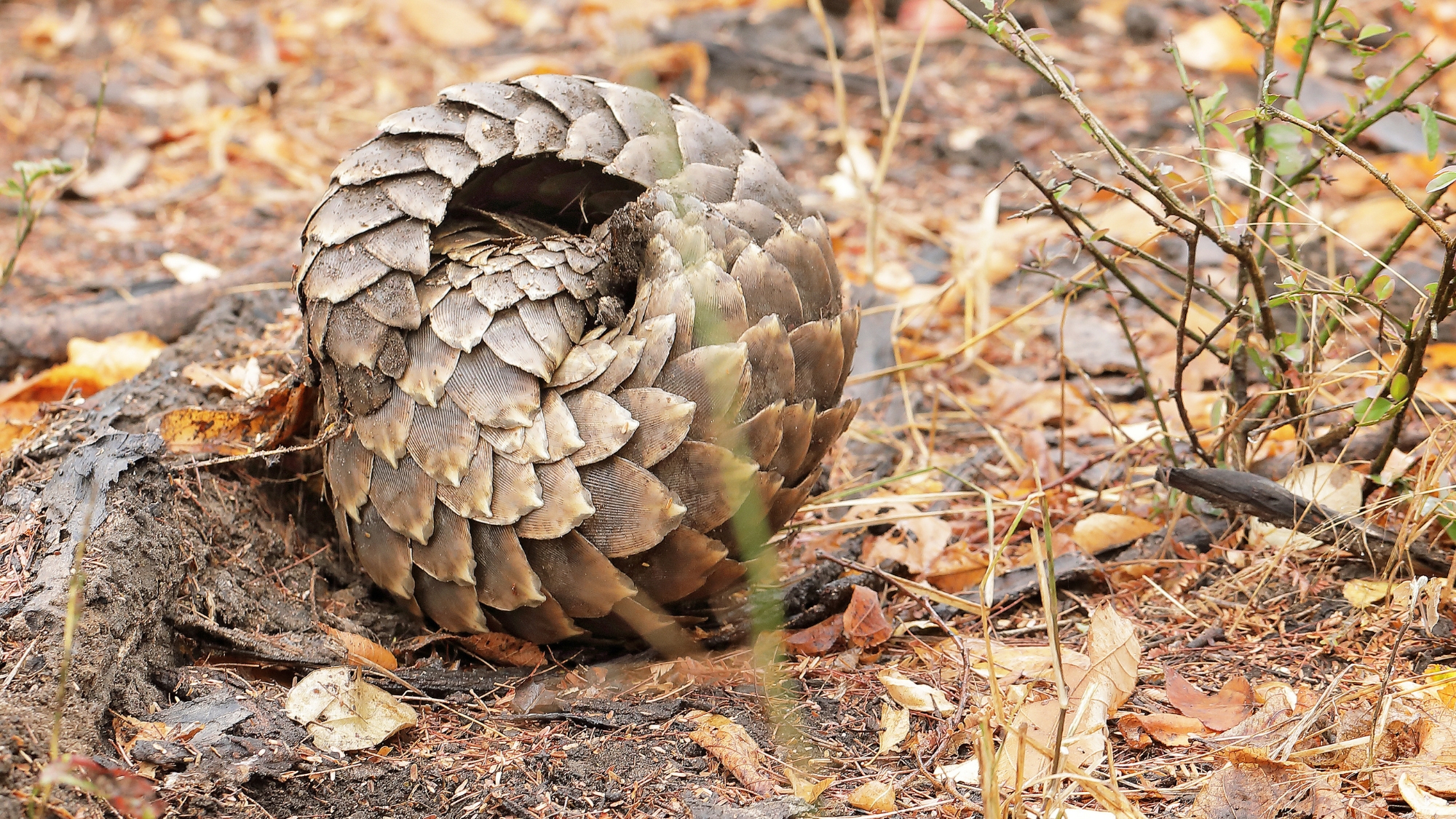
Some moments stay because they’re built on real intention
Why It Matters
And maybe that’s the real hook of a Gorongosa safari: you don’t go for a checklist. You go because something in you is ready for a safari that surprises you in ways you didn’t think safaris still could.
And if a part of you feels that tug – that curiosity for the places doing things differently – speak to us. We’ll help you shape a journey that not only moves you, but matters.
Featured Image: Samantha Myburgh
