UN Deputy Secretary-General Amina J. Mohammed described the Great Green Wall as a vision centred on people as much as landscapes.
- Country:
- Ivory Coast
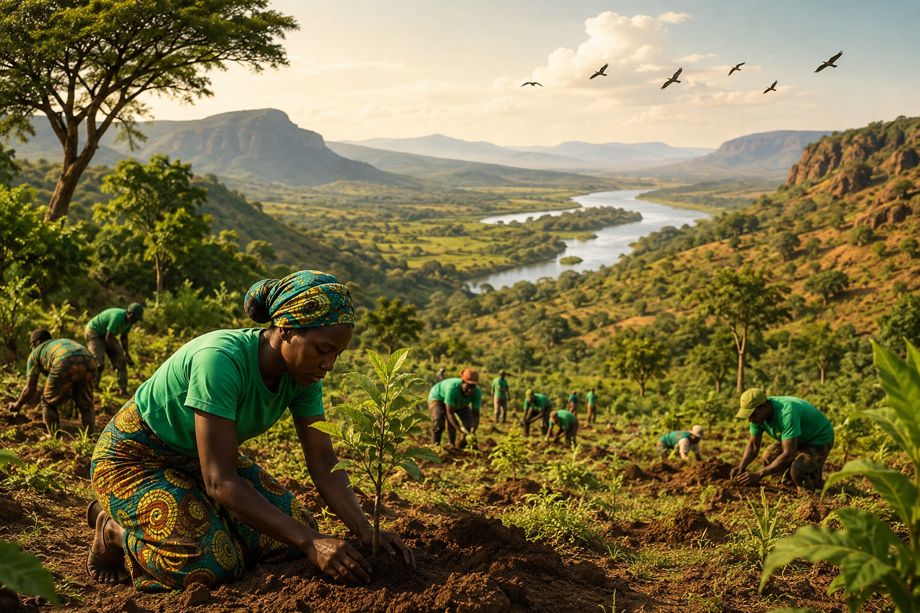
Africa’s Great Green Wall is entering a new phase as governments and development partners look beyond individual restoration projects and work toward a continent-wide investment platform capable of rebuilding degraded landscapes, creating jobs and strengthening communities against climate shocks. At COP-17 of the UN Convention to Combat Desertification in Ulaanbaatar, the African Development Bank committed to working with partners to mobilise more financing for the Great Green Wall Initiative (GGWI), giving fresh momentum to one of Africa’s largest environmental and economic programmes.
The commitment came during an event on 24 August bringing together African ministers, international organisations and development partners to discuss how the initiative can grow under the African Union’s Great Green Wall Strategy and Ten-Year Implementation Framework for 2024–2034. Launched in 2007 and originally focused on 11 Sahel countries, the Great Green Wall was built around ambitious 2030 goals: restoring 100 million hectares of degraded land, creating 10 million green jobs and sequestering 250 million tonnes of carbon.
From a Sahel Restoration Project to a Continental Opportunity
The African Union’s updated strategy is broadening the Great Green Wall beyond its original geographic footprint, turning it into a platform that can support land restoration and climate resilience across different parts of Africa. This wider approach recognises that land degradation is not confined to the Sahel and that restoration can support agriculture, livelihoods, food security and local economies at the same time.
UN Deputy Secretary-General Amina J. Mohammed described the Great Green Wall as a vision centred on people as much as landscapes. Climate change and conflict have complicated implementation, yet experiences in countries including Senegal, Chad and Djibouti show that restoration efforts can deliver meaningful results when communities, governments and investors work together. She called for stronger investment while placing women and young people at the centre of future programmes.
Mali’s Environment Minister Doumbia Mariam Tangara, speaking for the Pan-African Agency of the Great Green Wall, presented the initiative as an opportunity to build Africa’s leading platform for nature-based solutions, combining environmental recovery with economic and social benefits.
A $14 Billion Financing Gap Still Stands in the Way
The scale of Africa’s land degradation makes faster investment increasingly urgent. AU Commission Commissioner Moses Vilakati said the continent has lost 163 million hectares of land to degradation since 2015, while the Great Green Wall still faces a financing gap of about $14 billion if its 2030 objectives are to be achieved.
UNCCD Executive Secretary Yasmine Fouad stressed that countries need approaches suited to their own landscapes and circumstances rather than a single model applied everywhere. That flexibility could become increasingly important as the Great Green Wall expands into regions with different ecosystems, economies and development needs.
African Development Bank Manager for Agriculture Research, Production and Sustainability Laoauli Garba, representing Bank Group President Dr. Sidi Ould Tah, welcomed the AU’s continental strategy as a chance to accelerate implementation and attract investment at a much larger scale.
$500 Million Zambezi Programme Brings Investment Closer to Communities
A major example of that investment approach emerged during COP-17’s Finance Day Ministerial Dialogue. The African Development Bank Group announced plans to mobilise $500 million between 2027 and 2031 through the Ecosystem Restoration in the Zambezi River Basin programme, known as BREFOLE-ZRB.
Working with the Global Environment Facility, Climate Investment Funds, Green Climate Fund and eight participating countries, the programme is expected to strengthen the resilience of 2.8 million people, restore 300,000 hectares of degraded land and create 40,000 jobs for women and young people.
The programme will also support the Southern Africa Great Green Wall Accelerator by developing regional investment plans and building a pipeline of projects capable of attracting financing across the Southern African Development Community. This connection between restoration and bankable projects could help turn environmental commitments into investments that generate income, improve food security and support businesses.
Turning Restored Land Into Jobs, Food Security and Economic Value
For the African Development Bank, restoring land is increasingly being treated as an economic investment rather than an environmental expense. Garba said every restored hectare can become a more productive asset, strengthen food security, open opportunities for women and young people and make communities more resilient.
IFAD’s Juan Carlos Mendoza identified three priorities for moving the initiative faster: converting national commitments into investment-ready project pipelines, allocating financial risks strategically so more capital can enter the sector, and designing programmes that create functioning markets while measuring real development results.
The Great Green Wall’s next chapter will depend heavily on whether governments and development institutions can close the gap between ambitious continental targets and projects that investors can actually finance. With the initiative expanding beyond its original Sahel focus, the opportunity is becoming much larger: restoring damaged ecosystems while building livelihoods, strengthening food systems and creating economic opportunities across Africa.